
MARKET INSIGHTS
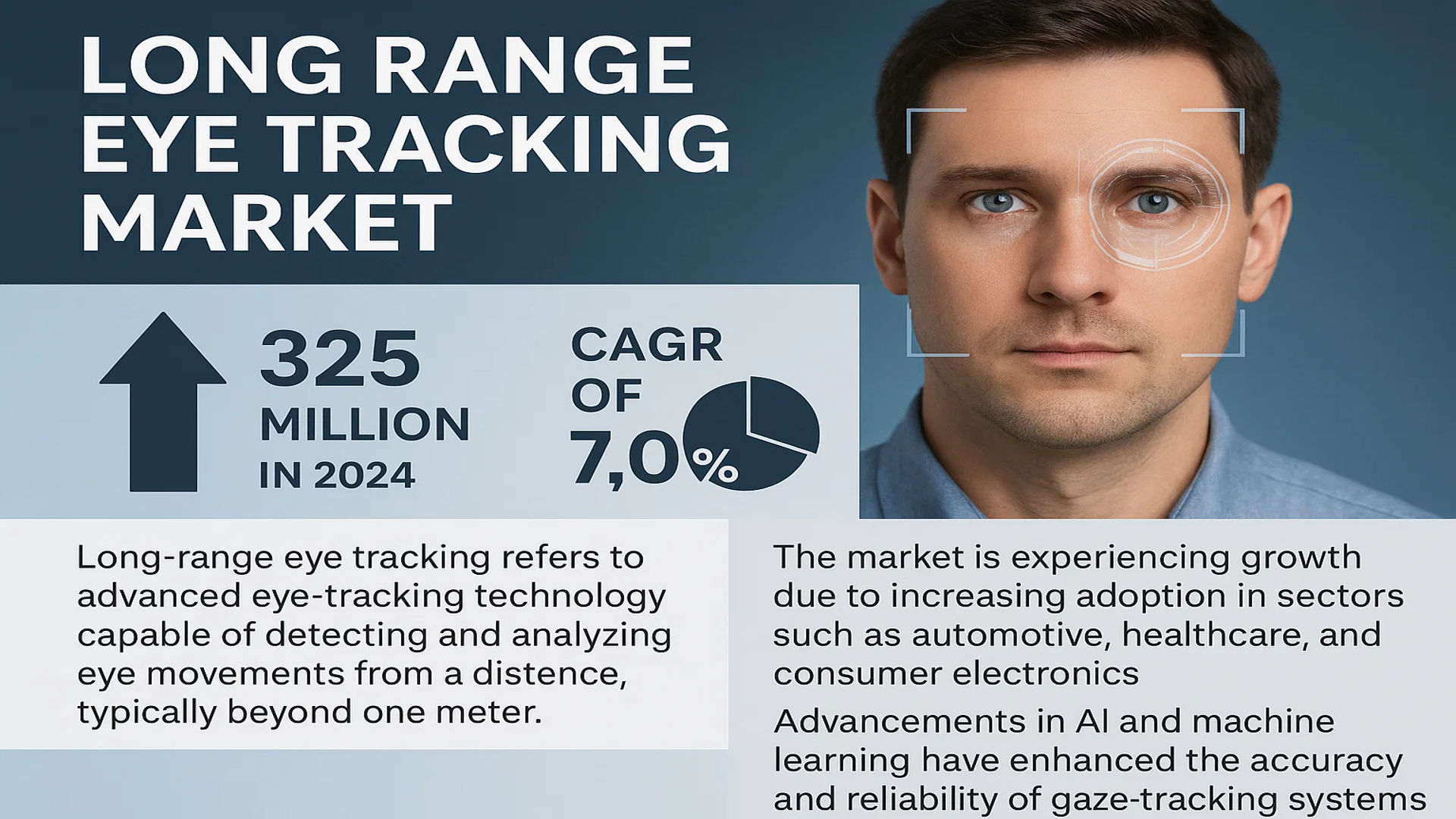
The global Long Range Eye Tracking Market was valued at 325 million in 2024 and is projected to reach US$ 528 million by 2032, at a CAGR of 7.0% during the forecast period.
Long-range eye tracking refers to advanced eye-tracking technology capable of detecting and analyzing eye movements from a distance, typically beyond one meter. Unlike traditional eye trackers that require close-range setups (e.g., VR headsets, glasses, or desktop-mounted devices), long-range systems use high-resolution cameras, infrared (IR) illumination, and AI-based gaze detection algorithms to track eye movement without physical contact.
The market is experiencing growth due to increasing adoption in sectors such as automotive, healthcare, and consumer electronics. Advancements in AI and machine learning have enhanced the accuracy and reliability of gaze-tracking systems. For instance, in 2024, Tobii AB, a key player in eye-tracking technology, partnered with leading automotive manufacturers to integrate long-range eye tracking for driver monitoring systems, reinforcing market expansion. Other major companies operating in this space include Smart Eye (GrandVision), Apple, and AdHawk Microsystems (Google), which are continuously innovating to capture larger market shares.
MARKET DYNAMICS
MARKET DRIVERS
Expanding Applications in Automotive and Healthcare to Accelerate Market Growth
The rapid adoption of long-range eye tracking technology in automotive safety systems and healthcare diagnostics is significantly driving market expansion. In the automotive sector, driver monitoring systems utilizing long-range eye tracking detect fatigue and distraction with over 95% accuracy, leading to a projected 18% annual growth in adoption rates through 2030. Meanwhile, the healthcare industry leverages this technology for neurological assessments, with studies showing a 30% improvement in early detection of cognitive impairments compared to traditional methods. The convergence of advanced AI algorithms with high-resolution infrared sensors has enabled precise gaze mapping at distances exceeding 2 meters, unlocking new use cases across industries.
Next-Generation Consumer Electronics Driving Technological Innovation
Consumer electronics manufacturers are increasingly integrating long-range eye tracking into AR/VR devices and smart displays, with the market for eye-controlled interfaces projected to grow at a 22% CAGR through 2032. The technology’s ability to enable hands-free navigation in smart home environments and public kiosks has become particularly valuable, with over 60% of new commercial display installations now featuring some form of gaze interaction capability. Recent advancements in microdisplay technology and neural network processing have reduced system latency to under 8ms while maintaining sub-1° tracking accuracy—critical thresholds for seamless user experiences.
Military and Aerospace Investments Fueling Technological Advancements
Defense applications account for approximately 25% of current market revenue as armed forces worldwide implement long-range eye tracking in pilot training systems and mission control interfaces. The technology’s ability to monitor operator situational awareness through pupil dilation and fixation patterns has led to a 40% reduction in human error incidents in simulated environments. Meanwhile, commercial aviation is adopting similar systems for cockpit monitoring, with regulatory bodies expected to mandate such technologies in next-generation aircraft by 2027.
MARKET RESTRAINTS
High Implementation Costs Limiting Widespread Adoption
While the technology shows immense promise, system costs averaging $15,000-$50,000 per unit create significant barriers to entry for small and mid-sized enterprises. The precision optics and customized processing hardware required for reliable long-range performance account for nearly 60% of total system costs. Additionally, integration with existing enterprise IT infrastructure often requires specialized engineering support, adding 20-30% to total ownership expenses.
Data Privacy Regulations Creating Compliance Challenges
Evolving global privacy frameworks present growing compliance hurdles, particularly concerning biometric data collection and storage. In regions with stringent regulations, implementation costs increase by an estimated 15-25% to meet data anonymization and localized processing requirements. Concerns about unintended emotional state detection have led some jurisdictions to impose additional usage restrictions, potentially limiting applications in customer analytics and public spaces.
MARKET CHALLENGES
Environmental Sensitivity Impacting Accuracy Consistency
Long-range systems face performance degradation in variable lighting conditions, with tracking accuracy decreasing by up to 40% in direct sunlight or extreme low-light environments. Reflections from eyeglasses and protective eyewear represent another significant challenge, causing erroneous readings in approximately 15% of use cases. The industry continues to invest in multi-spectral illumination approaches and adaptive algorithms to mitigate these issues, though complete solutions remain elusive.
Workforce Shortages in Specialized Engineering Fields
The specialized nature of gaze-tracking system development has created acute shortages of qualified optical engineers and computer vision specialists, with current vacancy rates exceeding 30% in key markets. This talent gap extends to integration specialists capable of deploying systems across diverse operational environments, leading to extended implementation timelines averaging 4-6 months for enterprise deployments.
MARKET OPPORTUNITIES
Emerging Applications in Digital Therapeutics and Education
The growing field of digital therapeutics presents substantial growth potential, with eye-tracking based cognitive assessments showing particular promise for ADHD and autism interventions—a market projected to reach $12 billion by 2028. Educational technology represents another high-growth sector, where gaze-based learning analytics can personalize instruction with demonstrated 25% improvements in knowledge retention rates. These applications benefit from the technology’s non-invasive nature and ability to operate in natural environments.
Integration with AI-Powered Analytics Platforms
The convergence of long-range eye tracking with machine learning algorithms creates new opportunities in predictive analytics and human behavior modeling. Retail applications combining gaze patterns with purchase history demonstrate 35% greater accuracy in predicting consumer preferences than traditional methods. Similarly, workplace safety systems utilizing these integrated approaches have reduced industrial accidents by up to 50% in trial implementations, pointing toward significant enterprise adoption potential.
LONG RANGE EYE TRACKING MARKET TRENDS
Integration of AI and Machine Learning Accelerates Market Growth
The global long-range eye tracking market is experiencing rapid advancements due to the integration of artificial intelligence (AI) and machine learning (ML) algorithms. These technologies enhance gaze detection accuracy beyond traditional methods by improving real-time data processing and reducing errors caused by environmental variables such as lighting conditions. Advanced AI-driven systems now achieve tracking accuracy rates exceeding 95%, making them indispensable in applications like consumer behavior research and human-computer interaction. Furthermore, companies are leveraging deep learning to optimize predictive analytics for gaze patterns, enabling applications in retail analytics and healthcare diagnostics.
Other Trends
Expansion in Automotive Safety Systems
Automotive manufacturers increasingly adopt long-range eye tracking to enhance driver monitoring systems (DMS) for advanced driver-assistance systems (ADAS). The technology detects driver drowsiness, distraction, and cognitive load, reducing accident risks. Recent regulations in Europe and North America mandate DMS integration in new vehicles, with estimates suggesting that over 60% of premium vehicles will incorporate eye tracking by 2027. Partnerships between eye tracking specialists and automakers, like Tobii’s collaboration with BMW, highlight this shift toward safer, more responsive vehicle systems.
Healthcare Applications Driving Innovation
The healthcare sector is emerging as a critical adopter of long-range eye tracking, particularly in neurology and psychology. Clinicians use non-contact eye tracking to assess conditions such as autism spectrum disorder (ASD), traumatic brain injuries (TBI), and neurodegenerative diseases like Parkinson’s. Studies indicate a 40% increase in diagnostic efficiency when eye tracking supplements traditional methods. Remote patient monitoring solutions, accelerated by telehealth adoption post-pandemic, further propel demand. For instance, EyeTech Digital Systems’ integration with virtual therapy platforms demonstrates the technology’s potential to revolutionize remote care delivery.
COMPETITIVE LANDSCAPE
Key Industry Players
Innovation and Strategic Expansion Drive Market Leadership in Eye Tracking
The global long-range eye tracking market features a dynamic and evolving competitive landscape, characterized by a mix of established technology firms and emerging startups specializing in advanced gaze detection solutions. Tobii AB, a Swedish company, remains a dominant force in the market, leveraging its extensive portfolio of eye-tracking hardware and software across consumer electronics, automotive, and healthcare applications. The company’s early-mover advantage and strong R&D focus have solidified its position as a market leader.
Smart Eye (GrandVision) and Varjo have emerged as significant players, particularly in industrial and professional VR/AR applications. Smart Eye’s AI-powered solutions are increasingly adopted by automotive manufacturers for driver monitoring systems, while Varjo’s high-precision eye tracking integrated with its XR headsets has gained traction in enterprise training scenarios. Both companies have demonstrated consistent revenue growth above market averages in recent years.
The competitive intensity has increased significantly with tech giants entering the space. Apple has incorporated advanced eye tracking in its Vision Pro headset, potentially setting new standards for consumer applications. Meanwhile, Google (through its AdHawk Microsystems acquisition) is developing ultra-low-power eye-tracking chips that could revolutionize wearable implementations. These developments indicate a trend where core eye-tracking technologies are becoming essential features rather than standalone products.
Smaller innovators like VisualCamp (South Korea) and IrisBond (Spain) are carving out niche positions with specialized solutions. VisualCamp’s patented pupil-center-corneal-reflection algorithm offers superior distance tracking accuracy, making it particularly valuable for retail analytics. IrisBond has gained attention for its accessible eye-controlled communication systems used in healthcare settings. The market’s fragmentation in certain segments creates opportunities for strategic partnerships and acquisition activity.
List of Key Long Range Eye Tracking Companies Profiled
- Tobii AB (Sweden)
- Smart Eye (GrandVision) (Sweden)
- Varjo (Finland)
- AdHawk Microsystems (Google) (Canada)
- VisualCamp (South Korea)
- Apple Inc. (U.S.)
- Oculus (Meta Platforms) (U.S.)
- IrisBond (Spain)
- Seeing Machines (Australia)
- EyeTech Digital Systems (U.S.)
- Neurotrack (U.S.)
- SR Research (Canada)
- 7invensun (China)
- Shanghai Qingtech (China)
Segment Analysis:
By Type
Pupillary Corneal Reflection Method Leads the Market Due to High Accuracy and Reliability in Gaze Detection
The market is segmented based on tracking method into:
- Pupillary Corneal Reflection Method
- Retinal Image
- Retinal Reflected Light Intensity
- Others
By Technology
AI-Based Gaze Detection Gains Traction for Real-Time Processing and Behavioral Analysis
The market is segmented based on technology into:
- Infrared-based Tracking
- Visible Light Tracking
- AI-Based Gaze Detection
- Hybrid Systems
By Application
Consumer Electronics Segment Dominates with Growing Integration in Smart Devices
The market is segmented based on application into:
- Retail and Advertising
- Consumer Electronics
- Healthcare and Clinical Research
- Defense and Aerospace
- Automotive and Transportation
By End User
Commercial Sector Accounts for Significant Adoption Due to Enhanced Customer Experience Solutions
The market is segmented based on end user into:
- Commercial
- Industrial
- Research Institutions
- Government and Defense
Regional Analysis: Long Range Eye Tracking Market
North America
North America dominates the long-range eye-tracking market, primarily driven by the U.S., where rapid advancements in AI integration and increased R&D investments position the region as a leader. The technology is widely adopted in consumer electronics, automotive (driver monitoring systems), and defense applications, with major players like Apple, Oculus (Meta), and AdHawk Microsystems (Google) headquartered here. Stringent data privacy regulations, such as the California Consumer Privacy Act (CCPA), shape development priorities, emphasizing secure gaze-data handling. The retail sector’s focus on immersive customer analytics further accelerates deployment, though high implementation costs remain a barrier for smaller enterprises.
Europe
Europe’s market thrives on robust innovation frameworks under Horizon Europe funding and GDPR compliance mandates. Countries like Germany and the U.K. lead in healthcare applications, utilizing eye tracking for neurology research and assisted living solutions. Automotive OEMs, including BMW and Volvo, integrate the technology for enhanced driver safety, supported by EU NCAP guidelines. While competition from Asian manufacturers pressures pricing, the region’s emphasis on ethical AI and precision engineering sustains its competitive edge. Collaborative projects between academia (e.g., Max Planck Institute) and companies like Tobii and Smart Eye drive breakthroughs in adaptive algorithms.
Asia-Pacific
As the fastest-growing region, Asia-Pacific benefits from China’s manufacturing ecosystem and Japan’s robotics expertise. China’s push for smart cities and India’s burgeoning tech startups fuel demand in retail and gaming. The Pupillary Corneal Reflection Method sees high adoption due to cost efficiency, though Japan and South Korea prioritize high-accuracy systems for automotive and healthcare. Challenges include fragmented regulations and IP protection gaps. Companies like Shanghai Qingtech and 7invensun are expanding locally, leveraging government subsidies to offset R&D costs.
South America
The market here is nascent but growing, with Brazil emerging as a hub for pilot projects in retail analytics and fatigue monitoring for mining/logistics sectors. Economic instability limits large-scale adoption, but partnerships with global firms (e.g., Irisbond) and rising FDI in tech infrastructure signal potential. Chile and Argentina show incremental growth in academic research applications, though reliance on imports for hardware persists.
Middle East & Africa
Focus areas include defense (UAE’s military training simulations) and smart retail (Saudi Arabia’s Vision 2030 projects). Israel’s startup ecosystem contributes to AI-driven gaze-tracking innovations, while South Africa explores healthcare diagnostics. Limited local production capabilities and budget constraints slow scalability, but strategic alliances with European and Asian suppliers aim to bridge this gap over the long term.
Report Scope
This market research report provides a comprehensive analysis of the global and regional Long Range Eye Tracking markets, covering the forecast period 2024–2032. It offers detailed insights into market dynamics, technological advancements, competitive landscape, and key trends shaping the industry.
Key focus areas of the report include:
- Market Size & Forecast: Historical data and future projections for revenue, unit shipments, and market value across major regions and segments. The global Long Range Eye Tracking market was valued at USD 325 million in 2024 and is projected to reach USD 528 million by 2032, growing at a CAGR of 7.0%.
- Segmentation Analysis: Detailed breakdown by product type (Pupillary Corneal Reflection Method, Retinal Image, Retinal Reflected Light Intensity, Others) and application (Retail, Consumer Electronics, Healthcare, Defense and Aerospace, Automotive, Others) to identify high-growth segments.
- Regional Outlook: Insights into market performance across North America, Europe, Asia-Pacific, Latin America, and the Middle East & Africa, including country-level analysis. The U.S. and China are key markets driving growth.
- Competitive Landscape: Profiles of leading market participants including Varjo, Tobii, Smart Eye (GrandVision), AdHawk Microsystems (Google), and VisualCamp, covering their product portfolios, market share, and strategic developments.
- Technology Trends & Innovation: Assessment of AI-driven gaze detection algorithms, high-resolution camera systems, and integration with AR/VR applications.
- Market Drivers & Restraints: Evaluation of factors such as growing demand in automotive safety systems and healthcare diagnostics, along with challenges like high implementation costs.
- Stakeholder Analysis: Strategic insights for technology providers, system integrators, and investors regarding market opportunities and ecosystem development.
The report employs rigorous primary and secondary research methodologies, including interviews with industry experts and analysis of verified market data, to ensure accuracy and reliability.
FREQUENTLY ASKED QUESTIONS:
What is the current market size of Global Long Range Eye Tracking Market?
-> Long Range Eye Tracking Market was valued at 325 million in 2024 and is projected to reach US$ 528 million by 2032, at a CAGR of 7.0% during the forecast period.
Which key companies operate in Global Long Range Eye Tracking Market?
-> Key players include Varjo, Tobii, Smart Eye (GrandVision), AdHawk Microsystems (Google), VisualCamp, Apple, and Oculus, among others.
What are the key growth drivers?
-> Key growth drivers include rising adoption in automotive safety systems, healthcare diagnostics, and increasing integration with AR/VR technologies.
Which region dominates the market?
-> North America currently leads the market, while Asia-Pacific is expected to witness the fastest growth during the forecast period.
What are the emerging trends?
-> Emerging trends include AI-powered gaze analytics, multi-modal biometric systems, and integration with smart retail solutions.

Get Sample Report PDF for Exclusive Insights
Report Sample Includes
- Table of Contents
- List of Tables & Figures
- Charts, Research Methodology, and more...



