
MARKET INSIGHTS
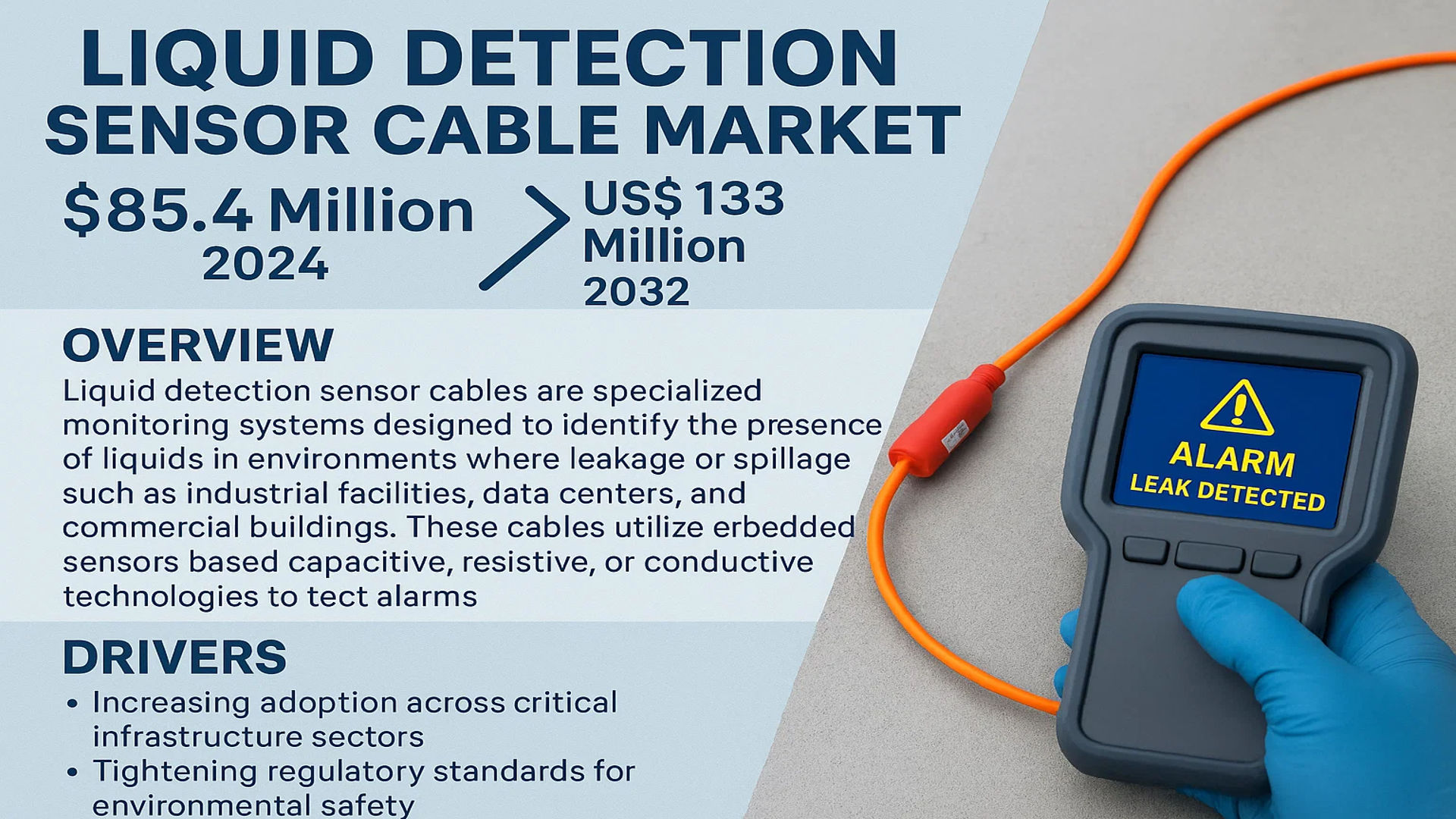
The global Liquid Detection Sensor Cable Market was valued at 85.4 million in 2024 and is projected to reach US$ 133 million by 2032, at a CAGR of 4.7% during the forecast period.
Liquid detection sensor cables are specialized monitoring systems designed to identify the presence of liquids in environments where leakage or spillage could cause significant damage, such as industrial facilities, data centers, and commercial buildings. These cables utilize embedded sensors based on capacitive, resistive, or conductive technologies to detect moisture contact and trigger alarms.
Market growth is driven by increasing adoption across critical infrastructure sectors and tightening regulatory standards for environmental safety. The U.S. currently represents the largest regional market, while Asia-Pacific shows the fastest growth potential due to rapid industrialization. Leading manufacturers including Eurovac, Entegris, and RENA Technologies are expanding their product portfolios with advanced smart sensing capabilities to meet evolving customer needs.
MARKET DYNAMICS
MARKET DRIVERS
Growing Industrial Automation and IoT Integration to Boost Market Growth
The rapid adoption of industrial automation across manufacturing, semiconductor, and electronics industries is significantly driving the demand for liquid detection sensor cables. These sensors play a critical role in preventing equipment damage and production downtime by identifying leaks early. Automation is expected to grow at an annual rate of over 8%, fueling sensor cable implementation. The integration of IoT technology further enhances this demand, as smart factories increasingly deploy connected leak detection systems for real-time monitoring.
Stringent Regulatory Requirements to Accelerate Adoption
Environmental regulations and workplace safety standards are becoming increasingly strict across industries dealing with hazardous liquids. Multiple government agencies now mandate liquid leak detection systems in chemical processing plants, data centers, and semiconductor fabrication facilities. Compliance with these regulations has led to over 30% year-over-year growth in safety equipment investments, directly benefiting the liquid detection sensor cable market. The trend toward preventive maintenance rather than reactive measures further reinforces this driver across all key industrial sectors.
Semiconductor Industry Expansion to Fuel Demand
With semiconductor manufacturers investing more than $200 billion globally in new fabrication plants, the need for advanced liquid detection systems has surged. These facilities rely on ultra-pure water and specialty chemicals, where even minor leaks can cause millions in damages. Automatic detection systems using sensor cables have become standard in cleanroom environments, helping maintain the strict contamination control required in chip production. The expansion of semiconductor manufacturing in Asia-Pacific, particularly China and Taiwan, presents significant growth opportunities for market players.
MARKET RESTRAINTS
High Initial Costs and Installation Complexity to Limit Market Penetration
While liquid detection sensor cables offer significant long-term benefits, their upfront costs can deter widespread adoption, particularly among small and medium enterprises. Complete system installation, including sensors, controllers, and integration with building management systems, requires substantial capital expenditure. Retrofitting existing facilities adds further complexity and costs, creating barriers for price-sensitive markets. The need for specialized installation teams and calibration processes compounds these challenges, potentially slowing market growth in developing regions.
Other Restraints
False Alarm Issues
Sensitivity to environmental conditions can lead to false positives, undermining system reliability. Humidity fluctuations, temperature variations, and dust accumulation frequently trigger unnecessary alerts, increasing maintenance burdens. This reliability challenge has caused some operators to disable detection systems, exposing facilities to greater risk.
Limited Awareness in Emerging Markets
Many potential users in developing economies remain unaware of liquid detection technologies or underestimate their benefits. This knowledge gap, combined with budget constraints, results in continued reliance on manual inspection methods despite their inherent limitations and potential for human error.
MARKET CHALLENGES
Technological Compatibility Issues Pose Integration Challenges
Integrating liquid detection sensor cables with diverse industrial control systems and platforms presents significant technical challenges. Many manufacturers use proprietary communication protocols that require custom interfaces, increasing implementation costs and complexity. The lack of standardization across sensor technologies and control systems creates compatibility hurdles that slow widespread adoption. Furthermore, cybersecurity concerns surrounding IoT-connected detection systems require additional investments in encryption and network protection, adding another layer of complexity for end-users.
Maintenance and Calibration Requirements
Regular maintenance is essential for reliable sensor cable operation, requiring trained personnel and downtime for testing. Dirty industrial environments lead to sensor degradation, necessitating frequent recalibration. These ongoing operational requirements present logistical and cost challenges for facility managers overseeing multiple detection points across large sites.
MARKET OPPORTUNITIES
Emerging Smart City Infrastructure to Create New Growth Avenues
The global development of smart cities presents substantial opportunities for liquid detection sensor applications. Municipal water systems, underground utility networks, and public infrastructure increasingly incorporate sensor technologies for leak detection and prevention. Governments are allocating significant budgets—exceeding $30 billion annually—for smart infrastructure projects where liquid monitoring plays a crucial role.
Advanced Material Development
Ongoing research into more durable and sensitive detection materials offers opportunities for product innovation. Nanotechnology-enhanced sensors with improved detection thresholds and longer lifespans are emerging, allowing manufacturers to differentiate their offerings and command premium pricing. These technological advancements are particularly valuable in harsh industrial environments where conventional sensors degrade quickly.
Energy Sector Expansion
The growing renewable energy sector, especially solar and battery storage facilities, requires robust liquid detection systems. Battery cooling installations and solar panel cleaning systems increasingly incorporate sensor cables to prevent leaks and optimize fluid management, representing a promising growth segment for market participants.
LIQUID DETECTION SENSOR CABLE MARKET TRENDS
Increasing Demand for Industrial Safety Solutions Drives Market Growth
The global Liquid Detection Sensor Cable market is experiencing substantial growth, propelled by the rising demand for advanced industrial safety and environmental monitoring solutions. These sensors, which utilize capacitive, resistive, or conductive sensing technologies, are critical in detecting liquid leaks in high-risk environments such as data centers, semiconductor fabs, and chemical plants. The market’s current valuation at $85.4 million in 2024 underscores the increasing emphasis on minimizing fluid-related equipment damage and operational disruptions. With industries investing in automated monitoring systems to enhance efficiency, the market is projected to reach $133 million by 2032, growing at a CAGR of 4.7%.
Other Trends
Advancements in Smart Sensor Technologies
Innovations in sensor cable design, particularly the integration of IoT-enabled and self-diagnostic capabilities, are reshaping the industry. Modern liquid detection systems now feature real-time alerts, wireless connectivity, and predictive analytics to preemptively identify potential leaks before they escalate. This shift is most prominent in the semiconductor and LED manufacturing sectors, where even minor liquid exposures can lead to significant yield losses. The adoption of AI-driven monitoring tools further enhances detection accuracy, reducing false alarms by up to 30% compared to traditional systems.
Expanding Applications in Renewable Energy and Electronics
The solar photovoltaics and MEMS segments are emerging as key growth areas, driven by stringent quality control requirements in production facilities. Liquid detection cables are increasingly deployed in cleanrooms to safeguard sensitive equipment from contamination. Collaboration between manufacturers and research institutions has led to the development of ultra-thin, flexible sensor cables capable of operating in extreme environments, extending their utility to offshore wind farms and battery storage installations. Meanwhile, the automatic detection segment is gaining traction, with projections indicating it will dominate revenue growth over the next six years due to its efficiency in large-scale industrial applications.
COMPETITIVE LANDSCAPE
Key Industry Players
Global Leaders Drive Innovation in Liquid Detection Technology
The global liquid detection sensor cable market exhibits a moderately fragmented competitive landscape, with established industrial automation providers competing alongside specialized sensor technology developers. Eurovac has emerged as a key player, leveraging its expertise in fluid handling systems to develop robust leak detection solutions for critical manufacturing environments. The company holds a strong presence in semiconductor and solar panel production facilities across Europe and Asia.
Benninger AG and Hydro Systems have gained significant traction by offering integrated fluid management systems that combine liquid detection with automated shut-off capabilities. These solutions are particularly valued in cleanroom environments where even minor liquid leaks can compromise product quality. Their growth is further supported by stringent regulatory requirements in pharmaceutical and microelectronics manufacturing.
Technology collaborations represent a key competitive strategy, with companies like Entegris forming alliances with semiconductor equipment manufacturers to embed liquid detection directly into wafer processing tools. This integration trend is reshaping product development approaches across the industry.
Meanwhile, RENA Technologies and C&G HI TECH are strengthening their positions through continuous innovation in sensor sensitivity and false-alarm reduction. Their recent product launches feature AI-powered algorithms that differentiate between actual leaks and environmental condensation – a persistent challenge in humid production environments.
List of Key Liquid Detection Sensor Cable Manufacturers
- Eurovac (Switzerland)
- Benninger AG (Switzerland)
- Hydro Systems (U.S.)
- Steelco (Italy)
- Entegris (U.S.)
- HORIBA (Japan)
- Kanto (Japan)
- Air Liquide (France)
- C&G HI TECH CO LTD (South Korea)
- RENA Technologies (Germany)
- Exyte (Germany)
- Fujifilm (Japan)
Segment Analysis:
By Type
Automatic Segment Leads Due to Rising Demand for Smart Monitoring Solutions
The market is segmented based on type into:
- Automatic
- Subtypes: Capacitive sensors, resistive sensors, and others
- Semi-automatic
- Subtypes: Manual trigger systems, hybrid detection systems, and others
By Application
Semiconductors Segment Dominates with High Adoption in Precision Manufacturing
The market is segmented based on application into:
- Integrated circuits
- Semiconductors
- LEDs
- Solar Photovoltaics
- MEMS
- Others
By End User
Industrial Sector Holds Major Share Due to Critical Leak Detection Needs
The market is segmented based on end user into:
- Industrial
- Subtypes: Manufacturing plants, chemical facilities, and others
- Commercial
- Residential
By Technology
Capacitive Sensing Technology Gains Traction for Non-Contact Detection
The market is segmented based on technology into:
- Capacitive sensing
- Resistive sensing
- Conductive sensing
- Optical sensing
Regional Analysis: Liquid Detection Sensor Cable Market
Asia-Pacific
The Asia-Pacific region dominates the global liquid detection sensor cable market, accounting for the largest market share due to its rapid industrialization and expanding semiconductor and electronics sector. Countries like China, Japan, and South Korea are major contributors, driven by their strong manufacturing base and technological advancements. The increasing adoption of automation in industries such as integrated circuits, solar photovoltaics, and MEMS is further fueling demand. Additionally, government initiatives promoting smart manufacturing and environmental monitoring in China and India are expected to accelerate market growth. However, cost sensitivity in emerging economies may slow the adoption of advanced sensor cables in some applications.
North America
North America is a key player in the liquid detection sensor cable market, thanks to stringent workplace safety regulations and high adoption of automation in semiconductor and pharmaceutical industries. The U.S., in particular, leads the region, with companies like Entegris and Hydro Systems driving innovation in liquid detection technologies. Compliance with OSHA and EPA standards has pushed industries to invest in reliable leak detection systems, favoring automatic sensor cables. Furthermore, the strong presence of semiconductor manufacturing hubs in states like Texas and Arizona supports steady demand for precision liquid monitoring solutions in cleanroom environments.
Europe
Europe’s market is characterized by strict environmental and industrial safety regulations under EU directives, which mandate leak detection systems in chemical processing, pharmaceuticals, and food & beverage industries. Germany and France are major contributors, with companies like Eurovac and Steelco offering advanced sensor cable solutions. The shift toward Industry 4.0 and smart factory initiatives is fostering demand for automated liquid detection systems. While growth is steady, high costs of compliance and slower industrial expansion compared to Asia could moderate market expansion.
South America
The liquid detection sensor cable market in South America is developing, with Brazil and Argentina showing gradual adoption in petrochemical and water treatment sectors. Economic instability and limited enforcement of industrial safety regulations pose challenges, hampering widespread implementation. However, increasing foreign investments in semiconductor assembly and oil refineries may present growth opportunities. The preference for cost-effective semi-automatic systems over fully automated solutions remains prevalent due to budget constraints.
Middle East & Africa
This region is an emerging market, with demand primarily concentrated in oil & gas and water management applications. Countries like Saudi Arabia and the UAE are investing in industrial automation, which could drive adoption of liquid detection cables. However, limited regulatory frameworks and reliance on imported technology slow market penetration. Long-term growth potential exists, especially with increasing infrastructure projects in Gulf Cooperation Council (GCC) countries.
Report Scope
This market research report provides a comprehensive analysis of the global Liquid Detection Sensor Cable market, covering the forecast period 2024–2032. It offers detailed insights into market dynamics, technological advancements, competitive landscape, and key trends shaping the industry.
Key focus areas of the report include:
- Market Size & Forecast: Historical data and future projections for revenue, unit shipments, and market value across major regions and segments. The global market was valued at USD 85.4 million in 2024 and is projected to reach USD 133 million by 2032 at a CAGR of 4.7%.
- Segmentation Analysis: Detailed breakdown by product type (Automatic, Semi-automatic) and application (Integrated circuits, Semiconductors, LEDs, Solar Photovoltaics, MEMS, Others) to identify high-growth segments.
- Regional Outlook: Insights into market performance across North America, Europe, Asia-Pacific, Latin America, and Middle East & Africa. The U.S. and China are key markets with significant growth potential.
- Competitive Landscape: Profiles of leading participants including Eurovac, Benninger AG, Hydro Systems, Steelco, Entegris, HORIBA, and others, covering their market share, product portfolios, and strategic developments.
- Technology Trends & Innovation: Assessment of sensor technologies (capacitive, resistive, conductive) and their integration with IoT systems for advanced liquid detection capabilities.
- Market Drivers & Restraints: Evaluation of factors including industrial automation growth, demand for leak prevention systems, and challenges related to technical complexity and cost sensitivity.
- Stakeholder Analysis: Strategic insights for sensor manufacturers, system integrators, industrial end-users, and investors regarding market opportunities and challenges.
The research employs both primary and secondary methodologies, including interviews with industry experts and analysis of verified market data, to ensure accuracy and reliability.
FREQUENTLY ASKED QUESTIONS:
What is the current market size of Global Liquid Detection Sensor Cable Market?
-> Liquid Detection Sensor Cable Market was valued at 85.4 million in 2024 and is projected to reach US$ 133 million by 2032, at a CAGR of 4.7% during the forecast period.
Which key companies operate in this market?
-> Key players include Eurovac, Benninger AG, Hydro Systems, Steelco, Entegris, HORIBA, Kanto, and Air Liquide among others.
What are the key growth drivers?
-> Growth is driven by increasing industrial automation, stringent safety regulations, and demand for preventive maintenance solutions across semiconductor and electronics manufacturing.
Which region dominates the market?
-> Asia-Pacific shows the highest growth potential, while North America currently leads in technological adoption.
What are the emerging trends?
-> Emerging trends include smart sensor integration, wireless monitoring systems, and AI-powered predictive maintenance solutions.

Get Sample Report PDF for Exclusive Insights
Report Sample Includes
- Table of Contents
- List of Tables & Figures
- Charts, Research Methodology, and more...
 Download Sample Report PDF


