
MARKET INSIGHTS
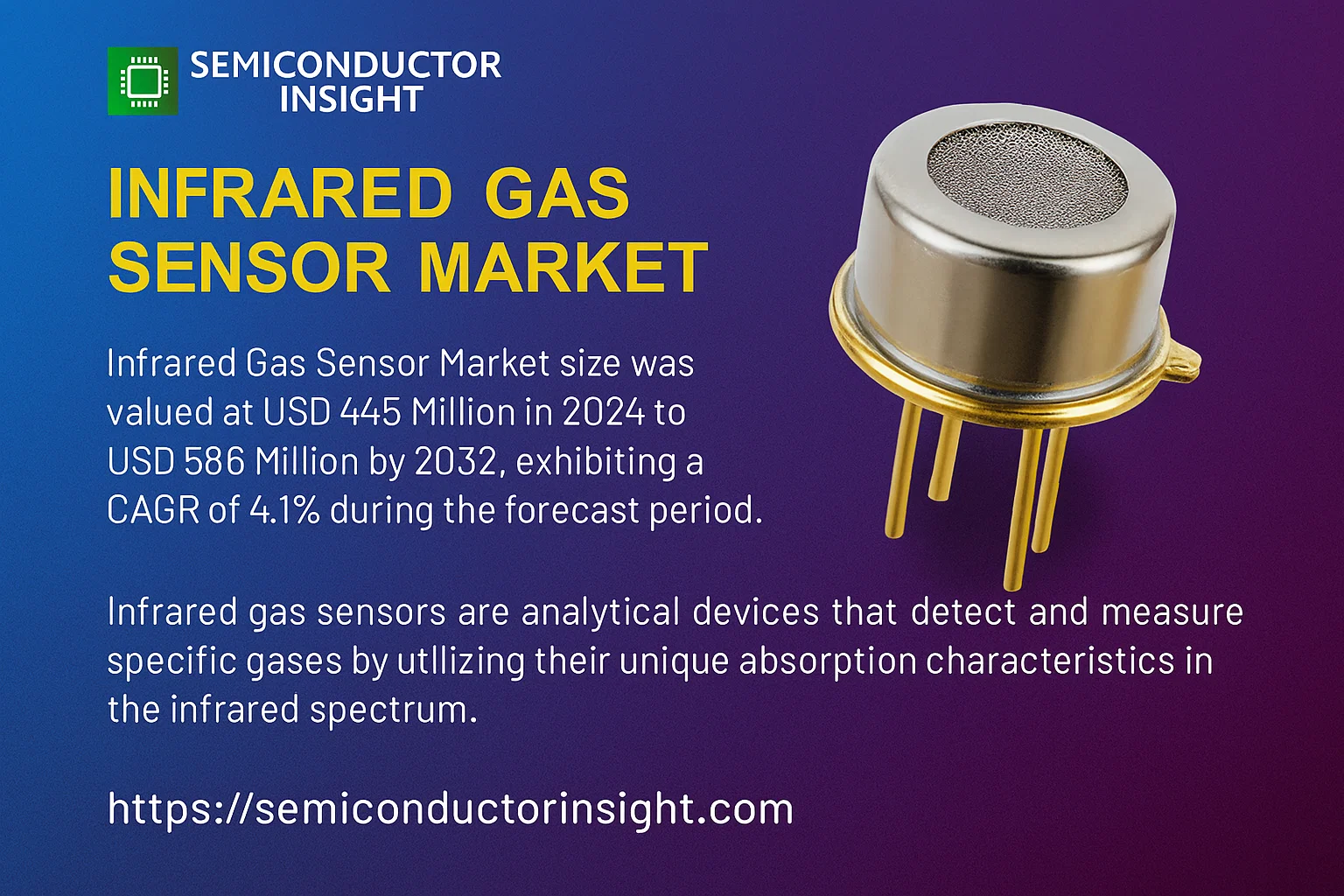
Global Infrared Gas Sensor Market size was valued at USD 445 million in 2024 to USD 586 million by 2032, exhibiting a CAGR of 4.1% during the forecast period.
Infrared gas sensors are analytical devices that detect and measure specific gases by utilizing their unique absorption characteristics in the infrared spectrum. These sensors operate on the principle of non-dispersive infrared (NDIR) technology, where gas molecules absorb light at specific wavelengths, allowing for highly selective and stable detection without being consumed in the process. Common applications include monitoring for carbon dioxide (CO2), methane, and various combustible gases.
The market growth is primarily driven by stringent government regulations for workplace safety and environmental monitoring, alongside increasing adoption in smart buildings for indoor air quality control. Furthermore, the expansion of the oil & gas industry and the growing demand for HVAC systems contribute significantly to market expansion. Initiatives by key players are also expected to fuel the market growth. For instance, companies are continuously investing in miniaturization and developing low-power consumption sensors for integration into IoT devices and portable instruments. Alphasense, City Technology Ltd (a Honeywell company), Drager, and Senseair (an Asahi Kasei Microdevices company) are some of the key players that operate in the market with a wide range of portfolios.
MARKET DRIVERS
Stringent Environmental and Safety Regulations
The implementation of stringent global environmental regulations, particularly those targeting emissions from industrial processes and vehicles, is a primary driver for the Infrared Gas Sensor Market. Governments worldwide are enforcing stricter air quality standards, necessitating continuous monitoring of gases like carbon dioxide (CO2), methane (CH4), and hydrocarbons. Industries such as oil & gas, chemicals, and manufacturing are mandated to install advanced detection systems, fueling demand for reliable infrared (IR) sensors due to their high accuracy and selectivity.
Technological Advancements and Miniaturization
Continuous innovation in IR sensor technology, including the development of Non-Dispersive Infrared (NDIR) sensors and the miniaturization of components, is significantly boosting market growth. These advancements have led to sensors that are more compact, energy-efficient, and cost-effective, expanding their applicability into new areas like portable gas detectors, smart HVAC systems, and consumer electronics. Enhanced signal processing algorithms have also improved detection limits and reliability.
Furthermore, the growing adoption of Industrial IoT (IIoT) and smart building automation is creating a robust demand for integrated gas sensing solutions. Infrared sensors are crucial for monitoring indoor air quality (IAQ) and detecting combustible or toxic gases in real-time, ensuring occupant safety and operational efficiency.
MARKET CHALLENGES
High Initial Cost and Competition
A significant challenge facing the Infrared Gas Sensor Market is the relatively high initial cost compared to other sensing technologies like electrochemical or catalytic bead sensors. This can be a barrier to adoption, particularly for small and medium-sized enterprises or in price-sensitive consumer applications. Additionally, the market faces intense competition from established and emerging sensor technologies that offer lower-cost alternatives for basic detection needs.
Other Challenges
Sensor Calibration and Maintenance
Infrared gas sensors require periodic calibration to maintain accuracy, which adds to the total cost of ownership. This need for regular maintenance can be a operational hurdle in remote or difficult-to-access installations.
Environmental Interferences
While highly selective, certain environmental conditions, such as high humidity or the presence of background gases with overlapping infrared absorption bands, can potentially interfere with the accuracy of IR sensors, posing a challenge for their use in complex atmospheres.
MARKET RESTRAINTS
Economic Volatility and Supply Chain Constraints
Economic downturns and fluctuations in key end-use industries, such as oil & gas and manufacturing, can lead to reduced capital expenditure on safety and monitoring equipment, thereby restraining market growth. Furthermore, the market is susceptible to disruptions in the global supply chain for critical components like infrared light sources and detectors, which can lead to production delays and increased costs.
Limitations in Detecting Certain Gases
A fundamental restraint for infrared gas sensors is their inherent limitation in detecting diatomic gases (like oxygen, O2, and nitrogen, N2) and monatomic gases (like argon, Ar), which do not absorb infrared radiation. This restricts their application spectrum, requiring the use of complementary sensing technologies for comprehensive gas analysis.
MARKET OPPORTUNITIES
Expansion in Emerging Economies and New Applications
Rapid industrialization and increasing investments in infrastructure development across emerging economies in Asia-Pacific and Latin America present significant growth opportunities. The rising awareness of workplace safety and environmental protection in these regions is driving the adoption of advanced gas detection systems, including IR sensors.
Integration with AI and Smart Cities
The integration of infrared gas sensors with Artificial Intelligence (AI) and data analytics platforms opens up new opportunities for predictive maintenance and smart city applications. These systems can analyze gas concentration data to predict leakages in urban gas distribution networks or optimize air quality management in real-time, creating a growing market for intelligent sensing solutions.
Growing Demand in Healthcare and Life Sciences
There is increasing utilization of infrared gas sensors in medical devices for applications such as capnography (monitoring CO2 in呼吸) and anesthetic gas monitoring. The expansion of the healthcare sector and the development of point-of-care diagnostic tools are expected to create a sustained demand for highly accurate and miniaturized IR sensors.
Infrared Gas Sensor Market Trends
Sustained Market Expansion and Regional Dominance
Global Infrared Gas Sensor market is on a consistent growth trajectory, valued at USD 445 million in 2024 and projected to reach USD 586 million by 2032, representing a Compound Annual Growth Rate (CAGR) of 4.1%. This expansion is underpinned by increasing regulatory requirements for safety and environmental monitoring across industrial and residential sectors. A key regional trend is the dominance of Europe, which holds the largest market share of approximately 43%, largely driven by stringent industrial safety and emissions regulations. North America follows as the second-largest market, accounting for about 23% of the global share, with demand fueled by the oil and gas industry and building automation standards. The Asia-Pacific region is anticipated to witness accelerated growth due to rapid industrialization and increasing investments in infrastructure.
Other Trends
Technological Standardization and Application Segmentation
A significant trend is the technological consolidation around Non-Dispersive Infrared (NDIR) techniques, which have become the standard for commercial single-gas sensors due to their reliability and selectivity. The market is clearly segmented by application, with the industrial sector being the primary driver. However, the residential segment is gaining momentum, particularly for CO2 monitoring in smart homes and for indoor air quality control. In terms of gas detection, CO2 sensors represent a major product segment, alongside sensors for combustible gases, highlighting the focus on both safety and environmental applications.
Competitive Landscape and Market Consolidation
The competitive environment is characterized by the presence of established players such as Alphasense, CityTechnology Ltd, Drager, and Senseair. The top three companies collectively occupy about 33% of the market share, indicating a moderately concentrated landscape. Ongoing trends include technological advancements for miniaturization and enhanced sensitivity, as well as strategic mergers and acquisitions aimed at expanding product portfolios and geographic reach. The industry faces challenges related to the need for continuous innovation to meet evolving performance standards and cost pressures, but the persistent demand for reliable gas detection solutions ensures a stable and growing market.
COMPETITIVE LANDSCAPE
Key Industry Players
European Dominance and Strategic Focus on Industrial Safety Drive Market Concentration
Global Infrared (IR) gas sensor market is characterized by a moderate level of concentration, with the top three companies collectively accounting for approximately 33% of the market share. The competitive dynamics are shaped by the technological maturity of Non-Dispersive Infrared (NDIR) techniques, which are the standard for commercial single-gas sensors. A significant feature of the market structure is the strong regional concentration of demand and production, with Europe being the dominant market, holding about 43% of the global share, followed by North America at around 23%. This regional skew influences the strategic focus of leading players, who often have deep roots and strong distribution networks in these key regions. The market leaders, such as Senseair (part of Asahi Kasei Microdevices), Drager, and SGX Sensortech, have established themselves through a combination of robust product portfolios for industrial safety applications, continuous innovation in sensor accuracy and miniaturization, and strategic acquisitions to expand their technological capabilities and geographic reach.
Beyond the market leaders, the competitive landscape includes a significant number of specialized and niche players that cater to specific gas detection needs or application segments. Companies like Dynament excel in providing sensors for combustion control and environmental monitoring, while GSS (Gas Sensing Solutions) is noted for its low-power, solid-state NDIR sensors. Other notable participants, such as Alphasense and City Technology Ltd., are recognized for their expertise in electrochemical sensors but also offer IR-based solutions, particularly for CO2 detection, highlighting the trend of diversified product lines. Numerous other companies, including Mipex, SmartGAS, and Edinburgh Sensors, focus on high-precision analytical instruments or customized solutions for research and specialized industrial processes. This tier of the market is highly competitive, with players competing on factors such as sensor selectivity, power consumption, form factor, and cost-effectiveness for applications ranging from residential air quality monitoring to complex industrial safety systems.
List of Key Infrared Gas Sensor Companies Profiled
- Alphasense
- City Technology Ltd
- Drager
- GSS (Gas Sensing Solutions)
- GE
- Senseair
- Dynament
- SGX Sensortech (IS)
- SmartGAS
- Mipex
- Clairair
- Heimann
- M-U-T
- Edinburgh Sensors
- Hanwei
- NE Sensor
Segment Analysis:
| Segment Category | Sub-Segments | Key Insights |
| By Type |
|
CO2 Sensors constitute the leading segment, driven by their extensive application in indoor air quality monitoring, HVAC systems, and greenhouses. Their dominance is reinforced by stringent environmental regulations and a growing focus on energy efficiency. Non-Dispersive Infrared (NDIR) technology is the predominant method used in commercial single-gas sensors, offering high selectivity and reliability for detecting carbon dioxide. The “Others” category includes sensors for refrigerant gases and various industrial process gases, showing specialized growth in niche applications. |
| By Application |
|
Industrial applications are the most significant segment, utilizing infrared gas sensors for process control, safety monitoring in hazardous environments, and leak detection. The demand is driven by the need for worker safety and operational efficiency across oil & gas, chemical, and manufacturing sectors. The residential segment is experiencing notable growth, propelled by the integration of sensors into smart home systems for detecting combustible gases and ensuring indoor air quality. Emerging applications in environmental monitoring and commercial building management are also contributing to market expansion. |
| By End User |
|
Oil & Gas Industry is the leading end-user segment, relying heavily on infrared sensors for exploration, production, and refining processes to ensure safety and prevent accidents. The manufacturing sector utilizes these sensors for monitoring industrial emissions and controlling combustion processes. A rapidly growing segment is building automation, where sensors are integrated into HVAC systems for energy management. The healthcare sector is an emerging adopter, using CO2 sensors in medical devices and patient monitoring systems, indicating diversification beyond traditional industrial uses. |
| By Technology |
|
Non-Dispersive Infrared (NDIR) is the dominant technology underpinning commercially available single-gas sensors due to its proven reliability, cost-effectiveness, and simplicity. This technology utilizes optical filters for wavelength selection and is highly effective for target gases like CO2. While dispersive systems offer high resolution for analytical instruments, they are less common in standard sensor applications. Tunable Diode Laser Absorption Spectroscopy (TDLAS) represents an advanced segment with superior sensitivity and selectivity, finding use in demanding applications requiring precise measurement of low gas concentrations. |
| By Detection Range |
|
Medium Range Detection sensors represent the leading segment, catering to the broadest set of applications including industrial safety and environmental monitoring where gas concentrations typically fall within predictable thresholds. Low range detection is critical for applications demanding high precision, such as indoor air quality monitoring and medical uses, where even minor fluctuations are significant. High range detection is specialized for environments with potentially explosive levels of combustible gases or high-concentration process streams, serving critical safety roles in the oil & gas and chemical industries, though constituting a more niche market. |
Regional Analysis: Infrared Gas Sensor Market
The market is heavily influenced by stringent mandates from agencies like OSHA and the EPA, which enforce strict exposure limits and emission monitoring requirements. This regulatory environment compels industries to adopt highly accurate infrared sensors to ensure compliance, worker safety, and avoid significant penalties, creating a consistent, non-cyclical demand for advanced gas detection solutions across the region.
Key sectors such as oil & gas, chemical manufacturing, and pharmaceuticals demonstrate a high propensity for integrating infrared sensors into their safety and process control systems. The preference is for NDIR technology due to its reliability in harsh environments and ability to detect specific gases without interference, which is critical for protecting assets and ensuring uninterrupted, safe industrial operations.
A strong ecosystem of sensor manufacturers and tech companies fuels continuous innovation, focusing on enhancing sensor sensitivity, reducing power consumption, and developing miniaturized form factors. There is a significant trend toward integrating IR sensors with wireless networks and IoT platforms, enabling real-time data analytics, predictive maintenance, and centralized monitoring for smarter facility management.
Beyond industrial safety, there is growing application in environmental monitoring, driven by climate change initiatives. Infrared sensors are increasingly deployed to track greenhouse gas emissions from industrial sites and urban areas. This expanding application area, supported by public and private investment, represents a significant growth vector for the regional market.
Europe
Europe represents a highly significant and technologically advanced market for infrared gas sensors, characterized by some of the world’s most rigorous environmental and industrial safety standards. The region’s strong regulatory framework, including directives from the European Union, mandates continuous emission monitoring and strict control of hazardous gases, creating a robust foundation for market demand. Countries like Germany, the UK, and France are key contributors, with their strong manufacturing, automotive, and chemical industries requiring precise gas detection. The European market is also at the forefront of adopting green technologies, leading to increased use of IR sensors in renewable energy applications, such as biogas production and carbon capture utilization and storage (CCUS) projects. The focus on energy efficiency and reducing the carbon footprint across various sectors further propels the need for accurate and reliable monitoring solutions.
Asia-Pacific
The Asia-Pacific region is the fastest-growing market for infrared gas sensors, fueled by rapid industrialization, urbanization, and increasing governmental focus on occupational health and environmental protection. Nations like China, Japan, South Korea, and India are major growth engines, with expanding manufacturing bases, oil refineries, and chemical plants. While the market is growing from a relatively lower base of stringent regulations compared to the West, there is a clear and accelerating trend toward implementing stricter safety and emission standards. The cost-effectiveness of IR sensors compared to traditional methods is a key adoption driver. Additionally, growing investments in smart city projects and infrastructure development across the region are opening new avenues for air quality monitoring and industrial safety applications, promising sustained long-term growth.
South America
The Infrared Gas Sensor Market in South America is developing, with growth primarily driven by the region’s substantial oil, gas, and mining industries. Countries such as Brazil and Chile are key markets where safety concerns in extraction and processing activities are paramount. The adoption of advanced sensing technologies is gradually increasing as companies seek to improve operational safety and meet evolving, though often less stringent, regulatory requirements. Market growth is somewhat constrained by economic volatility and slower regulatory implementation compared to North America or Europe. However, the potential for expansion remains significant, particularly as environmental awareness rises and international standards exert greater influence on local industrial practices, creating opportunities for market penetration.
Middle East & Africa
The Middle East & Africa region presents a market with distinct dynamics, heavily influenced by the vast oil and gas sector, especially in Gulf Cooperation Council (GCC) countries. The primary driver is the critical need for safety in hydrocarbon processing, transportation, and refining facilities. While the market is established in these energy-rich nations, adoption in other parts of Africa is more nascent, hindered by economic challenges and less developed regulatory frameworks. There is a growing recognition of the importance of gas detection for industrial safety, which is gradually spurring demand. The market potential is considerable, particularly as infrastructure development progresses and as regions outside the key oil-producing areas begin to prioritize industrial and environmental safety standards.
Report Scope
This market research report provides a comprehensive analysis of the Infrared Gas Sensor Market , covering the forecast period 2025–2032. It offers detailed insights into market dynamics, technological advancements, competitive landscape, and key trends shaping the industry.
Key focus areas of the report include:
- Market Overview: The report begins with an overview outlining its current market scenario, key growth indicators, and industry transformation drivers. It discusses macroeconomic factors, demand–supply balance, regulatory landscape, and the strategic role of semiconductors in powering advancements across industries such as automotive, telecommunications, consumer electronics, and industrial automation.
- Market Size & Forecast: Historical data and future projections for revenue, unit shipments, and market value across major regions and segments.
- Segmentation Analysis: Detailed breakdown by product type, technology, application, and end-user industry to identify high-growth segments and investment opportunities.
- Regional Insights: Insights into market performance across North America, Europe, Asia-Pacific, Latin America, and the Middle East & Africa, including country-level analysis where relevant.
- Competitive Landscape: Profiles of leading market participants, including their product offerings, R&D focus, manufacturing capacity, pricing strategies, and recent developments such as mergers, acquisitions, and partnerships.
- Technology Trends & Innovation: Assessment of emerging technologies, integration of AI/IoT, semiconductor design trends, fabrication techniques, and evolving industry standards.
- Market Drivers & Restraints: Evaluation of factors driving market growth along with challenges, supply chain constraints, regulatory issues, and market-entry barriers.
- Stakeholder Insights: Insights for component suppliers, OEMs, system integrators, investors, and policymakers regarding the evolving ecosystem and strategic opportunities.
Primary and secondary research methods are employed, including interviews with industry experts, data from verified sources, and real-time market intelligence to ensure the accuracy and reliability of the insights presented.
FREQUENTLY ASKED QUESTIONS:
What is the current market size of Infrared Gas Sensor Market?
-> Global Infrared Gas Sensor Market was valued at USD 445 million in 2024 and is projected to reach USD 586 million by 2032, exhibiting a CAGR of 4.1% during the forecast period.
Which key companies operate in Infrared Gas Sensor Market?
-> Key players include Alphasense, CityTechnology Ltd, Drager, GSS, GE, Senseair, Dynament, SGX Sensortech (IS), SmartGAS, Mipex, Clairair, Heimann, M-U-T, Edinburgh Sensors, Hanwei, and NE Sensor, among others. The top 3 companies occupied about 33% market share.
What are the key growth drivers?
-> Key growth drivers include increasing demand for gas detection in industrial and residential safety applications, technological advancements in NDIR techniques, and stringent regulations for air quality monitoring.
Which region dominates the market?
-> Europe is the largest market with about 43% share, while North America is the second-largest, accounting for about 23% market share.
What are the emerging trends?
-> Emerging trends include the adoption of non-dispersive infrared (NDIR) techniques for commercial single-gas sensors, integration of advanced wavelength selection methods, and miniaturization of sensor technology.

Get Sample Report PDF for Exclusive Insights
Report Sample Includes
- Table of Contents
- List of Tables & Figures
- Charts, Research Methodology, and more...
 Download Sample Report PDF



