Silicon Carbide Coated CVD Base Market Overview
Silicon Carbide Coated CVD Base likely refers to a material or substrate that has undergone a chemical vapor deposition (CVD) process to apply a coating of silicon carbide (SiC).
This report provides a deep insight into the global Silicon Carbide Coated CVD Base market covering all its essential aspects. This ranges from a macro overview of the market to micro details of the market size, competitive landscape, development trend, niche market, key market drivers and challenges, SWOT analysis, value chain analysis, etc.
The analysis helps the reader to shape the competition within the industries and strategies for the competitive environment to enhance the potential profit. Furthermore, it provides a simple framework for evaluating and accessing the position of the business organization. The report structure also focuses on the competitive landscape of the Global Silicon Carbide Coated CVD Base Market, this report introduces in detail the market share, market performance, product situation, operation situation, etc. of the main players, which helps the readers in the industry to identify the main competitors and deeply understand the competition pattern of the market.
In a word, this report is a must-read for industry players, investors, researchers, consultants, business strategists, and all those who have any kind of stake or are planning to foray into the Silicon Carbide Coated CVD Base market in any manner.
Silicon Carbide Coated CVD Base Market Analysis:
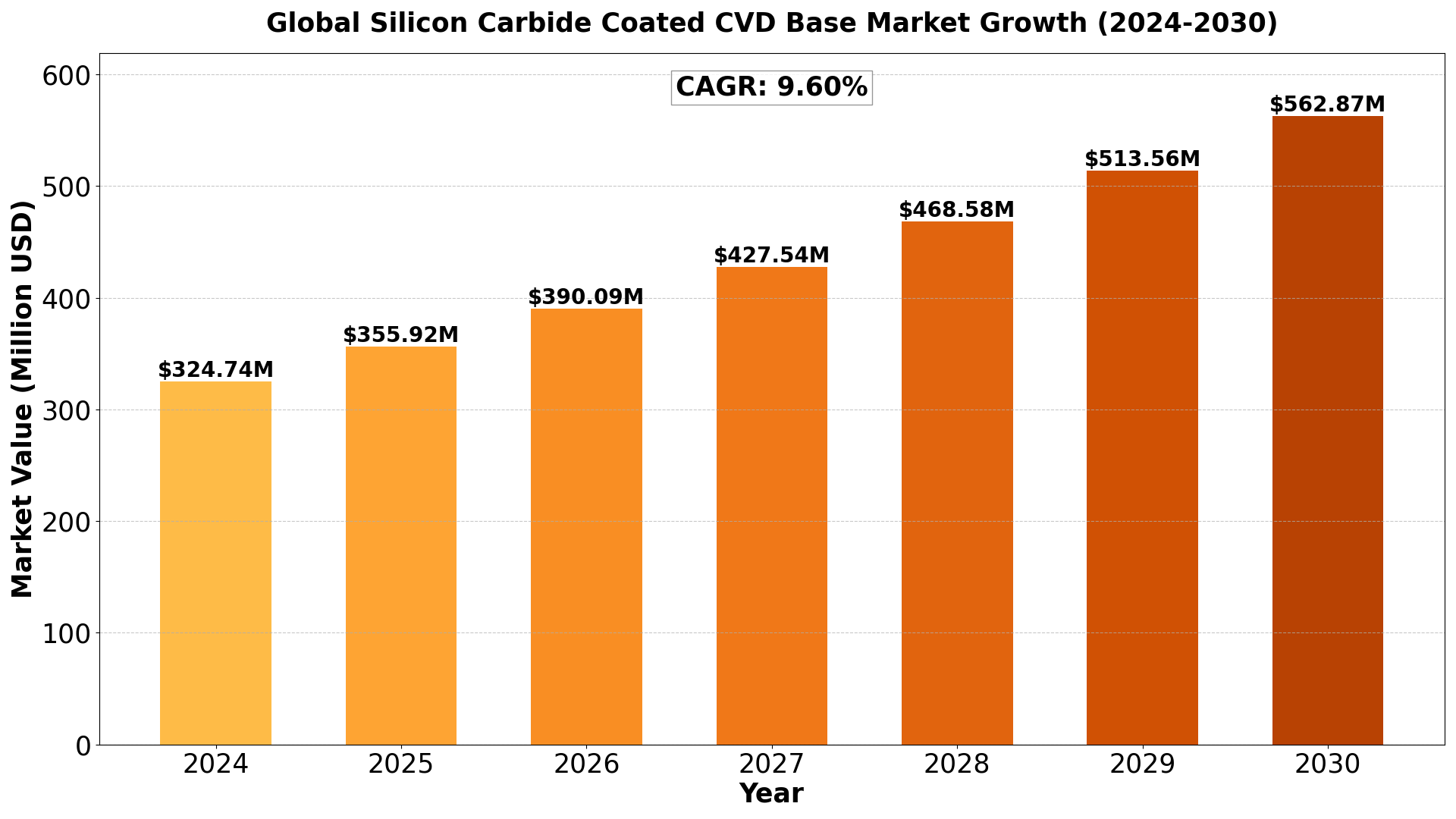
The Global Silicon Carbide Coated CVD Base Market size was estimated at USD 296.30 million in 2023 and is projected to reach USD 562.87 million by 2030, exhibiting a CAGR of 9.60% during the forecast period.
North America Silicon Carbide Coated CVD Base market size was USD 77.21 million in 2023, at a CAGR of 8.23% during the forecast period of 2024 through 2030.
Silicon Carbide Coated CVD Base Key Market Trends :
- Demand for High-Performance Materials: The need for high-performance materials in industries such as semiconductors, aerospace, and energy is increasing, especially for applications requiring high thermal conductivity, low thermal expansion, and resistance to extreme temperatures. SiC-coated CVD bases are ideal for such environments due to their excellent properties.
- Growth of Power Electronics: SiC-coated CVD bases play a crucial role in power electronics for electric vehicles (EVs), renewable energy systems, and industrial automation. The transition to SiC-based power devices, which operate at high voltage, high temperature, and high efficiency, is driving demand for SiC-coated components. These materials ensure better performance and longevity of devices in power conversion systems.
- Aerospace and Defense Applications: In aerospace and defense industries, where materials need to withstand extreme environments and high-stress conditions, SiC-coated CVD bases are increasingly being used for thermal management and structural components. They are also used in high-frequency applications due to their ability to provide high thermal stability and low loss.
- Automotive Industry (Electric Vehicles): With the rise in electric vehicle adoption, the demand for high-efficiency power electronics has surged. SiC-coated CVD bases are critical for the inverters, battery management systems, and chargers in EVs. These materials allow for higher voltage handling and improved performance under high-stress conditions, which are essential for EV components.
- Advanced Manufacturing and Semiconductor Industry: The semiconductor industry is also a significant contributor to the growth of the SiC-coated CVD base market, as they are used in the production of semiconductor wafers and high-performance electronic components that require stable and high-quality deposition materials. The growing need for advanced semiconductor fabrication techniques is increasing demand for high-quality SiC-coated CVD bases.
Silicon Carbide Coated CVD Base Market Regional Analysis :
-
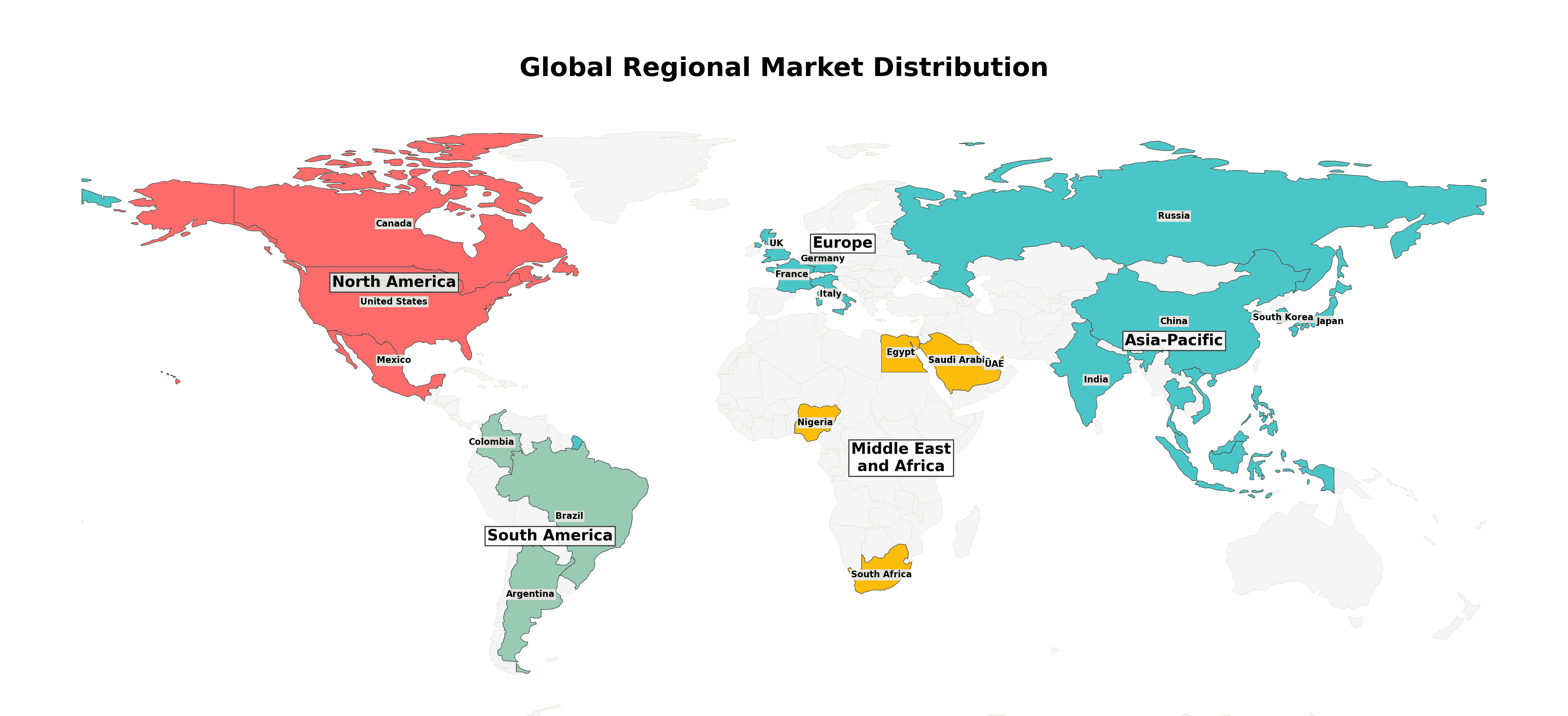
North America:
Strong demand driven by EVs, 5G infrastructure, and renewable energy, with the U.S. leading the market.
-
Europe:
Growth fueled by automotive electrification, renewable energy, and strong regulatory support, with Germany as a key player.
-
Asia-Pacific:
Dominates the market due to large-scale manufacturing in China and Japan, with growing demand from EVs, 5G, and semiconductors.
-
South America:
Emerging market, driven by renewable energy and EV adoption, with Brazil leading growth.
-
Middle East & Africa:
Gradual growth, mainly due to investments in renewable energy and EV infrastructure, with Saudi Arabia and UAE as key contributors.
Silicon Carbide Coated CVD Base Market Segmentation :
The research report includes specific segments by region (country), manufacturers, Type, and Application. Market segmentation creates subsets of a market based on product type, end-user or application, Geographic, and other factors. By understanding the market segments, the decision-maker can leverage this targeting in the product, sales, and marketing strategies. Market segments can power your product development cycles by informing how you create product offerings for different segments.
Key Company
- Momentive Technologies
- Tokai Carbon
- TOYO TANSO
- SGL Carbon
- Ningbo Hiper
- Hunan Xingsheng
- LIUFANG TECH
- Mersen
- Bay Carbon
- CoorsTek
- Schunk Xycarb Technology
- ZhiCheng Semiconductor
Market Segmentation (by Type)
- Layer Thickness: 80 90 µm
- Layer Thickness: 90 100 µm
Market Segmentation (by Application)
- SiC Single Crystal Growth
- MOCVD
- SiC & Si Epitaxy
- Others
Drivers
- Growing Demand for Power Electronics: The rise in demand for power electronic devices, especially in sectors like electric vehicles (EVs), renewable energy (solar and wind), and industrial automation, is driving the need for high-performance materials. SiC-coated CVD base materials are widely used in power electronics for their excellent thermal conductivity, low switching losses, and ability to operate at higher temperatures compared to traditional silicon. As these sectors continue to grow, the demand for SiC-coated components will increase, thereby driving the market for SiC-coated CVD bases.
- Electric Vehicle (EV) Adoption: The global push towards electric vehicles is a major driver for the SiC-coated CVD base market. SiC is critical in the powertrain systems of EVs due to its superior thermal performance and high voltage tolerance, which improves efficiency, reduces energy losses, and enables faster charging. As automakers adopt SiC-based power semiconductors for EV drivetrains, the demand for SiC-coated components, including CVD-based substrates, is expected to grow rapidly. EV manufacturers need SiC-coated components to produce high-efficiency power modules that are critical to the performance of the vehicle.
- Advancements in Semiconductor Technology: As semiconductor technology evolves, there is an increasing focus on improving the performance of components for high-power and high-frequency applications. SiC-coated CVD substrates are used to create advanced semiconductors, particularly for high-voltage and high-frequency applications. SiC’s ability to handle high power densities and operate under extreme conditions makes it an attractive material for next-generation semiconductor devices. This technological shift is contributing to the growth of the SiC-coated CVD base market.
Restraints
- High Cost of SiC Materials: One of the main challenges limiting the widespread adoption of SiC-coated components is the high cost of silicon carbide materials. SiC is more expensive than traditional silicon and requires more sophisticated processing techniques, such as CVD. These high material costs can make SiC-coated CVD bases prohibitively expensive for certain applications, especially in cost-sensitive industries.
- Complexity of Manufacturing Process: The process of coating substrates with SiC using CVD is complex and requires specialized equipment and expertise. This complexity can increase production times and costs, which may deter some manufacturers from adopting SiC-coated components. The precision required in the CVD process to achieve uniform coatings can also pose challenges, making it difficult to scale up production in some instances.
- Limited Availability of High-Quality Substrates: While SiC is a high-performance material, obtaining high-quality substrates suitable for CVD coating can be a challenge. SiC is more brittle than other materials, making it harder to manufacture high-quality wafers. This limitation can restrict the availability of substrates for CVD-based coatings and affect the overall production of SiC-coated components.
Opportunities
- Emerging Applications in 5G Technology: The rollout of 5G technology is creating new opportunities for SiC-coated components. SiC is increasingly used in high-frequency power electronics for communication systems due to its ability to handle high voltages and frequencies. As 5G infrastructure grows, the demand for SiC-based components, including those made from SiC-coated CVD bases, will increase, offering significant market opportunities.
- Growth in Renewable Energy Sector: The renewable energy sector, including solar power and wind energy, is increasingly adopting SiC-based power electronics to improve efficiency and reduce energy losses in power conversion systems. SiC-coated CVD substrates are used to manufacture power semiconductors for inverters and other power conversion equipment, making them a critical part of renewable energy infrastructure. As the renewable energy market expands, so too will the demand for SiC-coated CVD base components.
- Advancements in CVD Equipment and Processes: Ongoing advancements in CVD equipment and processes are improving the efficiency, precision, and cost-effectiveness of SiC coating technologies. Innovations such as high-throughput CVD systems, enhanced deposition techniques, and better control over the coating process are reducing production costs and improving yields. These advancements will help make SiC-coated components more accessible to a broader range of industries, further driving market growth.
Challenges
- Material Defects and Quality Control: Achieving consistent and defect-free SiC coatings during the CVD process remains a challenge. Variability in the quality of SiC coatings can impact the performance and reliability of the final product. Manufacturers must invest in advanced quality control and process monitoring technologies to ensure that the coatings meet the required specifications.
- Scalability of Production: Scaling up production of SiC-coated CVD components while maintaining high quality and precision can be difficult. As demand for SiC-coated components grows, manufacturers will need to invest in scalable manufacturing processes that can handle larger volumes without compromising on the quality of the coating or the underlying substrate. The ability to scale production effectively will be crucial for market growth.
- Environmental Impact and Sustainability Concerns: The CVD process, particularly in the deposition of SiC coatings, can have an environmental impact due to the use of high-energy processes and the generation of chemical byproducts. Manufacturers will need to adopt more sustainable practices to minimize the environmental footprint of SiC-coated CVD base production. Developing greener manufacturing processes and ensuring the sustainability of SiC materials will be essential in meeting environmental regulations and addressing market concerns.
Key Benefits of This Market Research:
- Industry drivers, restraints, and opportunities covered in the study
- Neutral perspective on the market performance
- Recent industry trends and developments
- Competitive landscape & strategies of key players
- Potential & niche segments and regions exhibiting promising growth covered
- Historical, current, and projected market size, in terms of value
- In-depth analysis of the Silicon Carbide Coated CVD Base Market
- Overview of the regional outlook of the Silicon Carbide Coated CVD Base Market:
Key Reasons to Buy this Report:
- Access to date statistics compiled by our researchers. These provide you with historical and forecast data, which is analyzed to tell you why your market is set to change
- This enables you to anticipate market changes to remain ahead of your competitors
- You will be able to copy data from the Excel spreadsheet straight into your marketing plans, business presentations, or other strategic documents
- The concise analysis, clear graph, and table format will enable you to pinpoint the information you require quickly
- Provision of market value (USD Billion) data for each segment and sub-segment
- Indicates the region and segment that is expected to witness the fastest growth as well as to dominate the market
- The current as well as the future market outlook of the industry concerning recent developments which involve growth opportunities and drivers as well as challenges and restraints of both emerging as well as developed regions
- Includes in-depth analysis of the market from various perspectives through Porters five forces analysis
- Provides insight into the market through Value Chain
- Market dynamics scenario, along with growth opportunities of the market in the years to come
- 6-month post-sales analyst support
Customization of the Report
In case of any queries or customization requirements, please connect with our sales team, who will ensure that your requirements are met.
FAQs
Q1. What is the Silicon Carbide Coated CVD Base market?
A1. The Silicon Carbide Coated CVD Base market involves the use of Chemical Vapor Deposition (CVD) technology to apply a coating of silicon carbide (SiC) on base materials. This SiC coating enhances the material’s properties, such as thermal conductivity, mechanical strength, and resistance to corrosion, making it ideal for high-performance applications in industries like semiconductor manufacturing, automotive, aerospace, and power electronics.
Q2. What is the current market size and forecast for the Silicon Carbide Coated CVD Base market until 2030?
A2. The Silicon Carbide Coated CVD Base market size was estimated at USD 296.30 million in 2023 and is projected to reach USD 562.87 million by 2030, exhibiting a CAGR of 9.60% during the forecast period.
Q3. What are the key growth drivers in the Silicon Carbide Coated CVD Base market?
A3. The key growth drivers include the increasing demand for high-performance materials in the semiconductor, power electronics, and automotive industries. Silicon carbide’s superior properties, like high thermal conductivity and resistance to wear and corrosion, are pushing its adoption in applications such as power devices, electric vehicle (EV) components, and semiconductor manufacturing.
Q4. Which regions dominate the Silicon Carbide Coated CVD Base market?
A4. The Asia-Pacific region, particularly China, Japan, and South Korea, is a dominant player in the Silicon Carbide Coated CVD Base market. These countries are key hubs for semiconductor manufacturing and power electronics production. North America and Europe also play significant roles in the market, driven by the increasing adoption of SiC in power electronics and EV technologies.
Q5. What are the emerging trends in the Silicon Carbide Coated CVD Base market?
A5. Emerging trends include advancements in the manufacturing of SiC-coated materials, with improvements in coating techniques to enhance efficiency and reduce costs. Additionally, the increasing adoption of SiC for electric vehicle powertrain components, renewable energy systems, and high-performance semiconductor devices is fueling demand.

Get Sample Report PDF for Exclusive Insights
Report Sample Includes
- Table of Contents
- List of Tables & Figures
- Charts, Research Methodology, and more...
 Download Sample Report PDF