Semiconductor Filter Housing Market Overview
Semiconductor filter housings are usually made of special materials, such as ceramics, metals, etc., which have good high temperature resistance, corrosion resistance and electrical insulation properties. These housing products are designed to provide physical protection and environmental encapsulation to effectively protect semiconductor filters from mechanical shock, moisture, dust and other external factors.
This report provides a deep insight into the global Semiconductor Filter Housing market covering all its essential aspects. This ranges from a macro overview of the market to micro details of the market size, competitive landscape, development trend, niche market, key market drivers and challenges, SWOT analysis, value chain analysis, etc.
The analysis helps the reader to shape the competition within the industries and strategies for the competitive environment to enhance the potential profit. Furthermore, it provides a simple framework for evaluating and accessing the position of the business organization. The report structure also focuses on the competitive landscape of the Global Semiconductor Filter Housing Market, this report introduces in detail the market share, market performance, product situation, operation situation, etc. of the main players, which helps the readers in the industry to identify the main competitors and deeply understand the competition pattern of the market.
In a word, this report is a must-read for industry players, investors, researchers, consultants, business strategists, and all those who have any kind of stake or are planning to foray into the Semiconductor Filter Housing market in any manner.
Semiconductor Filter Housing Market Analysis:
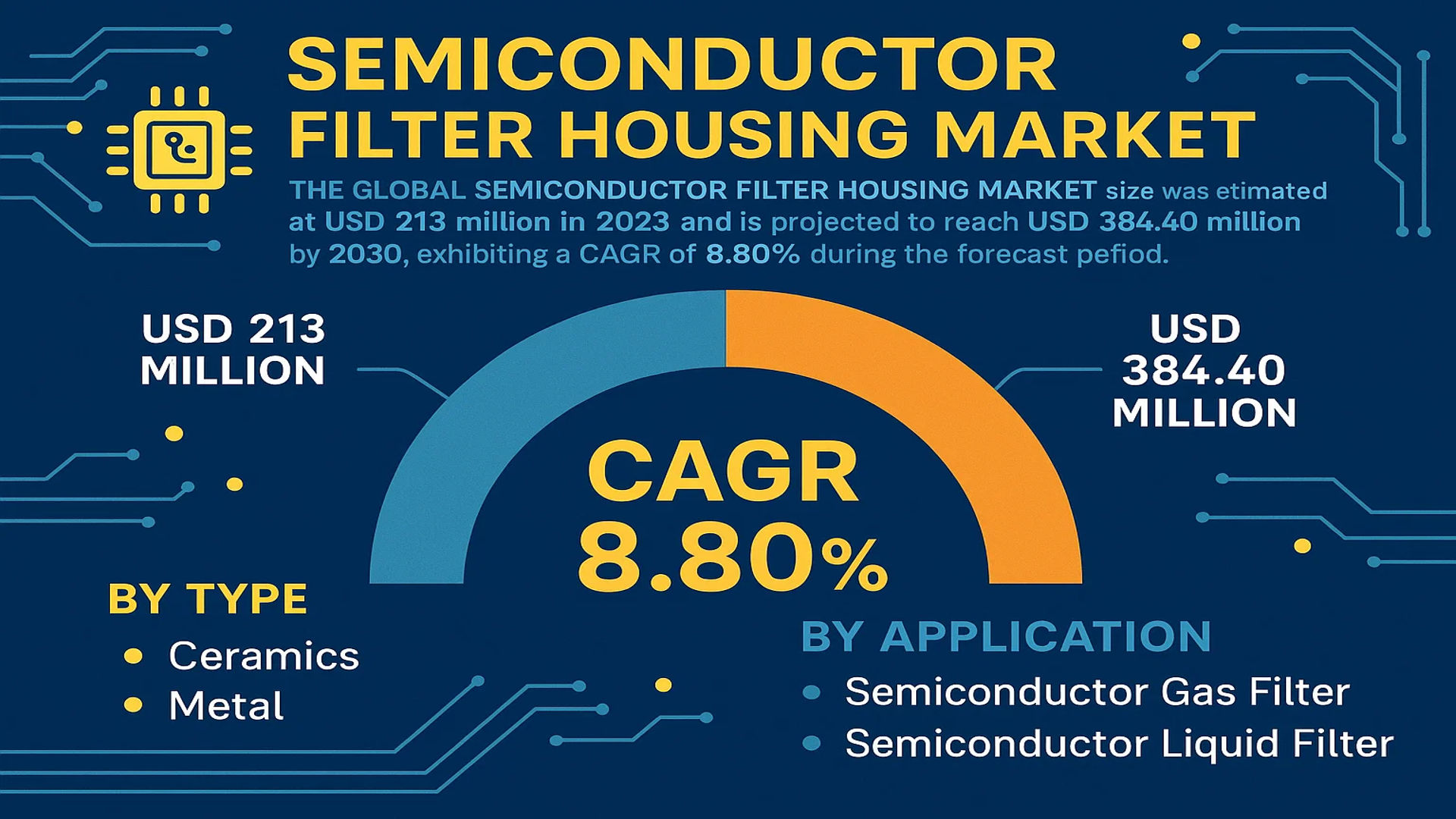
The Global Semiconductor Filter Housing Market size was estimated at USD 213 million in 2023 and is projected to reach USD 384.40 million by 2030, exhibiting a CAGR of 8.80% during the forecast period.
North America Semiconductor Filter Housing market size was USD 55.50 million in 2023, at a CAGR of 7.54% during the forecast period of 2024 through 2030.
Access Your Free Sample Report Now
Semiconductor Filter Housing Key Market Trends :
1. Rising Demand for Clean and Contamination-Free Environments
- The increasing complexity and miniaturization of semiconductor devices have heightened the need for contamination control during the manufacturing process. Semiconductor fabs require ultra-clean environments, where even microscopic particles can lead to defects in the chips.
- Semiconductor filter housings are critical for ensuring that process gases, chemicals, and liquids remain free of contaminants. As demand for advanced semiconductor devices (e.g., in 5G, AI, and automotive electronics) grows, the need for efficient filtration systems will increase, driving demand for high-performance filter housings.
2. Integration of Advanced Filtration Technologies
- The evolution of filtration technologies is influencing the semiconductor filter housing market. Advanced ultra-low particulate (ULP) filters, membrane filters, and high-efficiency particulate air (HEPA) filters are increasingly used in semiconductor fabrication to remove smaller and finer particles from process flows.
- Filter housings are being designed to accommodate these advanced filtration technologies, with an emphasis on higher filtration efficiency, temperature resistance, and chemical compatibility to meet the increasingly stringent standards of semiconductor manufacturing.
3. Focus on Increased Durability and Compatibility
- Semiconductor filter housings are being designed for enhanced durability and chemical resistance to withstand the harsh environments within semiconductor fabs. These materials must be able to resist aggressive chemicals, high temperatures, and extreme pressures often encountered in wet etching, deposition, and cleaning processes.
- Stainless steel and advanced polymer materials are increasingly being used in filter housing construction for their corrosion resistance and strength, which ensures long-lasting performance in critical semiconductor applications.
4. Demand for Customization and Modular Systems
- The diversification of semiconductor manufacturing processes and the growing complexity of fab layouts have led to an increasing demand for customized filter housing solutions.
- Manufacturers are offering modular systems and custom-built filter housings that can be tailored to meet the specific needs of different semiconductor processes. This allows semiconductor manufacturers to optimize filtration efficiency, space utilization, and process integration, driving the trend toward bespoke filter housing solutions.
5. Growing Focus on Sustainability and Eco-Friendly Solutions
- Sustainability is becoming an important consideration in the semiconductor industry, as there is a growing push for environmentally friendly practices and the reduction of waste.
- The semiconductor filter housing market is responding to these demands with innovations in recyclable materials, energy-efficient designs, and reduced emissions in the manufacturing process of filter housings. Additionally, efforts to reduce chemical consumption and enhance the reusability of filters and housings are becoming key drivers in the market.
Semiconductor Filter Housing Market Regional Analysis :
1. North America (USA, Canada, Mexico)
- USA: The largest market in the region due to advanced infrastructure, high disposable income, and technological advancements. Key industries include technology, healthcare, and manufacturing.
- Canada: Strong market potential driven by resource exports, a stable economy, and government initiatives supporting innovation.
- Mexico: A growing economy with strengths in automotive manufacturing, agriculture, and tourism, benefitting from trade agreements like the USMCA.
2. Europe (Germany, UK, France, Russia, Italy, Rest of Europe)
- Germany: The region’s industrial powerhouse with a focus on engineering, automotive, and machinery.
- UK: A hub for financial services, fintech, and pharmaceuticals, though Brexit has altered trade patterns.
- France: Strong in luxury goods, agriculture, and aerospace with significant innovation in renewable energy.
- Russia: Resource-driven economy with strengths in oil, gas, and minerals but geopolitical tensions affect growth.
- Italy: Known for fashion, design, and manufacturing, especially in luxury segments.
- Rest of Europe: Includes smaller yet significant economies like Spain, Netherlands, and Switzerland with strengths in finance, agriculture, and manufacturing.
3. Asia-Pacific (China, Japan, South Korea, India, Southeast Asia, Rest of Asia-Pacific)
- China: The largest market in the region with a focus on technology, manufacturing, and e-commerce. Rapid urbanization and middle-class growth fuel consumption.
- Japan: Technological innovation, particularly in robotics and electronics, drives the economy.
- South Korea: Known for technology, especially in semiconductors and consumer electronics.
- India: Rapidly growing economy with strengths in IT services, agriculture, and pharmaceuticals.
- Southeast Asia: Key markets like Indonesia, Thailand, and Vietnam show growth in manufacturing and tourism.
- Rest of Asia-Pacific: Emerging markets with growing investment in infrastructure and services.
4. South America (Brazil, Argentina, Colombia, Rest of South America)
- Brazil: Largest economy in the region, driven by agriculture, mining, and energy.
- Argentina: Known for agriculture exports and natural resources but faces economic instability.
- Colombia: Growing economy with strengths in oil, coffee, and flowers.
- Rest of South America: Includes Chile and Peru, which have strong mining sectors.
5. The Middle East and Africa (Saudi Arabia, UAE, Egypt, Nigeria, South Africa, Rest of MEA)
- Saudi Arabia: Oil-driven economy undergoing diversification with Vision 2030 initiatives.
- UAE: Financial hub with strengths in tourism, real estate, and trade.
- Egypt: Growing infrastructure development and tourism.
- Nigeria: Largest economy in Africa with strengths in oil and agriculture.
- South Africa: Industrialized economy with strengths in mining and finance.
- Rest of MEA: Includes smaller yet resource-rich markets like Qatar and Kenya with growing infrastructure investments.
Semiconductor Filter Housing Market Segmentation :
The research report includes specific segments by region (country), manufacturers, Type, and Application. Market segmentation creates subsets of a market based on product type, end-user or application, Geographic, and other factors. By understanding the market segments, the decision-maker can leverage this targeting in the product, sales, and marketing strategies. Market segments can power your product development cycles by informing how you create product offerings for different segments.
Market Segmentation (by Type)
- Ceramics
- Metal
- Other
Market Segmentation (by Application)
- Semiconductor Gas Filter
- Semiconductor Liquid Filter
Semiconductor Filter Housing Market Competitive landscape :
- Pall
- Exyte Technology
- YESIANG Enterprise
- Ecopro
- Purafil
- Mott Corporation
- Cobetter Filtration Group
- CoorsTek
- Critical Process Filtration
- Entegris
- Camfil
- Nippon Seisen
- Donaldson Company
- AAF International
- Porvair
Download Your Complimentary Sample Report
Drivers
- Growth of the Semiconductor Industry: The rapid expansion of the semiconductor industry, driven by increasing demand for electronic devices such as smartphones, computers, and automotive systems, directly impacts the need for high-quality filter housing. As semiconductor production becomes more complex, the requirement for protective housing to ensure clean environments grows.
- Technological Advancements in Semiconductor Manufacturing: Advancements in semiconductor technology, such as the trend toward smaller and more powerful chips, require more advanced filtration systems to maintain air purity and minimize contamination. Filter housings designed to meet these new specifications are becoming more important.
- Rising Demand for Cleanroom Environments: The rise in demand for advanced cleanroom technologies in semiconductor fabrication plants drives the need for efficient and effective filtration systems. Filter housings play a critical role in ensuring that these environments maintain the necessary levels of cleanliness, which is essential for semiconductor manufacturing.
- Automotive Electronics and Electric Vehicles (EVs): As the automotive industry embraces electric vehicles and advanced driver assistance systems (ADAS), there is a growing need for semiconductors. This trend is spurring the demand for semiconductor filter housings to ensure clean and safe manufacturing processes.
Restraints
- High Initial Costs: The high upfront cost of semiconductor filter housing systems can be a barrier for smaller manufacturers or companies operating with limited budgets. These high costs can deter adoption, especially when companies are uncertain about the long-term returns on investment.
- Complexity in Customization: The specific requirements of semiconductor fabrication processes often necessitate customized filter housing solutions. Customization can increase costs, lead times, and complexity in production, which can be a challenge for both manufacturers and customers.
- Fluctuations in Raw Material Prices: Semiconductor filter housings are made from high-quality materials, including stainless steel, polymers, and other specialized materials. Fluctuations in the prices of raw materials can lead to unpredictable costs, which may affect the overall market dynamics.
Opportunities
- Growth in Emerging Markets: As countries in Asia-Pacific, Latin America, and Africa invest more in semiconductor manufacturing capabilities, the demand for semiconductor filter housings in these emerging markets is growing. This opens opportunities for manufacturers to expand their reach into new regions and markets.
- Integration with Smart Technologies: With the rise of the Internet of Things (IoT), Industry 4.0, and smart factories, there is an opportunity to integrate smart features such as sensors and real-time monitoring into semiconductor filter housings. These advanced features can help manufacturers improve the efficiency and effectiveness of filtration systems, driving market growth.
- Expansion of the 5G Market: The global rollout of 5G networks is driving a significant increase in semiconductor demand. The high-performance chips required for 5G technology present opportunities for filter housing manufacturers to offer specialized solutions that can meet the higher standards of cleanliness and performance needed in 5G semiconductor production.
- Sustainability and Eco-friendly Solutions: As environmental concerns grow, there is a growing opportunity for companies that provide semiconductor filter housings to develop more sustainable, eco-friendly materials and manufacturing practices. This can attract environmentally conscious customers and align with the broader shift toward sustainability in the semiconductor industry.
Challenges
- Stringent Regulatory Standards: The semiconductor manufacturing industry is subject to stringent regulatory standards regarding contamination control, environmental protection, and worker safety. Filter housing manufacturers must constantly ensure their products meet these evolving regulations, which can add complexity and cost to production processes.
- Technological Challenges in Material Innovation: As semiconductor devices continue to shrink, filter housings must be able to handle increasingly fine particulates and provide higher levels of protection. The development of new materials and technologies to meet these requirements is a significant challenge for the industry.
- Competition and Price Pressure: With the growing number of players in the semiconductor equipment market, there is heightened competition, which can lead to price pressures. Companies must continually innovate and reduce costs to maintain competitiveness while ensuring product quality, which can be a delicate balancing act.
- Supply Chain Disruptions: The semiconductor industry is vulnerable to supply chain disruptions, whether due to geopolitical factors, natural disasters, or pandemics. Such disruptions can impact the availability of raw materials for filter housing production and lead to delays or shortages in meeting customer demands.
Key Benefits of This Market Research:
- Industry drivers, restraints, and opportunities covered in the study
- Neutral perspective on the market performance
- Recent industry trends and developments
- Competitive landscape & strategies of key players
- Potential & niche segments and regions exhibiting promising growth covered
- Historical, current, and projected market size, in terms of value
- In-depth analysis of the Semiconductor Filter Housing Market
- Overview of the regional outlook of the Semiconductor Filter Housing Market:
Key Reasons to Buy this Report:
- Access to date statistics compiled by our researchers. These provide you with historical and forecast data, which is analyzed to tell you why your market is set to change
- This enables you to anticipate market changes to remain ahead of your competitors
- You will be able to copy data from the Excel spreadsheet straight into your marketing plans, business presentations, or other strategic documents
- The concise analysis, clear graph, and table format will enable you to pinpoint the information you require quickly
- Provision of market value (USD Billion) data for each segment and sub-segment
- Indicates the region and segment that is expected to witness the fastest growth as well as to dominate the market
- Analysis by geography highlighting the consumption of the product/service in the region as well as indicating the factors that are affecting the market within each region
- Competitive landscape which incorporates the market ranking of the major players, along with new service/product launches, partnerships, business expansions, and acquisitions in the past five years of companies profiled
- Extensive company profiles comprising of company overview, company insights, product benchmarking, and SWOT analysis for the major market players
- The current as well as the future market outlook of the industry concerning recent developments which involve growth opportunities and drivers as well as challenges and restraints of both emerging as well as developed regions
- Includes in-depth analysis of the market from various perspectives through Porters five forces analysis
- Provides insight into the market through Value Chain
- Market dynamics scenario, along with growth opportunities of the market in the years to come
- 6-month post-sales analyst support
Customization of the Report
In case of any queries or customization requirements, please connect with our sales team, who will ensure that your requirements are met.
FAQs

Get Sample Report PDF for Exclusive Insights
Report Sample Includes
- Table of Contents
- List of Tables & Figures
- Charts, Research Methodology, and more...
 Download Sample Report PDF