
Elevator Seismic Sensor Market Insights
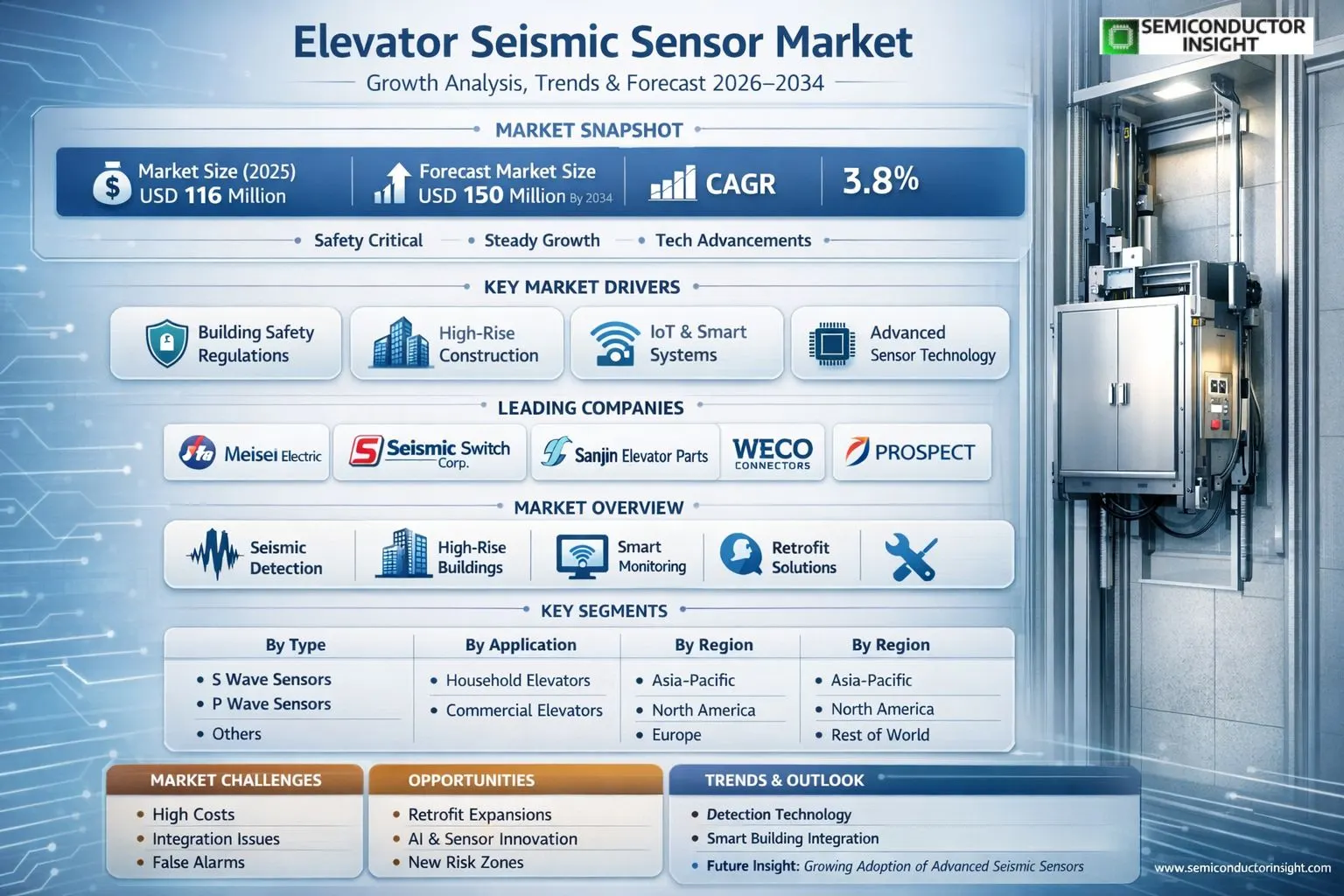
Global elevator seismic sensor market size was valued at USD 116 million in 2025. The market is projected to grow from USD 120.3 million in 2026 to USD 150 million by 2034, exhibiting a CAGR of 3.8% during the forecast period.
An elevator seismic sensor is a crucial safety device installed in elevators designed to detect seismic activities such as earthquakes. These sensors quickly sense ground vibrations, changes in acceleration, velocity, or displacement. Upon detection, they send signals to the elevator control system, which initiates safety protocols like stopping the elevator at the nearest floor and opening the doors to ensure passenger safety. Common types include accelerometer-based sensors, velocity sensors, and displacement sensors.
The market growth is primarily driven by stringent building safety codes in seismically active regions and increasing high-rise construction globally. Furthermore, technological advancements leading to more accurate and faster P-wave detection systems are creating new opportunities. Key industry players are focusing on innovation; for instance, manufacturers are integrating IoT capabilities for real-time monitoring and diagnostics. Leading companies operating in this market include Meisei Electric Co., Ltd., Seismic Switch Corp., Sanjin Elevator Parts Co., Ltd., WECO Electrical Connectors Inc., and PROSPECT Photoelectric Tech Co., Ltd.
MARKET DRIVERS
Stringent Regulatory Mandates and Building Safety Codes
The primary catalyst for Elevator seismic sensor market is Global adoption of stricter building safety codes. Regulatory bodies in seismically active regions, including Japan, California, and New Zealand, now mandate the installation of advanced seismic detection systems in elevator shafts. These regulations are designed to prevent entrapment and ensure safe evacuation during earthquakes, compelling building owners and developers to integrate these sensors as a standard safety feature in both new constructions and retrofit projects.
Rising Urbanization and High-Rise Construction
Global urbanization trends have led to a surge in the construction of skyscrapers and high-rise residential complexes. The safe vertical transportation in these tall structures during seismic events is a critical engineering concern. Consequently, the demand for reliable Elevator Seismic Sensor Market solutions has increased proportionally, as these systems are essential for triggering the automatic shutdown and safe return of elevator cars to a designated landing, protecting passengers and infrastructure.
➤ Technological integration with IoT and smart building management systems represents a significant driver, enabling real-time monitoring, predictive maintenance, and automated emergency response protocols.
The evolution towards smart cities and intelligent buildings further integrates seismic sensors into broader Building Management Systems (BMS). This connectivity allows for centralized monitoring and immediate data sharing with emergency services, enhancing overall building resilience and operational efficiency.
MARKET CHALLENGES
High Initial Investment and Cost Sensitivity
A significant challenge in Elevator seismic sensor market is the high upfront cost associated with advanced sensor systems and their installation, particularly for retrofitting existing elevator banks. In cost-sensitive markets and for older buildings, this can lead to delayed adoption or selection of less sophisticated solutions, potentially compromising safety levels.
Other Challenges
Technical Integration and Standardization Hurdles
Integrating new seismic sensor technologies with diverse, often older, elevator control systems from various manufacturers presents compatibility issues. The lack of universal communication protocols can increase installation complexity and cost.
False Alarm Management
Sensors must be finely calibrated to distinguish between seismic events and non-threatening vibrations from construction or heavy machinery. Reducing false alarms, which cause unnecessary downtime and erode user confidence, is an ongoing technical challenge for manufacturers.
MARKET RESTRAINTS
Limited Awareness and Enforcement in Emerging Economies
Growth in Elevator seismic sensor market is restrained by inconsistent enforcement of safety codes and lower awareness in emerging economies. While seismic risks may be present, the regulatory framework often lags, and budget constraints prioritize basic functionality over advanced safety features, slowing market penetration in these high-growth potential regions.
Economic Volatility Impacting Construction
Macroeconomic downturns and volatility in the construction sector directly impact the market. During periods of reduced construction activity or budget cuts, investments in advanced safety systems like seismic sensors are often deferred or scaled back, acting as a cyclical restraint on market expansion.
MARKET OPPORTUNITIES
Retrofitting of Existing Building Stock
The vast inventory of older buildings, especially in developed seismically active zones, presents a substantial opportunity. As regulations tighten and liability concerns grow, mandatory retrofit programs and incentivized upgrades for existing structures will drive significant demand for modern Elevator Seismic Sensor Market solutions, creating a sustained aftermarket.
Advancements in Sensor Technology and AI
Innovation in micro-electromechanical systems (MEMS) and the application of artificial intelligence for data analytics open new frontiers. The development of cheaper, more accurate, and self-diagnosing sensors that can predict maintenance needs and analyze shock patterns will create premium product segments and drive adoption.
Expansion into New Geographical Risk Zones
Increasing recognition of seismic risks in regions previously considered stable, coupled with new data on fault lines, is expanding the addressable market. This creates opportunities for sensor manufacturers to educate regulators and developers in these new zones, establishing early-mover advantage in emerging markets for elevator safety systems.
Elevator Seismic Sensor Market Trends
Advancements in Detection Technology and Product Segmentation
Elevator seismic sensor market is witnessing a primary trend of continuous technological refinement in sensing mechanisms. Manufacturers are focusing on enhancing the accuracy and response time of devices that detect ground vibrations, acceleration, and displacement. This evolution is critical for ensuring elevator systems can execute safety protocols, such as controlled stopping and door opening, with maximum reliability. The market segmentation by product type, including S Wave and P Wave seismic sensors, reflects a targeted approach to capturing different seismic parameters. Each sensor type is being optimized for specific performance characteristics, addressing the varied architectural and regulatory requirements across global regions.
Other Trends
Regulatory Stringency and Safety Code Adoption
A significant subtopic driving Elevator seismic sensor market is Global increase in stringency of building safety codes, particularly in seismically active zones. Regions prone to earthquakes are mandating the integration of advanced seismic detection systems in new constructions and modernizations. This regulatory push is not just a compliance issue but a fundamental driver for retrofitting existing elevator infrastructures, creating a steady demand stream alongside new installations.
Integration with Smart Building Systems
The trend towards IoT-enabled smart buildings is influencing sensor development. Modern elevator seismic sensors are increasingly designed to communicate seamlessly with centralized building management systems. This integration allows for real-time monitoring, predictive maintenance alerts, and coordinated emergency responses beyond the elevator shaft, enhancing overall occupant safety and building operational intelligence.
Competitive Landscape and Regional Market Development
The competitive environment is characterized by the presence of established players alongside specialized suppliers. Key manufacturers are concentrating on innovation and strategic partnerships to solidify their market positions. Regionally, while developed markets like North America and Japan continue steady adoption due to mature regulations, high-growth potential is observed in the Asia-Pacific region, particularly in China and Southeast Asia. This growth is fueled by rapid urbanization, the construction of high-rise buildings, and the gradual implementation of stringent seismic safety standards in emerging economies.
COMPETITIVE LANDSCAPE
Key Industry Players
A Market Led by Specialized Safety Technology Providers
Global elevator seismic sensor market exhibits a semi-consolidated competitive structure, anchored by a core group of established players specializing in elevator safety components and seismic detection technology. Meisei Electric is recognized as a leading global manufacturer, leveraging its strong reputation and technological expertise in seismic detection, with notable market share concentrated in seismically active regions like Japan and the broader Asia-Pacific market. The competitive landscape is further characterized by companies like Sanjin Elevator Parts and WECO, which have successfully integrated seismic sensors into their broader portfolios of elevator components, securing their positions through established distribution channels and relationships with major elevator OEMs and maintenance providers. The market’s projected growth to US$ 150 million by 2034 is intensifying competition, driving innovation in sensor accuracy, particularly for P-wave detection, and integration with smart building systems.
Beyond the dominant players, several significant niche companies are carving out specialized positions. Firms such as Seismic Switch and ADAMS focus primarily on advanced seismic safety devices, bringing dedicated R&D to enhance sensor sensitivity and reliability. Regional specialists like PROSPECT Photoelectric Tech and E-Feng Machinery command strong domestic presence in the significant Chinese market, which is a key consumption region. Other players, including Toyo Automation, compete through cost-competitive manufacturing and tailored solutions for specific elevator types, such as those used in commercial high-rises versus residential buildings. This tiered market dynamic ensures that while technological leadership from top firms sets standards, competitive pressures on price and regional service continue to influence market share distribution globally.
List of Key Elevator Seismic Sensor Companies Profiled
- Meisei Electric Co., Ltd.
- Seismic Switch Corp.
- Sanjin Elevator Parts Co., Ltd.
- WECO
- PROSPECT Photoelectric Technology Co., Ltd.
- ADAMS Elevator Equipment Ltd.
- E-Feng Machinery & Electric Co., Ltd.
- Toyo Automation Co., Ltd.
- FUKUDA DENSHI CO., LTD
- Mitsubishi Electric Corporation
- Kone Oyj
- CIBES Lift Group
- SICK AG
- Hansford Sensors Ltd.
- Omron Corporation
Segment Analysis:
| Segment Category | Sub-Segments | Key Insights |
| By Type |
|
S Wave Seismic Sensor represents a fundamental and critical technology for immediate earthquake response in elevator safety systems due to its primary role in detecting the more damaging shear waves that cause strong ground shaking.
|
| By Application |
|
Commercial Elevator applications drive the core demand and technological innovation for seismic sensors, given the high passenger volumes and stringent regulatory safety requirements in office buildings, hotels, and shopping centers.
|
| By End User |
|
Elevator Manufacturers (OEMs) are the primary end users, integrating seismic sensors directly into new elevator systems as a standard or premium safety feature, heavily influencing product specifications and adoption rates.
|
| By Technology Integration |
|
Networked & Smart Building Integrated Systems are emerging as the leading edge, offering enhanced safety management and operational intelligence beyond basic seismic detection.
|
| By Detection Methodology |
|
Advanced Signal Analysis & Pattern Recognition methodologies are gaining prominence as they significantly reduce false alarms and improve the discrimination between seismic events and other vibrations.
|
Regional Analysis: Elevator Seismic Sensor Market
Asia-Pacific
Building codes in Japan, New Zealand, and parts of China set stringent global benchmarks for elevator seismic performance, directly accelerating sensor adoption. These are not mere guidelines but enforceable standards critical for project approval, creating a non-negotiable market driver for elevator seismic sensor manufacturers and integrators.
The unprecedented rate of high-rise construction across Southeast Asia and India establishes a vast greenfield market for modern elevator systems. Developers increasingly view integrated seismic safety, powered by sophisticated sensors, as a premium feature and a key component for sustainable, resilient urban infrastructure.
The region is a global center for electronics manufacturing and IoT innovation, facilitating the development of cost-effective and smart sensor solutions. This ecosystem allows for seamless integration of elevator seismic sensor data into broader building management and smart city platforms, enhancing overall operational resilience.
Beyond new construction, a significant market segment involves upgrading existing elevator infrastructure in older buildings to meet contemporary safety codes. This creates a continuous, secondary demand stream for retrofit-compatible elevator seismic sensor systems throughout mature markets like Japan and Australia.
North America
The North American market for elevator seismic sensors is mature and technologically advanced, primarily driven by stringent seismic building codes in high-risk zones such as California, British Columbia, and Alaska. The market is characterized by a focus on high-performance, reliable systems that integrate with complex Building Management Systems (BMS) and adhere to strict certification standards from bodies like the California Division of the State Architect (DSA). Demand is fueled by both commercial real estate in major cities and critical infrastructure projects, including hospitals and government buildings, where operational continuity post-event is paramount. A growing emphasis on smart buildings and predictive maintenance is pushing the adoption of next-generation elevator seismic sensor solutions that offer remote diagnostics and real-time data analytics.
Europe
The European elevator seismic sensor market is defined by a diverse regulatory landscape and varying levels of seismic activity. Southern European nations, particularly Italy, Greece, and Turkey, represent the core demand centers due to their higher seismic risk, prompting rigorous national safety directives for elevator installations. In contrast, Western and Northern European markets focus more on modernization and the adoption of overarching EU machinery safety standards, which increasingly account for seismic resilience in critical lifts. The market sees steady growth from the retrofit of historical buildings and the expansion of urban transit systems, where integrating advanced seismic monitoring in elevator shafts is part of broader infrastructure resilience planning.
South America
The South American elevator seismic sensor market is concentrated in seismically active countries along the Pacific Ring of Fire, notably Chile and Peru. These regions have developed highly specialized building codes informed by significant historical seismic events, creating a mandatory and sophisticated market for safety equipment, including elevator sensors. Growth is tied to mining, commercial, and residential high-rise construction in urban centers. A key regional challenge and opportunity lie in elevating safety standards and sensor adoption in other developing nations with seismic risk, where economic factors and enforcement capabilities directly influence market penetration for elevator seismic sensor technologies.
Middle East & Africa
The market dynamics in the Middle East & Africa region are bifurcated. The Gulf Cooperation Council (GCC) countries, while largely aseismic, are global leaders in super-tall construction and luxury real estate, driving demand for state-of-the-art elevator safety systems, including seismic sensors, as part of premium, globally compliant building packages. In contrast, parts of North Africa and East Africa face genuine seismic hazards but have nascent markets constrained by economic development priorities and evolving regulatory frameworks. The regional elevator seismic sensor market’s long-term growth hinges on infrastructure investment and the gradual formalization of building safety codes that mandate such advanced protective technologies.
Report Scope
This market research report provides a comprehensive analysis of the Elevator Seismic Sensor Market , covering the forecast period 2026–2034. It offers detailed insights into market dynamics, technological advancements, competitive landscape, and key trends shaping the industry.
Key focus areas of the report include:
Key Coverage Areas:
- ✅ Market Overview: Analysis of the current market scenario, key growth indicators, industry drivers, regulatory landscape, technological role, and demand-supply dynamics for passenger safety in buildings.
- ✅ Market Size & Forecast: Historical data and future projections for global market revenue (USD millions) and sales volume (K Units), with precise CAGR calculations and value forecasts through 2034.
- ✅ Segmentation Analysis: Detailed breakdown by Type (S Wave Seismic Sensor, P Wave Seismic Sensor, Others) and by Application (Household Elevator, Commercial Elevator) to identify high-growth segments.
- ✅ Regional Insights: In-depth analysis of market performance across North America, Europe, Asia, South America, and Middle East & Africa, including key country-level markets such as the U.S., China, Japan, and Germany.
- ✅ Competitive Landscape: Profiles of leading manufacturers, including their market share, sales, revenue, product portfolios, recent developments, mergers, acquisitions, and strategic initiatives.
- ✅ Technology Trends & Innovation: Assessment of sensor technologies (accelerometer-based, velocity, displacement), integration with elevator control systems, and evolving safety standards.
- ✅ Market Drivers & Restraints: Evaluation of factors such as safety regulations, urbanization, construction activity, alongside challenges like cost constraints and supply chain issues.
- ✅ Stakeholder Insights: Strategic analysis for sensor manufacturers, elevator OEMs, suppliers, distributors, investors, and policymakers to navigate risks and opportunities.
Primary and secondary research methods are employed, including surveys and interviews with industry experts (manufacturers, suppliers, distributors), and analysis of verified data sources to ensure the accuracy and reliability of the insights presented.
FREQUENTLY ASKED QUESTIONS:
What is the current market size of Elevator Seismic Sensor Market?
-> Global Elevator Seismic Sensor Market was valued at USD 116 million in 2025 and is projected to reach USD 150 million by 2034, growing at a CAGR of 3.8% during the forecast period.
What is an Elevator Seismic Sensor and how does it work?
-> An elevator seismic sensor is a crucial safety device installed in elevators to detect seismic activities like earthquakes. It senses ground vibrations and changes in acceleration, velocity, or displacement, then sends signals to the elevator control system to initiate safety actions, such as stopping at the nearest floor and opening doors to ensure passenger safety.
What are the key segments of Elevator seismic sensor market?
-> The market is segmented by Type into S Wave Seismic Sensor, P Wave Seismic Sensor, and Others. By Application, it is segmented into Household Elevator and Commercial Elevator.
Which key companies operate in Elevator seismic sensor market?
-> Key players include Meisei Electric, Seismic Switch, Sanjin Elevator Parts, WECO, PROSPECT Photoelectric Tech, ADAMS, E-Feng Machinery, and Toyo Automation, among others. In 2025, Global top five players held a significant revenue share.
What is the regional outlook for Elevator seismic sensor market?
-> The market is analyzed across major regions including North America, Europe, Asia, South America, and Middle East & Africa. The U.S. and China are key country-level markets with substantial market sizes estimated for 2025.

Get Sample Report PDF for Exclusive Insights
Report Sample Includes
- Table of Contents
- List of Tables & Figures
- Charts, Research Methodology, and more...
 Download Sample Report PDF






