
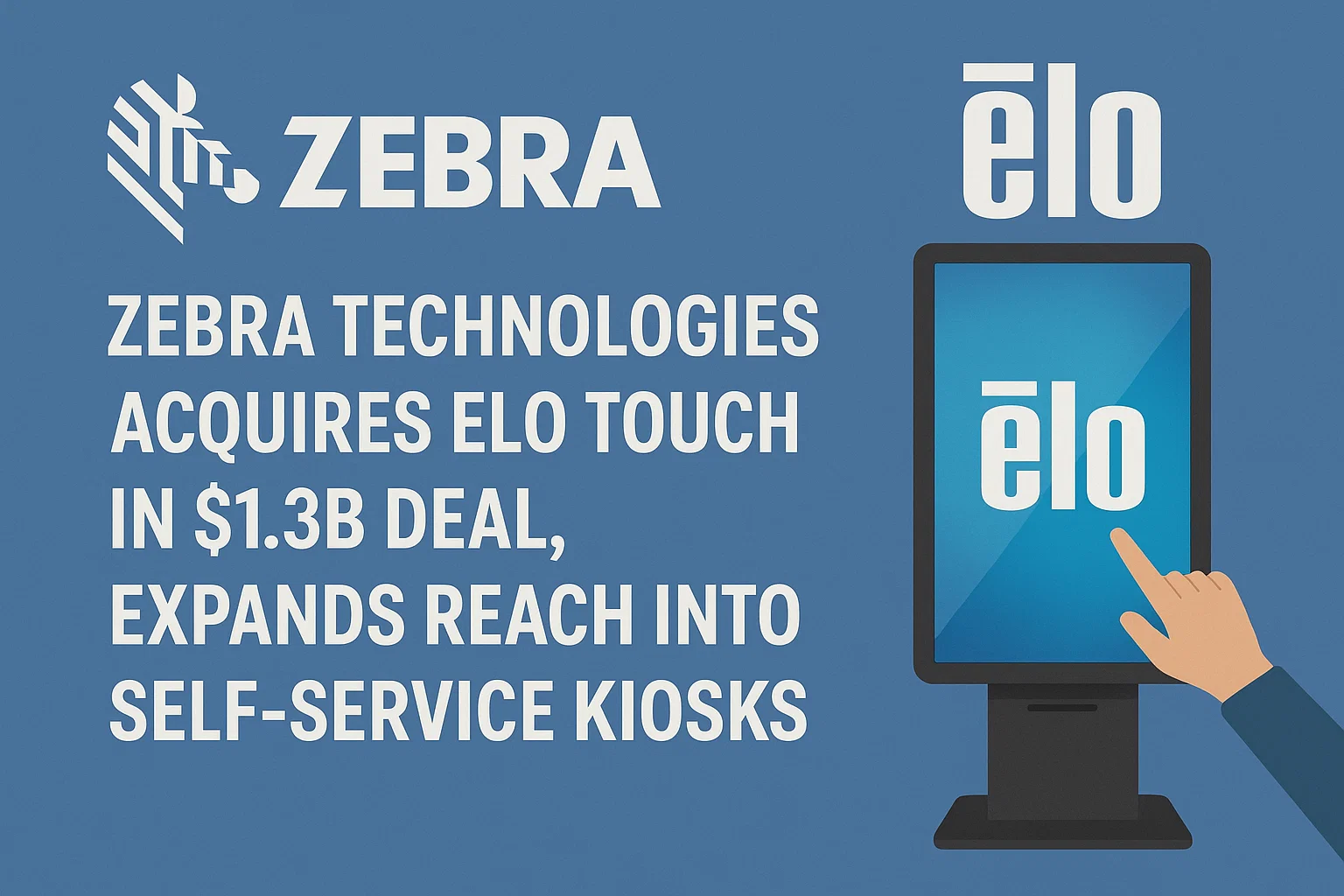
Zebra Technologies Acquires Elo Touch in $1.3B Deal, Expands Reach into Self-Service Kiosks
The way we interact with technology is rapidly evolving, and at the heart of this transformation lies an often-overlooked yet critical component: reader scan engine modules. Whether it’s scanning a boarding pass at an airport, authenticating a ticket at a concert, or automating retail checkout, these modules serve as the backbone of countless industries. They may not grab headlines like artificial intelligence (AI) or cloud computing, but they play an indispensable role in making modern commerce and security seamless.
In 2024, the global reader scan engine modules market was valued at US$ 756 million, and projections indicate that it could grow to US$ 1.2 billion by 2032, reflecting a compound annual growth rate (CAGR) of 6.8% from 2025 to 2032. This steady expansion is being fueled not only by rising adoption in retail, logistics, and healthcare but also by innovations in AI integration, ruggedization, and OEM-ready modules.
Access Your Free Sample Report- Reader Scan Engine Modules Market
Market Overview – The Rise of Scan Engine Modules
What Are Reader Scan Engine Modules?
Reader scan engine modules are the core components inside barcode scanners, kiosks, payment terminals, and access control devices. They enable machines to capture and decode information from barcodes, QR codes, and sometimes optical characters. Unlike consumer-facing scanners, these modules are designed to be embedded into OEM (original equipment manufacturer) products allowing seamless integration into broader systems.
Market Growth Trajectory
- Valuation (2024): US$ 756 million
- Forecast (2032): US$ 1.2 billion
- CAGR (2025–2032):8%
This growth trajectory is driven by several key factors:
- Retail Automation: Rising demand for self-checkout kiosks, mobile POS systems, and contactless experiences.
- Healthcare Digitization: Hospitals and labs increasingly rely on scan engines for medication tracking, patient ID verification, and diagnostic device integration.
- Logistics and Warehousing: With global e-commerce booming, warehouses need faster and more reliable scan technologies.
- Access Control and Security: From office lobbies to stadium gates, scan modules are powering the next generation of secure entry systems.
- AI and IoT Integration: Modules are now being enhanced with intelligence, enabling not just data capture but real-time fraud detection, inventory insights, and anomaly alerts.
Zebra Technologies – A Strategic $1.3 Billion Bet
The Elo Touch Acquisition
In August 2025, Zebra Technologies announced its boldest move in recent years: the acquisition of Elo Touch Solutions for $1.3 billion. While Zebra is already known worldwide as a leader in barcode scanners, mobile computers, and RFID solutions, this acquisition signals a broader strategy.
Elo brings expertise in touchscreens and self-service kiosks, which perfectly complements Zebra’s scan engine portfolio. Together, they create a more comprehensive retail and payment ecosystem from capturing product information with a scan engine to completing transactions on a touchscreen terminal.
Why This Matters for the Market
- Expanded Addressable Market: Zebra estimates this move expands its target market by $8 billion.
- Profit Impact: Expected to generate $25 million in core profit within three years post-acquisition.
- Synergy with Scan Engines: By integrating Elo’s kiosk technology with Zebra’s scanning modules, businesses can deploy end-to-end retail automation solutions.
Broader Implications
Zebra’s deal shows that consolidation is accelerating in this space. With rising demand for unified hardware ecosystems, companies are no longer content to dominate one niche they’re seeking to own the entire customer interaction experience. For scan engines, this means becoming even more embedded in retail transformation strategies.
Datalogic – Bringing AI Into the Checkout Lane
At NRF 2025, Datalogic unveiled some of the most innovative scan engine applications we’ve seen to date. Rather than focusing solely on speed or durability, the company leaned heavily into AI integration a clear sign of where the market is heading.
Key Announcements
- Produce Recognition (Magellan 9900i):
- Automatically identifies fresh produce by appearance.
- Reduces cashier error and fraud in produce sales.
- Ticket Switching Detection (Magellan 9600i):
- Detects mismatched price tags or fraudulent barcodes.
- Helps retailers minimize “shrinkage” losses due to theft or fraud.
- Scan Avoidance Detection (Magellan 9600i):
- Flags items that were deliberately not scanned at checkout.
- Addresses a major loophole in self-checkout security.
- AI Audit Rules for Shopevolution™ 8:
- Uses machine learning to monitor checkout activity.
- Enables real-time alerts for suspicious transactions.
Download Sample Report PDF- Reader Scan Engine Modules Market
Why This Is a Game Changer
Traditional scan engines excel at speed and accuracy, but they do not inherently understand context. By embedding AI, Datalogic is essentially giving scanners the ability to interpret behavior not just data.
This is crucial at a time when retailers face increasing loss-prevention challenges. According to industry studies, self-checkout fraud is a multi-billion-dollar problem worldwide. By tackling it at the scanner level, Datalogic is positioning itself as a pioneer in intelligent scanning.
Honeywell – Raising the Performance Bar
While Zebra and Datalogic are making strategic and AI-driven plays, Honeywell is pushing the envelope on performance and durability.
The N4680 Launch
Honeywell recently introduced its N4680 Series 2D decoded scan engine, which offers:
- High motion tolerance: Up to 6 meters per second at 120 fps.
- Form factor compatibility: Drop-in replacement for the older N3680.
- Expanded symbology support: 1D, 2D, OCR, and more.
- Developer flexibility: Open architecture for custom plug-ins.
Durability at the Core
Honeywell emphasizes that its scan engines are engineered for harsh environments, including:
- Extreme temperatures.
- Dust and vibration.
- Variable lighting conditions.
- Shock and physical stress.
This makes Honeywell’s modules particularly well-suited for industrial automation, outdoor kiosks, and rugged field applications.
Competitive Edge
While AI gets the headlines, durability and high motion tolerance remain must-have attributes for many industries. In fast-paced logistics centers, for example, packages fly down conveyors at high speeds requiring scanners that can keep up without error. Honeywell’s focus ensures it retains relevance in these mission-critical deployments.
OEM Embedded Solutions – Quietly Powering the IoT Revolution
Beyond big-brand headlines, OEM-level scan modules are experiencing growing momentum. Companies specializing in board-level engines provide the building blocks for countless devices:
- Medical equipment for tracking samples and patient IDs.
- Laboratory devices requiring precise, error-free data capture.
- Robotics that rely on barcode vision for navigation and interaction.
- Access control systems at buildings, airports, and events.
By embedding these modules directly into OEM devices, manufacturers can add data integrity, traceability, and IoT connectivity. Importantly, they also enable protection against counterfeit or unauthorized consumables a vital feature in industries like healthcare, where counterfeit drugs or unauthorized cartridges pose real risks.
This segment underscores how scan engines are moving from being external add-ons to becoming core embedded features of intelligent devices.
Industry-Wide Trends & Insights
From these recent developments, several themes emerge:
- AI Everywhere: Datalogic’s announcements show that AI is no longer optional; it’s becoming standard in high-end scanning systems.
- Consolidation and Ecosystems: Zebra’s Elo acquisition highlights the industry’s shift toward end-to-end solution ownership.
- Durability as a Differentiator: Honeywell proves that reliability in extreme conditions remains a competitive edge.
- OEM Integration Rising: Smaller board-level solutions are driving adoption in healthcare, robotics, and IoT.
- Contactless Environments: COVID-19 accelerated demand for self-service and touchless scanning now a permanent fixture.
Click Here To Download Full Sample Report- Reader Scan Engine Modules Market
Market Outlook – What to Expect by 2032
As the market heads toward US$ 1.2 billion by 2032, here’s what we can expect:
- Retail Will Lead Growth: With self-checkout adoption accelerating globally, retail will remain the largest segment.
- Healthcare Will Surge: Diagnostic devices and medication management systems will increasingly rely on embedded scan modules.
- AI-Embedded Engines Will Dominate Premium Segment: Expect more players to follow Datalogic’s lead in fraud prevention and behavior analysis.
- Industrial Applications Will Expand: Honeywell-style rugged modules will remain critical in logistics, manufacturing, and field services.
- OEM Partnerships Will Accelerate: As more devices require barcode vision, OEM-ready modules will see strong demand.
The reader scan engine module industry may not be the flashiest corner of tech, but its impact is profound and far-reaching. From Zebra’s billion-dollar expansion to Datalogic’s AI innovations and Honeywell’s rugged breakthroughs, the sector is rapidly evolving.
Backed by a projected CAGR of 6.8% from 2025 to 2032, the market’s steady growth reflects both its necessity and its adaptability. As AI, IoT, and contactless commerce reshape industries, scan engine modules are emerging as silent enablers of smarter, safer, and more efficient systems.

Comments (0)