
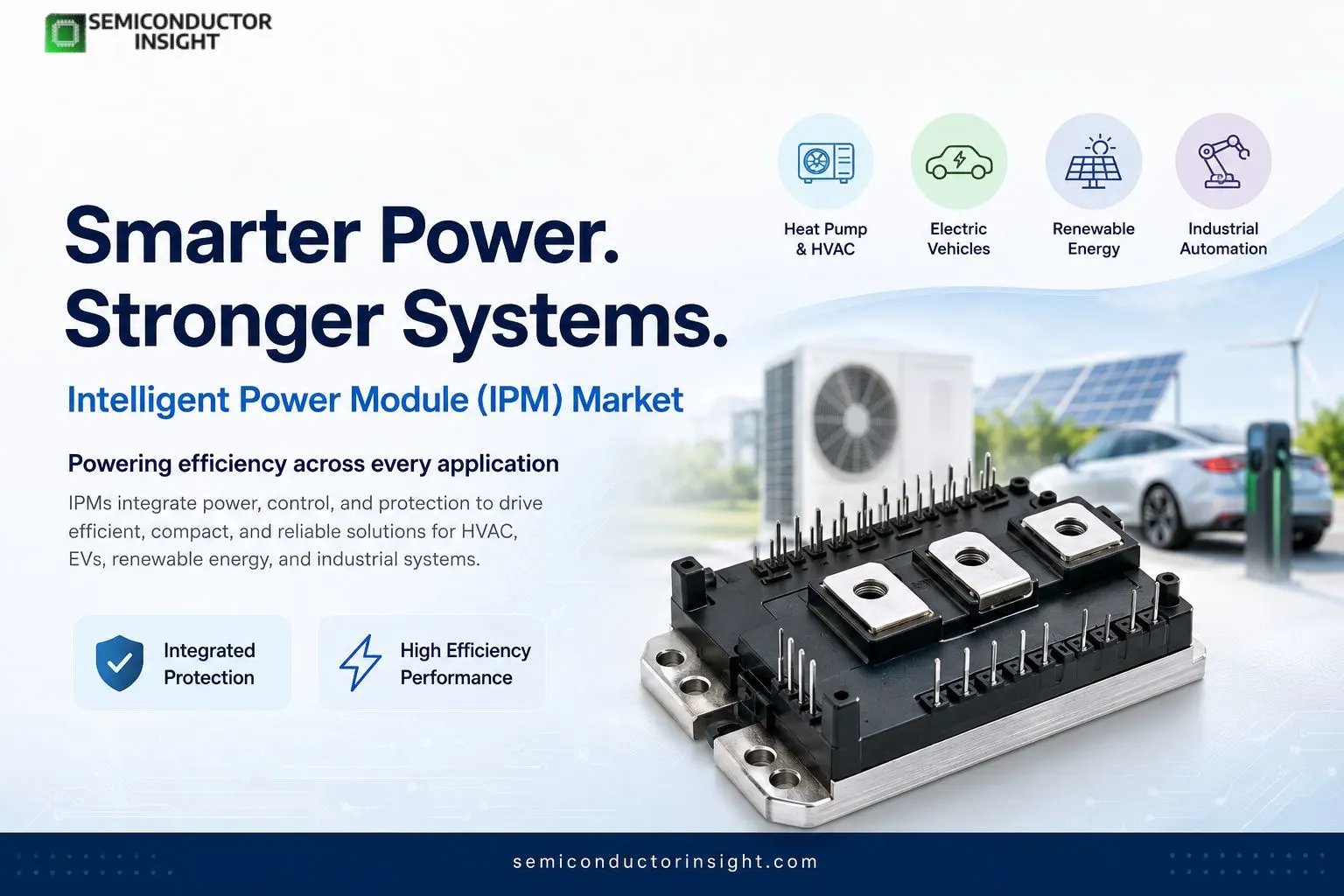
What Makes Intelligent Power Modules Essential for Modern Inverters and Motor Drives in 2026?
Intelligent Power Modules combine power switching devices with gate drivers and protection circuitry into compact packages that simplify the design of motor drives, inverters, and power conversion systems.
These modules handle complex tasks like current sensing, temperature monitoring, and fault protection internally, allowing engineers to focus on system level integration rather than discrete component troubleshooting.
Their use spans household appliances, industrial automation, renewable energy inverters, and electric vehicle traction systems, where reliable power control is non-negotiable.
Role in Heat Pump and HVAC Efficiency Gains
- Heat pumps have seen massive deployment worldwide, with installations projected to climb dramatically toward 2030 according to International Energy Agency tracking.
- IPMs control the inverter driven compressors and fans that enable variable speed operation, cutting energy consumption significantly compared to fixed speed alternatives.
- In practical deployments, systems using these modules achieve around 30 percent lower power draw in cooling modes.
- Manufacturers like onsemi have introduced 1200 V rated modules optimized for three phase inverters, delivering robust thermal performance through advanced substrates that help systems maintain efficiency even during prolonged operation in demanding climates.
Wide Bandgap Adoption in High Power Applications
The transition to silicon carbide and gallium nitride within IPMs marks a notable shift for applications needing higher switching frequencies and lower losses. Government backed projects under the Department of Energy explore high density SiC based intelligent power stages capable of handling over 75 kVA in compact footprints weighing around 5.5 kg.
These designs reach power densities near 11 kW per liter while targeting efficiencies above 99 percent in certain operating points. Prototypes demonstrate bidirectional capabilities useful for vehicle to grid interfaces and energy storage systems, where fast response and minimal heat generation matter greatly.
Protection and Integration Features Enhancing Reliability
Built in diagnostics for overcurrent, undervoltage, and overtemperature conditions help prevent catastrophic failures in the field. This intelligence reduces the need for external circuitry and shortens development timelines for OEMs. In industrial servo drives, for example, modules enable precise control of motors in robotics and CNC machines, supporting higher throughput with less downtime.
- Recent IEEE discussions highlight how these features contribute to overall system robustness in harsh environments like factory floors or outdoor renewable installations.
For More Detailed Insights, You Can Surf Our Latest Sample Report Link Here: https://semiconductorinsight.com/report/intelligent-power-module-ipm-market/
Contributions to Electric Vehicle Powertrains
Traction inverters in battery electric vehicles benefit from IPMs that manage high voltage and current demands while maintaining compact size. SiC variants allow for reduced cooling requirements and extended driving ranges due to lower conduction losses.
Fleet operators and automakers report smoother torque delivery and improved thermal management in real world testing, particularly during highway merging or hill climbs. Ongoing DOE collaborations focus on highly integrated wide bandgap modules that push power density targets essential for next generation platforms aiming for faster charging and lighter overall vehicle weight.
- Industrial and Renewable Energy Deployments
- In solar and wind inverters, IPMs facilitate efficient DC to AC conversion at scale.
- Medium voltage designs using 3.3 kV class modules target applications in data centers and solid state transformers, where ultrafast switching speeds around 250 V per nanosecond support high performance power delivery.
- University and national lab partnerships demonstrate heterogeneous integration techniques that combine commercial devices with custom controls for optimized performance.
- These efforts address growing demands from AI computing infrastructure and modernized electrical grids needing flexible power flow control.
- Material and Packaging Innovations
- Direct bonded copper substrates and improved thermal interfaces help dissipate heat more effectively, allowing higher continuous operation currents.
- Packaging advances reduce parasitic inductances, enabling cleaner switching waveforms and lower electromagnetic interference.
- Engineers working on appliance motors and pumps appreciate the smaller footprints that fit tighter product enclosures while still delivering full protection features.
- Case examples from HVAC retrofits show noticeable reductions in energy bills for commercial buildings after upgrading to inverter systems built around modern IPMs.
Broader System Level Impacts
Across sectors, these modules support the electrification trend by making power electronics more accessible and reliable. From small appliance drives drawing hundreds of watts to multi megawatt industrial converters, the standardized interfaces speed up adoption.
Field data from various installations continues to validate their role in achieving energy efficiency goals set by policymakers worldwide, contributing to lower operational costs and reduced carbon footprints in everything from manufacturing plants to residential heating solutions.

Comments (0)