

Top 5 Major Leading Regions for the Hardware Security Modules Market as Digital Identity Protection Accelerates
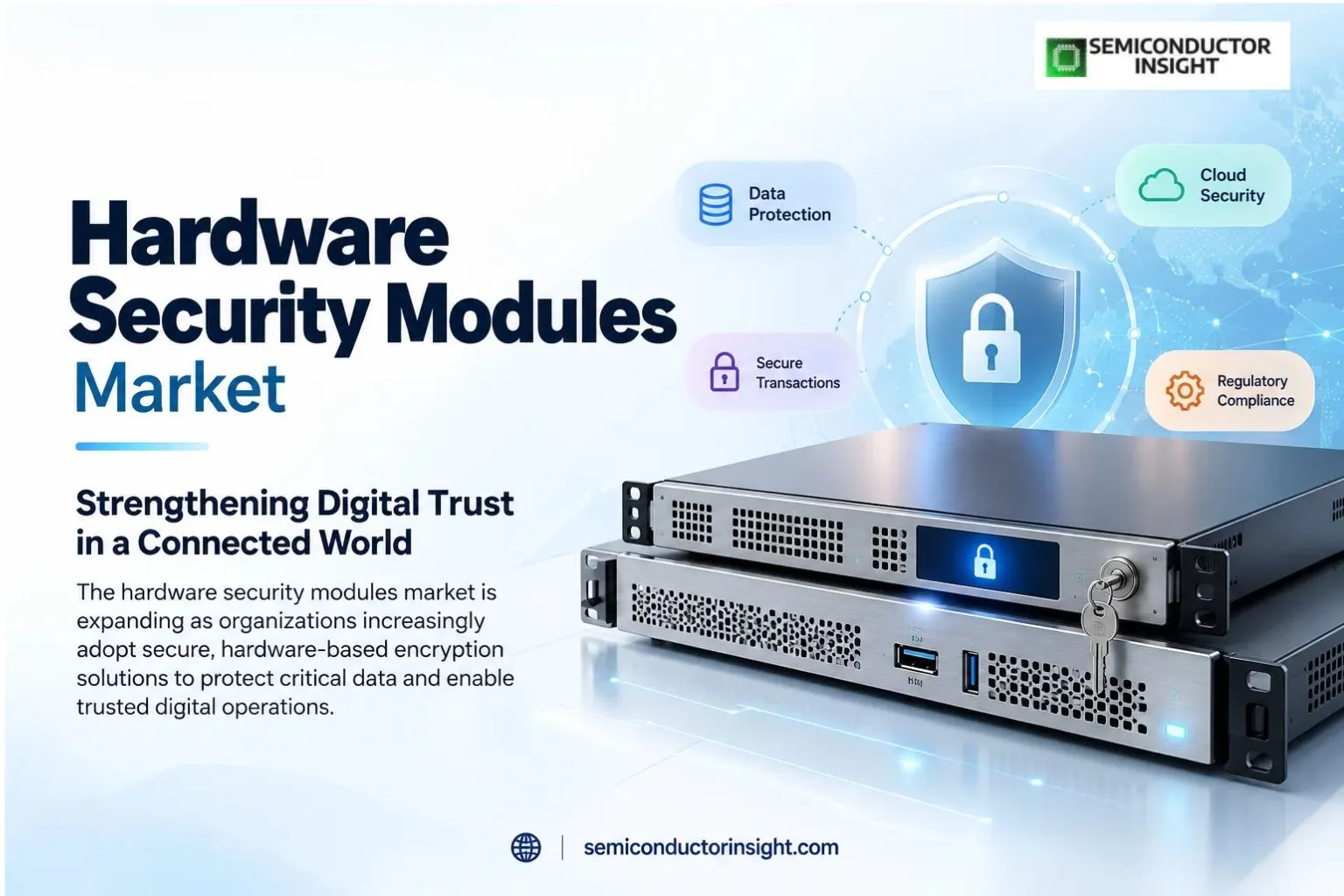
Hardware security modules are becoming increasingly important as organizations move sensitive workloads into cloud environments and expand digital payment, identity and data services. An HSM provides a dedicated environment for generating, storing and using cryptographic keys while helping prevent unauthorized extraction of protected keys.
The technology is no longer limited to traditional banking infrastructure. Cloud platforms, certificate authorities, government systems, payment networks, telecommunications and enterprise applications are creating new requirements for hardware-rooted cryptographic protection.
The transition is also visible in certification standards. FIPS 140-3 defines security requirements for cryptographic modules, while validated HSMs are increasingly offered through both dedicated hardware and cloud-based services. AWS, for example, identifies HSMs validated at FIPS 140-3 Level 3 for key protection.
North America Turns HSMs into Core Cloud Security Infrastructure
North America remains an important center for HSM deployment because of its large financial, cloud computing and technology sectors. The United States and Canada also have a mature regulatory and certification environment around cryptographic modules.
Cloud providers are expanding access to dedicated HSM infrastructure so organizations can protect keys without operating every physical security system themselves. AWS CloudHSM currently provides FIPS 140-3 certified HSM infrastructure, while its newer HSM type supports up to 16,666 total keys per cluster.
- Banking, payment processing, certificate management and enterprise encryption therefore remain important application areas across the region.
Europe Links Cryptographic Protection with Digital Resilience
Europe is moving toward stronger technology resilience requirements, particularly across financial services. The Digital Operational Resilience Act became applicable on January 17, 2025 and covers 21 types of financial entities within its regulatory framework.
This environment creates greater attention around encryption, key management, authentication and third-party technology risk. HSMs can support these requirements by providing controlled environments for cryptographic operations.
The European market is also being shaped by cloud migration and digital identity initiatives, increasing the need to protect signing keys and sensitive credentials.
Asia Pacific Expands Through Payments and Digital Identity
Asia Pacific represents one of the most active environments for digital payments, electronic authentication and large-scale online services. These applications require cryptographic infrastructure capable of handling high transaction volumes while protecting private keys.
India provides a clear example. The Controller of Certifying Authorities states that India’s eSign architecture creates private keys on an HSM and destroys them immediately after one-time use. The CCA also lists multiple licensed certification authorities and eSign service providers supporting the country’s digital-signature ecosystem.
China is also strengthening its commercial cryptography ecosystem. Its Cryptography Law establishes a framework for commercial cryptography products and services, while updated regulations have strengthened testing, recognition and application of commercial cryptography.
Don’t Forget to Surf Our Updated Report for More Detailed Analysis: https://semiconductorinsight.com/report/hardware-security-modules-hsm-market/
Latin America Builds Secure Digital Transaction Infrastructure
Latin America is creating additional demand for cryptographic infrastructure as banking, digital payments, electronic signatures and government services move online.
Brazil and Mexico are particularly important technology markets, while countries across the region are strengthening digital identity and electronic-document systems. HSMs can support certificate authorities, payment processing, encryption and secure digital-signature environments where private-key protection is essential.
The opportunity is increasingly connected with financial inclusion. As more financial activity moves through digital channels, protecting transaction keys and authentication infrastructure becomes a fundamental part of maintaining trust.
Middle East and Africa Prioritize Trusted Digital Services
The Middle East and Africa are developing rapidly across cloud computing, fintech, government digitization and telecommunications. Countries including the United Arab Emirates and Saudi Arabia are investing heavily in digital government and financial technology infrastructure.
These developments create use cases for HSMs in payment security, certificate management, identity systems and protection of sensitive government data. For organizations operating critical infrastructure, keeping cryptographic keys inside tamper-resistant hardware can provide an additional layer of protection compared with software-only key storage.
Hardware Becomes the Trust Anchor for Digital Infrastructure
HSM market is moving beyond a simple hardware-versus-software discussion. Modern deployments increasingly combine dedicated security hardware with cloud key-management services, APIs, remote administration and automated certificate management.
As organizations add more connected devices, digital identities, encrypted databases, payment applications and cloud workloads, the protection of cryptographic keys becomes increasingly fundamental to the security architecture itself.

Comments (0)