

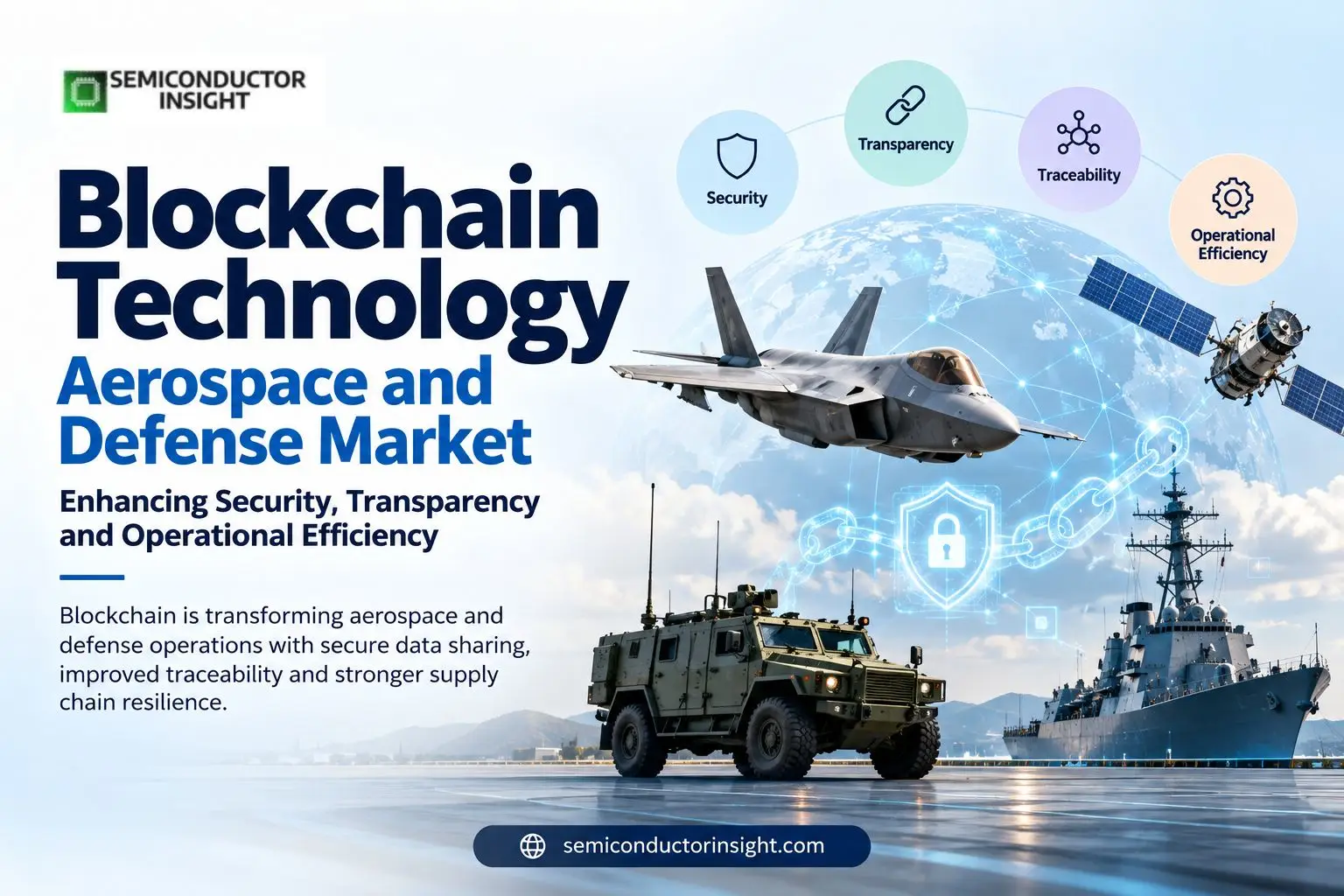
Top 5 Major Leading Regions for the Blockchain Technology Aerospace and Defense Market and Their Emerging Security Applications in 2026
Blockchain technology is gaining attention across aerospace and defense as organizations look for stronger ways to verify digital records, secure aircraft communications, and trace sensitive components. A distributed ledger can keep a shared record of transactions among authorised parties, in contrast to a traditional database that is managed by a single administrator. This makes it pertinent to military procurement, satellite data exchange, unmanned aircraft operations, spare component authentication, and aircraft maintenance histories.
- In January 2026, NASA reported testing a blockchain-based system at its Ames Research Center to protect flight information exchanged between aircraft and ground stations. The drone-based test explored real-time data sharing, including flight plans, operator registration, and telemetry. This development demonstrates how blockchain is moving beyond financial transactions into practical aviation cybersecurity
Why Defense Supply Chains Need Verifiable Digital Records?
Modern aircraft and defense systems depend on suppliers, maintenance teams, logistics providers, and government procurement agencies working across multiple locations. A missing component history or altered maintenance record can create expensive verification work and operational uncertainty.
A blockchain-based record can connect manufacturing, inspection, shipment, and maintenance events, helping authorized users verify whether a component’s recorded history is consistent. Smart contracts can also automate selected procurement checks and compliance workflows.
- However, blockchain does not automatically guarantee that information entered into the system is accurate. Physical inspections, access controls, encryption, and trusted data collection remain essential.
North America and the Push for Trusted Defense Procurement
North America has a strong foundation for blockchain development through its aerospace industry, defense research institutions, and government technology programs. The United States is particularly notable for its work on aviation data integrity and military supply-chain traceability.
In 2025, a US Navy-backed Small Business Innovation Research project titled ConTrack received an award of $139,347 to explore blockchain-based supply-chain risk management. The proposed system focuses on procurement, manufacturing, delivery tracking, and smart-contract automation.
These applications could help defense contractors verify supplier records, investigate counterfeit-component risks, and maintain traceable procurement histories. NASA’s 2026 flight-data research adds another application area by examining how distributed records can support secure aviation communications.
Europe and the Interoperability Challenge
- Europe’s aerospace and defense ecosystem includes multinational manufacturers, national defense agencies, and NATO-linked cooperation. This environment creates opportunities for trusted digital records that can be verified across organizational boundaries.
- NATO’s Digital Transformation Implementation Strategy 2.0, published in May 2026, emphasizes interoperable digital capabilities, secure information sharing, and resilient systems across operational domains. It does not establish blockchain as a universal solution, but these priorities align with potential distributed-ledger applications.
- Aircraft component traceability, cross-border maintenance documentation, and authenticated logistics records are relevant use cases. Adoption will depend on shared technical standards, data sovereignty requirements, and compatibility with existing defense information systems.
Asia Pacific and the Expansion of Digital Defense Infrastructure
Asia Pacific brings together major aircraft manufacturers, growing aerospace supply chains, defense modernization programs, and expanding digital technology capabilities. India is an important example of public-sector blockchain infrastructure development.
India’s Centre of Excellence in Blockchain Technology, operated under the Ministry of Electronics and Information Technology and the National Informatics Centre, lists applications including document chains and logistics chains. This provides an established government example of blockchain deployment beyond cryptocurrency.
For aerospace and defense organizations, comparable approaches could support verified supplier documentation, maintenance records, and controlled equipment movement. These are potential applications rather than evidence of widespread military blockchain deployment across the region.
Latin America and the Opportunity to Strengthen Aerospace Traceability
Latin America has aerospace manufacturing, aircraft maintenance, military aviation, and regional logistics activities that create practical opportunities for digital verification systems.
Brazil’s established aerospace manufacturing base makes component provenance and maintenance documentation relevant areas to examine. A permissioned blockchain could help connect manufacturers, maintenance providers, and parts distributors through a shared record of inspections and transfers.
The immediate value would be improved auditability rather than replacing existing aviation databases. Regional adoption will depend on investment, interoperability, cybersecurity expertise, and the willingness of suppliers to participate in shared digital networks.
Take a Quick Glance at Our In-Depth Analysis Report: https://semiconductorinsight.com/report/edge-blockchain-semiconductor-market/
Middle East and Africa and the Shift toward Digitally Managed Assets
Middle Eastern aerospace and defense modernization programs create potential applications for authenticated spare-parts records, aircraft servicing documentation, and defense procurement verification. In Africa, aviation maintenance networks and equipment distribution provide additional areas where traceable records could help reduce documentation gaps.
Permissioned blockchain platforms could allow approved organizations to validate maintenance events and equipment transfers without giving every participant unrestricted access to sensitive information.
Nevertheless, regional progress should be assessed through verified deployments, pilot announcements, and procurement programs rather than assumed market leadership. Blockchain’s usefulness will depend on whether organizations can integrate it with existing operational systems.
What Will Determine Successful Deployment?
The strongest applications are likely to emerge where several organizations need to verify the same sensitive records. Aerospace operators should assess blockchain alongside conventional databases, cybersecurity controls, and established aviation standards before deployment.
The most credible near-term opportunities lie in component provenance, procurement auditability, and secure flight-data exchange, supported by real-world testing and measurable operational benefits.

Comments (0)