
Top 5 Leading Regions in Breath Alcohol Sensor Market with Recent Industry Developments
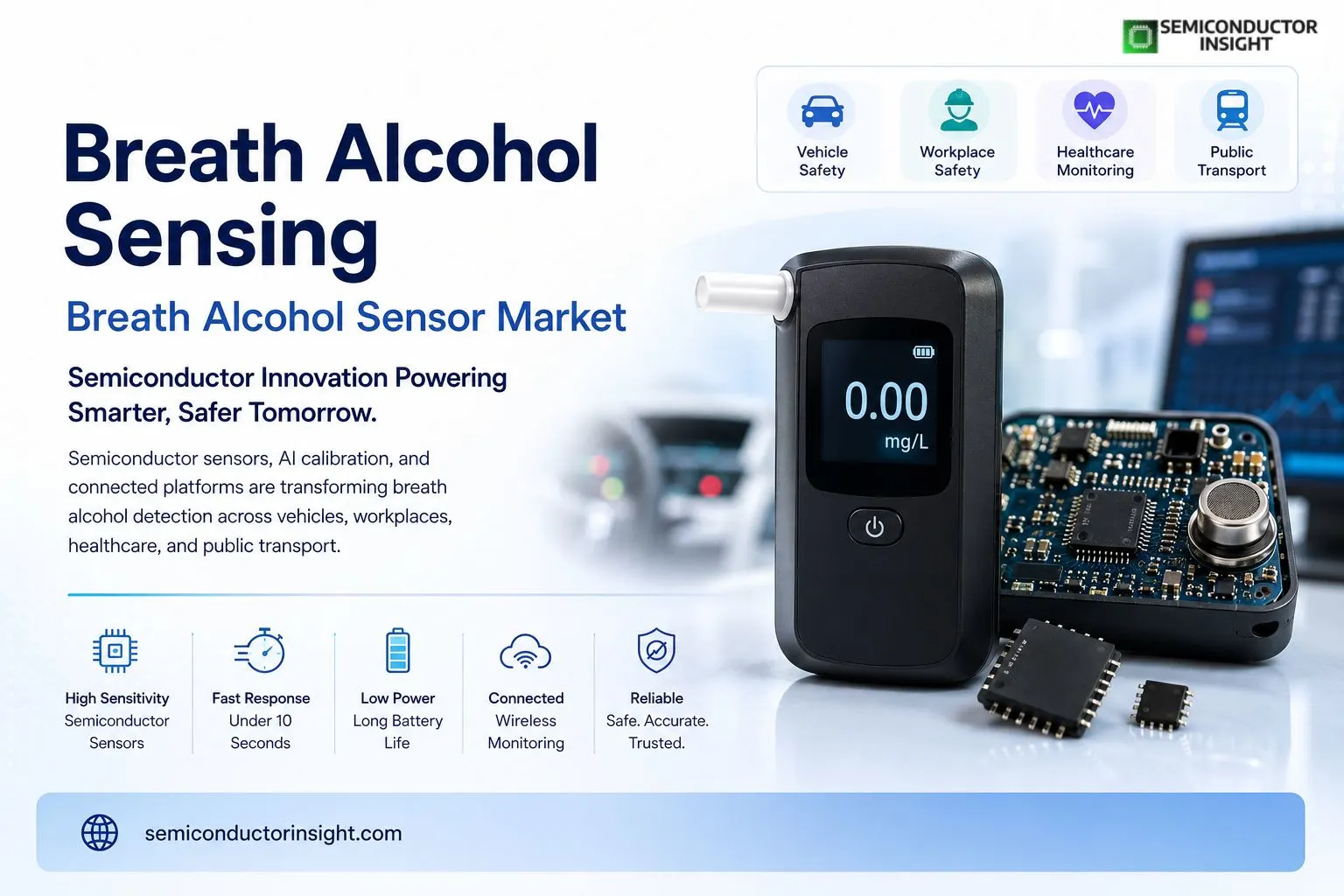
Breath alcohol sensing has evolved far beyond handheld devices used during roadside inspections. Today’s systems combine semiconductor gas sensors, MEMS technology, embedded processors, AI-based calibration, and wireless connectivity to deliver rapid and reliable alcohol detection across vehicles, workplaces, healthcare, and public transportation. As sensor chips become smaller and more energy efficient, manufacturers are integrating breath alcohol detection into intelligent safety ecosystems rather than treating it as a standalone product.
Governments, automotive manufacturers, and industrial organisations are increasingly investing in technologies that reduce alcohol related accidents while improving operational safety. Semiconductor advances remain central to this transformation because they enable highly sensitive gas detection, faster response times, and compact designs suitable for portable and embedded applications.
From Gas Sensitive Materials to Smart Electronic Platforms
- Modern breath alcohol sensors rely on semiconductor metal oxide materials, electrochemical fuel cells, microcontrollers, temperature compensation circuits, and signal processing algorithms. Semiconductor sensors detect changes in electrical resistance when ethanol molecules interact with the sensing layer.
- Recent developments have improved sensor recovery time to less than 10 seconds for many commercial portable units while extending operational life beyond 5 years through improved material stability. Several manufacturers now achieve measurement ranges from 00 to 2.00 mg/L breath alcohol concentration, enabling applications from consumer wellness to forensic testing.
- Miniaturised MEMS fabrication techniques have also reduced chip footprints to only a few millimetres, allowing seamless integration into dashboard electronics, wearable devices, and connected industrial equipment.
Regulations Are Expanding the Need for Embedded Detection
Global transportation authorities continue introducing stricter impaired driving policies. The European Union’s revised General Safety Regulation requires new vehicle designs to be prepared for alcohol interlock installation, encouraging automotive suppliers to develop compatible semiconductor sensing modules.
Meanwhile, commercial fleet operators increasingly deploy alcohol screening before driver shifts. Mining companies, logistics providers, railway operators, and aviation ground services are also incorporating electronic breath testing into employee safety programs.
- According to the World Health Organisation, approximately 6 million deaths worldwide each year are associated with alcohol consumption, highlighting why prevention technologies continue receiving regulatory attention.
Semiconductor Engineering Is Improving Accuracy and Reliability
Research institutions are focusing on nanostructured semiconductor materials including tin oxide, zinc oxide, tungsten oxide, and indium oxide to improve ethanol selectivity while minimising interference from humidity and temperature.
Current semiconductor sensor development includes:
- AI-assisted signal correction for varying environmental conditions
- Low-power integrated circuits supporting battery operation exceeding 12 months
- MEMS heating elements consuming below 50 mW
- Bluetooth-enabled calibration and diagnostics
- Multi-gas detection architectures capable of identifying ethanol alongside volatile organic compounds
These innovations support deployment across healthcare diagnostics, smart transportation, industrial safety, and consumer electronics.
Discover more report insights; just browse our latest free update here: https://semiconductorinsight.com/report/breath-alcohol-sensor-market/
North America Leads through Regulatory Enforcement and Connected Safety Infrastructure
North America continues to dominate Breath Alcohol Sensor Market due to its mature road safety framework, strict workplace compliance standards, and widespread adoption of advanced sensing technologies. The United States and Canada have established extensive roadside alcohol screening programs, with law enforcement agencies conducting millions of breath alcohol tests each year to reduce impaired driving incidents. Commercial fleet operators across trucking, public transit, mining, and oil and gas sectors increasingly require digital breath alcohol testing before drivers begin their shifts, creating sustained demand for portable and embedded semiconductor-based sensors.
The region is also witnessing rapid adoption of connected fleet management systems, where breath alcohol analyzers automatically transmit test results to cloud platforms for compliance tracking and audit reporting. In the automotive sector, semiconductor companies are collaborating with vehicle manufacturers to develop integrated driver monitoring systems that combine breath alcohol detection with in-cabin cameras and AI-based behavioral analysis. Strong investments in MEMS technology, IoT-enabled safety devices, and smart transportation infrastructure continue to reinforce North America’s leadership in semiconductor-enabled alcohol sensing solutions.
Automotive Innovation and Vehicle Safety Regulations Advance Europe
Europe remains a leading market because of its proactive regulatory environment and long-standing commitment to reducing alcohol-related road fatalities. The European Union’s General Safety Regulation encourages vehicle manufacturers to design new models that are compatible with alcohol interlock systems, accelerating the integration of semiconductor-based breath alcohol sensors into passenger and commercial vehicles. Countries such as Sweden, France, Finland, and Belgium have expanded mandatory or voluntary alcohol interlock programs for buses, freight vehicles, school transportation, and repeat driving offenders, creating steady demand for reliable sensing technologies.
The region is also home to several automotive electronics and semiconductor innovators developing MEMS gas sensors, low-power microcontrollers, and intelligent sensor modules with improved detection accuracy and environmental compensation. Research institutions across Germany, the Netherlands, and Scandinavia continue to explore nanomaterial-based sensing platforms capable of delivering faster response times and lower maintenance requirements. These developments, combined with Europe’s emphasis on connected mobility and Vision Zero road safety initiatives, position the region as a major innovation hub for breath alcohol sensing technologies.
Asia Pacific Emerges as the Fastest Growing Manufacturing and Technology Hub
Asia Pacific is rapidly strengthening its position through large-scale semiconductor manufacturing, expanding automotive production, and increasing government investment in intelligent transportation systems. Countries including Japan, South Korea, Taiwan, and China account for a significant share of global semiconductor fabrication capacity, enabling cost-effective production of sensing chips, MEMS components, and embedded electronics used in modern breath alcohol analyzers.
Japan has introduced mandatory alcohol testing requirements for many commercial transport operators, encouraging widespread deployment of digital breath alcohol monitoring devices across logistics and passenger transportation fleets. China continues to expand smart city projects and intelligent traffic management systems while investing heavily in advanced automotive electronics and connected vehicles. South Korea and Taiwan contribute through their expertise in semiconductor fabrication and sensor miniaturization, supporting the development of highly compact, energy-efficient alcohol sensing modules. High-volume electronics manufacturing, well-established supply chains, and continuous advancements in semiconductor packaging technologies enable the region to produce reliable breath alcohol sensors at competitive costs while supporting growing global demand.
Latin America
Brazil, Chile, and Mexico continue strengthening impaired driving enforcement through national road safety campaigns. Growing investments in public transportation modernisation and industrial worker safety are increasing demand for portable semiconductor breath alcohol analysers, particularly among logistics and mining operators.
Middle East and Africa
The Middle East is gradually expanding adoption across aviation, oil and gas, and industrial facilities where strict workforce safety compliance is essential. Gulf countries are investing in smart city infrastructure and intelligent transportation systems, creating opportunities for connected alcohol detection technologies integrated with broader digital safety platforms.
Where Research Investment Is Moving Next
University laboratories are developing semiconductor nanowires and graphene hybrid sensing materials capable of detecting extremely low ethanol concentrations while reducing false positives.
Researchers are also integrating machine learning algorithms directly into embedded semiconductor processors, allowing continuous self-calibration and predictive maintenance.
Another emerging area involves flexible semiconductor sensors printed onto lightweight substrates for wearable monitoring devices, opening opportunities beyond conventional handheld breath analysers.
- Semiconductor chips with integrated humidity compensation
- AI-enhanced calibration without laboratory equipment
- MEMS micro heaters for ultra fast sensor stabilisation
- Cloud-connected fleet monitoring platforms
- Smartphone synchronised portable alcohol analysers
- Multi-parameter health monitoring devices combining alcohol, respiration, and temperature sensing
These developments demonstrate how semiconductor technology is transforming breath alcohol sensing from a simple measurement tool into a connected safety intelligence platform.

Comments (0)