
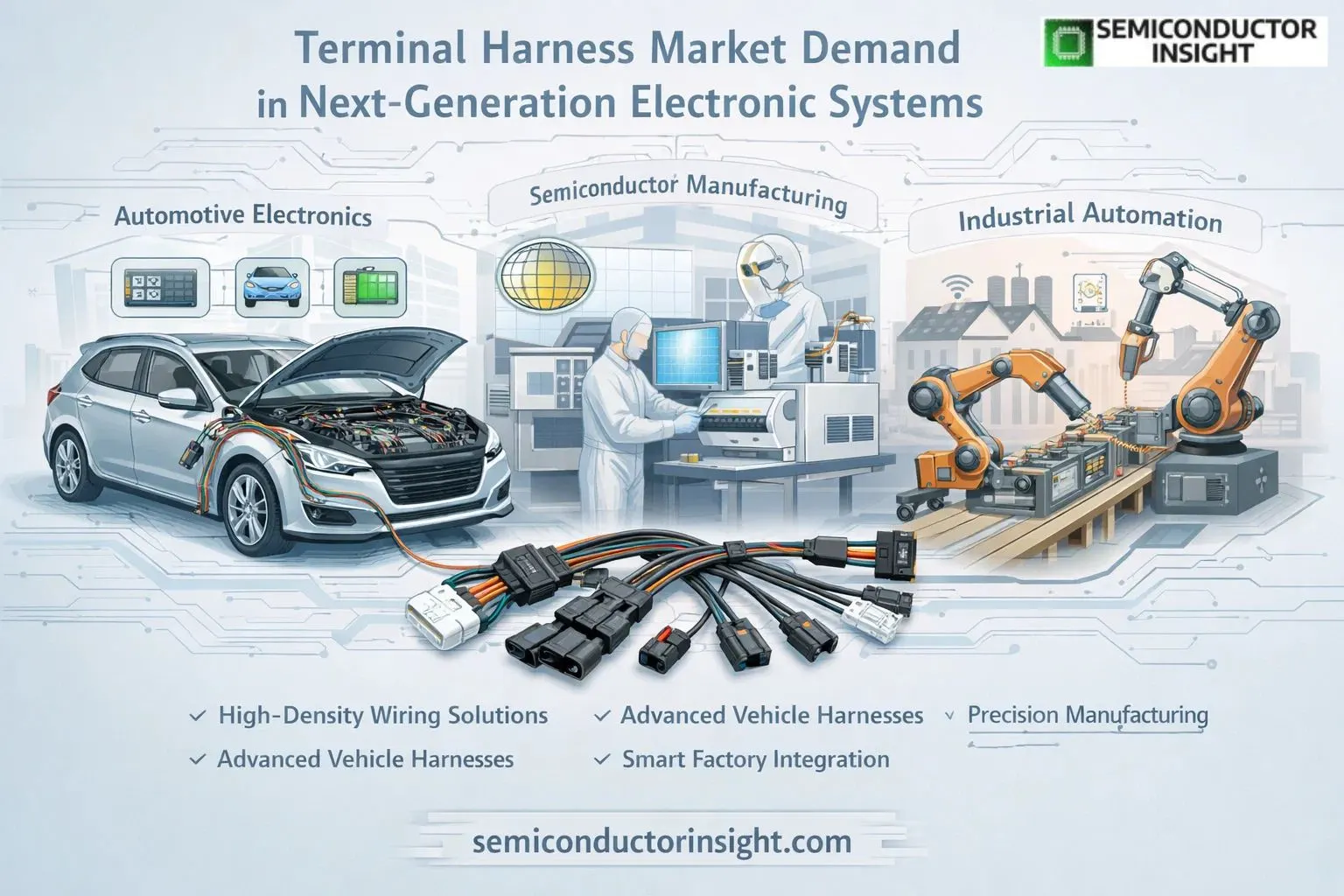
Terminal Harness Market Demand in Next-Generation Electronic Systems
In the world of semiconductors and advanced electronics, reliable electrical connections are essential for system performance. Terminal harness market plays a crucial role in enabling this connectivity by organizing multiple electrical wires and connectors into structured systems that transmit power and signals across devices and industrial equipment.
A typical modern passenger vehicle alone contains up to 3 kilometers of electrical wiring integrated into harness systems, while large industrial machines use dozens of specialized harness assemblies to link sensors, control units, and power modules.
The growing complexity of electronic systems is rapidly increasing harness requirements. Global production of wiring harness systems surpassed 2.1 billion units in 2023, reflecting the massive scale of electrical integration across vehicles, consumer electronics, and industrial automation.
As semiconductor devices become smaller and more powerful, terminal harness solutions are evolving to support high-density electrical routing while maintaining reliability and thermal stability.
Semiconductor Manufacturing Equipment and Precision Wiring
Semiconductor fabrication facilities rely heavily on precision wiring harness assemblies to connect sensors, control boards, robotic systems, and wafer-processing equipment. These facilities contain thousands of interconnected electrical components that require stable signal transmission.
A single semiconductor fabrication plant may operate over 1,000 automated processing tools, each containing multiple cable assemblies and harness modules responsible for power distribution and signal routing. Cleanroom manufacturing equipment must also maintain extremely low failure rates because electrical disruptions can halt wafer production.
Industrial automation has become a key driver in this ecosystem. In 2023, automation systems accounted for around 22% of global wiring harness demand, driven by the growth of smart factories and Industry 4.0 manufacturing technologies.
Advanced harness systems also integrate shielding materials that reduce electromagnetic interference by as much as 40%, which is critical for semiconductor processing equipment operating with high-precision sensors and robotics.
Automotive Electronics Driving Terminal Harness Adoption
- While semiconductor equipment relies on precision wiring, the automotive sector remains the largest consumer of terminal harness assemblies. Electronic features such as infotainment systems, advanced driver assistance systems (ADAS), and electric vehicle power electronics require extensive harness networks.
- Automotive manufacturing represents roughly 68% of global wiring harness production volume, highlighting the importance of vehicle electronics in this industry.
- Each passenger vehicle contains approximately 40-50 meters of copper wiring bundled into harness systems, often weighing between 20 and 30 kilograms depending on vehicle complexity.
- Electric vehicles further increase harness requirements because battery management systems, motor controllers, and charging systems require high-voltage electrical distribution. Many EV platforms now operate with 400-volt electrical architectures, demanding specialized connectors and insulation materials.
- These developments demonstrate how the terminal harness market is closely connected to both semiconductor innovation and automotive electrification.
Strategic Role in the Future of Electronic Systems
As semiconductor devices continue to evolve and electronic systems become more interconnected, terminal harness technologies will remain fundamental to electrical infrastructure. From semiconductor fabrication equipment to electric vehicles and smart factories, harness assemblies enable the stable transmission of power and data across complex systems.
With billions of harness units produced each year and increasing integration of electronics across industries, the terminal harness market will continue to support the rapid expansion of modern digital infrastructure and advanced manufacturing technologies.
Take a Quick Glance at Our In-Depth Analysis Report: https://semiconductorinsight.com/report/terminal-harness-market/
Industrial Automation and Smart Factory Integration
Terminal harness assemblies are also essential in industrial machinery and robotics used across modern manufacturing environments. Smart factories rely on sensors, programmable controllers, and high-speed communication networks, all of which depend on stable wiring infrastructure.
Industrial machinery applications alone consumed around 150 million wiring harness units in 2023, driven by the adoption of connected sensors and automated production lines.
Manufacturing plants increasingly use modular harness assemblies that simplify equipment maintenance and reduce installation time. In aerospace systems, for example, complex harness assemblies can contain more than 500 wires per harness, ensuring reliable signal transmission across aircraft systems.
The growing use of robotics in electronics manufacturing further supports demand for high-precision harness solutions designed to withstand vibration, heat, and mechanical stress.
Major Companies Shaping the Terminal Harness Ecosystem
Several global electronics and automotive suppliers dominate the development and production of terminal harness components. These companies support industries ranging from semiconductors and telecommunications to automotive manufacturing.
Top 5 major companies
- TE Connectivity: TE Connectivity supplies connectors and harness systems used in industrial automation, automotive electronics, and semiconductor equipment. The company operates more than 80 manufacturing facilities worldwide and produces millions of connectivity components used in electronic devices and data infrastructure.
- Yazaki Corporation: Yazaki is one of the largest automotive harness suppliers globally, producing wiring systems for major vehicle manufacturers. The company operates in over 45 countries and supplies electrical distribution systems for millions of vehicles annually.
- Sumitomo Electric Industries: Sumitomo Electric produces advanced wiring harness systems used in automotive electronics and high-speed data infrastructure. Its harness technologies support vehicle electrification and high-density electronic systems.
- Aptiv PLC: Aptiv develops smart vehicle architecture and electrical distribution systems used in autonomous driving platforms and electric vehicles. The company’s harness technologies support advanced vehicle electronics and connectivity.
- Samvardhana Motherson Group: Samvardhana Motherson Group manufactures wiring harness systems for global automotive OEMs and electronics manufacturers, operating production facilities across Asia, Europe, and North America.
Together, leading manufacturers account for around 65% of global wiring harness supply, highlighting a highly consolidated supplier ecosystem serving electronics and automotive industries.

Comments (0)