
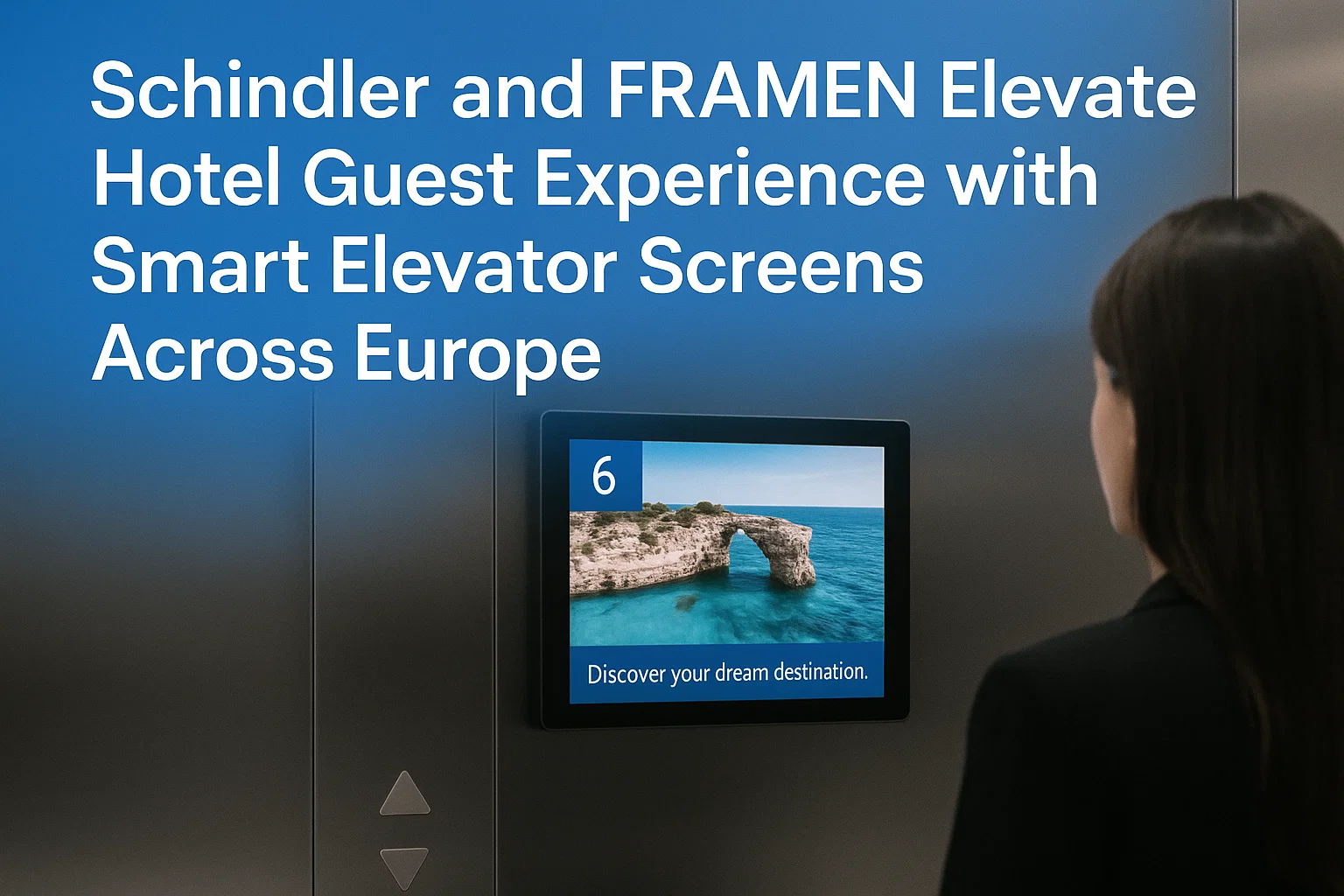
Schindler and FRAMEN Elevate Hotel Guest Experience with Smart Elevator Screens Across Europe
In today’s hyper-connected world, where digital interactions shape how we consume information, even the most unlikely places are becoming hubs for engagement. One of the fastest-emerging spaces in this transformation is the elevator cabin. Traditionally just a means of vertical transportation, elevators are now doubling as micro-arenas for communication, advertising, and engagement, powered by digital display screens.
The global elevator display screen market, valued at US$324 million in 2024, is projected to reach US$444 million by 2032, growing at a CAGR of 4.7%. This steady growth reflects not just an increasing demand for advertising real estate but also the convergence of smart building technologies, digital signage innovations, and new business models that monetize every square foot of property.
Access Your Free Sample Report- Elevator Display Screen Market
The Evolution of Elevator Display Screens
Not long ago, the only “display” in an elevator was a mechanical dial or LED panel showing the floor number. Over the last decade, these simple indicators have been augmented or replaced with high-resolution LCD/LED panels that can deliver dynamic content:
- Floor indicators
- Building announcements
- Local weather, traffic, or news feeds
- Advertising messages
This transition reflects a broader digital signage revolution across retail, transit, and public spaces. What makes elevators unique is the captive audience factor. Riders, often with limited distractions and no mobile signal in high-rise buildings, are in a prime position to notice and absorb short, dynamic messages.
Elevator screens thus occupy a rare niche: they are small, localized, repetitive touchpoints with extremely high visibility. That is why building owners, advertisers, and elevator OEMs are increasingly investing in them.
Recent Developments in the Industry
1. Programmatic Advertising Enters the Elevator Space
One of the biggest shifts in digital out-of-home (DOOH) advertising has been the integration of programmatic platforms automated systems that let advertisers buy ad space in real time, similar to online ads.
- Screenverse & Vertical Impression Partnership (2024):
Vertical Impression, with over 2,400 elevator screens across 98 U.S. metro areas, teamed up with Screenverse to make its inventory available programmatically. This means advertisers can now purchase elevator screen ad slots through major exchanges like Vistar, Place Exchange, Broadsign, and Hivestack.- Impact: This turns elevator advertising from a “niche buy” into part of larger, data-driven ad campaigns, making it easier for agencies and brands to include elevator screens in omnichannel strategies.
2. OEMs Teaming Up with Content Platforms
Elevator manufacturers are no longer just selling hardware. They are bundling content, media partnerships, and monetization options.
- Schindler & FRAMEN Partnership (2023–2024):
In the DACH region, Schindler partnered with FRAMEN to deploy digital screens in hotel elevators. Already active in ~150 hotels, the rollout is expanding to 220 more in Austria and Germany. These screens show curated content like local events, travel tips, and promotions.- Why it matters: Elevator rides in hotels often last 30–60 seconds, providing an ideal time slot for bite-sized infotainment and contextual ads, while creating additional value for property owners.
- Captivate & Videri Collaboration:
Captivate, a North American leader in elevator and lobby media, launched Captivate CANVAS, a platform powered by Videri’s hardware. It focuses on Class A office buildings, blending editorial content with advertisements, giving professionals news, market updates, and branded content during rides.
3. Elevators as a Communication Tool for Real Estate
Beyond advertising, many building owners now use elevator displays for internal communications:
- Tenant updates (maintenance schedules, fire drills, amenities)
- Local news and weather feeds
- Emergency alerts
Companies like Navigo® promote their screens as a way to “engage every floor,” highlighting that an elevator is often the only space where every building occupant passes daily.
4. Expansion into Asia
In markets like Vietnam, elevator screens are increasingly popular for advertising in malls, office towers, and residential complexes. A recent article in VnExpress pointed out their advantage: higher frequency of display, minimal distractions, and strong recall rates compared to digital banners or social media ads.
This trend echoes across Asia, where dense urban living and high-rise developments make elevators an ideal captive medium.
Download Sample Report PDF- Elevator Display Screen Market
Market Outlook: $324M → $444M by 2032
The elevator display screen industry’s steady growth can be attributed to several factors:
- Urbanization & High-Rise Construction
- With more people living and working in vertical cities, the number of elevators globally continues to rise. Each new elevator cabin is a potential space for a screen.
- Advertising Industry Shift
- As traditional banner ads lose effectiveness due to “ad fatigue,” brands are turning to DOOH formats with guaranteed impressions and better recall.
- Smart Building Integration
- Elevators are now part of smart building ecosystems, with IoT sensors and connectivity. Screens can sync with building management systems for real-time updates.
- Revenue Models for Property Owners
- Screens turn elevators into monetizable assets, offering landlords an extra revenue stream while enhancing tenant experience.
Technology Innovations Driving Growth
- Ruggedized Hardware
- Elevators vibrate, move, and often have unstable power supply. Modern display panels are engineered to withstand such conditions, with vibration-resistant mounts, surge protectors, and long-life LED backlighting.
- High Brightness & Resolution
- New models offer 4K resolution, higher brightness (1,000+ nits), and wide viewing angles for visibility in varying cabin lighting.
- Interactivity & Sensors
- Some next-gen screens integrate touch capability, motion detection, or even facial recognition (though this raises privacy concerns).
- Content Management Systems (CMS)
- Cloud-based platforms allow property managers to update content remotely, schedule ads, and monitor screen health in real time.
- Energy Efficiency
- Power-saving features like ambient light sensors and sleep mode are increasingly standard, aligning with green building certifications.
Challenges Facing the Industry
- Privacy Concerns
- Using cameras or AI for audience analytics (gender, age, dwell time) sparks regulatory and ethical debates. In Europe, GDPR places strict limits on such data collection.
- Installation & Retrofitting
- Older elevators often lack space, wiring, or power capacity for screens. Retrofitting can be costly, limiting adoption in legacy buildings.
- Content Relevance
- Since rides are short (30–60 seconds), content must be concise and engaging. Poorly curated or repetitive content risks being ignored.
- Maintenance Costs
- Screens are highly visible; a malfunction (e.g., blank screen) immediately impacts brand and property image. Reliable remote monitoring is essential.
Opportunities for Growth
- Programmatic DOOH Expansion
- By integrating with ad exchanges, elevator screens can become part of national or global campaigns, expanding their value proposition.
- Hospitality & Healthcare
- Hotels, hospitals, and senior living facilities are prime candidates for infotainment + advertising combos.
- Residential Complexes
- In high-rise apartments, elevator screens double as community boards, with monetization potential through local advertising.
- Smart City Ecosystems
- As cities adopt IoT frameworks, elevator screens can serve as micro-nodes for emergency alerts, wayfinding, and community updates.
Click Here To Download Full Sample Report- Elevator Display Screen Market
What Will Elevator Screens Look Like in 2032?
By 2032, the elevator display screen market will have evolved beyond static ads and basic infotainment. Expect:
- AI-driven personalization: Content adapted to time of day, building type, or event schedules (without breaching privacy).
- Interactive touch & voice: Allowing users to browse building directories or even order services while riding.
- Integration with AR/VR: In futuristic high-rise complexes, immersive content could transform rides into experiences.
- Seamless connectivity: Screens tied into 5G/IoT, updating instantly with hyper-local content.
The elevator display screen industry, though still a niche within the larger digital signage market, is gaining strong momentum. With US$324 million in 2024 growing to US$444 million by 2032.

Comments (0)