MARKET INSIGHTS
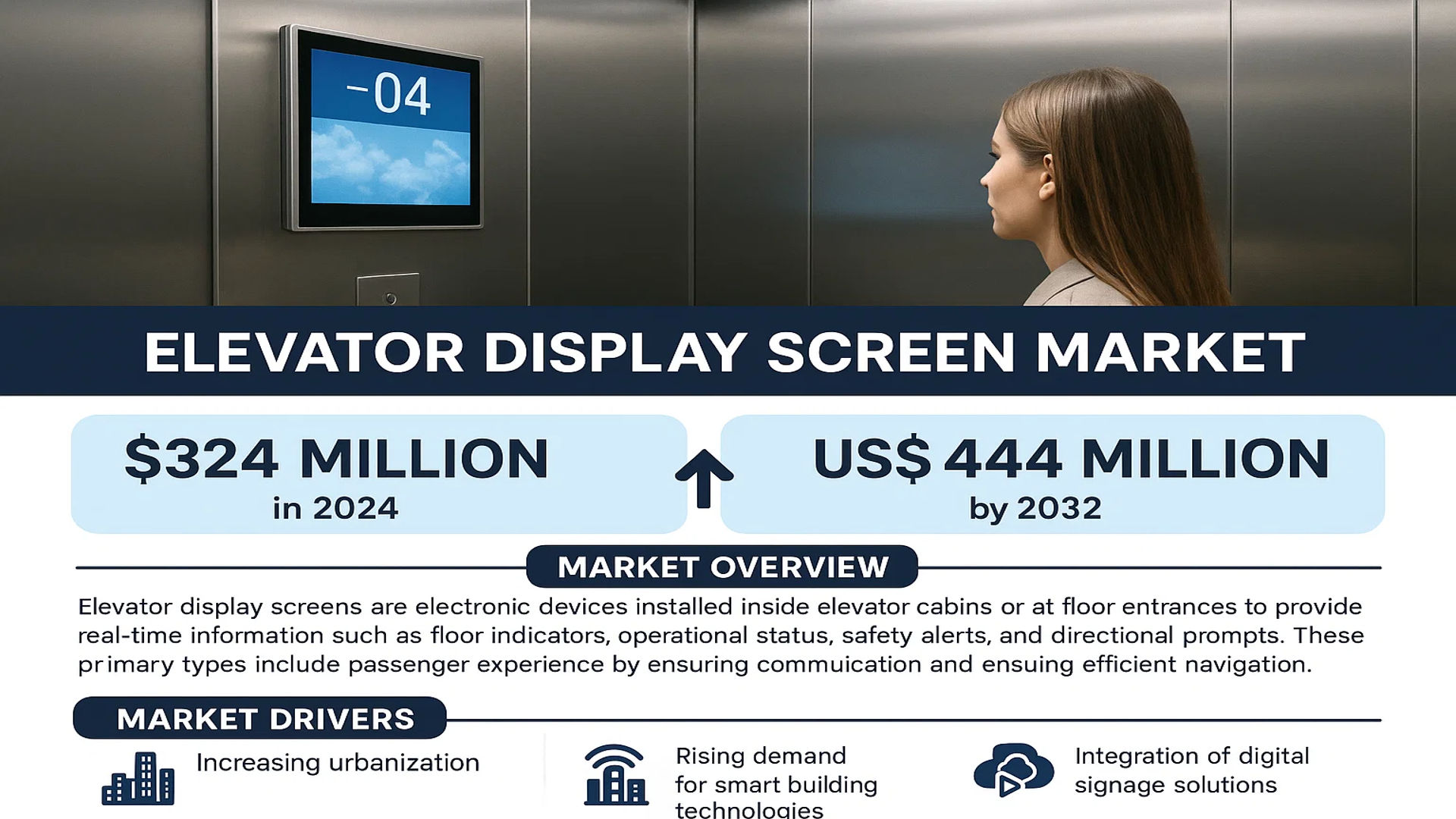
The global Elevator Display Screen Market was valued at 324 million in 2024 and is projected to reach US$ 444 million by 2032, at a CAGR of 4.7% during the forecast period
Elevator display screens are electronic devices installed inside elevator cabins or at floor entrances to provide real-time information such as floor indicators, operational status, safety alerts, and directional prompts. These screens enhance passenger experience by improving communication and ensuring efficient navigation. The primary types include in-car displays and floor displays, catering to residential, commercial, and hospital elevators.
Market growth is driven by increasing urbanization, rising demand for smart building technologies, and the integration of digital signage solutions in modern elevators. Furthermore, advancements in display technologies, such as OLED and touch-sensitive panels, are elevating user interactivity. Key players like Samsung Electronics, LG Electronics, and Panasonic dominate the market, collectively holding a significant revenue share in 2024. For instance, in 2023, KONE introduced AI-powered elevator displays with predictive maintenance alerts, reinforcing market expansion.
MARKET DYNAMICS
MARKET DRIVERS
Rising Urbanization and Construction Boom Fueling Market Expansion
The global elevator display screen market is experiencing robust growth driven primarily by rapid urbanization and increasing construction activities worldwide. With over 68% of the world’s population projected to live in urban areas by 2050, the demand for high-rise buildings with advanced vertical transportation systems is surging. Elevator displays play a crucial role in modern buildings by enhancing passenger experience and providing critical operational information. The construction of smart buildings, particularly in developing economies, is accelerating the adoption of sophisticated elevator display technologies. Developers increasingly view these systems as value-added features that improve building ratings and tenant satisfaction.
Technological Advancements in Display Solutions Driving Innovation
Significant technological progress in display technologies is transforming the elevator display screen market. The shift from traditional LED displays to high-resolution LCD and OLED panels enables richer multimedia content delivery and better visibility. Modern elevator displays now incorporate touchscreen capabilities, multi-language support, and real-time connectivity features. The integration of IoT technology allows remote monitoring and dynamic content updates, creating new opportunities for advertising and emergency communication. Leading manufacturers are investing heavily in developing energy-efficient displays with longer lifespans, reducing maintenance costs for building owners.
Furthermore, the growing demand for accessibility features in public spaces is prompting the development of displays with voice assistance and Braille compatibility. This technological evolution is significantly enhancing passenger experience while creating additional revenue streams through digital advertising.
Growing Emphasis on Passenger Safety and Information Dissemination
Safety concerns and regulatory requirements are major factors propelling the elevator display screen market forward. Modern displays serve as critical communication channels during emergencies, providing evacuation instructions and live updates. The implementation of stricter building safety codes in many countries mandates clear visual indicators for elevator operations and emergency procedures. This regulatory push is particularly strong in earthquake-prone regions and high-density urban centers where elevator usage is intensive.
➤ For instance, recent updates to international building safety standards require real-time status alerts during power outages and emergency lighting for display visibility.
The healthcare sector also represents a growing market segment, where elevator displays assist in wayfinding and provide critical timing information for patient transport. These diverse applications across multiple sectors are contributing to steady market growth.
MARKET RESTRAINTS
High Installation and Maintenance Costs Limiting Market Penetration
While demand for elevator display screens is growing, the market faces significant challenges from high initial investment costs. Advanced display systems require substantial capital expenditure for both hardware and software components, particularly for retrofitting existing elevator systems. The specialized nature of elevator installations often necessitates custom display solutions, further increasing costs. Many building owners, especially in price-sensitive markets, hesitate to invest in premium display solutions when basic indicator systems meet minimum regulatory requirements.
Additionally, the long replacement cycles of elevator systems mean that display technology upgrades often coincide with major modernization projects rather than occurring independently. This cyclical nature of investment creates periods of reduced demand in the market.
Technical and Operational Challenges
The harsh operating environment within elevator shafts presents technical challenges for display manufacturers. Screens must withstand constant vibration, temperature fluctuations, and potential moisture exposure while maintaining reliability. These requirements drive up production costs and complicate product design. Furthermore, integrating display systems with various elevator control architectures requires specialized engineering expertise that is in short supply.
MARKET CHALLENGES
Cybersecurity Risks in Connected Display Systems
The increasing connectivity of elevator display screens introduces significant cybersecurity vulnerabilities that pose challenges for market growth. As displays become networked components of building management systems, they create potential entry points for cyber attacks. Hackers could potentially manipulate displayed information or gain access to building networks through vulnerable display interfaces. This risk is particularly concerning in government buildings and critical infrastructure where elevator systems must meet stringent security standards.
Manufacturers face growing pressure to implement robust encryption and authentication protocols, which add complexity and cost to display systems. The lack of standardized security frameworks for building IoT devices further complicates the development of secure display solutions.
Rapid Technological Obsolescence Creating Upgrade Pressures
The fast pace of display technology innovation presents a significant challenge for both manufacturers and end-users. Building owners face difficult decisions about investing in systems that may become obsolete within a few years. The display industry’s transition to newer technologies like microLED creates uncertainty about long-term product support and spare parts availability. This rapid obsolescence cycle conflicts with the typical 10-15 year lifespan expected from elevator system components, leading to either premature upgrades or mismatched technology generations within buildings.
MARKET OPPORTUNITIES
Emerging Smart City Initiatives Creating New Growth Potential
The global smart city movement presents substantial opportunities for the elevator display screen market. As cities invest in intelligent infrastructure, elevator displays are evolving into multifunctional information hubs. These advanced systems can integrate with city information networks to provide real-time transit updates, local weather alerts, and emergency notifications. The ability to deliver hyperlocal content and services through elevator displays creates new revenue models, including targeted advertising and wayfinding services.
Particularly in Asia-Pacific smart city projects, elevator displays are being specified as standard components in new developments. This regional focus on smart building technologies is driving innovation in display functionality and creating benchmark standards for the global market.
Expanding Retrofit Market in Aging Building Stock
The massive installed base of older elevators represents a significant untapped market for display screen upgrades. Many buildings constructed before 2000 lack modern display systems, creating opportunities for retrofit solutions. Manufacturers are developing display kits specifically designed for legacy elevator systems, often incorporating wireless connectivity to simplify installation. The growing emphasis on building modernization and accessibility upgrades in developed markets is expected to drive steady demand for these retrofit solutions.
Additionally, changing tenant expectations about building amenities are prompting property owners to invest in display upgrades as part of broader repositioning strategies. This trend is particularly strong in commercial real estate, where tenant experience directly impacts property values and lease rates.
ELEVATOR DISPLAY SCREEN MARKET TRENDS
Smart Building Integration and Digitalization Drive Market Expansion
The global elevator display screen market is experiencing significant growth due to the increasing adoption of smart building technologies. Modern buildings now integrate IoT-enabled devices to enhance user experience and operational efficiency, with elevator displays playing a pivotal role. These screens provide real-time information, such as floor indicators, emergency alerts, and even advertisements, improving passenger engagement. The rising demand for contactless solutions in post-pandemic environments has further accelerated the adoption of interactive displays, with manufacturers focusing on touchless interfaces to cater to hygiene-conscious consumers.
Other Trends
Rise of High-Definition and Interactive Displays
The shift toward high-definition LED and OLED displays is reshaping the market, as building owners prioritize visual quality and durability. Leading manufacturers are investing in advanced display technologies to offer sharper images and longer lifespans, particularly in commercial and hospitality sectors. Interactive displays with gesture recognition and voice commands are also gaining traction, providing accessibility for users with disabilities while minimizing physical contact. These innovations are projected to contribute significantly to the market’s projected CAGR of 4.7% between 2024 and 2032.
Regional Growth and Competitive Landscape
Asia-Pacific dominates the elevator display screen market, driven by rapid urbanization and infrastructure development in countries like China and India. The region accounts for over 40% of global market share due to rising high-rise construction and government initiatives promoting smart cities. Meanwhile, North America and Europe are witnessing steady growth, fueled by retrofitting activities in aging buildings and stringent safety regulations. Key players, including Samsung Electronics and LG Electronics, are expanding their portfolios with energy-efficient solutions, leveraging partnerships with elevator manufacturers to enhance interoperability. Collaborative efforts between display providers and real estate developers continue to influence product innovation and regional market dynamics.
COMPETITIVE LANDSCAPE
Key Industry Players
Elevator Display Market Shaped by Innovation and Strategic Expansion
The global elevator display screen market presents a dynamic competitive landscape, characterized by the presence of established electronics giants and specialized digital signage providers. Samsung Electronics leads the market with its advanced OLED and LCD display solutions, catering to both in-car and floor display segments. The company’s dominance stems from its vertically integrated supply chain and strong relationships with elevator manufacturers across North America and Asia-Pacific.
LG Electronics and Panasonic follow closely, leveraging their expertise in commercial displays to offer durable, high-visibility solutions suitable for elevator environments. Both companies have recently introduced touch-enabled and energy-efficient displays, responding to growing demand for interactive and sustainable building technologies.
The market sees increasing competition from elevator OEMs like KONE who are vertically integrating display solutions into their smart elevator ecosystems. Meanwhile, specialized firms such as Sparsa Digital and REV Interactive are gaining traction by offering customized content management systems integrated with display hardware.
Chinese manufacturers including Jiangsu WELM Technology are expanding globally through competitive pricing and localization strategies, particularly in emerging markets. This is prompting established players to strengthen their distribution networks and after-sales services to maintain market share.
List of Key Elevator Display Screen Companies Profiled
- Samsung Electronics (South Korea)
- LG Electronics (South Korea)
- Sony Electronics (Japan)
- Panasonic (Japan)
- Philips (Netherlands)
- Hitachi (Japan)
- Toshiba (Japan)
- Sharp Imaging and Information (Japan)
- KONE (Finland)
- Sparsa Digital (U.S.)
- REV Interactive (Singapore)
- Quadra Electronics (U.S.)
- Digital Signage Singapore (Singapore)
- Navori (Switzerland)
- Schaefer (Germany)
- Jiangsu WELM Technology (China)
Elevator Display Screen Market: Segment Analysis
By Type
In-car Display Segment Dominates Due to Enhanced Passenger Experience and Safety Features
The market is segmented based on type into:
- In-car Display
- LCD Screens
- LED Screens
- OLED Screens
- Touchscreen Displays
- Floor Display
- Single-Sided Displays
- Double-Sided Displays
- Interactive Kiosks
- Others
By Application
Commercial Elevator Segment Leads Due to High Adoption in Office Buildings and Shopping Centers
The market is segmented based on application into:
- Residential Elevator
- Commercial Elevator
- Hospital Elevator
- Industrial Elevator
- Others
By Technology
LED Technology Segment Gains Traction Due to Energy Efficiency and High Brightness
The market is segmented based on technology into:
- LCD
- LED
- OLED
- Touchscreen
- Others
By Installation Location
Internal Displays Dominate as They Are Essential for Passenger Information and Safety
The market is segmented based on installation location into:
- Internal Elevator Displays
- External Elevator Displays
- Floor Indicator Displays
Regional Analysis: Elevator Display Screen Market
Asia-Pacific
The Asia-Pacific region dominates the global elevator display screen market, accounting for the largest revenue share due to rapid urbanization and booming construction activity. China leads the region with extensive high-rise developments and smart-city initiatives, followed by India and Southeast Asian nations witnessing growing commercial and residential infrastructure projects. In-car displays are particularly in demand, as modern elevators increasingly emphasize passenger experience. Local manufacturers like Jiangsu WELM Technology compete with global players through cost-effective solutions, though premium installations in luxury buildings still favor brands like Samsung and LG Electronics. The market benefits from strong government support for smart buildings, though price sensitivity remains a key consideration for widespread adoption.
North America
North America’s elevator display screen market is characterized by high adoption of advanced technologies and stringent safety standards. The U.S. leads with its focus on smart buildings and ADA compliance, driving demand for interactive and accessible display solutions. Commercial applications, especially in offices and healthcare facilities, prioritize energy-efficient LED and OLED displays with integrated IoT capabilities. Major suppliers like REV Interactive and Quadra Electronics emphasize customization for branding and emergency communication. While replacement cycles in older buildings present opportunities, high installation costs sometimes slow modernization efforts compared to new constructions.
Europe
Europe maintains a mature yet innovation-driven elevator display market, with Germany, France, and the U.K. as primary contributors. The region emphasizes eco-friendly displays with low power consumption, aligning with EU sustainability directives. Touchless interfaces gained traction post-pandemic, particularly in hospital and public transit elevators. However, fragmented regulations across countries create compliance challenges for manufacturers. Partnerships between display providers like Philips and elevator OEMs such as KONE are common to deliver integrated solutions. Retrofit projects in historic buildings pose unique design constraints but drive niche innovations in slim-profile displays.
South America
South America shows gradual but steady growth in elevator display adoption, primarily in Brazil and Argentina’s urban centers. Budget-friendly LCD solutions dominate due to economic constraints, though premium commercial projects increasingly specify higher-end displays. The market faces challenges from inconsistent building codes and reliance on imports, but local assembly by companies like Schaefer helps mitigate costs. Infrastructure investments ahead of major events (e.g., Expo 2027 in Argentina) are expected to boost demand, particularly for multilingual and wayfinding-enabled displays in tourism hubs.
Middle East & Africa
The MEA elevator display market is emerging unevenly, with the UAE, Saudi Arabia, and South Africa as bright spots. Mega-projects like NEOM in Saudi Arabia drive demand for cutting-edge smart displays with Arabic/English support and high durability for harsh climates. Luxury developments favor imported high-resolution screens, while cost-conscious segments opt for basic models. Slow uptake in African nations reflects limited high-rise construction, though urban renewal initiatives in cities like Cairo present long-term opportunities. Supply chain bottlenecks and currency fluctuations remain persistent challenges across the region.
Report Scope
This market research report provides a comprehensive analysis of the global Elevator Display Screen market, covering the forecast period 2024–2032. It offers detailed insights into market dynamics, technological advancements, competitive landscape, and key trends shaping the industry.
Key focus areas of the report include:
- Market Size & Forecast: Historical data and future projections for revenue, unit shipments, and market value across major regions and segments. The global Elevator Display Screen market was valued at USD 324 million in 2024 and is projected to reach USD 444 million by 2032, growing at a CAGR of 4.7%.
- Segmentation Analysis: Detailed breakdown by product type (In-car Display, Floor Display), application (Residential Elevator, Commercial Elevator, Hospital Elevator, Others), and end-user industry to identify high-growth segments.
- Regional Outlook: Insights into market performance across North America, Europe, Asia-Pacific, Latin America, and the Middle East & Africa. The U.S. market is a key contributor, while China shows significant growth potential.
- Competitive Landscape: Profiles of leading market participants including Samsung Electronics, LG Electronics, Panasonic, KONE, and Hitachi, covering their product portfolios, market share, and strategic developments.
- Technology Trends & Innovation: Assessment of emerging display technologies, integration of IoT and AI in elevator systems, and evolving user interface standards.
- Market Drivers & Restraints: Evaluation of urbanization, smart building trends, and safety regulations as growth drivers, along with cost sensitivity and supply chain challenges.
- Stakeholder Analysis: Strategic insights for display manufacturers, elevator OEMs, building developers, and investors regarding market opportunities and challenges.
The report employs both primary and secondary research methodologies, including interviews with industry experts and analysis of verified market data, to ensure accuracy and reliability.
FREQUENTLY ASKED QUESTIONS:
What is the current market size of the Global Elevator Display Screen Market?
-> Elevator Display Screen Market was valued at 324 million in 2024 and is projected to reach US$ 444 million by 2032, at a CAGR of 4.7% during the forecast period.
Which key companies operate in the Global Elevator Display Screen Market?
-> Key players include Samsung Electronics, LG Electronics, Panasonic, Philips, Hitachi, Toshiba, and KONE, among others.
What are the key growth drivers?
-> Key growth drivers include urbanization, smart building trends, safety regulations, and the need for enhanced passenger experience in elevators.
Which region dominates the market?
-> Asia-Pacific shows the highest growth potential, while North America and Europe maintain significant market shares.
What are the emerging trends?
-> Emerging trends include touchless interfaces, interactive displays, energy-efficient technologies, and integration with building management systems.

Get Sample Report PDF for Exclusive Insights
Report Sample Includes
- Table of Contents
- List of Tables & Figures
- Charts, Research Methodology, and more...