

4G RRU Market 2026 through 4T4R Radios, Multi-Band Support and LTE Infrastructure Upgrades
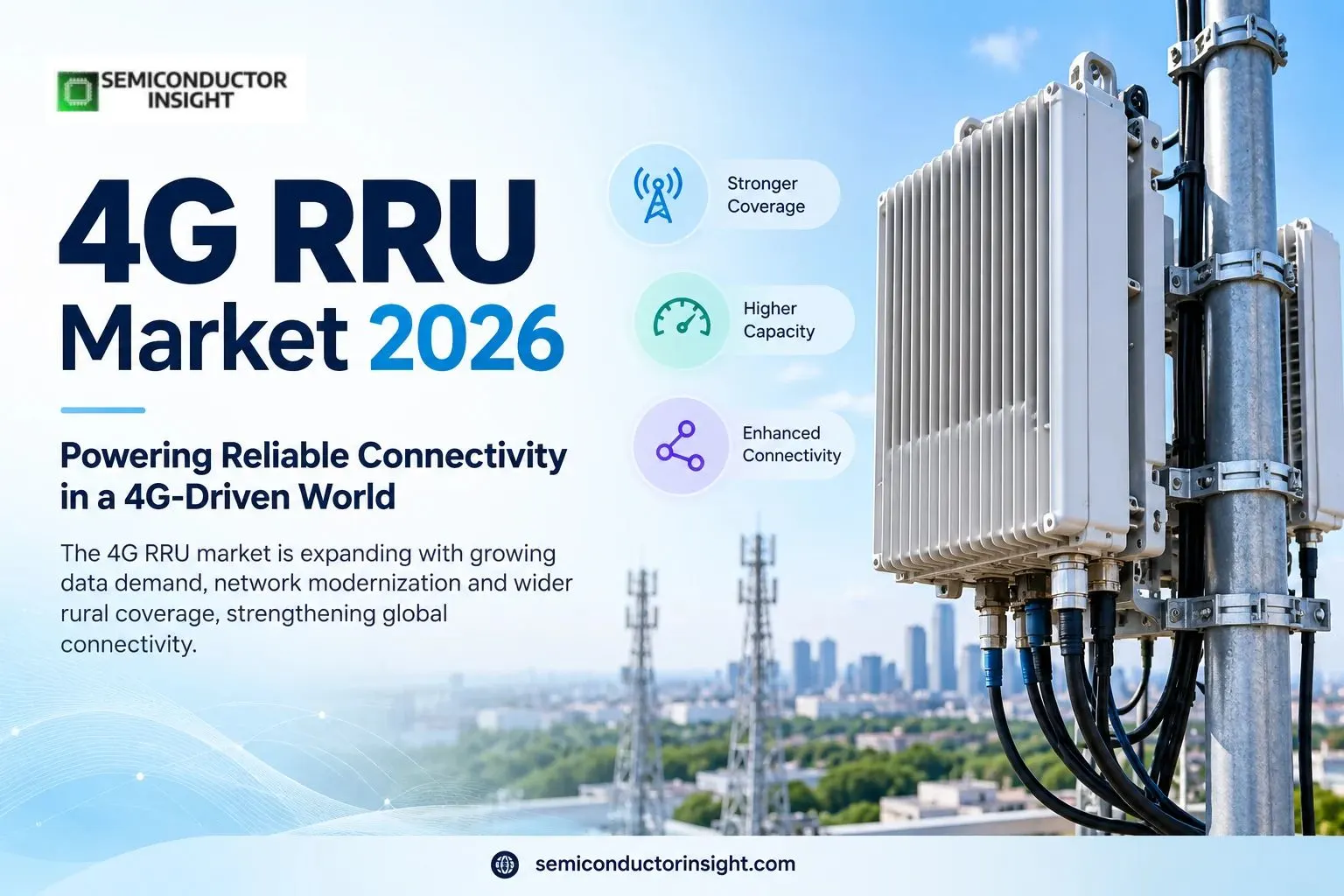
Even as telecommunications operators expand 5G coverage, 4G remote radio units (RRUs) remain important to mobile networks that support voice calls, broadband access, enterprise connectivity, and rural communications. An RRU converts digital radio signals into radio-frequency transmissions and amplifies received signals before forwarding them toward the baseband processing system.
The scale of existing LTE usage explains why this hardware continues to matter. According to the June 2026 Ericsson Mobility Report, global 4G subscriptions stood at approximately 4.5 billion in the second quarter of 2026, even after declining by 62 million during that quarter. This installed user base makes equipment maintenance, capacity optimisation, and selective radio upgrades important considerations for operators.
What Happens Inside a Remote Radio Unit?
- The performance of an RRU depends on several interconnected components, including power amplifiers, filters, low-noise amplifiers, analogue-to-digital converters, and radio-frequency transceivers.
- Together, these components help transmit signals efficiently, receive weak signals, and limit unwanted interference.
- The unit is typically installed close to the antenna, reducing the need to carry high-frequency radio signals over long feeder cables.
- This architecture can improve radio performance while simplifying the layout of tower installations. Its design must also accommodate weather exposure, thermal management, electromagnetic compatibility, and continuous operation.
- For semiconductor suppliers, these requirements create demand for RF power devices, signal-processing components, and power-management electronics designed for demanding outdoor conditions.
Why 4T4R Configurations Are Attracting Attention?
Transmit-and-receive configurations influence how an RRU handles radio signals. A 2T2R unit has two transmit and two receive paths, while a 4T4R unit provides four of each. Additional radio paths can support diversity and multiple-input multiple-output techniques, although actual performance depends on antenna configuration, spectrum, interference, and network design.
Commercial equipment illustrates the range of available architectures. Tejas Networks lists 4G remote radio head support across bands including B1, B3, B5, B28, B40, and B41, covering different deployment and spectrum requirements. Its portfolio also includes radios that can support migration toward newer network generations.
For operators, the key question is whether a configuration can meet local capacity requirements without unnecessary increases in power consumption, tower loading, or installation complexity.
LTE Hardware Is Becoming Part of a Longer Upgrade Cycle
The distinction between 4G-only hardware and equipment designed for multiple generations is becoming increasingly important. Some radio platforms support LTE alongside 5G New Radio, allowing operators to introduce newer services while retaining existing infrastructure.
For example, MTI lists radio products supporting LTE and 5G, including configurations with 4T4R architecture and O-RAN interfaces. Its published specifications include nominal −48 V DC power operation and eCPRI fronthaul connectivity on selected products. These details show how radio equipment can be designed around established telecom power systems while accommodating newer network architectures.
This flexibility is particularly relevant when operators must coordinate LTE maintenance with gradual 5G deployment rather than replace every radio unit at once.
Don’t Forget to Surf Our Updated Report for More Detailed Analysis: https://semiconductorinsight.com/report/4g-rru-market/
Open RAN Is Changing the Equipment Conversation
Open RAN introduces greater emphasis on standardised interfaces between radio units and other network elements. The aim is to make it easier to combine equipment from different suppliers, subject to interoperability testing and implementation requirements.
The O-RAN architecture uses interfaces such as the open fronthaul connection between the radio unit and distributed unit. For an RRU manufacturer, supporting these interfaces involves more than adding a fibre port. Synchronisation, radio performance, management software, security, and interoperability must also work correctly.
India provides a relevant example of this technology direction. The Department of Telecommunications’ Digital Communication Innovation Square programme documents Indian-developed radio access products, including Lekha Wireless Solutions’ 4G and 5G equipment portfolio. This illustrates the role of domestic engineering in broadening the available supplier base.
The Semiconductor Details Behind Field Reliability
- RRUs operate in environments where heat, moisture, voltage fluctuations, and prolonged workloads can affect reliability. Power amplifiers must deliver the required output while managing heat dissipation. Filters must maintain signal selectivity, and power-management circuits must support stable operation during changing loads.
- Maintenance also matters. A radio unit that supports remote monitoring, alarms, and software updates can help technicians diagnose faults without immediately arranging a physical site visit. These features are especially useful across geographically dispersed networks, where tower access and maintenance scheduling can be difficult.
- As operators evaluate replacement hardware, the most useful specifications are therefore not limited to output power. Band compatibility, carrier support, energy consumption, thermal design, interface standards, and long-term component availability all influence the practical value of an RRU.
What Network Planners Should Examine Before an Upgrade?
4G RRU market is increasingly shaped by the need to balance existing LTE demand with investment in newer technologies. A sensible equipment assessment begins with spectrum availability and traffic patterns, followed by compatibility with antennas, baseband systems, and current site infrastructure.
Operators should also distinguish between a product’s maximum laboratory specification and its performance under real deployment conditions. Vendor datasheets establish technical capabilities, while field testing and network measurements help determine whether those capabilities translate into better coverage, capacity, or reliability.
For semiconductor and telecom equipment suppliers, the opportunity lies in building radio hardware that is efficient, interoperable, durable, and adaptable. Although LTE subscriptions are gradually migrating toward 5G, billions of existing connections mean that reliable 4G radio infrastructure remains an important part of the global communications landscape.

Comments (0)