
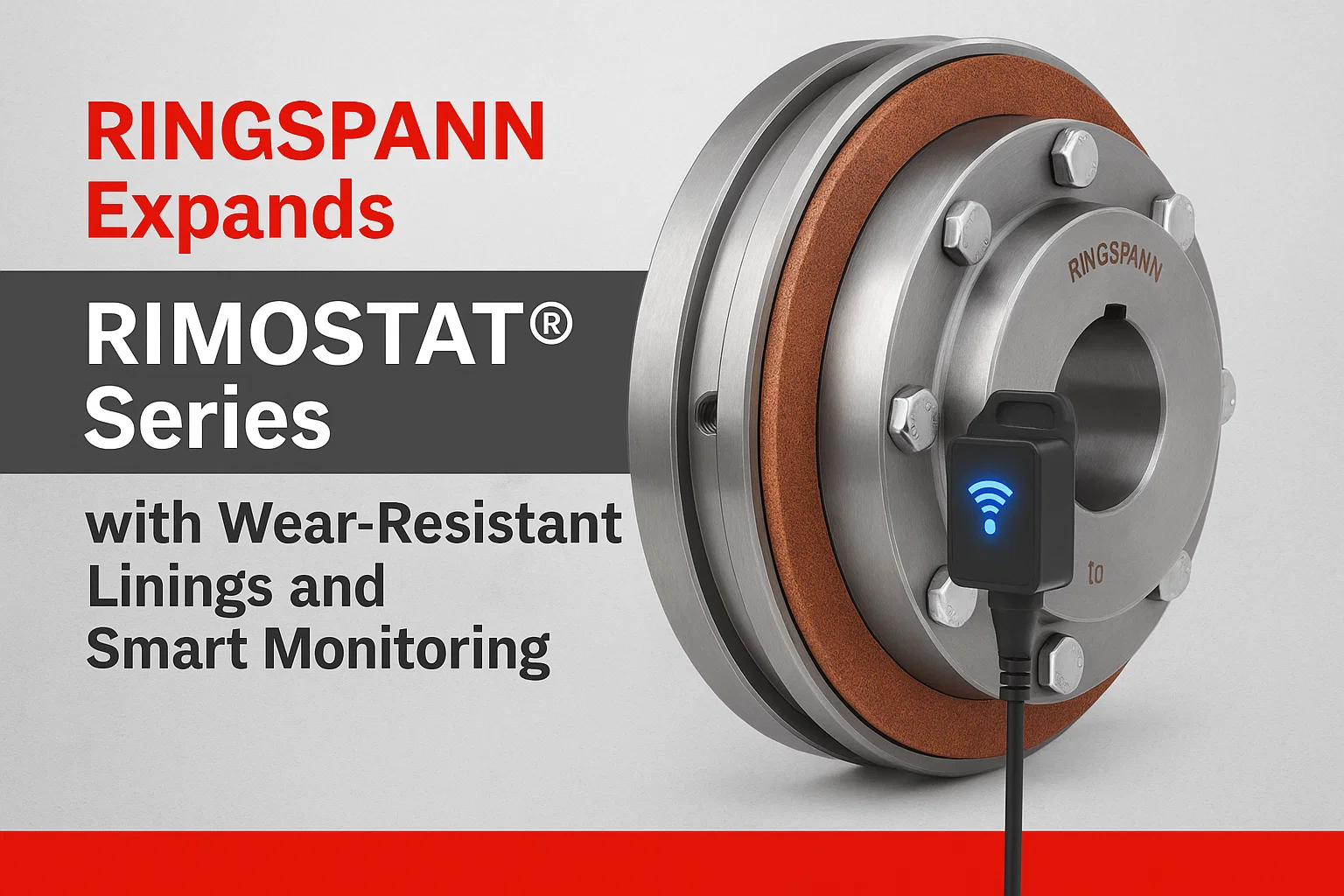
RINGSPANN Expands RIMOSTAT® Series with Wear-Resistant Linings and Smart Monitoring
In the dynamic world of industrial automation, mechanical safety is as important as efficiency. Among the unsung heroes of machine protection systems lies the friction type torque limiter a component designed to prevent catastrophic failures by disengaging drive elements when torque exceeds safe limits. While torque limiters may not attract the same attention as robotics or artificial intelligence, their role in ensuring safe, reliable, and cost-effective operation across industries is critical.
The global Friction Type Torque Limiter Market, valued at USD 297 million in 2024, is projected to grow steadily to USD 433 million by 2032, reflecting a CAGR of 5.6% over the forecast period. This growth trajectory is fueled by a surge in automation, demand for machine reliability, expansion into emerging applications such as electric vehicle (EV) test rigs, and advancements in materials and monitoring technologies.
Access Your Free Sample Report- Friction Type Torque Limiter Market
Understanding Friction Type Torque Limiters
Before diving into industry updates, it is important to understand what friction torque limiters are and why they matter.
- Core Function: A friction type torque limiter transmits torque through frictional contact. When torque exceeds a preset threshold, slippage occurs between the friction elements, protecting both driving and driven machinery components.
- Applications: Found in conveyors, test rigs, packaging systems, pumps, compressors, and even EV drivetrains, these limiters serve as an insurance policy against costly downtime.
- Advantages:
- Cost-effective mechanical overload protection.
- Simple design and high reliability.
- No permanent disengagement (as in shear pins); slip is recoverable.
- Broad adaptability across industries.
As industries become increasingly automated, ensuring machinery longevity while minimizing downtime is paramount hence the growing importance of torque limiters.
Recent Developments in the Friction Torque Limiter Industry
1. R+W’s Precision Torque Limiter Expedite Program
R+W, a recognized name in precision couplings and limiters, recently announced a rapid assembly and delivery program for its SK1 series of torque limiters, ranging from 15 to 1500 Nm. By drastically reducing lead times, the company is addressing one of the biggest customer pain points: delayed procurement in high-demand industries.
Why it matters:
- Fast delivery empowers manufacturers to minimize downtime in critical projects.
- It highlights an industry trend where service responsiveness and customization are becoming just as valuable as product performance.
2. Howdon’s Role in EV Test Rigs
Howdon, another key player, has recently supported the development of electric vehicle drivetrain test rigs. Friction torque limiters are being integrated into these rigs to handle unpredictable torque spikes and ensure consistent testing outcomes.
Why it matters:
- The EV revolution is driving entirely new requirements for torque management.
- Test rig reliability is crucial for validating drivetrain durability, making torque limiters a frontline defense against costly delays or equipment failures.
3. RINGSPANN’s RIMOSTAT® and RHSD Series Enhancements
RINGSPANN has expanded its line of friction torque limiters capable of slip torques up to 60,000 Nm. These feature sintered friction linings for superior wear resistance, along with options for electronic speed monitoring.
Why it matters:
- This represents a convergence of mechanical safety and digital monitoring, paving the way for smarter torque limiters.
- By embedding sensor-based monitoring, these devices align with the broader Industrial IoT (IIoT) movement, enabling predictive maintenance and reduced downtime.
4. Flohr Industrietechnik’s Stainless Steel INOX Series
Flohr introduced stainless steel torque limiter systems aimed at food processing, pharmaceuticals, and medical device manufacturing. In these sectors, hygiene and corrosion resistance are critical, and traditional torque limiters may fall short.
Why it matters:
- The INOX series demonstrates how torque limiters are expanding beyond heavy machinery into hygienic and precision-driven industries.
- This development positions friction torque limiters as enablers of safety not just in performance, but also in compliance with strict regulatory environments.
5. Tsubaki’s Pre-Assembled Torque Limiter Sprockets
Tsubaki has introduced pre-assembled torque limiter and sprocket systems, simplifying installation and reducing setup time. These units are custom bored and ready-to-use, reflecting a push toward user-friendly solutions.
Why it matters:
- Simplified integration appeals to industries facing labor shortages or lacking specialized mechanical expertise.
- It underscores a trend toward plug-and-play mechanical components making reliability accessible to a broader base of customers.
Download Sample Report PDF- Friction Type Torque Limiter Market
6. Autogard Highlighted in Machinery Protection Features
Autogard torque limiters were recently featured in trade media, emphasizing their role in minimizing downtime in critical machinery. While not a new product launch, this reflects a rising awareness of torque limiters as essential safety devices, not just ancillary components.
Why it matters:
- Reinforces the value proposition of torque limiters in preventing accidents and financial losses.
- Suggests a growing mainstream appreciation of these devices beyond the engineering community.
Key Trends Driving the Market Forward
1. Smart Monitoring and IoT Integration
The next generation of friction torque limiters is likely to feature sensor integration for real-time torque monitoring, enabling predictive maintenance. RINGSPANN’s electronic monitoring add-ons are an early sign of this shift.
2. Industry-Specific Customization
From hygienic stainless steel limiters for food and pharma to high-precision test rigs for EVs, customization is becoming central to torque limiter development.
3. Faster Delivery and Mass Customization
As R+W demonstrated, customers increasingly value shorter lead times and tailored solutions. Rapid delivery and modular assembly options will become differentiators in a competitive market.
4. Advanced Materials and Durability
Use of sintered friction linings, stainless steels, and coatings enhances the lifespan and reliability of torque limiters in harsh operating conditions.
5. Expanding Applications in EVs and Robotics
Torque limiters are extending beyond traditional industrial sectors into EV drivetrains, robotics, and automated test environments, reflecting the broader digitalization of manufacturing.
Market Insights: Growth, Opportunities, and Challenges
Market Growth
- 2024 Market Value: USD 297 million
- 2032 Projected Value: USD 433 million
- CAGR:6% (2024–2032)
This steady growth reflects both expanding adoption and ongoing replacement demand in traditional sectors like manufacturing, energy, and logistics.
Growth Drivers
- Rapid industrial automation worldwide.
- Increased EV adoption requiring specialized testing equipment.
- Greater awareness of downtime costs and the value of preventative safety devices.
- Innovation in monitoring and friction materials.
Challenges
- Competition from alternative torque-limiting technologies (magnetic, electronic).
- Limited visibility in mainstream industrial press compared to robotics or AI.
- Need for skilled technicians in some cases for calibration and maintenance.
Opportunities
- Integrating friction torque limiters into smart factory ecosystems.
- Expanding into non-traditional industries like medical devices, food, and pharma.
- Growth in emerging markets (Asia-Pacific, Latin America) where automation is accelerating.
Click Here To Download Full Sample Report- Friction Type Torque Limiter Market
Future Outlook
The future of friction torque limiters is defined by a balance of mechanical reliability and digital intelligence. While their design may appear simple, their role is increasingly sophisticated bridging the gap between traditional mechanical systems and modern Industry 4.0 frameworks.
Key outlook points include:
- Mainstream IoT Adoption: Expect friction torque limiters to evolve into smart protective devices with embedded sensors.
- Green Energy and EV Expansion: As renewable energy and electric vehicles grow, demand for torque management will scale alongside.
- Customized, Application-Specific Designs: More industry-specific models (such as stainless INOX limiters) will be developed.
- Sustainability and Materials Innovation: Future torque limiters may incorporate recyclable materials or eco-friendly manufacturing methods to align with global sustainability goals.
With the market projected to grow from USD 297 million in 2024 to USD 433 million by 2032, the torque limiter industry is entering a phase of steady but transformative growth. Its trajectory is being reshaped by EV applications, digital monitoring, advanced materials, and industry-specific customization.

Comments (0)