

Remote Boat Monitoring: How Marine IoT Is Transforming Vessel Management
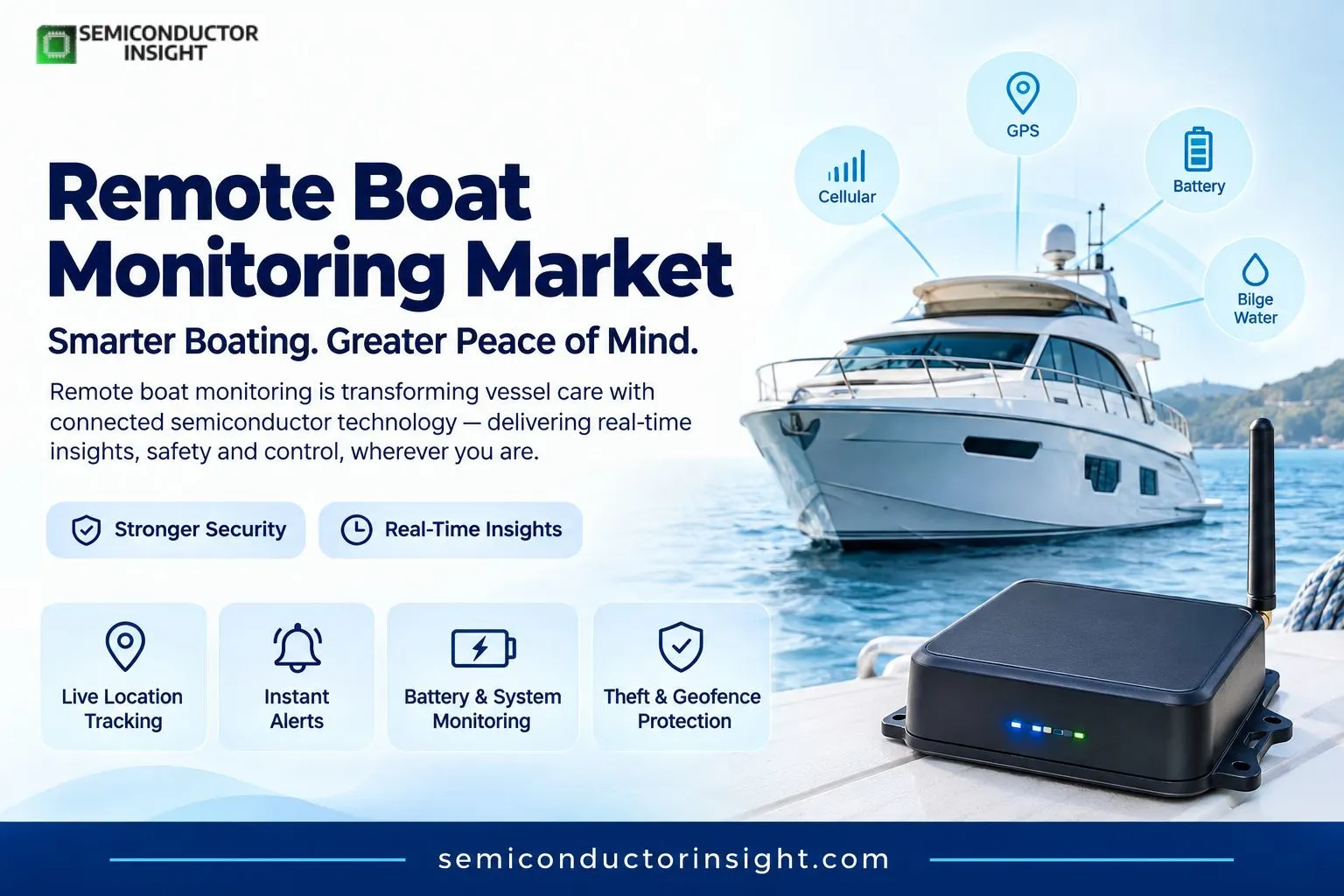
Remote boat monitoring begins with a handful of semiconductor components that survive salt air, vibration, and limited power. A typical unit carries a low-power microcontroller, a multi-band cellular modem such as LTE Cat-M1, a GPS receiver, and a set of analog front ends that sample battery voltage, bilge water presence, temperature, and acceleration. These chips sit inside an IP65 or higher enclosure and draw as little as 1.2 watts under normal operation, allowing months of standby on a standard 12-volt bank.
Raymarine – The Bridge That Never Sleeps
- Step aboard a modern yacht and Raymarine’s YachtSense ecosystem often forms the digital nervous system.
- Its YachtSense Link marine router pairs 4G connectivity with four low-voltage digital input/output channels, GPS, and SeaTalkNG/NMEA 2000 ports so owners can monitor batteries, pumps, lighting, and location from a phone even when the boat sits empty in a marina.
- In 2025 Teledyne’s Raymarine unit added Maretron’s Octoplex, MPower and MConnect lines, expanding automation options for builders and owners. The Remote Module alone offers eight 250 mA channels and draws only 250 mA itself, fitting neatly into existing SeaTalkng backbones.
- Recent app updates in 2026 added geofencing alerts and remote digital switching, while the free Wi-Fish app lets anglers view CHIRP DownVision sonar on smartphones.
- With installations spanning recreational runabouts to larger motor yachts, Raymarine remains a go-to for integrated remote oversight that blends navigation electronics with practical boat-watch functions.
Navico Group – One Network, Many Brands
Under Brunswick’s umbrella, Navico Group stitches together Simrad, B&G, Lowrance, CZone digital switching and power-management brands into connected vessel platforms. The division posted roughly $800 million in net sales for 2025 and operates multiple engineering offices plus two manufacturing facilities while employing more than a thousand people across marine electronics and related systems.
CZone replaces traditional wiring with modular digital control of lighting, bilge pumps and tank monitoring, while the newer OP Box links those functions straight to multifunction displays. In 2026 software releases improved sonar auto-gain, Navionics Dock-to-Dock autorouting and entertainment integration, and the company continues rolling out AutoCaptain autonomous docking and AI-assisted maintenance alerts on Boston Whaler and Sea Ray models. Commercial and defense workboat segments are expanding the addressable market, giving Navico a broad footprint from weekend fishing boats to professional fleets.
Sentinel Marine Solutions – Decade of Quiet Watchfulness
For more than ten years Sentinel has refined a single platform that now serves over 45,000 users worldwide, processes more than 65 million miles of vessel data, partners with 40-plus OEMs and supports 400-plus fleets. The Boat Monitor unit collects wired, NMEA 2000 and Bluetooth sensor data, updates frequently while under way and every 20 minutes at rest, then pushes alerts for shore-power loss, battery voltage drops, bilge activity, door openings or geofence breaches.
Bundles such as SafeGuard and Secure target everything from open RIBs to 90-foot yachts, giving owners live status on batteries, bilge water and security without constant dock checks. Fleet operators gain usage reports, maintenance recommendations and multi-vessel dashboards that cut manual inspections. In 2026 the company continues expanding OEM integrations so new builds leave the factory already connected.
Sensar Marine – Always-On, Almost Invisible
Founded in 2014 and staffed by a lean team of around a dozen specialists, Sensar Marine’s Boat Monitor runs 24/7 on its own internal battery that lasts up to four months between charges drawn from the boat’s banks. The compact unit tracks GPS position, geofence breaches (auto-activating after 15 minutes of stillness), G-forces from 0 g to 8 g, bilge activity and battery health, sending SMS and app alerts the moment thresholds are crossed.
Subscription plans start at roughly $10 per month. Builders use the same hardware as a “Vessel Lab” that logs data every five seconds during sea trials, turning every demo ride into cloud-delivered engineering feedback. Owners simply open the app to see current location, trip logs and system status whether the boat sits in a quiet inlet or a busy harbor.
Our most recent updated related study is available for free at this link: https://semiconductorinsight.com/report/remote-boat-monitoring-system-market-size-share-trends-market/
Blue Guard Innovations – Modular Mates for Peace of Mind
Based in Colorado with manufacturing in San Diego, Blue Guard’s Smart Skipper system uses Bluetooth 5.0 mesh “Mate” sensors GPS/Geofence, Battery, Bilge Pump, Temperature, Load Control, Secure (door/hatch) and upcoming Tank Level paired with an onboard tablet that acts as the cloud gateway. Owners can monitor and control pumps, lights or air-conditioning while receiving real-time security alerts.
Cloud plans allow two vessels and three users per subscription, with monthly options around $5 and yearly plans near $59. The approach lets users add only the sensors they need and keeps the system functional even when cellular coverage drops, because the tablet continues local monitoring. Research-vessel captains and recreational owners alike cite the flexibility of mesh networking that needs no line-of-sight wiring.
Barnacle Systems – From Military Roots to Everyday Black Boxes
Started in 2017 by a founder with prior experience building remote-monitoring gear for government agencies, Barnacle’s BRNKL line now includes the 5G cellular model, subscription-light Blue unit (priced roughly $4,300–$5,400) and professional Black offline-first recorder. Systems capture live video from multiple IP cameras, store up to 4 TB locally, integrate NMEA 2000 data, accelerometers, multi-constellation GNSS and optional Starlink or Iridium links.
Owners receive alerts for battery banks, bilge activity, shore power, cabin climate, geofence breaches and unauthorized boarding, while the Black version keeps all data onboard with military-grade encryption for mission-critical use. In 2026 the company highlighted rising marina theft trends and positioned BRNKL cameras and sensors as practical deterrents that also generate evidence for authorities.
Monnit Corporation – Sensors That Scale from Dinghy to Container Ship
- Monnit’s ALTA wireless IoT sensors have delivered more than 43 billion data points across 85 countries to roughly 64,000 customers.
- The catalog exceeds 80 sensor types covering temperature, water detection, current (20 A to 500 A), voltage, tilt, vibration, humidity and gas.
- Marinas and boat owners deploy them for bilge-water alerts, battery-bank monitoring, power-pedestal tracking and security.
- Sensors run on replaceable batteries or optional solar, communicate on multiple RF frequencies, and feed the free iMonnit platform that pushes SMS or email alerts.
- Integrators combine the hardware with custom software for entire harbor networks, turning individual vessel sensors into facility-wide visibility tools.
BoatSecure – Long-Range LoRa Quietly on Watch
Made in New Zealand and designed for marina or mooring use, BoatSecure’s device monitors five critical systems bilge-pump cycling and duration, battery voltage across banks, shore-power status, GPS movement and onboard motion over a LoRa wireless link that exceeds 10 km and penetrates masts and infrastructure without cellular data.
Instant app or email alerts arrive within seconds of an event. Installation is deliberately simple, and club discounts plus no long lock-in contracts make it approachable for private owners. The system runs continuously, switching modes when the boat is under way so anchor-drift alarms do not false-trigger, giving skippers continuous status without monthly cellular fees.
Hello Sailor – Pay-As-You-Go Simplicity
This British system uses LTE-M cellular (with fallback to traditional networks) and a low-cost pay-as-you-go SIM that can cost around £5 per year, eliminating monthly subscriptions. It monitors two battery voltages, bilge-pump activation, GPS position, temperature and two general-purpose sensor inputs that accept common switches for security, float alarms, shore-power loss or anchor-drag detection.
Current draw sits at just 0.008 A, so even boats without solar or wind power stay monitored. Designed for remote moorings with weak signal, the unit installs with basic hand tools after a short dinghy trip, then sends text alerts whenever thresholds are crossed.
Incharge Marine – Focused Power & System Guardianship
Incharge Marine concentrates on battery-bank, charging-system and related electrical monitoring that integrates with broader remote platforms. Its solutions help owners track voltage, current and charge status across multiple banks, reducing the risk of unexpected power loss that can disable bilge pumps or security systems.
The hardware is typically paired with cellular or Wi-Fi gateways so alerts reach a phone the moment shore power drops or a bank falls below safe levels. By zeroing in on the electrical heart of the vessel, Incharge supports both recreational owners and commercial operators who need reliable power visibility when the boat sits unattended for days or weeks.

Comments (0)