

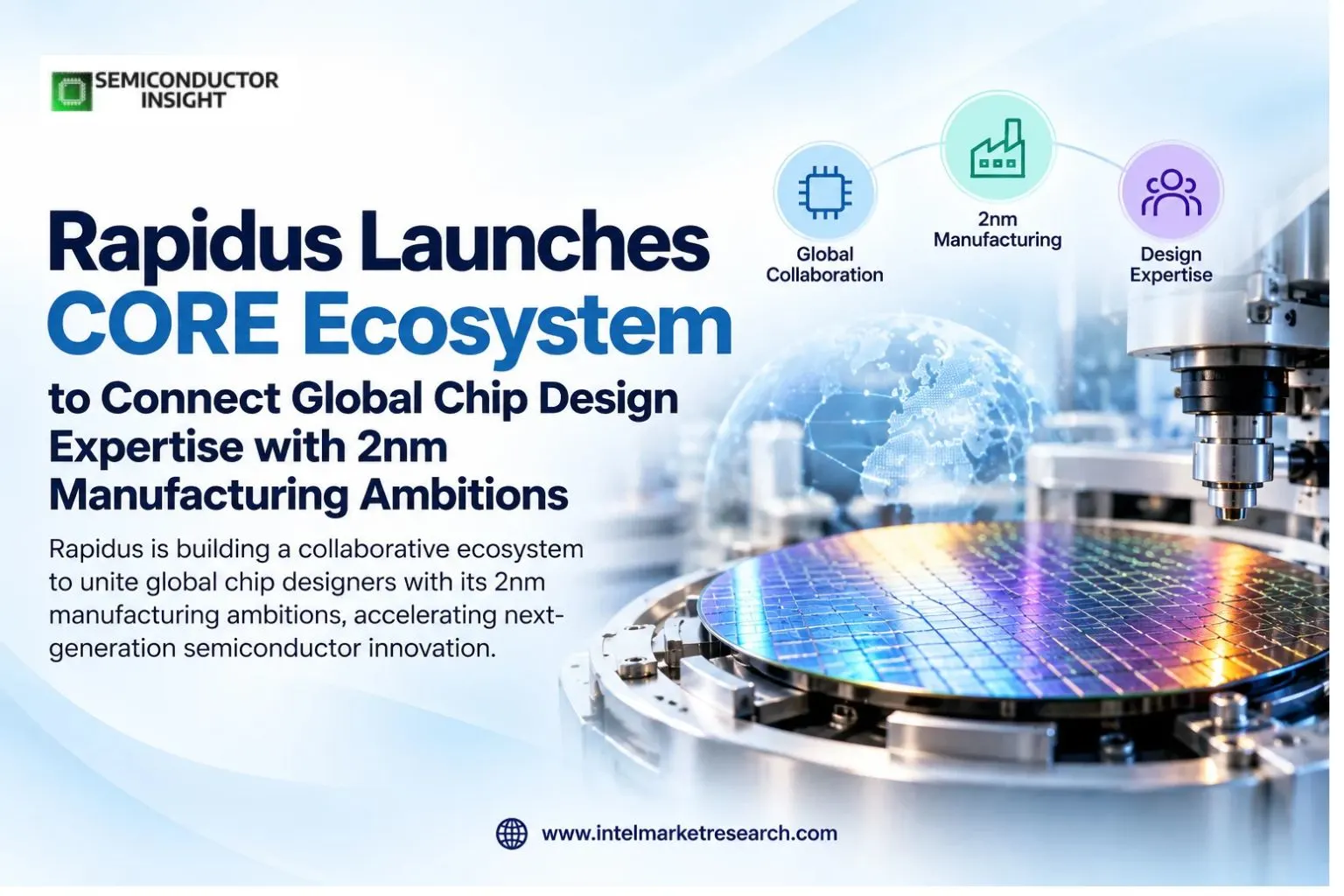
Rapidus Launches CORE Ecosystem to Connect Global Chip Design Expertise with 2nm Manufacturing Ambitions
Japan’s Rapidus Corporation is bringing together 17 design-focused partners under a new collaboration framework, aiming to strengthen the path from advanced chip development to manufacturing.
Beyond the Fab: Rapidus Builds a Wider Semiconductor Development Network
The race to develop next-generation semiconductors is increasingly being shaped by the capabilities surrounding the fabrication process. As chip architectures become more complex and development cycles demand greater coordination, access to design expertise, electronic design automation tools, semiconductor IP, and engineering talent is becoming an important part of advanced-node competitiveness.
Against this backdrop, Rapidus Corporation has announced the establishment of the Rapidus Collaborative Open Rapid Ecosystem (CORE), a global framework intended to support the development and mass production of cutting-edge semiconductors.
The initiative is designed to bring together companies and specialist capabilities across the semiconductor value chain, strengthening the support available to customers as they move from chip development toward manufacturing. It also supports Rapidus’s broader ambitions in advanced semiconductor production, including its focus on 2nm technology.
17 Design Partners Form the First CORE Initiative;
Rapidus is beginning the ecosystem’s development with Design Solution Associates, a group of 17 companies intended to connect customers with semiconductor design resources and specialized technical expertise.
The announced members, listed alphabetically, are:
- AION Silicon Limited
- Cadence Design Systems, Inc.
- Dai Nippon Printing Co., Ltd.
- GreatAsic Technology Sdn. Bhd.
- HCL Technologies Limited
- Infinecs Systems Sdn. Bhd.
- Infosys Limited
- MavissDesign Co., Ltd.
- MosChip Technologies Limited
- NSW Inc.
- Oppstar Technology Sdn Bhd
- Quest Global Services Pte. Ltd.
- SkyeChip Berhad
- Synopsys, Inc.
- TOPPAN Inc.
- Toshiba Information Systems (Japan) Corporation
- Wipro Limited
The group brings together organizations with different areas of expertise across semiconductor design, engineering services, and related technologies. Through this network, Rapidus aims to help customers access the specialized resources needed to begin development earlier and establish a more coordinated route toward manufacturing.
The framework is also intended to serve customers beyond Japan, giving international businesses a broader network of design-related support as they explore advanced semiconductor development opportunities.
Why Design-to-Manufacturing Integration Matters at 2nm?
- Developing a chip for an advanced manufacturing process involves much more than transferring a design to a fabrication facility. Chip designers must coordinate architecture, verification, physical implementation, power and performance requirements, design tools, and manufacturing constraints.
- At advanced nodes such as 2nm, these interdependencies make early coordination particularly important. Design decisions can affect manufacturability, performance, development costs, and the time required to prepare a product for production.
- For a manufacturer seeking to attract customers to a new advanced process, the availability of a supporting design ecosystem can therefore be a meaningful consideration.
- Rapidus’s CORE framework addresses this broader requirement by connecting its manufacturing ambitions with external design capabilities. Rather than expecting every customer to assemble all the necessary resources independently, the initiative aims to create a more accessible network of technical partners.
- However, the ecosystem’s practical impact will depend on how effectively participating companies coordinate their services, support customer projects, and help translate designs into manufacturing-ready products.
CORE Is Planned to Expand Beyond Design Services
The initial Design Solution Associates group represents the first stage of a broader ecosystem strategy. Rapidus has indicated that it plans to expand CORE into additional categories, including electronic design automation (EDA) and semiconductor intellectual property (IP).
EDA software is fundamental to modern chip development, supporting activities such as circuit design, simulation, verification, and physical implementation. Semiconductor IP, meanwhile, provides reusable building blocks that can help designers develop complex chips without creating every component from the ground up.
Building stronger connections across these categories could help Rapidus establish a more comprehensive development environment for customers.
The expansion also reflects an important industry reality: advanced semiconductor manufacturing depends on a network of interrelated technologies and specialized organizations. Strengthening those connections may help reduce fragmentation between design preparation and production requirements.
- With CORE, Rapidus is positioning collaboration as an important part of its advanced semiconductor strategy. The initial network of 17 Design Solution Associates establishes a starting point, while planned expansion into EDA, IP, and other categories signals a broader ambition to connect more stages of the chip-development process.
The industry takeaway: As semiconductor manufacturing moves toward increasingly advanced nodes, the ability to connect design resources, technology partners, and production infrastructure could become just as important as the manufacturing process itself.
Unlock Key Takeaways from Our Updated Relevant Report Study: https://semiconductorinsight.com/report/advanced-packaging-chip-last-level-cache-sram-macro-market/
LinkedIn Semiconductor News
THE 2nm RACE IS ABOUT MORE THAN FAB CAPACITY – RAPIDUS IS BUILDING THE ECOSYSTEM BEHIND THE CHIP.
Japan’s advanced semiconductor ambitions are gaining another building block.
Rapidus Corporation has announced the Rapidus Collaborative Open Rapid Ecosystem (CORE), a global collaboration framework designed to support the development and mass production of cutting-edge semiconductors, including its 2nm technology ambitions.
The first step? Bringing design expertise closer to manufacturing.
Through its newly formed Design Solution Associates, Rapidus is connecting with 17 companies spanning semiconductor design, engineering, and technology services. The initiative aims to help customers access specialist capabilities earlier in the development cycle and build a stronger pathway from chip design to production.
The founding group includes:
Cadence Design Systems, Synopsys, TOPPAN, Dai Nippon Printing, Toshiba Information Systems (Japan), Infosys, Wipro, HCL Technologies, MosChip Technologies, and other specialist design partners.
- Advanced-node development requires more than sophisticated fabrication processes. Design tools, semiconductor IP, engineering talent, verification capabilities, and manufacturing readiness must come together long before a chip reaches production.
- By building a broader partner network, Rapidus is seeking to address this integration challenge while strengthening support for customers in Japan and international markets.
- And CORE is designed to go further: Rapidus plans to expand the ecosystem beyond design services into electronic design automation (EDA), intellectual property (IP), and additional technology categories.
The strategic takeaway: In the 2nm era, competitive advantage will depend not only on who can manufacture advanced chips, but also on how effectively the industry connects design innovation with production capabilities.
Can a collaborative ecosystem help Rapidus strengthen Japan’s position in advanced semiconductor manufacturing?
Browse Our Thorough Related Sector Studies: https://semiconductorinsight.com/report/advanced-packaging-chip-last-level-cache-sram-macro-market/
#Rapidus #Semiconductors #2nm #ChipDesign #AdvancedSemiconductors #EDA #SemiconductorIP #JapanSemiconductors #ChipManufacturing #SemiconductorIndustry #CORE #Cadence #Synopsys #TOPPAN

Comments (0)