
Qualcomm and MediaTek Silicon Fuelling Broadband Data Card Breakthroughs for Travellers and Enterprises
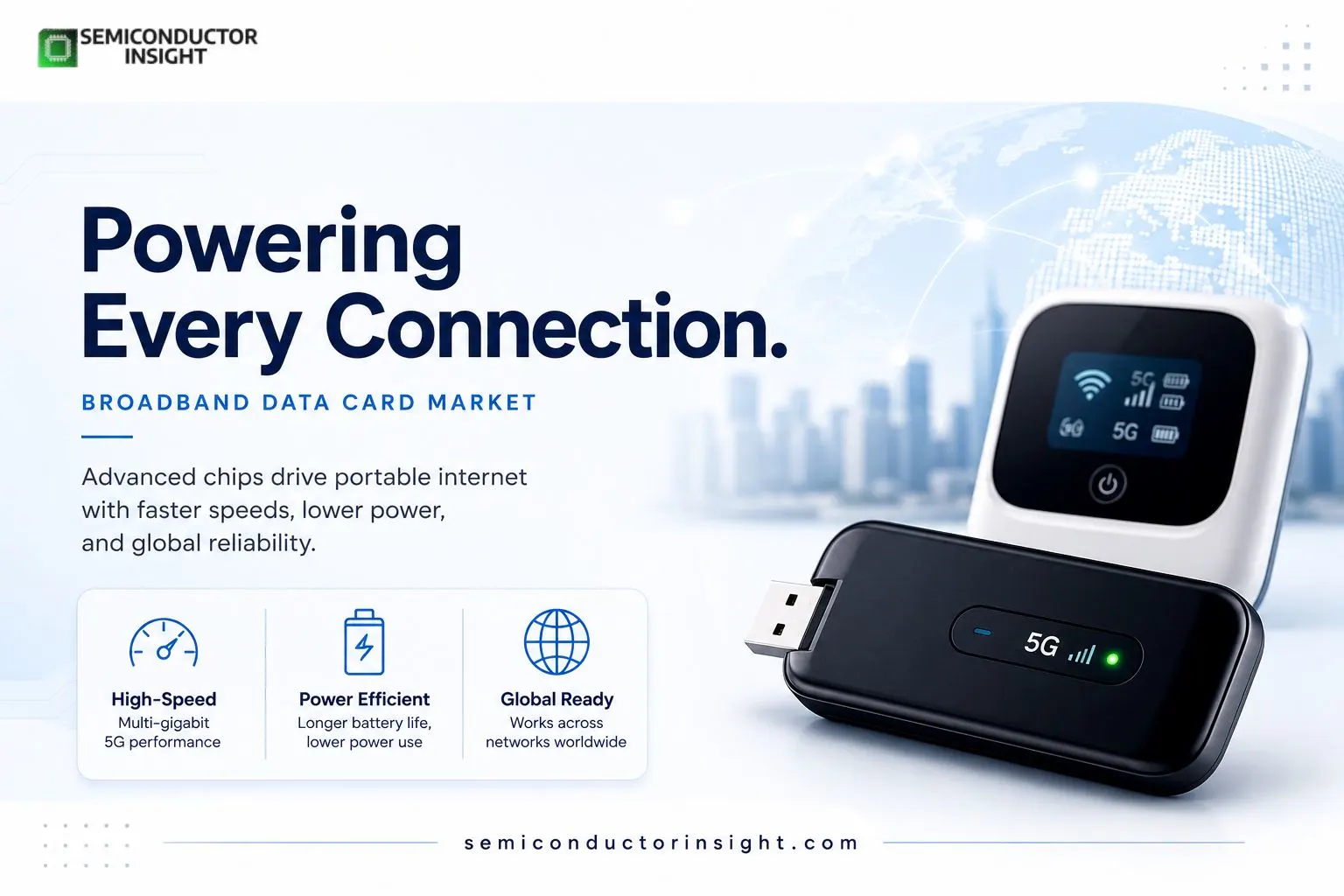
Broadband data cards continue to serve as lifelines for users needing reliable internet on the move. These compact devices, often appearing as USB sticks or pocket-sized hotspots, rely heavily on advanced semiconductor components to deliver seamless wireless connectivity across cellular networks.
As mobile data demand surges globally, the interplay between semiconductor technology and these portable solutions stands out as a key area of innovation.
Shifting Landscapes in Portable Connectivity Hardware
- Portable broadband solutions have moved far beyond early 3G dongles.
- Today’s devices integrate sophisticated modem-RF systems capable of handling multi-gigabit speeds while managing power efficiency for extended battery life in hotspots.
- Manufacturers embed chips that support carrier aggregation, allowing devices to combine multiple frequency bands for stronger signals in challenging environments.
- This hardware evolution supports everything from remote workers accessing cloud applications to international travelers maintaining connections without local SIM swaps.
- Real-world instances highlight this shift. In regions with expanding 5G infrastructure, users plug in updated data cards to achieve download speeds that rival fixed broadband.
- Government initiatives, such as those tracked by the FCC’s Broadband Data Collection, underscore the push for wider mobile coverage, indirectly boosting demand for compatible portable devices that fill gaps in fixed-line networks.
Semiconductor Foundations Enabling High-Speed Mobility
At the heart of modern broadband data cards lie specialized modem chipsets. Companies like Qualcomm supply platforms such as the X85 Modem-RF, which power high-performance 5G modules capable of advanced features including AI-optimized signal processing. These chips handle complex tasks like beamforming and low-latency data transfer, essential for applications ranging from video streaming to real-time IoT monitoring.
MediaTek’s offerings, including RedCap platforms, target cost-sensitive segments by reducing power consumption significantly compared to earlier generations. Such optimizations allow data cards and hotspots to operate longer on battery while supporting multiple connected devices. Current studies entries on mobile broadband modems detail how USB-connected variants evolved from PCMCIA cards to today’s plug-and-play solutions, emphasizing the role of integrated SIM slots and antenna designs.
Ongoing examples include deployments in enterprise settings where fleets of vehicles use embedded or portable data cards for telemetry. In developing markets, affordable 4G/5G dongles help bridge digital divides, enabling education and small business operations in areas lacking fiber infrastructure.
Stay connected for additional in-depth information right here: https://semiconductorinsight.com/report/broadband-data-card-market/
Global Adoption Patterns and Usage Scenarios
- Mobile broadband usage patterns vary widely. In North America and parts of Europe, users leverage 5G-enabled hotspots for backup connectivity during travel or outages. Pew Research data from 2025 shows steady home broadband subscription rates around 78% among U.S. adults, yet mobile alternatives remain critical for flexibility.
- Internationally, portable WiFi devices see heavy use in tourism-heavy areas. Products like multi-country hotspots that work across 140+ nations without traditional SIM contracts demonstrate practical innovation, often powered by efficient semiconductor designs that manage global roaming bands efficiently.
- In Asia and Africa, government-led digital inclusion programs promote data card distribution to schools and rural clinics. These initiatives pair with local network rollouts, where semiconductor advancements in RF front-end modules ensure reliable performance even on crowded spectra.
Technical Innovations Reshaping Device Capabilities
Recent semiconductor progress focuses on integration and efficiency. Advanced packaging techniques allow modem chips, power management ICs, and memory to coexist in tiny footprints suitable for dongles. This results in devices that support Wi-Fi 6 or 7 for sharing connections with multiple users while maintaining thermal control during heavy use.
Energy efficiency stands out as another frontier. Chips designed for lower power draw extend operational times in battery-powered hotspots, crucial for field workers or emergency responders. Case studies from network operators show deployments where upgraded data cards reduced downtime and improved data throughput in mobile environments.
Emerging Use Cases in a Connected World
Beyond consumer travel, broadband data cards find applications in temporary setups like construction sites or event venues. Semiconductors enabling private network support allow these devices to create secure local bubbles. Integration with edge computing further expands possibilities, where onboard processing handles data before transmission.
In smart agriculture or logistics, ruggedized versions with enhanced modem chips provide constant tracking and sensor data relay. These scenarios leverage the maturity of cellular technologies, with 5G subscriptions growing rapidly worldwide adding hundreds of millions annually according to industry reports from sources like GSMA and Ericsson.
Sustainability and Design Forward Trends
Semiconductor manufacturers increasingly prioritize greener production and operation. Lower-power modems contribute to reduced energy consumption across millions of devices. Design trends favor compact, durable form factors with better heat dissipation, extending product lifecycles and minimizing electronic waste.
Developers also explore hybrid solutions combining cellular with satellite fallback, relying on versatile RF semiconductors to switch seamlessly. Such adaptability positions broadband data cards as resilient tools in an unpredictable connectivity landscape.
Looking at Integration with Broader Ecosystems
- These devices increasingly interact with smartphones, laptops, and IoT hubs. Chip-level support for easy pairing and security protocols strengthens their role in personal area networks. As 5G Advanced and future standards emerge, expect data cards to incorporate even more capable silicon for enhanced speeds and reliability.
- The semiconductor industry’s focus on mobile and consumer segments keeps driving improvements tailored to portable broadband needs. With connected devices proliferating, the demand for efficient, high-performing data cards shows no signs of slowing.
This dynamic space reflects broader technological progress where compact hardware delivers outsized impact on daily connectivity. Whether for work, exploration, or essential services, broadband data cards powered by cutting-edge chips remain vital in keeping the world linked.

Comments (0)