
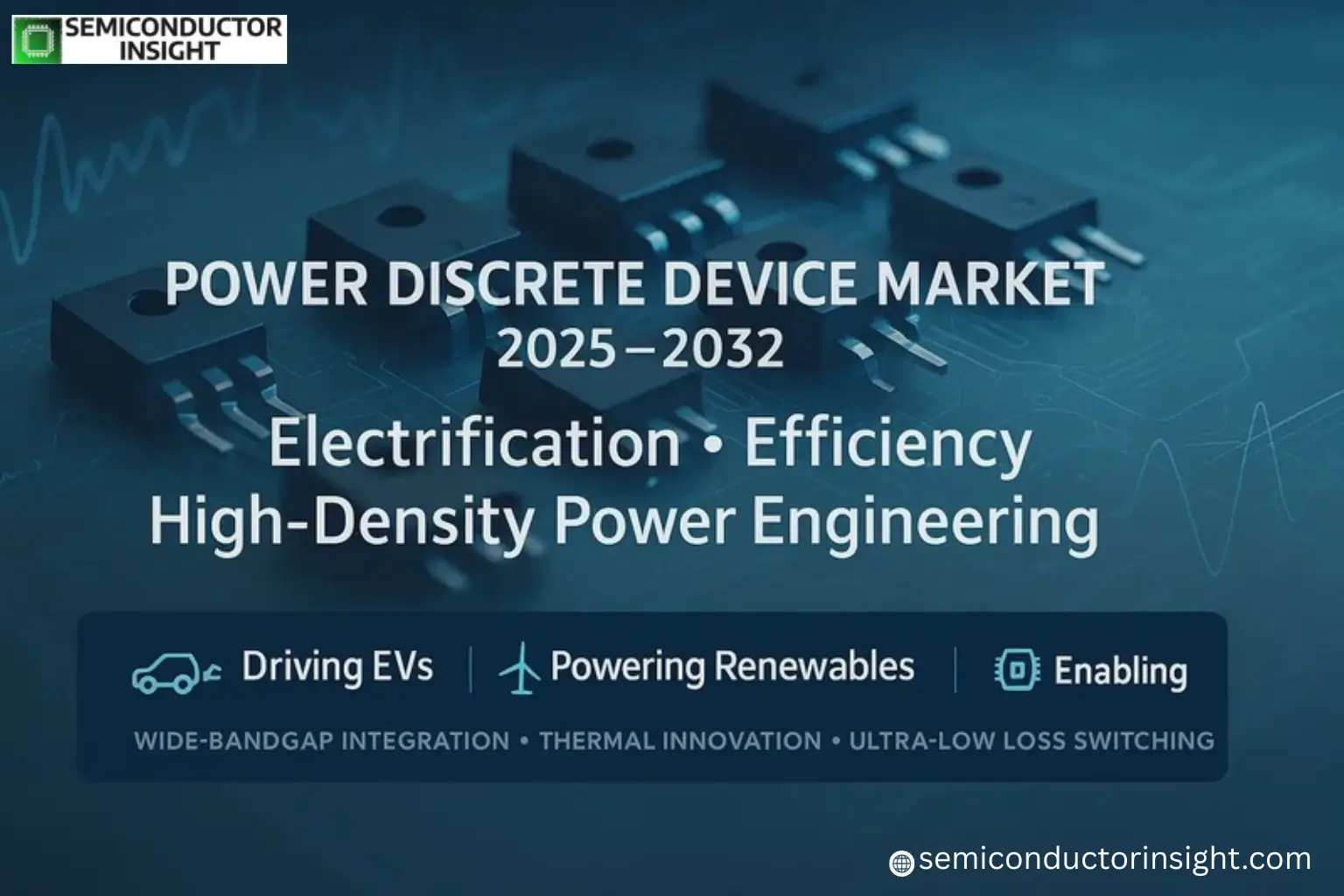
Power Discrete Device Market: The Silent Backbone of Modern Electronics
Power discrete devices rarely get the spotlight, but without them, the global electronics ecosystem would collapse in seconds. Every motor controller, server rack, electric vehicle inverter, and industrial power module depends on these compact components to switch, regulate, and protect high-power electrical loads with remarkable accuracy. As industries shift toward electrification, automation, and high-density computing, Power Discrete Device Market is stepping into one of its most influential growth phases.
Do Visit Our Detailed Report for More Insights: https://semiconductorinsight.com/report/power-discrete-device-market/
A Market Expanding Because the World Is Using More Power, Not Less
Across sectors from EVs and renewable energy grids to 5G infrastructure and high-efficiency consumer appliances there’s a shared requirement: handle more power with lower loss. Power discretes meet this need with efficiency profiles that directly affect product performance, thermal output, reliability, and long-term operational cost.
This isn’t a market driven by convenience. It’s driven by necessity
Manufacturers must squeeze more performance into smaller footprints while improving thermal behavior, extending device lifespan, and supporting increasingly strict global energy regulations. Power discretes MOSFETs, IGBTs, rectifiers, diodes, and thyristors have become foundational to these demands.
Where the Momentum Is Coming From
The value of this market isn’t tied to one blockbuster application. It emerges from steady, unavoidable adoption across multiple sectors:
- Electrification of Transportation
Electric cars, e-bikes, hybrid powertrains, charging stations, and on board inverters all depend heavily on high-voltage MOSFETs and IGBTs. These devices manage acceleration, braking energy recovery, battery management, and drivetrain performance.
EV manufacturers now seek lower conduction losses, faster switching speeds, and better heat dissipation pushing discrete component design forward.
- Renewable Energy and Smart Grids
Solar inverters, wind turbines, and storage units rely on rectifiers and high-power transistors to convert and stabilize energy. As countries scale up green transitions, power discretes are becoming critical to grid-level reliability.
- High-Efficiency Industrial Automation
Servo drives, robotics, conveyor systems, and PLCs all require precise motor control. Power discretes help industries reduce downtime, cut energy bills, and extend machine life cycles.
- Data Centres & Advanced Computing
Server farms consume massive amounts of electricity. The push for energy-efficient power delivery at chip, rack, and building level keeps power discretes at the heart of data-centre modernization.
Design Conversations Shaping the Next Generation
The current wave of innovation in power discretes doesn’t come from flashy features. It comes from engineering improvements that quietly transform how devices behave inside systems:
- Refined Thermal Packages: New encapsulation materials, copper-clip bonding, and advanced heat-spreader designs reduce thermal resistance and improve long-term reliability, especially in EV and industrial power modules.
- Higher Power Density with Smaller Footprints: As PCBs shrink in consumer electronics and EV control units, the need for compact discretes is rising. Manufacturers are redesigning packages to withstand higher junction temperatures without increasing device size.
- Wide-Bandgap Integration: While SiC and GaN dominate industry headlines, they increasingly coexist with silicon-based discretes. The hybrid system approach silicon where it’s cost-effective, wide-band gap where speed matters is shaping next-gen powertrain and fast-charging designs.
- Better Protection & Fault Tolerance: Designers now demand built-in safeguards against short circuits, overcurrent, and thermal overload. Smarter discrete devices reduce system-level component count and elevate safety standards.
Why This Market Isn’t Slowing Down Anytime Soon
Several long-term forces guarantee sustained demand:
- Urban electrification requiring better power management in public transport, heating, and infrastructure.
- Government policies pushing low-emission appliances and energy-efficient systems.
- Electronics miniaturization that amplifies demand for compact, thermally-stable components.
- Rapid EV adoption, where power discretes remain essential even as integrated modules grow.
- 5G networks and edge computing, both requiring stable high-efficiency power delivery.
Closing Perspective: A Market Built on Reliability
Power discrete devices don’t draw attention. They don’t define product aesthetics. They don’t create user excitement. But they determine whether a system survives under pressure or fails at the worst moment.
And that’s exactly why the Power Discrete Device Market continues to rise.
As electrification accelerates and industries reach for higher efficiency standards, these compact components will keep playing the quiet yet irreplaceable role that modern technology depends on.

Comments (0)