
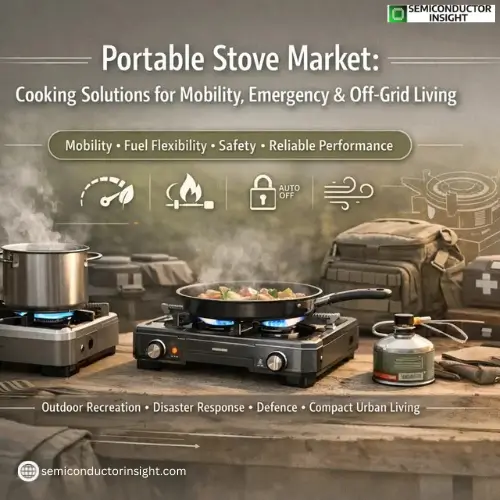
Portable Stove Market: Where Mobility Meets Modern Cooking Demand
Cooking is no longer tied to fixed kitchens or permanent infrastructure. From high-altitude trekking routes to disaster-relief camps and compact urban homes, the need for reliable, portable cooking solutions has quietly reshaped consumer behavior. Portable stove market sits at this intersection of mobility, safety, and energy efficiency, supporting lifestyles and industries that depend on cooking without conventional setups.
This blog explores how portable stoves have evolved beyond simple camping gear into essential tools across recreation, emergency preparedness, defence, and off-grid living while examining the forces shaping demand, design, and adoption worldwide.
Understanding the Portable Stove Market
The portable stove market includes compact cooking devices designed for easy transport, quick setup, and operation without fixed utility connections. These stoves typically run on fuels such as butane, propane, LPG, kerosene, alcohol, solid fuel tablets, or electricity (via batteries or induction-compatible power sources).
What defines this market today is not just portability, but performance under constraint limited space, unpredictable weather, fuel availability, and safety expectations. Manufacturers are increasingly balancing heat efficiency, fuel conservation, and lightweight construction to meet diverse user needs.
Why Demand Is Expanding Across Unlikely Sectors?
Once associated almost exclusively with outdoor recreation, portable stoves are now seeing demand from sectors that were previously peripheral.
Emergency response agencies and humanitarian organizations rely on portable stoves for rapid deployment during natural disasters, where cooking infrastructure is compromised. Military units and border patrol teams value rugged, low-visibility cooking solutions that function reliably in remote terrain. Meanwhile, urban consumers in small apartments and temporary housing settings are adopting portable stoves as backup or space-saving alternatives.
This diversification has shifted the market from seasonal sales cycles to year-round procurement, stabilizing demand and encouraging broader product innovation.
Design Evolution: From Utility to User Experience
- Modern portable stoves are no longer judged solely on flame output.
- User expectations have evolved, and manufacturers are responding with smarter engineering.
- Heat control mechanisms have become more precise, allowing consistent cooking rather than simple boiling.
- Wind-resistant burner heads and pressure-regulated valves improve reliability outdoors.
- Safety features such as automatic shut-off systems, cartridge locking mechanisms, and overpressure protection are now standard in many mid-range models.
- At the same time, materials have changed.
- Aluminum alloys, stainless steel, and heat-resistant polymers reduce weight without sacrificing durability, making stoves easier to carry during long expeditions or field operations.
Fuel Choices Are Shaping Buying Decisions
Fuel availability and storage convenience play a major role in purchasing behavior. In developed markets, butane and propane stoves dominate due to clean combustion and ease of cartridge replacement. In contrast, kerosene and multi-fuel stoves remain relevant in regions where fuel access is inconsistent or supply chains are less predictable.
Electric portable stoves, while still niche, are gaining attention in regions with reliable portable power sources. These models appeal to users prioritizing indoor safety and emission-free operation, especially in temporary housing and emergency shelters.
A Snapshot of How the Market Functions
Portable stove adoption typically follows a practical decision path:
Mobility Need → Fuel Accessibility → Safety Requirements → Cooking Performance → Purchase Choice
Challenges That Are Quietly Reshaping the Market
Despite steady growth, the market faces constraints that influence design and pricing. Fuel regulations differ across countries, affecting cartridge compatibility and transport approvals. Safety certifications add compliance costs, particularly for export-oriented manufacturers. Additionally, consumers are becoming more cautious about indoor air quality, pushing companies to improve combustion efficiency and emissions control.
Rather than slowing growth, these challenges are pushing the industry toward better-engineered, more compliant products that align with modern safety and sustainability expectations.
Where the Market Is Gaining Momentum?
- Growth is most visible in regions experiencing lifestyle shifts and climate-related disruptions.
- Outdoor recreation participation is rising in North America and Europe, while Asia-Pacific markets are seeing increased demand from urban households and disaster preparedness programs.
- In emerging economies, portable stoves often serve as primary cooking devices in off-grid or transitional housing areas.
- Across regions, the unifying factor is practicality portable stoves solve real, immediate problems where traditional cooking solutions fall short.
What This Market Signals for the Years Ahead?
The portable stove market is no longer defined by novelty or convenience alone. It reflects broader trends in mobility, resilience, and decentralized living. As consumers and institutions alike seek flexible solutions that work beyond fixed infrastructure, portable stoves are becoming everyday essentials rather than occasional tools.
Innovation in fuel efficiency, safety design, and material science will continue to differentiate market leaders, while demand from emergency response, defence, and compact living segments ensures long-term relevance.
Remember to Look through Our Updated Report for a More Comprehensive Analysis:
https://semiconductorinsight.com/report/portable-stove-market/
Key Takeaway
The portable stove market thrives because it addresses a universal need reliable cooking under changing conditions. Its growth is grounded not in trends, but in utility, adaptability, and trust earned through performance when it matters most.

Comments (0)