
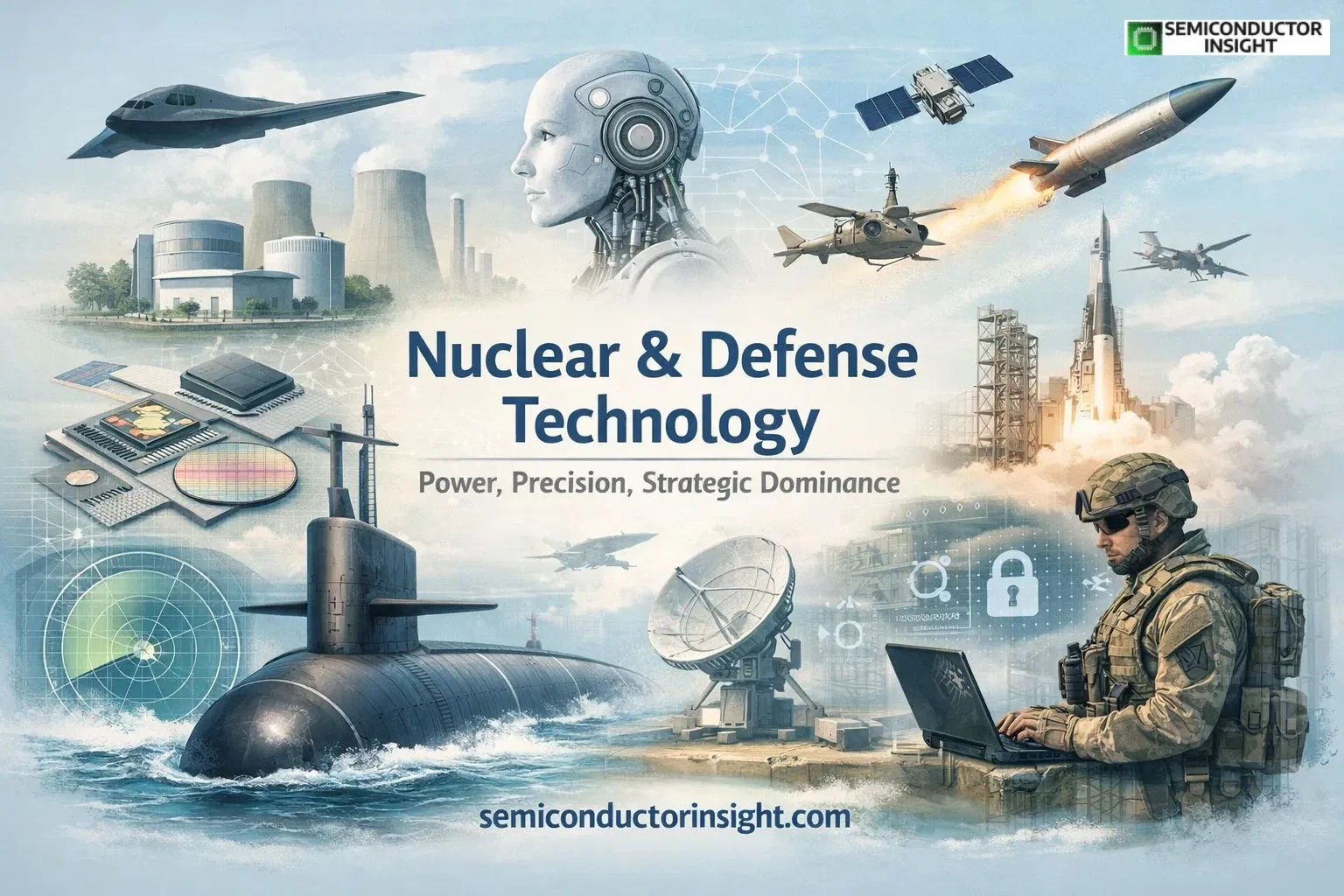
Nuclear and Defence Tech Market Outlook Boosts Power, Precision, and Strategic Superiority in a Shifting Global Order
Nuclear and defence technology market is no longer confined to missiles and warheads. It now represents a complex ecosystem of digital systems, space assets, advanced materials, cyber capabilities, and next-generation energy platforms.
Governments are investing heavily not only in deterrence but also in precision warfare, surveillance dominance, and electronic resilience.
Please Take a Look at Our Updated Related Report before Continuing: https://semiconductorinsight.com/report/global-military-aerospace-sensor-market/
Nuclear Modernization beyond Warheads
The nuclear segment is witnessing a structural transformation. Countries such as the United States, China, and Russia are modernizing delivery systems, upgrading submarine fleets, and reinforcing command-and-control networks. The U.S. Department of Defence has continued upgrades to its nuclear triad, including the Columbia-class ballistic missile submarines and the Ground Based Strategic Deterrent program.
Meanwhile, civilian nuclear technology is also influencing the defence ecosystem. Small Modular Reactors are gaining attention for their potential use in remote military bases and strategic installations. Organizations like the International Atomic Energy Agency have documented rising interest in compact reactor designs that provide stable energy in isolated or high-risk regions. These developments demonstrate how nuclear modernization is increasingly linked to energy resilience and operational continuity.
Semiconductor Power behind Modern Warfare
What truly differentiates today’s defence landscape from previous decades is the role of semiconductors. Advanced chips are embedded in missile guidance systems, radar platforms, satellites, encrypted communication devices, and autonomous vehicles. High-performance processors enable faster data interpretation and real-time threat detection.
The demand for radiation-hardened chips has increased significantly, particularly for space-based defence systems. Semiconductor leaders such as Intel and Taiwan Semiconductor Manufacturing Company have been central to discussions around secure supply chains, especially as geopolitical tensions highlight vulnerabilities in chip manufacturing concentration.
Recent legislation like the CHIPS and Science Act in the United States underscores how semiconductor independence is now viewed as a national security priority. Defense applications require highly reliable, tamper-resistant microelectronics, and supply disruptions can directly affect military readiness. In this environment, advanced semiconductors have become as critical as traditional weapons platforms.
Hypersonics, AI Integration, and Tactical Precision
- Hypersonic missile programs are among the most talked-about technological shifts in defence strategy. These systems travel at speeds exceeding Mach 5, significantly reducing reaction times and challenging existing missile defence frameworks.
- Reports from agencies such as the U.S. Congressional Research Service highlight increased funding allocations toward hypersonic research and testing.
- Artificial intelligence is also transforming operational structures. AI-enabled drones and surveillance systems can process enormous volumes of data, identify patterns, and support decision-making at unprecedented speeds.
- Autonomous underwater vehicles and robotic ground systems are being deployed for reconnaissance and logistics support.
- The convergence of AI, sensor technology, and semiconductor design is enabling what analysts describe as precision warfare, where data accuracy becomes more decisive than sheer firepower.
Space as the Next Defence Frontier
Space has emerged as an integral component of the defense technology landscape. Satellite networks provide navigation, intelligence gathering, and secure communications. Disruptions to these networks can paralyze both military and civilian systems.
Organizations like National Aeronautics and Space Administration and defense-linked space commands are increasingly collaborating with private aerospace companies to enhance satellite resilience. Anti-satellite weapon tests conducted by several nations have further intensified the urgency to protect orbital infrastructure.
Semiconductor components designed for extreme radiation environments are essential in these systems. The intersection of nuclear science, aerospace engineering, and chip design is shaping a multidimensional defense architecture that extends far beyond terrestrial boundaries.
Cybersecurity and Electronic Warfare Integration
Another defining shift in the nuclear and defense technology market is the emphasis on cybersecurity and electronic warfare. Military networks face constant threats from state and non-state actors. Encryption modules, secure processors, and electromagnetic shielding technologies are receiving substantial attention.
Modern fighter aircraft, naval destroyers, and missile defense systems depend heavily on software-defined platforms. Protecting these systems from cyber intrusion is as vital as reinforcing their physical defenses. Reports from government cybersecurity agencies highlight a steady rise in attempted breaches targeting defense contractors and research institutions.
The protection of microelectronics supply chains has therefore become inseparable from broader national security strategies.
Industrial Collaboration and Policy Momentum
The expansion of the nuclear and defense tech market is not driven solely by government laboratories. Public-private partnerships are accelerating innovation cycles. Defense contractors collaborate with semiconductor firms, AI startups, and advanced materials companies to shorten development timelines.
Policy frameworks across multiple nations emphasize domestic production capabilities for critical technologies. Export controls, technology-sharing alliances, and cross-border defense agreements are shaping how innovation flows across the global landscape.
In this vast and evolving ecosystem, nuclear capability, semiconductor innovation, and digital defense systems are deeply intertwined. The market is no longer defined by a single category of weapons or infrastructure. Instead, it represents a layered network of energy systems, computational platforms, aerospace assets, and cyber frameworks working together to secure national interests in an increasingly complex world.

Comments (0)