
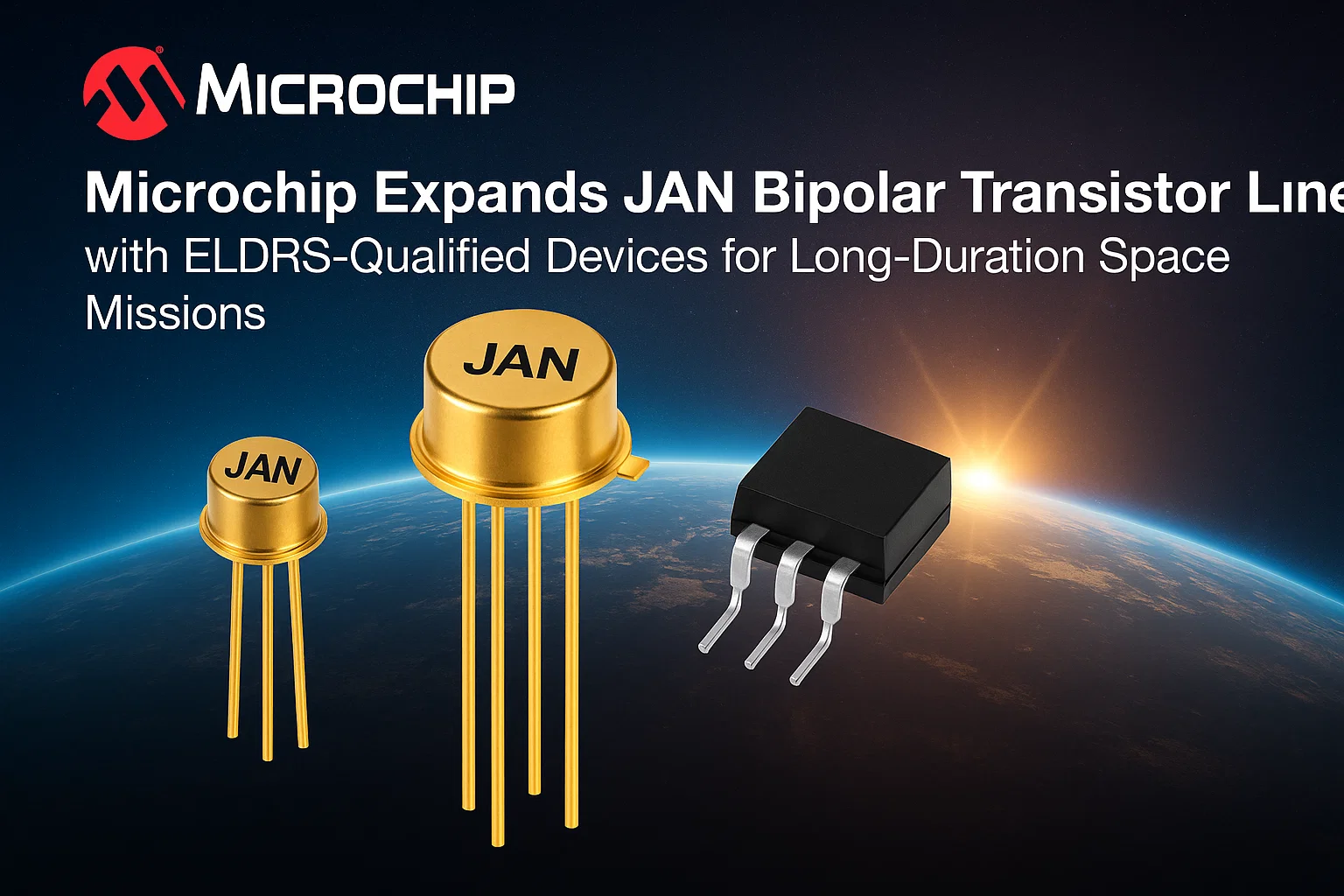
Microchip Expands JAN Bipolar Transistor Line with ELDRS-Qualified Devices for Long-Duration Space Missions
Radiation-hardened (rad-hard) electronic components have become indispensable in aerospace, defense, and nuclear applications where extreme environmental conditions exist. Among these components, rad-hard bipolar transistors hold a crucial role due to their ability to withstand total ionizing dose (TID) effects, single event effects (SEE), and other radiation-induced anomalies that can degrade or destroy standard electronics.
The Rad-Hard Bipolar Transistor market was valued at USD 284 million in 2024 and is projected to reach USD 374 million by 2032, growing at a CAGR of 4.1%. This growth is driven by increasing space missions, advancements in military-grade electronics, and the need for highly reliable components in nuclear environments.
Access Your Free Sample Report- Rad-Hard Bipolar Transistor Market
1. Understanding Radiation-Hardened Bipolar Transistors
Radiation-hardened (rad-hard) bipolar transistors are specifically designed to operate reliably in environments exposed to high-energy radiation, such as:
- Outer space missions
- Military defense systems
- High-altitude aviation
- Nuclear power plants and medical imaging devices
Key Features
- ELDRS Immunity (Enhanced Low Dose Rate Sensitivity): Prevents gradual degradation in low-dose environments like deep space.
- High TID Tolerance: Up to hundreds of kilorads (krad).
- SEE Mitigation: Withstands single-event latch-ups and burnouts caused by cosmic rays or solar particles.
These features make rad-hard bipolar transistors vital for satellites, spacecraft avionics, missile guidance, and even advanced research in nuclear physics.
2. Market Overview and Forecast
Current Market Size
- 2024 Valuation: USD 284 million
- Projected 2032 Value: USD 374 million
- CAGR: 1%
Key Growth Drivers
- Rising satellite launches for communication and Earth observation
- Increasing demand for military and defense electronics
- Expansion of nuclear energy programs
- Growing interest in deep space exploration by agencies like NASA, ESA, ISRO, and private companies like SpaceX and Blue Origin
Application Segments
- Space & Satellite Systems – Largest market share due to stringent radiation resilience requirements
- Defense & Military Systems – Missile guidance, radar systems, and secure communication
- Aerospace Avionics
- Nuclear & Medical Equipment
3. Recent Developments in Rad-Hard Bipolar Transistor Technology
Here are the latest innovations and certifications shaping the industry:
3.1 Infineon Achieves JANS Certification for Rad-Hard GaN Transistors
- Announcement: Infineon recently introduced radiation-hardened Gallium Nitride (GaN) power transistors, achieving JANS certification under MIL-PRF-19500/794.
- Performance Specs:
- 500 krad(Si) total ionizing dose resistance
- High SEE immunity up to ~86 MeV·cm²/mg
- Significance: Although GaN is a different technology than bipolar, this milestone impacts the entire rad-hard industry, as it signals a trend toward mixed-technology systems, where bipolar transistors coexist with GaN devices in space-grade circuits.
- Impact on Market: Sets new reliability benchmarks and competitive standards for bipolar transistor vendors.
3.2 Microchip Introduces ELDRS-Qualified Bipolar Devices
- Update: Microchip expanded its JAN-certified bipolar transistor family with Enhanced Low Dose Rate Sensitivity (ELDRS)
- Testing: Qualified under MIL-STD-750 (Method 1019) for radiation resilience up to 100 krad.
- Why it Matters: Long-duration missions (like Mars exploration) require components that can survive slow cumulative radiation damage over years.
3.3 Renesas (Intersil) Expands In-House Radiation Testing
- Investment: Renesas has upgraded its wafer-level ELDRS and high-dose rate testing
- Goal: Improve screening for military- and space-grade analog devices, including bipolar transistors.
- Market Impact: Faster time-to-market and better assurance of device reliability.
Download Sample Report PDF- Rad-Hard Bipolar Transistor Market
4. Technical Analysis: Why Bipolar Transistors Still Matter
Even with the emergence of MOSFET and GaN devices, bipolar transistors maintain a strong foothold because:
- Superior gain stability under radiation
- Temperature resilience in extreme conditions
- Proven track record in heritage space missions
- Compatibility with legacy systems in defense
Additionally, hybrid solutions combining bipolar and CMOS (BiCMOS) remain a growing trend for mixed-signal rad-hard ICs.
5. Market Dynamics
5.1 Drivers
- Mega-Constellations: Satellite networks like Starlink and OneWeb demand robust components.
- Defense Modernization: Programs like Next-Gen Interceptor (NGI) and hypersonic missiles need ultra-reliable electronics.
- Space Exploration: NASA’s Artemis, ESA’s JUICE mission, and ISRO’s Gaganyaan program fuel demand for radiation-tolerant devices.
5.2 Challenges
- High Development Cost: Rad-hard devices cost 10–50x more than commercial parts.
- Limited Supply Chain: Only a handful of foundries specialize in rad-hard processes.
- Qualification Time: JANS and MIL-PRF certifications take months to years.
6. Competitive Landscape
Key Players:
- Infineon Technologies
- Microchip Technology
- Renesas Electronics (Intersil)
- Texas Instruments
- Teledyne e2v
- STMicroelectronics
Strategies Adopted
- Vertical Integration: In-house fabrication and testing to maintain quality.
- R&D in Mixed Technologies: Combining bipolar with GaN and SiC.
- Partnerships with Space Agencies: Long-term supply agreements with NASA, ESA, ISRO.
7. Future Trends
- Miniaturization: Smaller footprints for CubeSats and small satellites.
- GaN and SiC Integration: Hybrid platforms with bipolar devices for optimized performance.
- Additive Manufacturing: 3D-printed substrates for rad-hard electronics.
- AI-Driven Design Tools: Accelerated qualification using digital twins.
Click Here To Download Full Sample Report- Rad-Hard Bipolar Transistor Market
8. Regional Outlook
- North America: Largest market share due to NASA, SpaceX, and U.S. defense programs.
- Europe: ESA-driven missions and strong aerospace sector.
- Asia-Pacific: Rapid growth with India, China, and Japan increasing space budgets.
- Middle East: Emerging demand for defense rad-hard electronics.
The rad-hard bipolar transistor market is evolving, driven by space exploration, military modernization, and advanced radiation-hardening techniques like ELDRS qualification. While new technologies like GaN are making waves, bipolar transistors remain essential for legacy systems, hybrid designs, and critical reliability scenarios.

Comments (0)