
Lighting Systems Used Occupancy Sensors Market Is Quietly Powering Smart Buildings Worldwide
Lighting Systems Used Occupancy Sensors Market is evolving as a critical layer in modern infrastructure, blending automation with energy-conscious design. At its core, occupancy sensing technology ensures that lighting systems respond to real human presence switching on when needed and turning off when spaces are vacant. This seemingly simple function is now deeply embedded in smart homes, commercial buildings, hospitals, and industrial facilities.
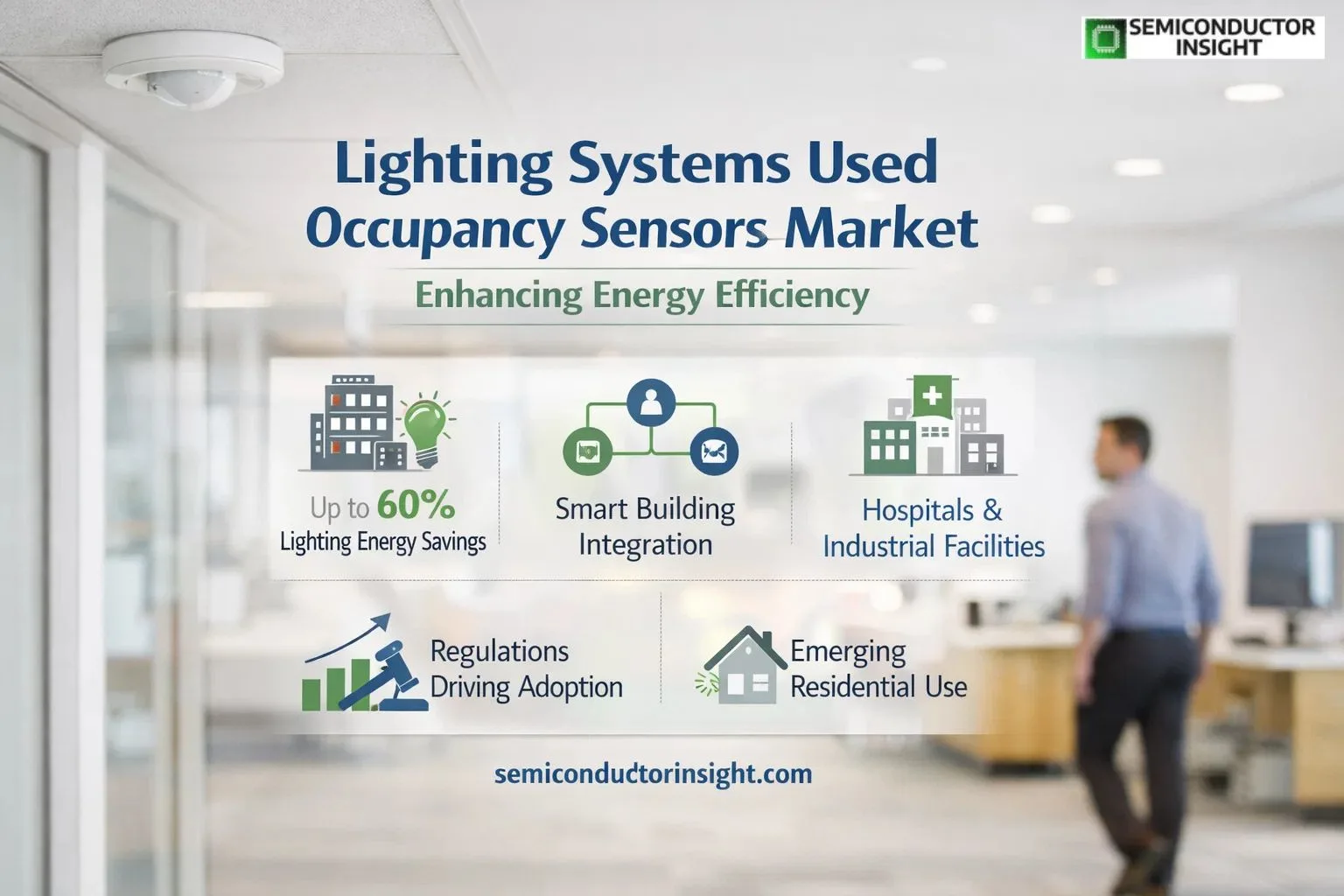
Across urban environments, lighting accounts for nearly 15-20% of total electricity consumption in buildings, according to data from global energy agencies. Occupancy sensors have emerged as one of the most practical interventions, with studies showing that automated lighting controls can reduce lighting energy usage by 30% to 60% depending on building type and usage patterns. These systems are no longer optional add-ons they are becoming foundational to energy-efficient design.
The Shift from Manual Switches to Intelligent Detection
Traditional lighting relied on manual control, often leading to inefficiencies lights left on overnight, empty conference rooms fully lit, or corridors illuminated without need. Occupancy sensors eliminate this gap by using technologies such as passive infrared (PIR), ultrasonic waves, and microwave detection.
In office environments, for instance, occupancy sensors can reduce wasted lighting hours by up to 40 hours per employee annually. In large commercial buildings with thousands of lighting points, this translates into significant operational savings and measurable reductions in carbon emissions.
Educational institutions have also embraced these systems. Schools in the United States implementing occupancy-based lighting reported annual energy savings of over 20% in classrooms alone, while also extending the lifespan of lighting fixtures due to reduced usage.
How Smart Buildings Are Driving Sensor Adoption?
- The global rise of smart buildings is accelerating the adoption of occupancy sensors in lighting systems.
- Modern building management systems (BMS) now integrate lighting, HVAC, and security into a unified digital ecosystem. Occupancy data plays a central role in this integration.
- For example, when a room is detected as vacant, not only are lights turned off, but air conditioning and ventilation systems are also adjusted. This interconnected response can reduce overall building energy consumption by up to 25%, based on case studies from green-certified commercial buildings.
- In cities investing in smart infrastructure, occupancy sensors are also being deployed in public spaces such as parking garages, street lighting, and transit hubs. Adaptive street lighting systems, which dim or brighten based on pedestrian movement, have shown energy savings of up to 50% compared to traditional always-on lighting.
Real-World Installations: From Offices to Hospitals
Healthcare facilities represent one of the most impactful use cases. Hospitals operate 24/7, but not all spaces require constant illumination. Occupancy sensors installed in patient rooms, corridors, and storage areas help reduce unnecessary energy use while maintaining safety standards.
A hospital case study in Europe demonstrated that installing occupancy-based lighting controls reduced annual electricity consumption by over 1 million kilowatt-hours in a single facility. This not only cut costs but also aligned with sustainability goals.
Similarly, in industrial settings, warehouses with high ceilings benefit from high-bay occupancy sensors. These sensors ensure that lights activate only in zones where workers are present. In large logistics centers spanning hundreds of thousands of square feet, such targeted lighting can reduce energy waste significantly.
The Rise of Sensor Fusion and Data Intelligence
A notable evolution in Lighting Systems Used Occupancy Sensors Market is the move toward sensor fusion combining multiple sensing technologies to improve accuracy. For example, PIR sensors may struggle with detecting stationary occupants, while ultrasonic sensors can detect subtle movements. Combining both reduces false negatives and enhances reliability.
Beyond lighting control, occupancy sensors are increasingly becoming data sources. Building managers now use occupancy data to analyze space utilization. For instance, offices can identify underused meeting rooms or optimize seating arrangements based on actual usage patterns.
This data-driven approach is particularly relevant in hybrid work environments, where office occupancy fluctuates daily. Companies leveraging occupancy analytics have reported up to 30% improvements in space utilization efficiency.
Regulations and Energy Codes Accelerating Adoption
- Government regulations are playing a decisive role in expanding the use of occupancy sensors.
- Energy codes in several countries now mandate automatic lighting controls in commercial buildings. For example, building standards often require occupancy sensors in areas such as restrooms, storage rooms, and conference spaces.
- In India, the Energy Conservation Building Code (ECBC) encourages the use of automated lighting controls, including occupancy sensors, to reduce building energy consumption.
- Similar mandates exist in North America and Europe, where compliance with energy efficiency standards is tied to building approvals and certifications.
- These regulatory frameworks are not just pushing adoption they are standardizing it, ensuring that occupancy-based lighting becomes a baseline expectation rather than a premium feature.
Emerging Applications in Residential Spaces
While commercial adoption has been dominant, residential use of occupancy sensors is gaining traction. Smart homes increasingly integrate motion-based lighting in hallways, bathrooms, and outdoor areas.
Homeowners are drawn not only to energy savings but also to convenience and security. Motion-activated outdoor lighting, for example, enhances safety while reducing unnecessary energy use. In multi-family housing, shared spaces like parking areas and stairwells benefit significantly from occupancy-based lighting.
As smart home ecosystems expand, occupancy sensors are being integrated with voice assistants and mobile apps, allowing users to customize lighting behavior based on routines and preferences.
To Know More about the Report, You Can Freely Browse Our Latest Updated Report: https://semiconductorinsight.com/report/lighting-systems-used-occupancy-sensors-market/?add_to_wishlist=3741
Lighting That Thinks Ahead
Lighting Systems Used Occupancy Sensors Market is moving beyond simple motion detection toward predictive and adaptive lighting. With advancements in artificial intelligence and IoT connectivity, future systems are expected to anticipate occupancy patterns rather than just react to them.
For instance, lighting systems could learn daily office routines and pre-adjust lighting levels before occupants arrive. In retail environments, sensors could track customer movement patterns to optimize lighting for better product visibility and engagement.
This transition from reactive to predictive lighting marks a significant leap, positioning occupancy sensors not just as energy-saving tools, but as intelligent components of responsive environments.

Comments (0)