
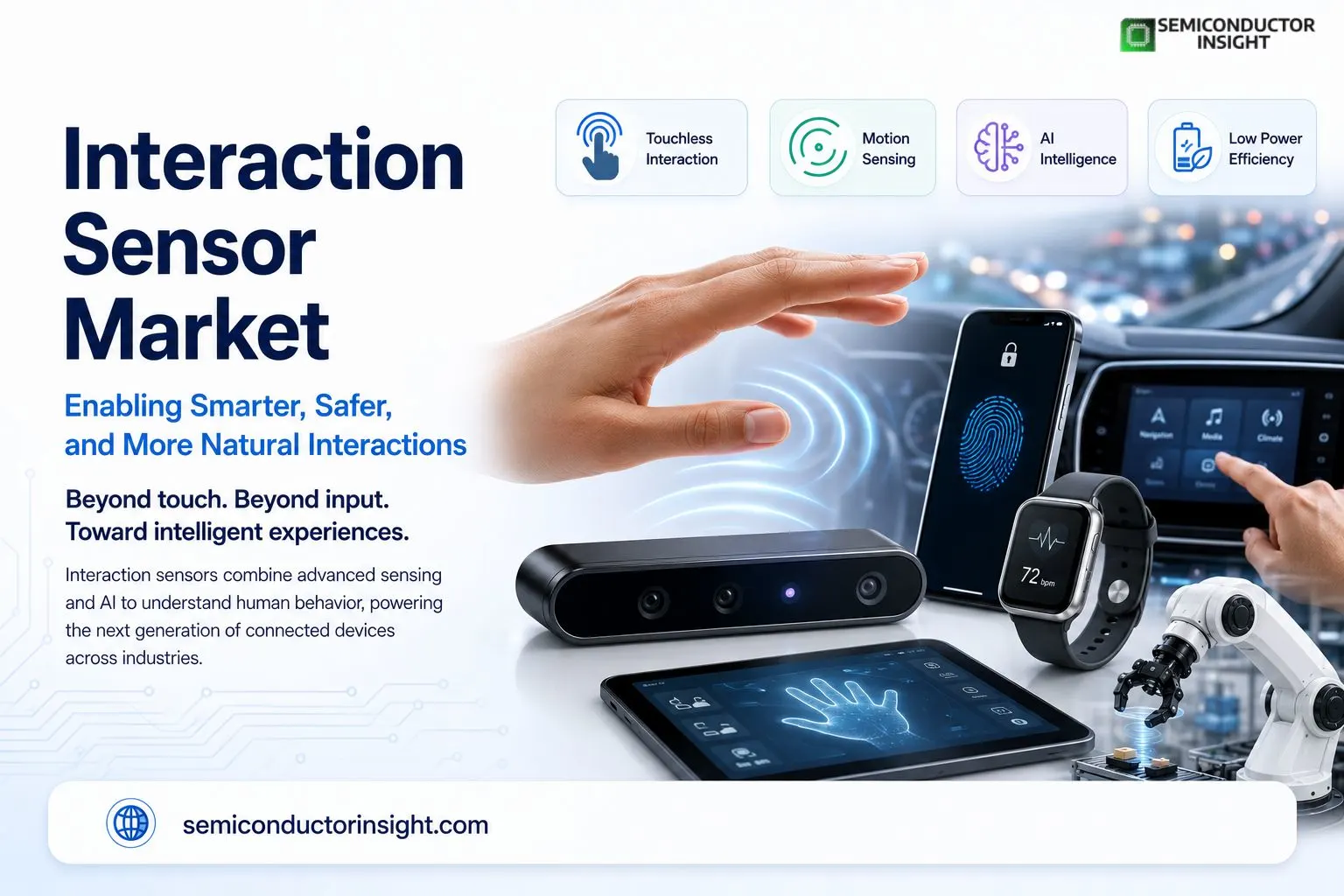
Interaction Sensors: The Invisible Intelligence Behind Modern Electronics
Interaction sensors are quietly becoming one of the most important components in modern electronics. Whether unlocking a smartphone with a fingerprint, enabling gesture control inside a vehicle, monitoring movement through wearable devices, or supporting touchless interfaces in hospitals, these sensors have transformed the way people communicate with machines.
As artificial intelligence, edge computing, and connected devices become more sophisticated, interaction sensors are evolving from simple input components into intelligent systems capable of interpreting human behavior in real time. Their role now extends beyond convenience, enabling safer workplaces, smarter healthcare, immersive consumer experiences, and highly responsive industrial automation.
Every Connected Device Is Becoming More Aware of Human Behavior
- Modern electronics no longer rely on a single sensing technology.
- Today’s interaction systems combine capacitive touch sensors, infrared sensors, radar, ultrasonic sensing, pressure sensors, microphones, cameras, and proximity detectors to understand multiple forms of human interaction simultaneously.
- Instead of simply detecting a touch, devices can now recognize gestures, eye movement, voice commands, hand positioning, and even subtle body motions.
- This transition is especially visible in premium smartphones, smart televisions, gaming consoles, collaborative office displays, autonomous robots, and intelligent retail kiosks where multiple sensors work together through AI algorithms to deliver faster and more natural interactions.
The Numbers behind Everyday Sensor Intelligence
The scale of sensor-enabled electronics demonstrates why interaction sensing continues to gain strategic importance across industries.
According to the International Telecommunication Union (ITU), global internet users surpassed 5.5 billion people in 2024, creating unprecedented demand for connected interactive devices. The GSMA estimates that worldwide smartphone connections exceeded 7 billion, while IDC reported global shipments of more than 260 million wearable devices in recent years, including smartwatches, fitness trackers, and hearables. Meanwhile, the International Federation of Robotics (IFR) recorded more than 4.2 million industrial robots operating in factories worldwide, many relying on advanced proximity, force, and motion sensors to safely collaborate with workers.
These figures illustrate how interaction sensing has expanded well beyond smartphones into nearly every intelligent electronic system.
One User Action Now Activates Multiple Semiconductor Technologies
Unlike conventional electronic inputs, modern interaction sensors rarely operate independently. A simple gesture in front of a smart display can activate several semiconductor technologies simultaneously.
Take a Quick Glance at Our In-Depth Analysis Report: https://semiconductorinsight.com/report/interaction-sensor-market/
User Movement
│
▼
Optical or Radar Detection
│
▼
Sensor Signal Processing
│
▼
Edge AI Decision Engine
│
▼
Instant Device Response
This layered architecture allows devices to respond within milliseconds while minimizing unnecessary power consumption. Semiconductor companies continue integrating sensing, processing, memory, and wireless communication into compact packages that improve both speed and efficiency.
Automotive Interiors Are Becoming Sensor Rich Digital Environments
- Vehicle cabins are rapidly transforming into intelligent interactive spaces.
- New-generation electric vehicles increasingly incorporate driver monitoring cameras, gesture recognition systems, capacitive steering wheels, occupancy sensors, facial authentication, and touch-sensitive control panels.
- Recent launches from manufacturers such as Mercedes-Benz, BMW, Hyundai, Tesla, and BYD demonstrate how digital cockpits now prioritize intuitive interaction over conventional physical controls.
- Driver monitoring systems also support advanced safety regulations by detecting fatigue, distraction, and occupant behavior before potential accidents occur.
- As software-defined vehicles continue expanding, interaction sensors will become central to both user experience and road safety.
AI Is Making Sensors Understand Context Instead of Simple Commands
A significant transformation is taking place inside interaction sensing technology. Earlier generations merely detected an input, whereas today’s AI-powered systems interpret context. Smart speakers distinguish between different voices, wearable devices recognize physical activity patterns, and collaborative robots adjust movement according to nearby human behavior.
Research laboratories and semiconductor manufacturers are increasingly developing multimodal sensing platforms capable of combining touch, sound, movement, temperature, pressure, and visual information into a unified decision-making process. This reduces false detections while creating more personalized user experiences across consumer electronics, healthcare equipment, and industrial automation.
Tiny Sensors Are Solving Big Problems in Healthcare
Healthcare has become one of the fastest-growing application areas for interaction sensors. Hospitals increasingly deploy touchless monitoring systems, patient movement sensors, fall detection devices, and contact-free medical interfaces that improve hygiene while reducing unnecessary physical contact.
Wearable medical devices equipped with optical sensors continuously monitor heart rate, blood oxygen saturation, sleep quality, and physical activity. According to the World Health Organization, the global population aged 60 years and older is expected to reach 1.4 billion by 2030, increasing demand for remote patient monitoring and intelligent assisted-living technologies that depend heavily on reliable interaction sensing.
The Next Competitive Edge Lies in Invisible Intelligence
The future of interaction sensors is becoming less about hardware visibility and more about seamless user experiences. Semiconductor manufacturers are designing ultra-low-power sensing chips that remain continuously active without significantly draining battery life. Advances in neuromorphic computing, flexible electronics, edge AI accelerators, and integrated sensor fusion are enabling devices to anticipate user intent rather than simply react to commands.
As digital environments become increasingly immersive across homes, factories, vehicles, healthcare facilities, and public infrastructure, interaction sensors will serve as the invisible intelligence connecting people with the next generation of smart electronic systems.

Comments (0)