

IEC 60691 Update 2026: New Thermal-Link Requirements Put Safety under the Spotlight
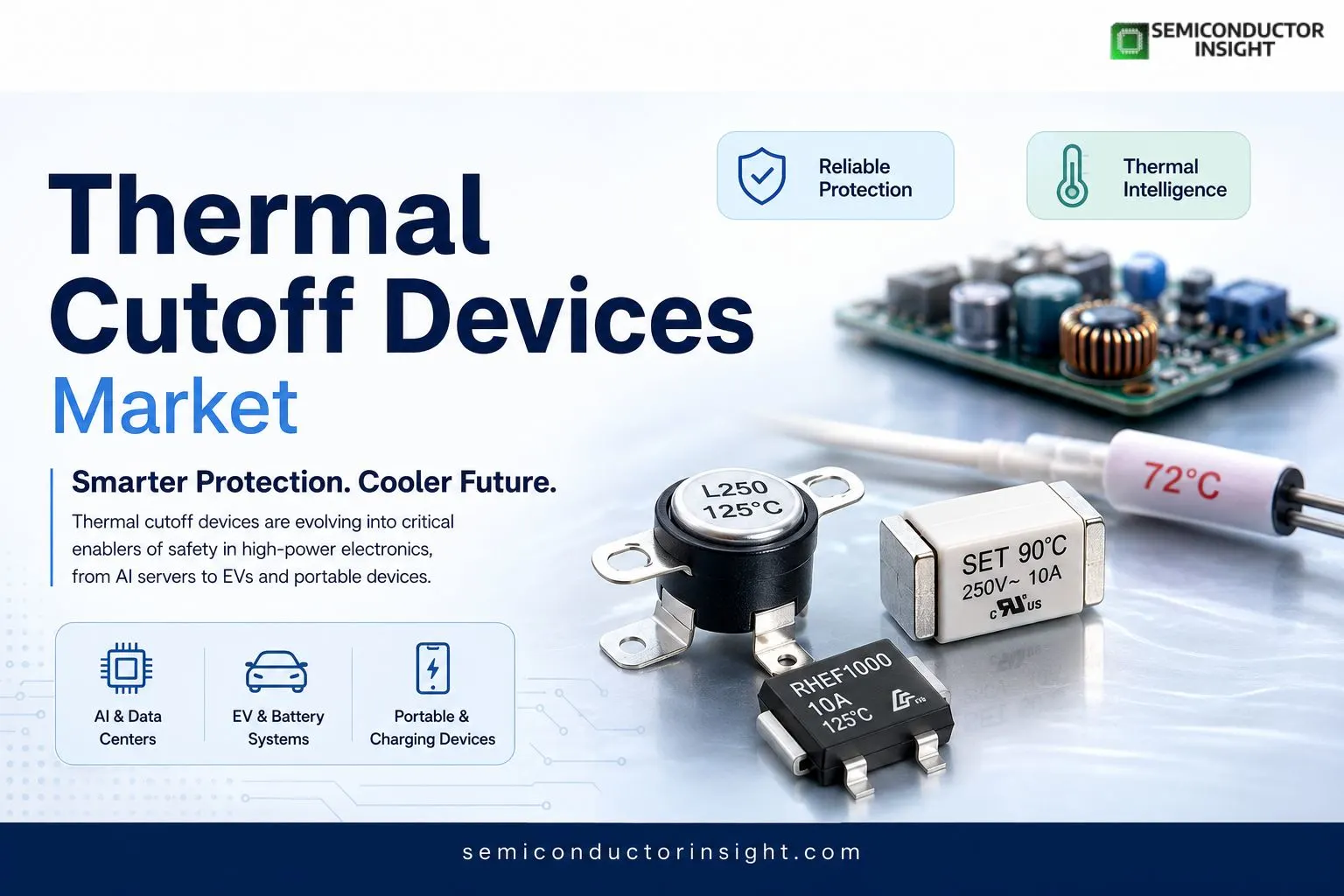
Thermal cutoff devices are moving from being simple safety components to becoming an important part of modern electronic protection architectures. Their basic purpose remains straightforward: interrupt a circuit when temperature rises beyond a defined limit. Their relevance, however, is expanding as semiconductor packages, power converters, batteries and compact electronic systems operate with greater power density.
The latest IEC 60691 consolidated edition, published in February 2026, specifically covers thermal-links used in electrical appliances, electronic equipment and component parts to protect against excessive temperatures under abnormal conditions. The current edition also emphasizes that protection effectiveness depends on the device’s mounting position and the current it carries.
A Small Component with a Very Specific Job
- A traditional thermal cutoff is intended to offer a direct safety interruption, in contrast to a temperature sensor that continually communicates thermal conditions to a controller. The gadget disconnects the circuit when it reaches its predetermined operational condition.
- This distinction matters in applications where a secondary protection layer is required even if a microcontroller, temperature sensor or battery-management system fails. Modern thermal protection portfolios therefore include one-time thermal links, resettable PPTC devices, thermal protectors and semiconductor-based protection ICs.
- For example, current commercial protection products span miniature surface-mount packages through higher-current devices. Littelfuse’s RHEF1000 resettable device has a 10 A hold-current rating, 18.5 A trip current and 100 A maximum fault-current rating, with operation specified up to 125°C.
AI Hardware Is Raising the Temperature Question
The rapid expansion of AI computing is creating a new environment for thermal protection. High-performance processors, accelerators, memory and power-conversion systems are being packed into increasingly dense computing platforms.
Recent 2026 industry developments show how strongly AI infrastructure is influencing semiconductor power demand. Onsemi reported in August 2026 that demand for its power-management chips used in AI data centers was supporting its outlook, while the company is expanding its semiconductor portfolio toward AI and robotics applications.
This does not mean every AI processor will use a thermal cutoff device directly. Instead, the wider power architecture creates more locations where independent thermal protection can become valuable, including power supplies, charging circuits, converters, cooling equipment and auxiliary electronics.
Take a Quick Glance at Our In-Depth Analysis Report: https://semiconductorinsight.com/report/thermal-cutoff-device-market/
The Automotive Battery Is Becoming a Major Protection Zone
Battery-powered electronics are another important application area. Thermal protection is particularly relevant in lithium-ion battery packs, where abnormal heating can damage cells and surrounding electronics.
Commercial battery protection products already demonstrate how thermal cutoffs are being integrated into compact designs. Littelfuse’s battery mini-breaker portfolio includes devices with activation temperatures from 72°C to 90°C, hold-current options of 6 A, 15 A and 18 A, and operating ranges extending from -30°C to 100°C.
These components can be used alongside battery-management systems rather than replacing electronic monitoring. That layered approach gives designers both active monitoring and physical protection against abnormal thermal events.
Surface-Mount Designs Are Changing Where Protection Can Fit
- Miniaturization is one of the most visible changes in thermal protection. Traditional protection components often required dedicated space and wired connections, whereas newer designs can be integrated directly into compact electronic assemblies.
- Littelfuse’s high-current reflowable thermal protector, for example, is designed for surface-mount assembly and lead-free reflow processing. The company describes applications spanning automotive and industrial electronics, including situations where a power FET, capacitor, resistor or triac develops a thermal fault.
- This type of packaging is important for semiconductor applications because protection can be positioned closer to the heat-generating component, potentially shortening the thermal path between a fault source and the protective element.
USB-C, Wireless Charging and Portable Electronics Add More Use Cases
The growth of compact charging electronics is also broadening thermal-protection requirements. Wireless charging pads, USB-C power systems, tablets, smartphones, wearables and portable medical equipment all combine restricted space with localized heat generation.
Commercial protection architectures now combine thermal protection with overcurrent, overvoltage and surge protection. Littelfuse, for instance, identifies thermal protection alongside TVS diodes, fuses and protection ICs in wireless charging systems, while its surface-mount PPTC portfolio includes devices for compact mobile and USB applications.
Thermal Cutoffs Are Becoming Part of Layered Safety Architecture
The most important shift in 2026 is not simply higher demand for individual cutoff components. It is the move toward multiple protection layers within the same electronic system.
A modern design may combine a temperature sensor for monitoring, a protection IC for active control, a PPTC for resettable overcurrent protection and a thermal cutoff for final physical interruption. EV charging equipment already illustrates this broader approach, combining temperature sensing, semiconductor protection, fuses and switching technologies across the power path.
As semiconductor systems become smaller, more powerful and more thermally demanding, thermal cutoff devices are increasingly being evaluated as part of the overall reliability architecture rather than as isolated safety components. The 2026 IEC 60691 update reinforces that direction by keeping thermal-links firmly within the framework of electronic equipment safety.

Comments (0)