
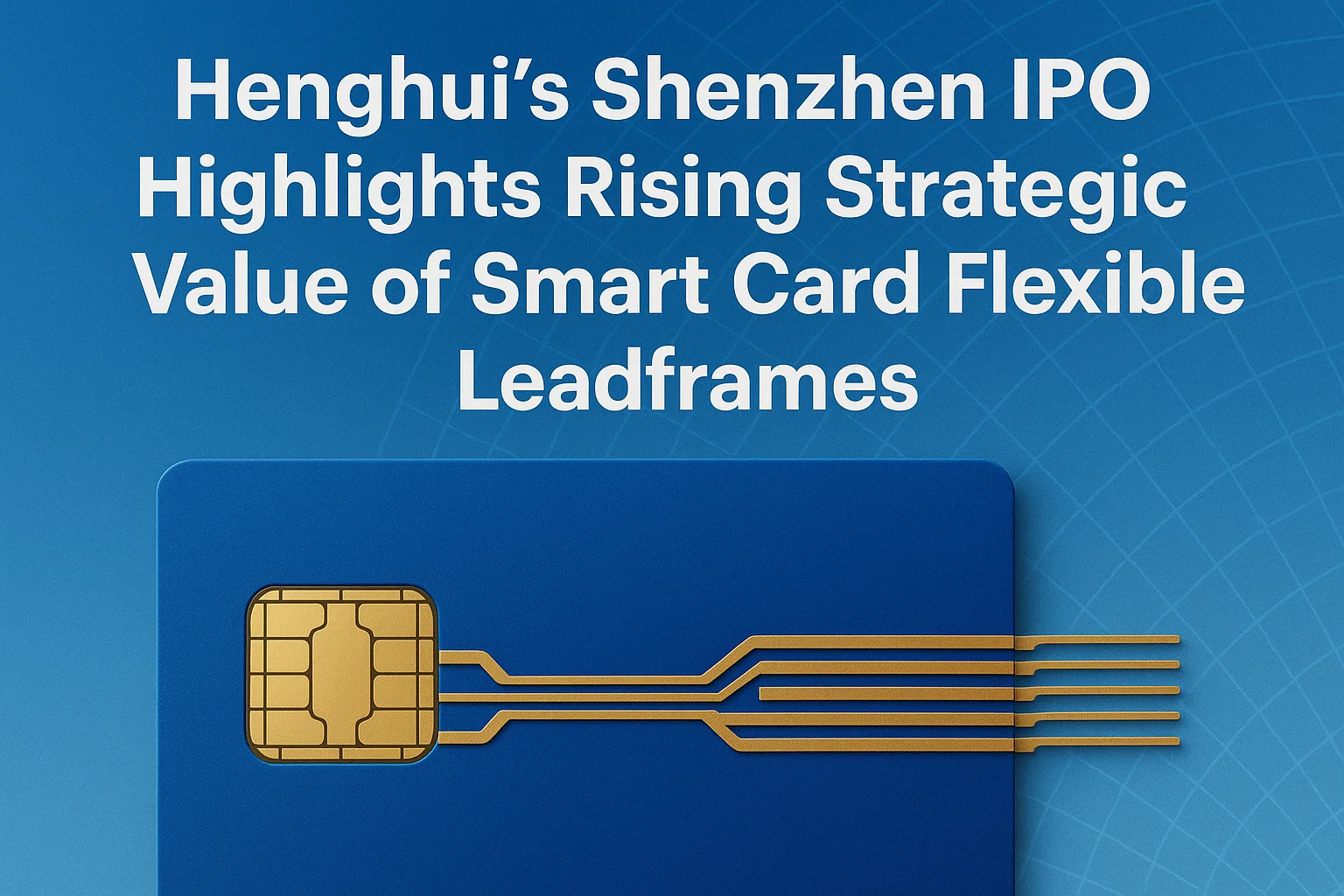
Henghui’s Shenzhen IPO Highlights Rising Strategic Value of Smart Card Flexible Leadframes
The smart card industry has long played a pivotal role in enabling secure transactions, identity verification, and access control across the globe. At the heart of these smart cards lies a critical component—the flexible leadframe, which serves as the backbone for embedding integrated circuits, antennas, and electrical connections within the card structure. As demand for secure, reliable, and multifunctional smart cards accelerates, the smart card flexible leadframe market is evolving with notable innovations and strategic industry moves.
According to the latest industry insights, the global Smart Card Flexible Leadframe market was valued at US$ 285 million in 2024 and is projected to reach US$ 432 million by 2032, growing at a CAGR of 5.1% between 2025 and 2032. This steady expansion reflects the increasing reliance on smart cards across sectors such as banking, telecommunications, government identity programs, healthcare, transportation, and retail.
Recent developments—such as the IPO filing by Henghui Electronics in March 2025 and the continuous innovation efforts by leading players like Linxens, LG Innotek, and Henghui Technology—underscore the industry’s growth trajectory. At the same time, advancements in miniaturization, contactless integration, and durability are setting new benchmarks for flexible leadframe technology.
Access Your Free Sample Report- Smart Card Flexible Leadframe Market
Understanding Smart Card Flexible Leadframes
Before delving into recent developments, it’s important to understand the significance of flexible leadframes in smart card manufacturing.
- A leadframe is a thin sheet of metal or composite that acts as a substrate for connecting the microchip inside a smart card to its external contacts or antennas.
- In flexible form, leadframes allow for seamless integration with both contact and contactless smart card technologies, ensuring durability and adaptability for diverse applications.
- Key materials include copper alloys, polyimide films, and etched or stamped metallic structures designed for high conductivity and resilience.
In short, flexible leadframes enable smart cards to be slim, durable, and multifunctional—essential traits as demand for secure payments, government IDs, SIM cards, and transport passes grows worldwide.
Recent Industry Developments
- Henghui Electronics’ IPO Filing (March 2025)
One of the most significant news events in the industry came in March 2025, when New Henghui Electronic Co., Ltd., a leading Chinese electronics company specializing in etched leadframes and smart card components, filed for an IPO on the Shenzhen Stock Exchange’s GEM board.
- The company announced plans to raise RMB 518.63 million, with its smart card business—including flexible leadframes—serving as the core revenue driver.
- This IPO not only strengthens Henghui’s financial base but also highlights the growing market demand for leadframes in smart card manufacturing.
- The move signals investor confidence in the long-term potential of flexible leadframes, especially as smart cards become more deeply integrated into digital payment and identification ecosystems.
For the industry, Henghui’s IPO represents a milestone event that could accelerate capacity expansion, R&D investment, and global competitiveness.
- Innovation Leadership by Global Players
Beyond IPO activity, global leaders like Linxens, LG Innotek, and Henghui Technology have been making strategic investments to maintain their technological edge.
- Linxens (France-based): Known for its strong presence in connectors and smart card inlays, Linxens has been advancing leadframe designs focused on miniaturization and dual-interface compatibility. This allows a single card to support both contact-based chip reading and NFC/contactless payment modes, a critical feature for banking and transit cards.
- LG Innotek (South Korea): Leveraging its expertise in semiconductor packaging and electronic materials, LG Innotek has been working on durable, high-performance leadframes optimized for mass production of secure identity and SIM cards. Its emphasis on reducing defect rates and enhancing conductivity is giving it an edge in large-scale deployments.
- Henghui Technology (China): Separate from the IPO-filing Henghui Electronics, Henghui Technology is a recognized name in leadframe manufacturing. It has been focusing on etched flexible leadframes that combine thinness with mechanical strength, enabling cards to endure frequent swiping, tapping, and bending without compromising performance.
Together, these players are setting benchmarks for reliability, security, and cost efficiency in smart card leadframes.
- Growth in Contactless and Dual-Interface Smart Cards
One of the most influential trends driving flexible leadframe innovation is the global adoption of contactless smart cards.
- Payment Cards: With digital wallets and tap-to-pay transactions becoming mainstream, banks and payment providers are issuing more dual-interface cards that require robust leadframes capable of supporting both chip-and-pin and NFC features.
- Government ID Programs: National ID and e-passport projects in countries such as India, China, and those in the European Union are fueling demand for secure smart card substrates.
- Healthcare Systems: Smart health cards that store medical records and insurance details require durable, tamper-resistant leadframes.
- Transportation and Access Control: From metro cards to corporate access badges, smart cards in everyday mobility rely on flexible, long-lasting leadframes.
The increasing adoption of dual-interface solutions highlights why innovation in flexible leadframes is not optional—it’s essential for meeting modern security and usability requirements.
Download Sample Report PDF- Smart Card Flexible Leadframe Market
- Sustainability and Manufacturing Efficiency
Another important development in the industry is the push for eco-friendly and cost-efficient manufacturing processes.
- Companies are exploring low-waste etching methods and recyclable materials to reduce the environmental footprint of smart card production.
- Automation and AI-based quality inspection are being integrated into leadframe production lines to minimize defects and improve yield rates.
- These improvements not only reduce costs but also help manufacturers align with global ESG (Environmental, Social, Governance) standards, which are increasingly demanded by governments and institutional buyers.
Smart Card Flexible Leadframe Market Outlook (2025–2032)
Market Size and Growth
- 2024 Market Value: US$ 285 million
- 2032 Projection: US$ 432 million
- CAGR (2025–2032): 5.1%
This moderate yet steady growth reflects the essential nature of smart card leadframes in both mature and emerging markets. Unlike volatile sectors, smart card infrastructure continues to expand as cashless economies, digital IDs, and secure authentication systems proliferate globally.
Regional Insights
- Asia-Pacific: Dominates the market, driven by China’s massive government ID programs, India’s Aadhaar-linked services, and the widespread use of SIM cards in developing economies.
- Europe: Strong demand for banking, healthcare, and transportation cards, along with regulatory emphasis on data security.
- North America: Steady adoption in financial services and access control, with growing interest in next-gen secure identity solutions.
- Middle East & Africa: Emerging opportunities in government ID rollouts and expanding financial inclusion initiatives.
Application Breakdown
- Banking & Payments: Largest revenue contributor, with banks upgrading to contactless and dual-interface cards.
- Government & Identity: Expanding as more countries issue e-passports, national IDs, and smart driver’s licenses.
- Telecom: SIM cards remain a high-volume application, especially in emerging economies.
- Healthcare & Transportation: Fastest-growing segments due to rising demand for secure, portable data storage solutions.
Key Market Drivers
- Contactless Payments Surge: Tap-to-pay is now the norm in many regions.
- Government Digitalization Initiatives: National ID and smart passport projects boost demand.
- Security Requirements: Need for tamper-resistant, durable smart cards.
- IoT Expansion: Smart cards increasingly used for authentication in connected devices.
Challenges
- Rising Raw Material Costs: Copper and specialty polymers remain subject to price fluctuations.
- Counterfeit Risks: Need for advanced anti-cloning measures.
- Transition to Mobile Wallets: While mobile payments grow, smart cards still hold relevance, but the industry must adapt.
The Strategic Importance of Henghui’s IPO
Henghui Electronics’ IPO is not just a company-specific event—it has broader implications for the entire industry:
- R&D Acceleration: Funds raised will likely be channeled into developing next-gen leadframes with advanced materials and higher integration.
- Capacity Expansion: As demand surges, Henghui can scale production to meet global requirements.
- Global Visibility: Listing on the Shenzhen GEM enhances credibility, potentially attracting international partnerships.
For competitors, this move is a signal to double down on innovation and efficiency to maintain market share.
Future Outlook: The Road Ahead
Looking forward, the Smart Card Flexible Leadframe industry is poised to evolve along several key directions:
- Miniaturization and Multi-functionality
- Leadframes will support thinner cards with more embedded functions (e.g., biometric authentication, cryptocurrency wallets).
- Durability and Longevity
- Innovations will focus on making cards more resistant to wear, bending, and environmental factors.
- Sustainability
- Recyclable materials and low-carbon manufacturing will become competitive differentiators.
- Integration with Emerging Tech
- Smart cards may integrate with blockchain-based ID systems, expanding leadframe applications beyond traditional uses.
- Regional Expansion
- Markets in Africa, Southeast Asia, and Latin America will see rapid growth as governments and banks roll out digital infrastructure.
Click Here To Download Full Sample Report- Smart Card Flexible Leadframe Market
The Smart Card Flexible Leadframe industry is at a pivotal moment, shaped by technological innovation, strategic corporate moves, and rising global demand. Henghui’s IPO filing in March 2025 highlights the sector’s financial and strategic importance, while innovation leaders like Linxens, LG Innotek, and Henghui Technology continue to refine designs that meet the dual demands of security and convenience.
With the market projected to grow from US$ 285 million in 2024 to US$ 432 million by 2032, at a CAGR of 5.1%, the sector promises stable, long-term expansion. The convergence of contactless adoption, government ID programs, healthcare integration, and sustainability efforts will further strengthen its role in global digital transformation.
As we move deeper into the digital era, smart card flexible leadframes will remain indispensable components—powering the secure, durable, and versatile smart cards that millions of people around the world rely on every day.

Comments (0)