
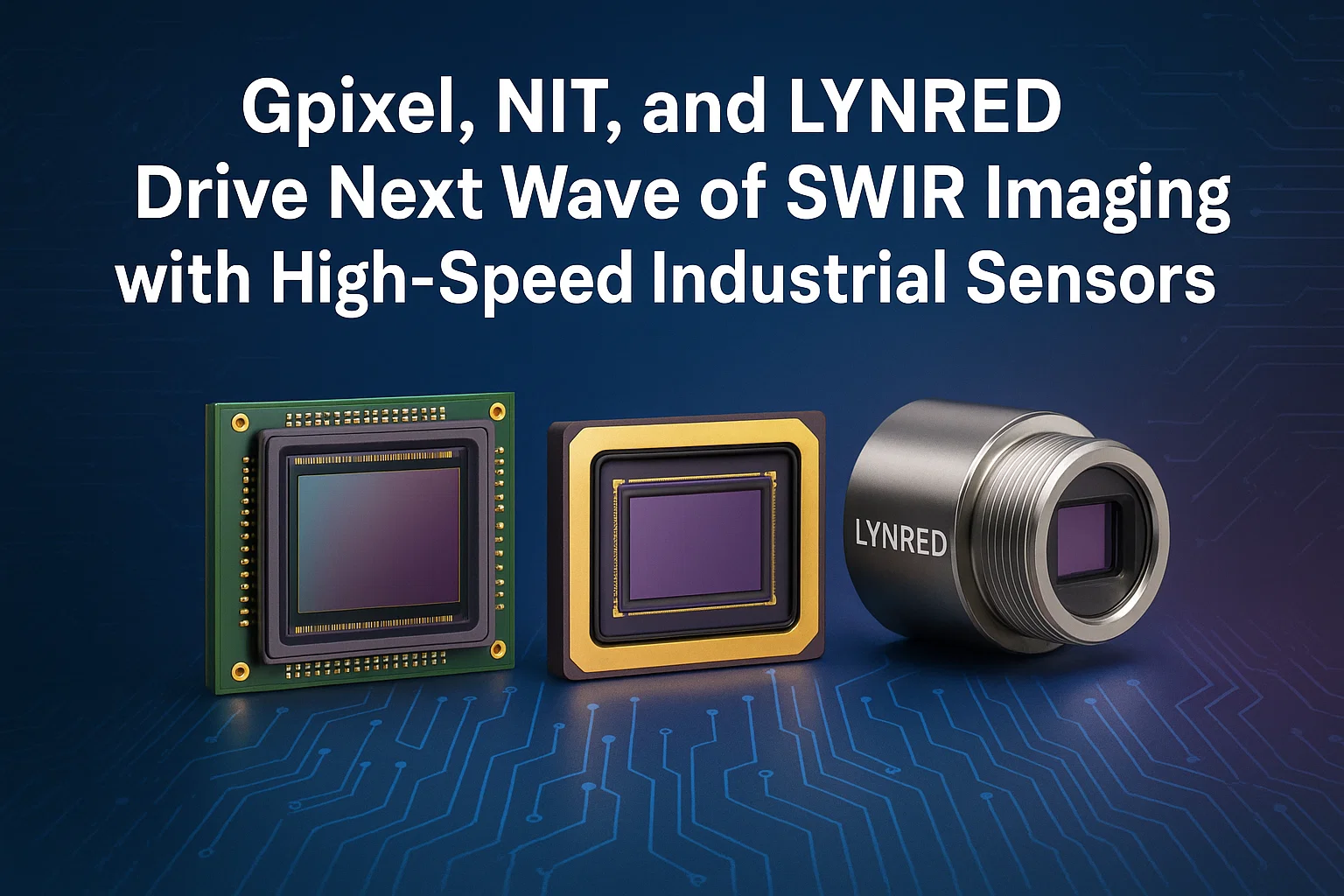
Gpixel, NIT, and LYNRED Drive Next Wave of SWIR Imaging with High-Speed Industrial Sensors
In the evolving landscape of imaging technology, Short-Wave Infrared (SWIR) image sensors are emerging as one of the most transformative innovations. Unlike conventional cameras that capture light in the visible spectrum, SWIR sensors detect wavelengths typically ranging from 900 nm to 1700 nm (and sometimes extended up to 2500 nm). This ability allows them to penetrate fog, smoke, dust, and even packaging materials revealing insights invisible to the human eye.
Industrial applications of SWIR imaging are growing rapidly, particularly in semiconductor inspection, food quality control, recycling, pharmaceutical sorting, and long-range surveillance. In fact, the SWIR Image Sensors for Industrial Cameras Market was valued at USD 248 million in 2024 and is expected to soar to USD 584 million by 2032, expanding at a robust CAGR of 13.8%.
Access Your Free Sample Report- SWIR Image Sensors for Industrial Cameras Market
Market Growth Drivers: Why SWIR is Moving Mainstream
The impressive double-digit growth of the SWIR sensor market is driven by a combination of technological advancements, new materials research, and expanding industrial demand.
1. Rising Industrial Inspection Needs
From detecting microscopic cracks in silicon wafers to identifying bruises in fresh produce, SWIR cameras are now central to automated quality control. Their ability to differentiate between moisture levels, chemical compositions, and hidden defects makes them indispensable in precision manufacturing.
2. Cost Reduction Efforts
Historically, SWIR technology has been expensive, often costing above $10,000 per unit. However, breakthroughs in quantum-dot technology, alternative semiconductor materials (like InAs QDs), and CMOS integration are pushing down costs dramatically. New research even envisions sub-$500 SWIR sensors, a game-changer for mass adoption.
3. Expanding Application Horizons
SWIR cameras are no longer confined to defense and scientific labs. Today, they are penetrating food processing, agriculture, electronics, pharmaceuticals, environmental monitoring, and smart cities.
4. Strategic Mergers & Acquisitions
Major sensor companies are strengthening their portfolios through acquisitions. For example, Onsemi’s acquisition of SWIR Vision Systems a pioneer in quantum-dot-based SWIR imaging signals a push to integrate SWIR with mainstream industrial platforms.
Recent Industry Developments: Who’s Leading the Innovation Race?
1. Gpixel’s High-Speed SWIR Line-Scan Sensors (GIR1201 & GIR2505)
In June 2025, Gpixel unveiled two advanced InGaAs line-scan SWIR sensors, tailored for industrial inspection:
- GIR1201:
- 1024 × 1 resolution
- 5 µm pixel size
- Line rate: up to 9 kHz
- Dynamic range: ~72 dB
- Power consumption: <450 mW
- GIR2505:
- 512 × 2 pixels, with 25 µm pixel pitch
- Line rate: 4 kHz
- Dynamic range: ~70 dB
These sensors deliver high throughput with low power usage, making them ideal for wafer inspection, packaging analysis, and material sorting.
2. NIT’s NSC2301 Line-Scan SWIR Sensor
New Imaging Technologies (NIT) launched the NSC2301 in mid-2025, targeting high-speed industrial inspections.
- Resolution: 2048 × 1 pixels
- Pixel size: 8 µm
- Line rate: >80 kHz
- Spectral range: 9–1.7 µm
- Integrated thermoelectric cooling (TEC) for noise reduction
This sensor is optimized for semiconductor manufacturing, textile inspection, and pharmaceutical sorting.
3. LYNRED’s EYESENTIAL SW Sensor
LYNRED, a European leader in IR technologies, launched EYESENTIAL SW a cost-optimized SWIR sensor designed for machine vision.
- VGA resolution (640 × 512)
- 10 µm pixel pitch
- 14-bit digital output
- Off-the-shelf packaging
By balancing performance with affordability, LYNRED is making SWIR accessible for mainstream industrial and scientific imaging.
Download Sample Report PDF- SWIR Image Sensors for Industrial Cameras Market
4. Quantum-Dot and Lead-Free Research Breakthroughs
- Oklahoma State University (OSU) Research Project: Developing quantum-dot SWIR-to-visible upconversion sensors. Expected cost reduction from >$10,000 to <$500, while scaling resolution from <1 MP to >100 MP.
- imec’s Lead-Free InAs Quantum Dots: imec demonstrated eco-friendly quantum-dot absorbers for SWIR imaging around 1390 nm. This shift is significant for sustainability and regulatory compliance.
5. High-Resolution SWIR Cameras for Harsh Environments
NIT introduced the SenS 1920, a Full HD SWIR camera designed for long-range surveillance and industrial monitoring in foggy or dusty conditions. With 1920 × 1080 resolution and 25e- read noise, it represents a leap in high-performance SWIR imaging.
6. Onsemi’s Strategic Acquisition of SWIR Vision Systems
Onsemi acquired SWIR Vision Systems, expanding its intelligent sensing portfolio with quantum-dot-based SWIR imaging solutions. This strategic move is expected to:
- Accelerate integration of SWIR into automotive, consumer, and industrial platforms
- Reduce cost barriers through large-scale manufacturing
- Open doors for AI-driven multispectral imaging
Applications: Where SWIR Imaging is Creating Impact
1. Semiconductor & Electronics Inspection
SWIR cameras detect defects, cracks, and stress points in silicon wafers and circuit boards. They also monitor layer thickness and impurities at sub-micron levels.
2. Food & Agriculture
SWIR sensors can distinguish freshness, moisture, and contamination in fruits, grains, and packaged foods. They’re widely used in sorting lines to ensure consistent quality.
3. Pharmaceutical & Medical Packaging
SWIR allows non-destructive inspection of blister packs, sealed bottles, and tablet coatings. This reduces counterfeiting and ensures compliance with safety standards.
4. Recycling & Material Sorting
In recycling plants, SWIR imaging separates plastics, glass, paper, and composites by detecting spectral signatures invisible to conventional cameras.
5. Defense & Security
For surveillance in fog, haze, or low light, SWIR offers clear visibility. It is increasingly integrated with AI-powered perimeter security systems.
6. Environmental Monitoring
SWIR cameras help detect moisture in soil, gas leaks, and chemical pollutants, making them valuable in climate monitoring and industrial safety.
Challenges and Barriers to Adoption
Despite rapid growth, the SWIR image sensor industry faces hurdles:
- High Cost of Manufacturing: InGaAs-based sensors remain costly compared to visible-light CMOS sensors.
- Limited Pixel Density: While progress is being made, SWIR resolutions still lag behind mainstream imaging.
- Thermal Noise: Even with TEC, cooling solutions add complexity and cost.
- Supply Chain Constraints: Many key materials (InGaAs, InAs) are not produced at large scale, creating bottlenecks.
Future Outlook: What’s Next for SWIR Sensors?
The forecasted growth to US$ 584 million by 2032 indicates that SWIR will soon move from niche to mainstream industrial adoption. Here are key trends to watch:
- Hybrid Sensors: Combining SWIR with visible, NIR, and thermal bands into single multispectral sensors.
- AI Integration: Real-time defect detection, predictive maintenance, and automated sorting using AI-enhanced SWIR imaging.
- Miniaturization: CMOS-compatible quantum-dot SWIR sensors that fit into compact cameras and smartphones.
- Cost Democratization: Quantum-dot and alternative material research could drive prices below $1,000, unlocking consumer and automotive markets.
- Sustainability Push: Lead-free, eco-friendly quantum-dot absorbers are likely to become standard, aligning with global environmental policies.
Click Here To Download Full Sample Report- SWIR Image Sensors for Industrial Cameras Market
A Clearer Future with SWIR
SWIR image sensors are no longer confined to defense labs or scientific observatories. They are rapidly entering production lines, recycling centers, farms, and surveillance systems, reshaping the future of imaging.
The convergence of new sensor launches (Gpixel, NIT, LYNRED), breakthrough research (OSU, imec), and strategic acquisitions (Onsemi) reflects a market on the brink of mass adoption. With costs falling, performance improving, and applications multiplying, the SWIR industry is well on its way to becoming a cornerstone of industrial imaging.
By 2032, with revenues projected at US$ 584 million, SWIR sensors are set to redefine how industries see, inspect, and secure the world ushering in a new era where invisible wavelengths bring visible transformation.

Comments (0)