
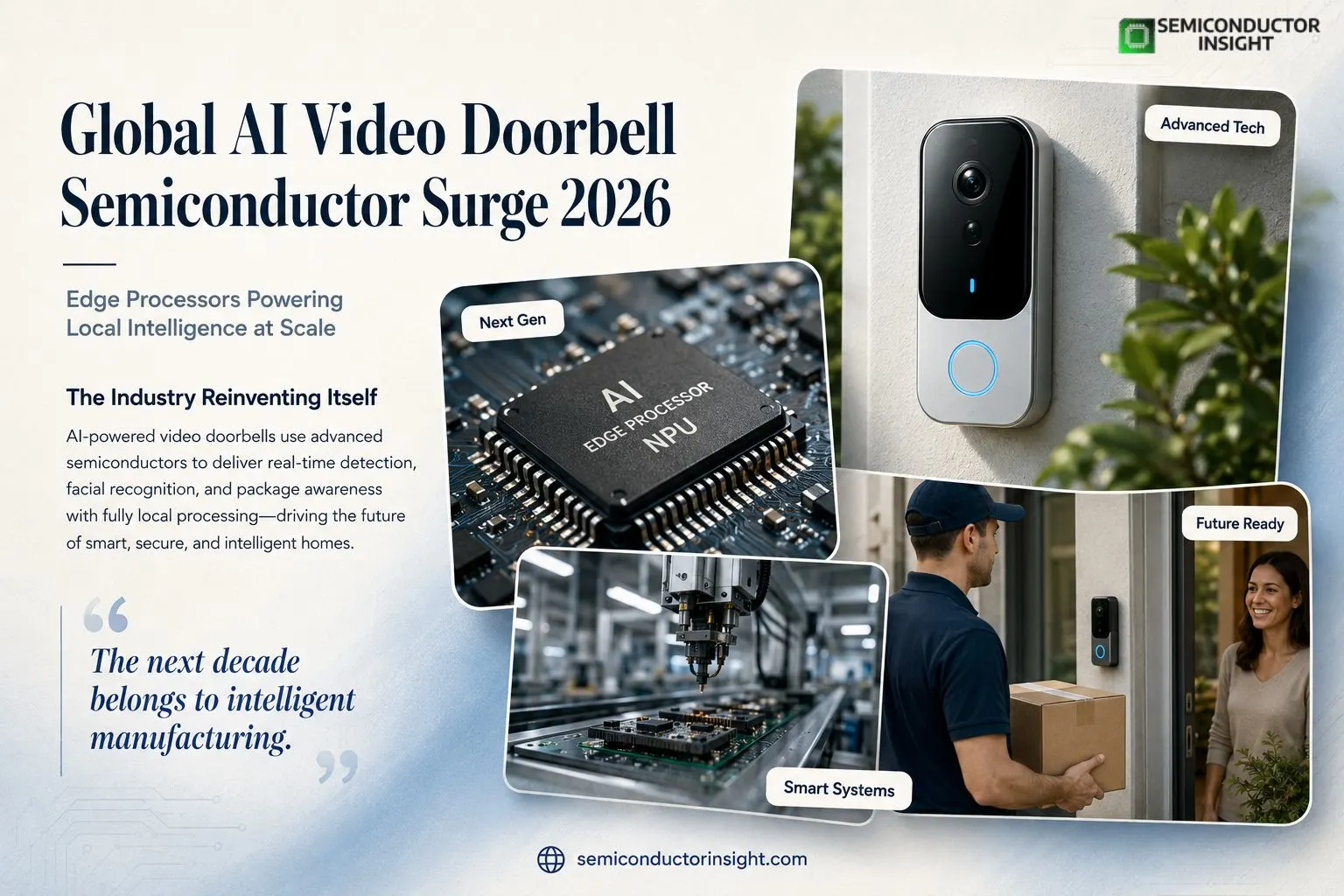
Global AI Video Doorbell Semiconductor Surge 2026: Edge Processors Powering Local Intelligence at Scale
The integration of advanced semiconductors into everyday security devices has revolutionized home monitoring. AI-powered video doorbells featuring package detection and facial recognition with fully local processing stand at the forefront of this shift. These systems rely on specialized chips that handle complex computer vision tasks directly on the device, minimizing latency while enhancing user privacy by keeping sensitive data away from constant cloud uploads.
Semiconductor innovations enable compact, energy-efficient designs capable of real-time analysis. Processors from companies like NXP and Qualcomm support edge AI pipelines that distinguish between people, packages, pets, and vehicles without external servers.
How Local Processing Transforms Everyday Security?
Local processing means the doorbell’s onboard chip analyzes video streams instantly. When a delivery arrives, the system identifies the package shape and position, sending a precise alert. Facial recognition happens through embedded neural network accelerators that match visitors against a small, user-approved database stored securely on the device.
This approach reduces bandwidth usage and protects against internet outages. For families in areas with unreliable connectivity, it ensures continuous operation. Global adoption grows as households seek smarter, more autonomous tools amid rising delivery volumes worldwide.
Semiconductor Foundations Enabling These Features
- Modern video doorbells incorporate microcontrollers, vision processors, and low-power AI accelerators.
- NXP’s solutions, for example, combine face recognition with ultra-wideband radar for presence detection, all running on efficient real-time operating systems.
- Qualcomm’s platforms target similar smart camera applications with powerful on-device inference.
- These chips balance performance with power constraints, crucial for battery-operated units that last months between charges.
- Advances in process nodes allow more computations within tight thermal and energy budgets typical of doorbell hardware.
Worldwide Examples and Real-World Implementations
In the United States, Google Nest doorbells use local and hybrid AI for package and person detection, with familiar face alerts available through subscriptions. Users report high satisfaction with quick notifications when family members approach.
Eufy models emphasize full local storage and processing, appealing to privacy-conscious consumers in Europe and Asia. Kami doorbells highlighted early on-device facial recognition capabilities, setting benchmarks for response speed.
In 2025-2026, manufacturers rolled out Matter-compatible devices that integrate smoothly across ecosystems. Reports from various regions show increased installations in urban apartments and suburban homes alike, driven by package theft concerns and contactless delivery preferences post-pandemic.
Ecosystem Integration Leaders for Smart Home Harmony
Which smart home platforms mesh most effectively with these AI video doorbells?
- Google Home stands out for seamless facial recognition and package alerts within its ecosystem, allowing users to link doorbells with Nest hubs for voice announcements and automations.
- Amazon’s Ring integrates deeply with Alexa routines, enabling actions like turning on lights upon package detection. Apple users anticipate enhanced options with rumored HomeKit-secure enclave processing for privacy-first facial features.
- TP-Link Tapo offers strong cross-platform compatibility with Alexa and Google at affordable price points, making it versatile for mixed-device households.
These integrations turn isolated doorbells into central hubs that coordinate lighting, locks, and notifications automatically.
Package Detection in Action across Scenarios
Advanced detection goes beyond simple motion. Systems now track whether a package is delivered or removed, reducing porch piracy risks. In high-traffic Asian cities with dense apartment living, these features help residents monitor ground-level drop-offs remotely. European case studies from smart city pilots demonstrate how aggregated anonymous data from such devices informs urban delivery optimization without compromising individual privacy.
- Privacy Advantages of On-Device Intelligence
By processing everything locally, these doorbells address growing concerns about data security. Information stays within the user’s control, with options for encrypted local storage via microSD cards in many models. This contrasts with cloud-heavy alternatives and aligns with regulations emphasizing data minimization in regions like the EU.
Technical Flow of a Typical Interaction
A visitor approaches → Camera captures frame → Onboard semiconductor processor runs AI model → Identifies face or package → Generates instant local alert → Optional secure cloud sync for review. This streamlined path delivers sub-second responses in optimal conditions.
- Current Volume and Adoption Insights
Millions of smart video doorbells ship annually, with features like package detection now standard in many mid-to-high-range units. IoT device growth supports broader semiconductor demand, with smart home security forming a notable segment. Wikipedia and industry articles note steady expansion in connected home technologies, fueled by consumer electronics trends.
For More Detailed Insights, You Can Surf Our Latest Report Here: https://semiconductorinsight.com/report/ai-video-doorbell-with-package-detection-and-facial-recognition-local-processing-market/
Evolution of Semiconductors for Future-Proofing
Ongoing chip improvements focus on even lower power consumption and higher accuracy under varying lighting. Integration with standards like Matter promises easier multi-vendor setups, benefiting global users from North America to emerging markets in Latin America and Africa.
These AI doorbells exemplify how semiconductor advancements turn ordinary entryways into intelligent, responsive gateways. As more households embrace local processing for security and convenience, the technology continues maturing into an essential part of modern living.

Comments (0)