

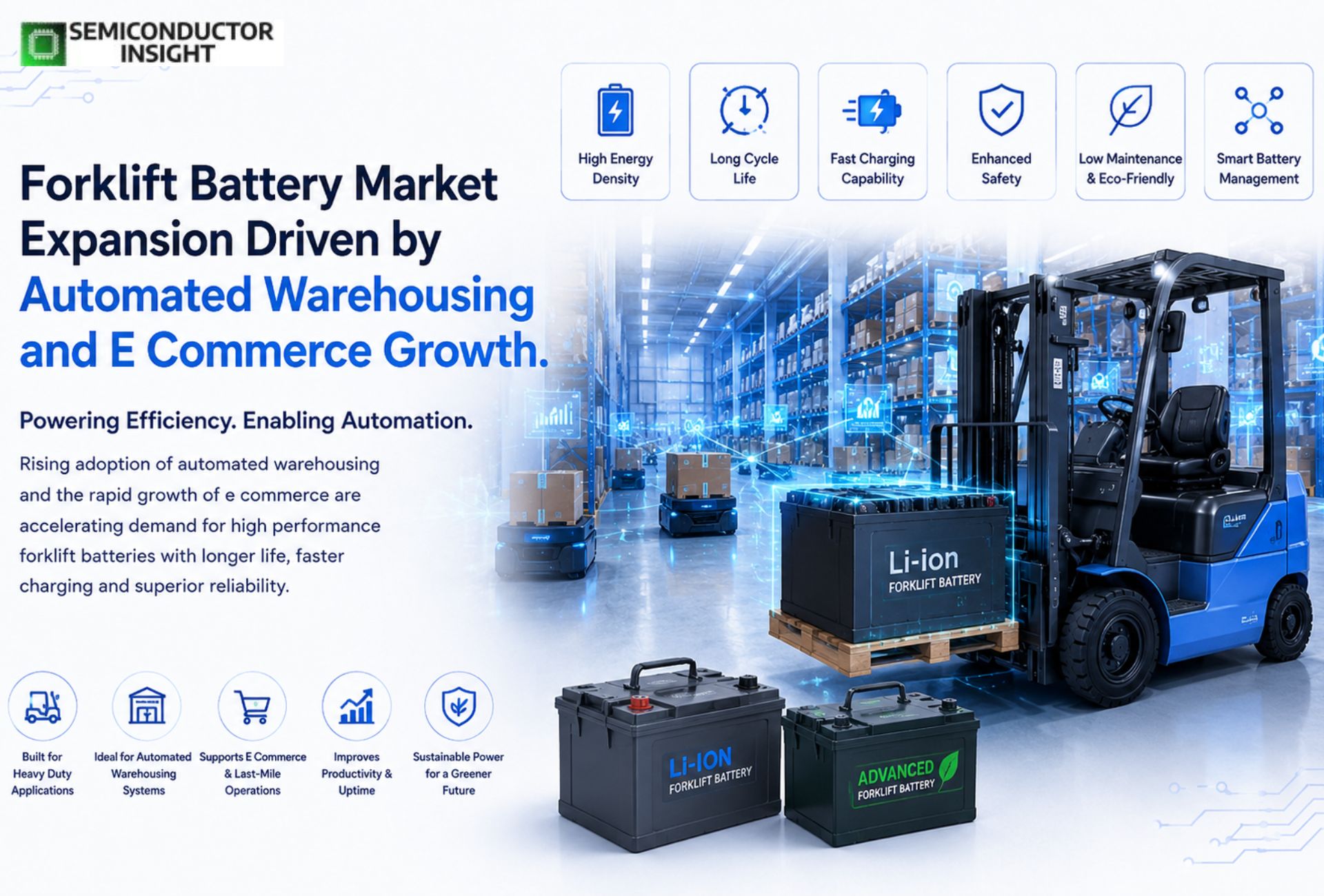
Forklift Battery Market Expansion Driven by Automated Warehousing and E Commerce Growth
The global transition toward automated manufacturing, semiconductor fabrication expansion, and intelligent warehousing is rapidly changing the operational role of industrial forklifts. What was once viewed as a routine warehouse utility has now become a critical component of high-speed logistics ecosystems. This shift is significantly influencing forklift battery market, especially as industries seek cleaner, longer-lasting, and digitally connected energy solutions.
Semiconductor fabrication facilities, electronics assembly plants, and EV battery factories are situations where the constant mobility of materials is critical. Advanced battery-powered units are replacing internal combustion forklifts because they produce fewer emissions, require less maintenance and can operate in indoor cleanrooms.
“Electrification of industry is an important part of the transition to lower-emission industry, and demand for electricity from this sector continues to increase,” claimed the International Energy Agency. This broader trend toward electrification is a direct driver of demand for industrial battery technology in the logistics infrastructure space.
Warehouse Electrification Is Accelerating Faster Than Expected
- The explosive growth of e-commerce fulfilment centres and semiconductor production hubs has intensified the need for electrically powered warehouse Major logistics operators are modernizing facilities with automated guided vehicles, robotics systems, and lithium-ion forklift fleets capable of operating continuously with minimal downtime.
- Large-scale distribution centres now process thousands of inventory movements every hour. In semiconductor manufacturing environments, where delicate components require contamination-controlled handling, electric forklifts offer operational advantages over diesel-powered alternatives.
- Recent industrial facility projects in the United States, Taiwan, South Korea, and Germany have integrated advanced battery charging systems directly into warehouse architecture. Several newly developed semiconductor fabs include dedicated energy management systems that optimize forklift charging schedules to reduce grid stress during peak operations.
Lithium Ion Batteries Are Redefining Industrial Fleet Operations
Lithium-ion technology is becoming one of the most disruptive forces in forklift battery market. Traditional lead-acid batteries, while still widely used, often require long charging cycles, dedicated maintenance spaces, and battery swapping procedures that reduce operational efficiency.
Modern lithium-ion forklift systems provide:
- Faster opportunity charging
- Higher energy density
- Reduced maintenance needs
- Longer operational lifespan
- Lower heat generation
- Improved energy efficiency
Industrial operators increasingly favor lithium-ion systems because they support continuous operations in high-demand environments such as semiconductor packaging plants and automated logistics warehouses.
According to data published by the U.S. Department of Energy, lithium-ion battery prices have declined substantially over the past decade, making electrified industrial fleets more economically feasible for large-scale warehouse operations.
In several semiconductor-focused logistics centres across Asia, forklift fleets now operate using centralized smart charging platforms capable of monitoring battery health, charging cycles, and operational performance in real time.
Explore the full report details in our recently refreshed edition anytime: https://semiconductorinsight.com/report/global-forklift-battery-charger-market/
Battery Intelligence Is Becoming a Competitive Advantage
Battery systems are no longer simple energy storage units. Industrial operators increasingly demand intelligent battery management systems capable of delivering predictive insights and operational analytics.
Modern forklift batteries now integrate:
- IoT-based monitoring sensors
- Thermal management systems
- Cloud-connected diagnostics
- Predictive maintenance software
- Fleet optimization analytics
These technologies are particularly important in semiconductor manufacturing environments where operational interruptions can disrupt highly synchronized production schedules.
Several industrial automation companies are also developing AI-assisted warehouse energy platforms that automatically prioritize charging schedules based on fleet activity, warehouse traffic, and electricity pricing fluctuations.
Semiconductor Factories Are Creating New Demand Patterns
The semiconductor sector itself is emerging as an important indirect growth catalyst for forklift battery market. Massive investments in chip fabrication plants globally are increasing demand for advanced material handling infrastructure.
- A single semiconductor fabrication facility can involve thousands of daily equipment and material transport movements.
- Electric forklifts equipped with low-emission battery systems are increasingly preferred for handling sensitive semiconductor wafers, specialty chemicals, and precision manufacturing equipment.
- The Semiconductor Industry Association reported continued investment growth in semiconductor manufacturing infrastructure following global chip shortages experienced during recent years. These facility expansions are creating new industrial logistics requirements across the supply chain.
For example, semiconductor projects supported through the United States CHIPS and Science Act have accelerated construction of new manufacturing sites requiring modern warehouse electrification systems and energy-efficient logistics fleets.
Fast Charging Infrastructure Is Becoming Central to Operations
Charging downtime has historically been one of the biggest operational concerns for industrial forklift fleets. Modern warehouse operators now prioritize fast charging infrastructure capable of supporting 24-hour logistics operations.
High-capacity charging stations are increasingly integrated with:
- Renewable energy systems
- Industrial microgrids
- Smart electricity management platforms
- Energy storage systems
Some large fulfillment facilities now use automated charging docks where forklifts recharge during short idle intervals between warehouse assignments.
This operational model is becoming especially valuable in semiconductor logistics environments where production timelines depend heavily on uninterrupted material movement.
Sustainability Audits Are Changing Procurement Decisions
Environmental compliance is increasingly influencing industrial fleet purchasing decisions. Companies facing stricter emissions reporting requirements are reevaluating diesel-powered warehouse equipment and investing more heavily in electrified fleets.
Large manufacturers are now including battery sustainability metrics within procurement evaluations, including:
- Energy efficiency performance
- Battery recyclability
- Carbon footprint reporting
- Lifecycle environmental impact
Battery recycling initiatives are also expanding globally as governments promote circular economy strategies for industrial energy storage systems.
In Europe, industrial operators increasingly align warehouse electrification projects with broader ESG reporting frameworks. Similar sustainability-focused transitions are gaining momentum across semiconductor and electronics manufacturing sectors in Asia and North America.
Smart Industrial Mobility Is Entering a New Phase
Forklift battery market is no longer evolving solely around energy storage. It is becoming closely tied to industrial automation, digital infrastructure, and intelligent manufacturing ecosystems.
As semiconductor factories, data centres, and automated distribution hubs continue expanding worldwide, industrial mobility systems are expected to become even more connected, energy efficient, and software-driven.
The broader transition toward electrified logistics infrastructure reflects how industrial operations are redefining efficiency, sustainability, and operational resilience in an increasingly technology-centreed global economy.

Comments (0)