
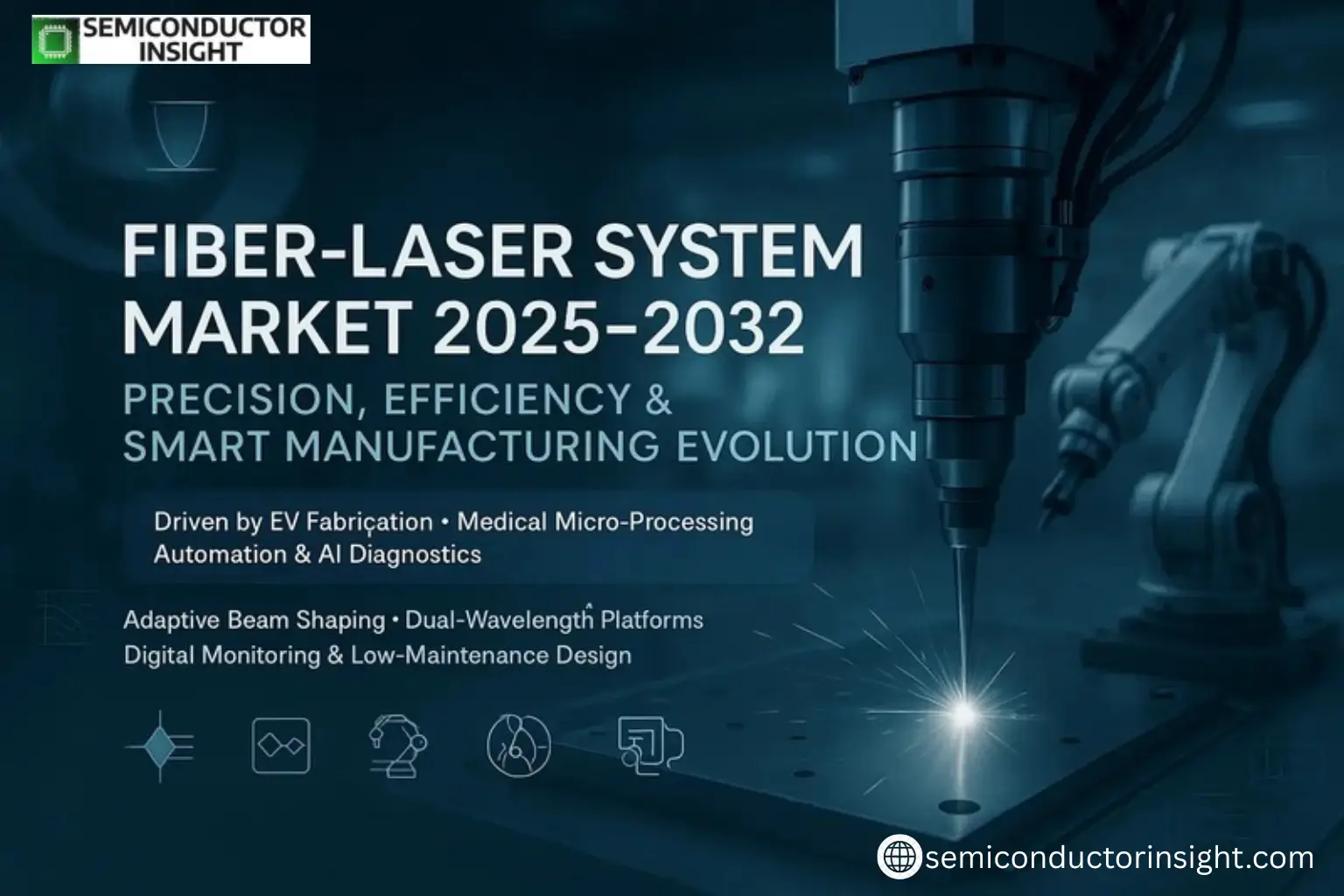
Fiber-Laser System Market: The Precision Engine behind Modern Manufacturing
The fiber-laser ecosystem has quietly transformed from a niche industrial tool into the backbone of high-precision manufacturing. Whether it’s cutting complex metal shapes for electric vehicles, engraving medical components with micro-accuracy, or powering ultra-clean welding lines for aerospace, fiber-laser systems have set a new standard for productivity and performance.
The target industry today isn’t just expanding it’s maturing into a strategic investment zone where reliability, beam quality, and digital integration outweigh simple power ratings.
A Market Driven by Speed, Accuracy & Material Versatility
The shift toward fiber-laser systems reflects a deeper transformation in how factories operate. Businesses are under pressure to produce cleaner cuts, faster output, and near-zero maintenance downtime. Fiber lasers respond to this demand with unmatched electrical efficiency, longer service life, and the ability to work seamlessly with metals, alloys, composite materials, and engineered substrates.
One of the biggest reasons manufacturers continue to migrate toward fiber-based platforms is the system’s consistency. Unlike CO₂ or solid-state lasers, fiber lasers deliver a stable, high-quality beam even during extended production runs. This reliability directly translates into predictable throughput an essential attribute for automotive, medical device, semiconductor, and precision tooling companies.
Where the Market Finds Its Momentum
The growth of the fiber-laser system market comes from industries that prefer measure twice, cut once precision engineering. Three sectors are shaping the demand curve more than others:
- E-Mobility & Electric Drives
Electric vehicle architectures pack multiple metal components into compact spaces. Fiber lasers offer the fine-line cutting and micro-welding needed for battery trays, EV stators, copper busbars, and lightweight structural elements. Their ability to maintain thermal stability is becoming crucial as EV production volumes scale globally.
- Medical Manufacturing
As implants, surgical tools, and diagnostic equipment become smaller and more complex, fiber-laser systems are being adopted for ultra-clean marking, burr-free cutting, and precision joining. The promise of reduced postoperative risk makes laser-processed components the preferred choice among medical OEMs.
- Industrial Automation & Smart Factories
For automated factories embracing AI-driven production, fiber-laser systems bring predictable output and digital traceability. Systems now integrate sensors, real-time beam diagnostics, and remote monitoring modules, allowing manufacturers to maintain consistent quality across large-scale operations.
What’s Changing: The New Generation of Fiber-Laser Systems
The latest wave of fiber-laser technologies is reshaping the competitive landscape. Instead of focusing purely on wattage, OEMs are now optimizing how lasers interact with materials, machines, and data frameworks.
Here are the innovation themes reshaping the market:
- Adaptive Beam Shaping
Systems now modify the beam profile dynamically, enabling smoother edges, faster penetration, and cleaner welding seams.
- Dual-Wavelength & Multi-Mode Laser Platforms
Designed for complex materials such as copper and aluminum, these systems enhance reflectivity management and reduce processing defects.
- Energy-Optimized Power Modules
Manufacturers are reworking internal architectures to reduce energy leakage, lower heat generation, and extend diode lifecycles.
- Low-Maintenance Digital Modules
Integrated diagnostics help detect mirror contamination, alignment drift, and internal temperature spikes long before they cause downtime.
The result seen is a new generation of lasers that operate faster, last longer, and behave more intelligently on the shop floor.
Why Manufacturers Prefer Fiber-Laser Systems
Beyond technical performance, fiber-laser systems resonate because they simplify the work lives of engineers and operators. Production teams prefer tools that allow effortless reconfiguration, minimal calibration, and high repeatability. Fiber lasers check all these boxes and this alignment with real-world user needs is accelerating their adoption.
Maintenance teams also appreciate the sealed, low-wear structure of fiber lasers. With fewer optics, no alignment requirements, and exceptional thermal management, the systems offer predictability in long production cycles something CO₂ systems simply cannot match.
Competitive Landscape: A Market Defined by Expertise
While dozens of global players participate in the fiber-laser system market, the real competition lies in engineering depth. Companies that can deliver customizable architectures, tighter integration with machine tools, and value-added software ecosystems are shaping the premium segment.
Key competitive devices include:
- Proprietary optical fiber designs
- Co-development partnerships with automation OEMs
- Integrated beam analysis & on-machine monitoring
- Aftermarket support and rapid module replacement
- Ability to adapt products for EVs, aerospace, medical, and semiconductor needs
A Stable Future with High-Precision Ambitions
The fiber-laser system market is heading toward a phase defined by efficiency, intelligence, and deeper integration across smart factories. As manufacturers push for higher output and cleaner machining quality, fiber lasers will continue positioning themselves as the tool of choice.
From EV battery housing lines to surgical device micro-fabrication, the technology is shaping the next era of precision manufacturing and doing so with unmatched stability and performance.

Comments (0)