
Edge Computing Logic Processors Market 2026: USD 4.5 billion to USD 9.8 billion at 9.0% CAGR
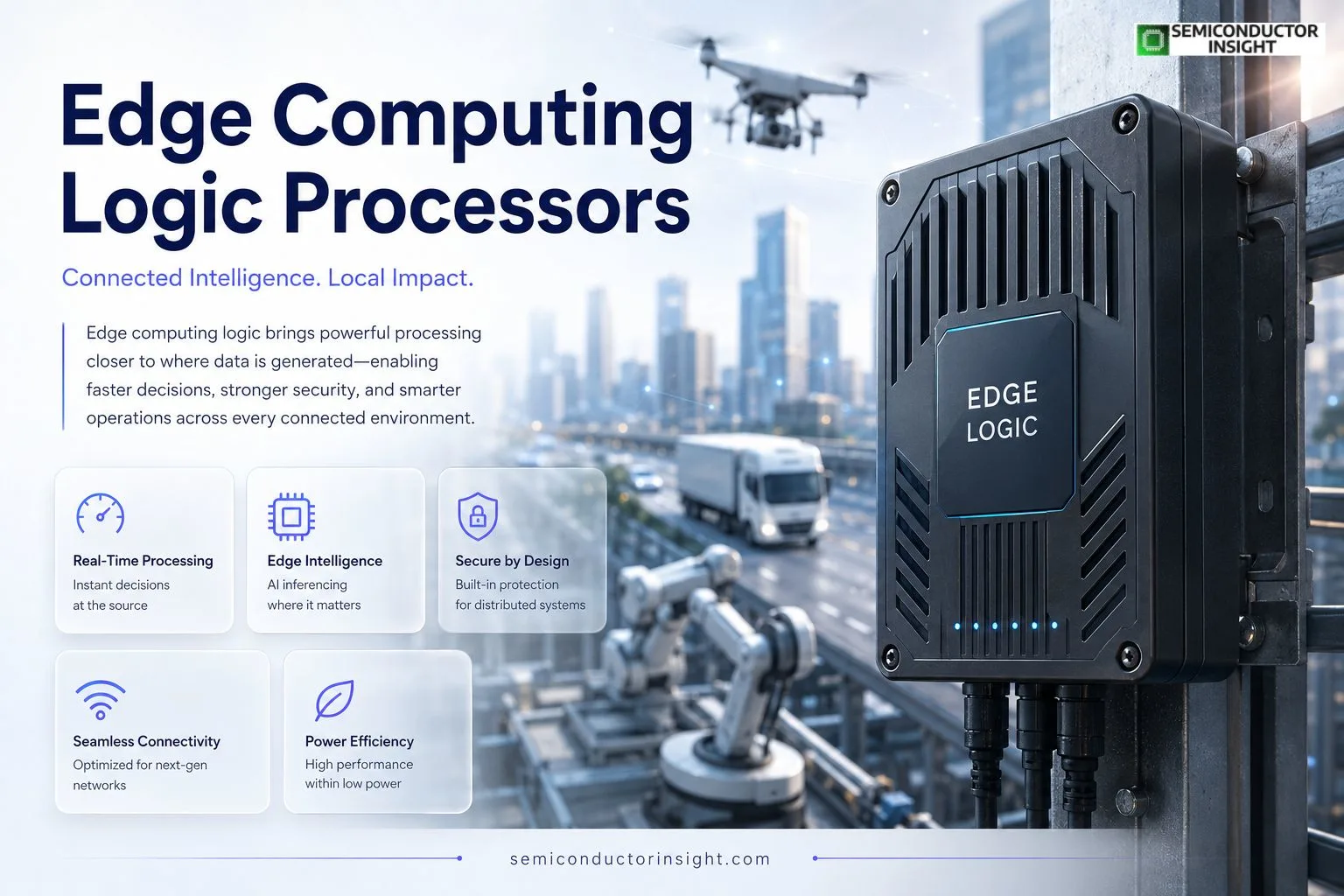
Edge computing logic continues to redefine how intelligent systems operate by placing powerful processing capabilities directly where data is generated. This shift supports faster decision-making across connected environments while reducing dependence on centralised cloud infrastructure.
Logic Processing at the Network Edge
Specialised logic chips power the computational foundation for edge deployments. These components handle everything from basic data filtering to complex AI inference tasks in constrained environments. Manufacturers design them with emphasis on low power draw, thermal management, and real-time performance to suit deployment in remote or mobile settings.
Developments draw from established semiconductor principles where computation moves closer to data sources. This approach minimises transmission delays and enhances responsiveness in applications ranging from industrial sensors to wearables.
North America’s Position in Global Edge AI
North America holds the largest share of the global edge AI hardware market in 2025, accounting for 42.1% of regional revenue. Asia-Pacific follows with around 33%, while Europe contributes approximately 22%. The Rest of the World represents a smaller share at about 3%, highlighting North America’s leading role in the market.
Current Deployments Driving Adoption
Automotive systems increasingly rely on edge logic for sensor fusion in advanced driver assistance. Vehicles process camera, radar, and lidar inputs locally to enable immediate reactions, improving safety without constant connectivity. Similar patterns appear in manufacturing, where production equipment uses onboard logic to monitor operations and adjust parameters instantly.
Smart infrastructure projects incorporate these chips into traffic systems and utility networks. Local processing allows dynamic responses to changing conditions, such as rerouting vehicles during congestion or balancing energy loads based on real-time demand.
How is enterprise adoption sitting right now?
- Enterprise Deployment Gap
Only 20% of enterprises had fully deployed edge computing in 2024. That number is expected to hit 50% by 2029, a near-tripling in five years as cost curves fall and tooling matures.
- MLOps at the Edge
76% of companies now use MLOps platforms to manage edge AI deployment, compared to near-zero in 2021, reflecting the operationalization of what was once purely research-grade infrastructure.
Efficiency Innovations in Chip Design
Design teams focus on architectures that deliver strong performance within tight power budgets. Techniques, including specialised accelerators and optimised memory integration, help logic solutions manage demanding workloads while extending battery life in portable devices.
Material advancements and process refinements contribute to these gains. Government-supported programs worldwide promote research into more efficient computing methods to support sustainable technology growth.
Connectivity Synergies with Emerging Networks
High-speed wireless standards complement edge logic by enabling seamless data exchange between distributed nodes. This combination proves especially valuable in logistics, where fleet operators gain better visibility and control through localised analysis of vehicle and cargo data.
IoT ecosystems benefit as well, with logic components managing the flood of sensor information at the source. Only essential insights travel onward, easing network loads and strengthening data handling practices.
To Know More about the Report, You Can Freely Browse Our Latest Updated Report: https://semiconductorinsight.com/report/edge-computing-logic-market/
- Architectural Shifts Toward Modularity
Chiplet approaches are gaining traction for their ability to create tailored solutions efficiently. Designers assemble varied logic functions into compact packages suited to specific use cases, accelerating development cycles across different sectors.
Advanced integration methods further improve data flow between processing elements and supporting components. These enhancements open doors for more capable on-device intelligence without proportional increases in size or consumption.
- Protection Mechanisms in Decentralised Setups
Distributed architectures require strong safeguards at each processing point. Modern logic designs incorporate hardware-level security features that help protect against unauthorised access while maintaining operational integrity.
Real-world implementations in critical sectors demonstrate how these measures work alongside broader system protections. This layered strategy addresses risks inherent in spreading computational resources more widely.
Momentum across Global Applications
Ongoing projects highlight expanding use in healthcare monitoring tools that deliver timely insights while respecting privacy needs. Urban development initiatives also leverage edge logic for more responsive public services and resource management.
The technology aligns with broader movements toward specialised, efficient computing solutions. As examples accumulate in everyday operations, edge-optimised logic solidifies its position as a key enabler for next-stage innovations in how systems interact with the physical world.

Comments (0)