
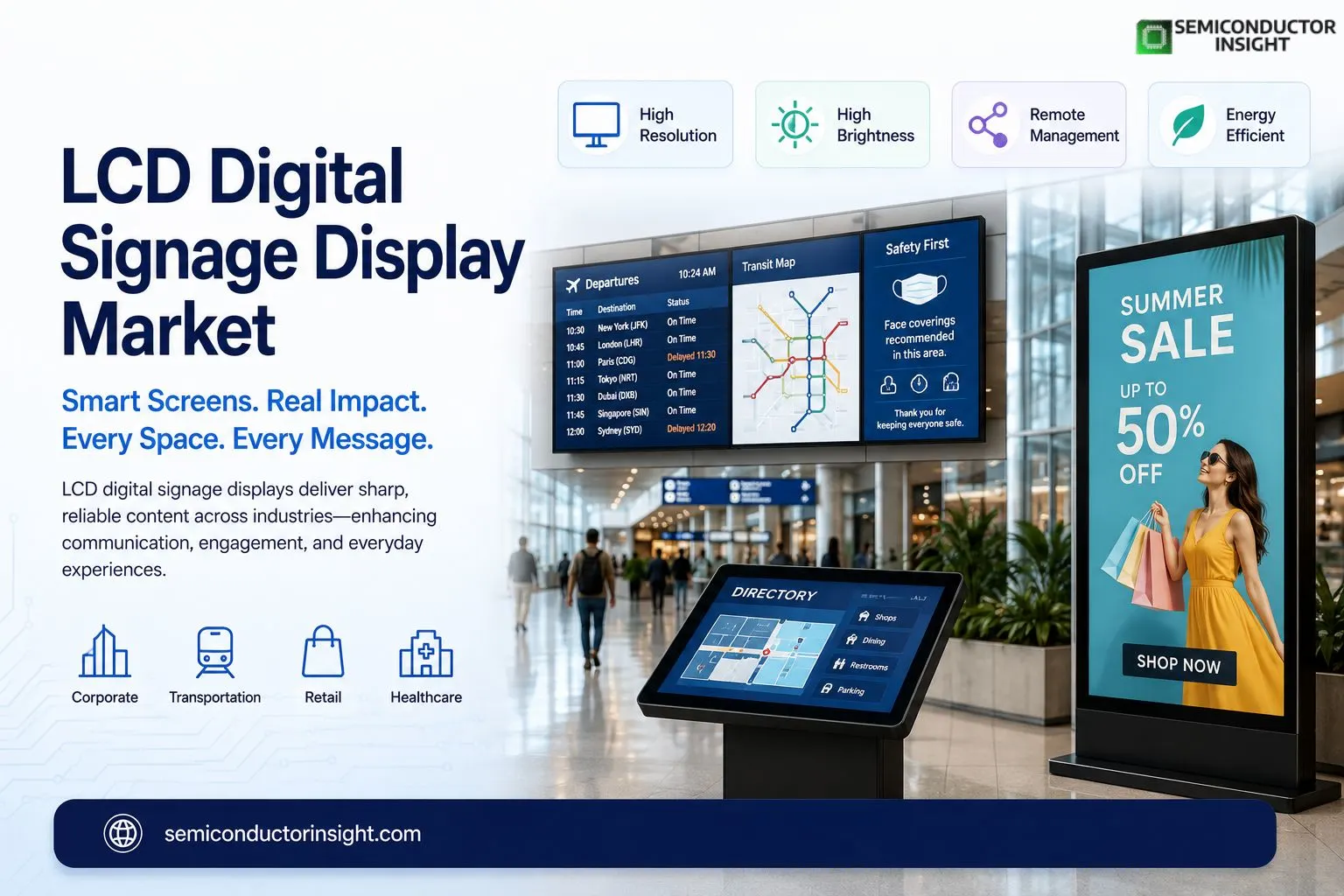
CHIPS Act and Display Tech Updates 2026 Impact on LCD Digital Signage Display Market Manufacturing
Liquid crystal display technology forms the backbone of countless digital signage installations worldwide, delivering sharp visuals through controlled light modulation between polarized layers. These panels rely on semiconductor elements to manage pixel states, switching rapidly to create moving images and text. From transportation hubs to corporate lobbies, LCD screens provide reliable information delivery that static posters cannot match. Authorized technical overviews on display engineering sites describe how liquid crystals align under electric fields to either block or pass backlight, producing the familiar high-resolution output seen in commercial settings.
Early digital signage evolved from basic message boards to sophisticated networked systems. Today, LCD panels dominate many indoor and semi-outdoor applications due to their balance of performance and scalability. Installations often feature screen sizes ranging from 40 inches to over 90 inches diagonally, with resolutions hitting 4K or higher for crisp viewing even at distance. In transportation, airports and train stations use these displays for real-time schedules, showing updates every few seconds across dozens of units per terminal.
Panel Technology Evolution Path
- Visualize the progression starting with basic twisted nematic crystals moving toward advanced in-plane switching variants that improve viewing angles up to 178 degrees.
- This path allows viewers to see consistent colors from nearly any position in crowded public areas.
- Recent case examples include major transit authorities upgrading fleets of information boards with brighter LCD models rated for 700 to 1500 nits of luminance, ensuring visibility under varying ambient light conditions.
- Education environments embraced these systems for announcements and learning aids.
- Colleges and universities deploy networks of screens in hallways and cafeterias, reaching thousands of students daily with event calendars and safety notices.
- One documented instance at a large campus showed over 200 displays coordinating content from central management software, reducing printed materials significantly while improving engagement metrics.
Transportation Integration Highlights
In public transit, LCD digital signage helps manage passenger flow. Bus depots and subway platforms feature multi-panel video walls built from tiled LCD modules, displaying maps, arrival times, and emergency alerts. Government transportation portals highlight how such systems enhance rider experience, with some networks incorporating touch interactivity for route planning directly at stations. Brightness levels often exceed 1000 nits combined with anti-glare coatings to combat sunlight in open areas.
Retail spaces leverage the technology for dynamic advertising. Stores install slim bezel LCD video walls that showcase promotions, with content refreshed remotely across hundreds of locations. A retail chain example from recent reports detailed a rollout of interactive directories using 55-inch panels, guiding shoppers while collecting anonymized interaction data for layout optimization.
Healthcare Communication Networks
Hospitals integrate LCD displays in waiting areas and corridors for patient education and wayfinding. Screens show health tips, visiting hours, and facility maps, often with 24/7 operation cycles.
Studies referenced on health information sites note installations in over two-thirds of larger facilities, supporting better patient flow and reducing staff inquiries. Panel durability stands out here, with designs engineered for continuous runtime exceeding 50,000 hours in many commercial-grade units.
For More Detailed Insights, You Can Surf Our Latest Report Here: https://semiconductorinsight.com/report/lcd-digital-signage-display-market/
Content Management and Interactivity Layer
Modern setups go beyond passive viewing. Software platforms push scheduled or live content to displays, incorporating sensors for audience measurement in some advanced cases. In corporate offices, meeting room signage uses LCD panels to show bookings and collaboration prompts. Educational statistics from authorized sources indicate widespread adoption, with many institutions reporting screens as essential for daily operations and emergency communications.
Outdoor and semi-outdoor variants incorporate higher brightness and weatherproofing, though LCD remains strong indoors where color accuracy and cost efficiency matter most. Examples from event venues show large arrays hosting concerts or conferences, with panels daisy-chained for seamless visuals spanning several meters wide.
Energy and Sustainability Focus
Manufacturers emphasize lower power consumption in newer generations, with some models operating efficiently at under 300 watts for mid-size units. This supports green building certifications in installations at universities and government buildings. Recycling programs for end-of-life panels recover materials, aligning with broader electronics stewardship efforts documented on environmental authority websites.
LCD digital signage display market thrives through these practical deployments across sectors. From bustling airports handling millions of passengers annually to quiet corporate hallways, the technology delivers timely information at scale. Ongoing advancements in connectivity, such as integration with 5G networks for faster updates, continue to expand possibilities. As public and private spaces prioritize clear communication, LCD-based signage remains a trusted semiconductor-driven solution shaping daily interactions globally.

Comments (0)