
Ammunition Market Growth Driven by Precision and Electronic Integration
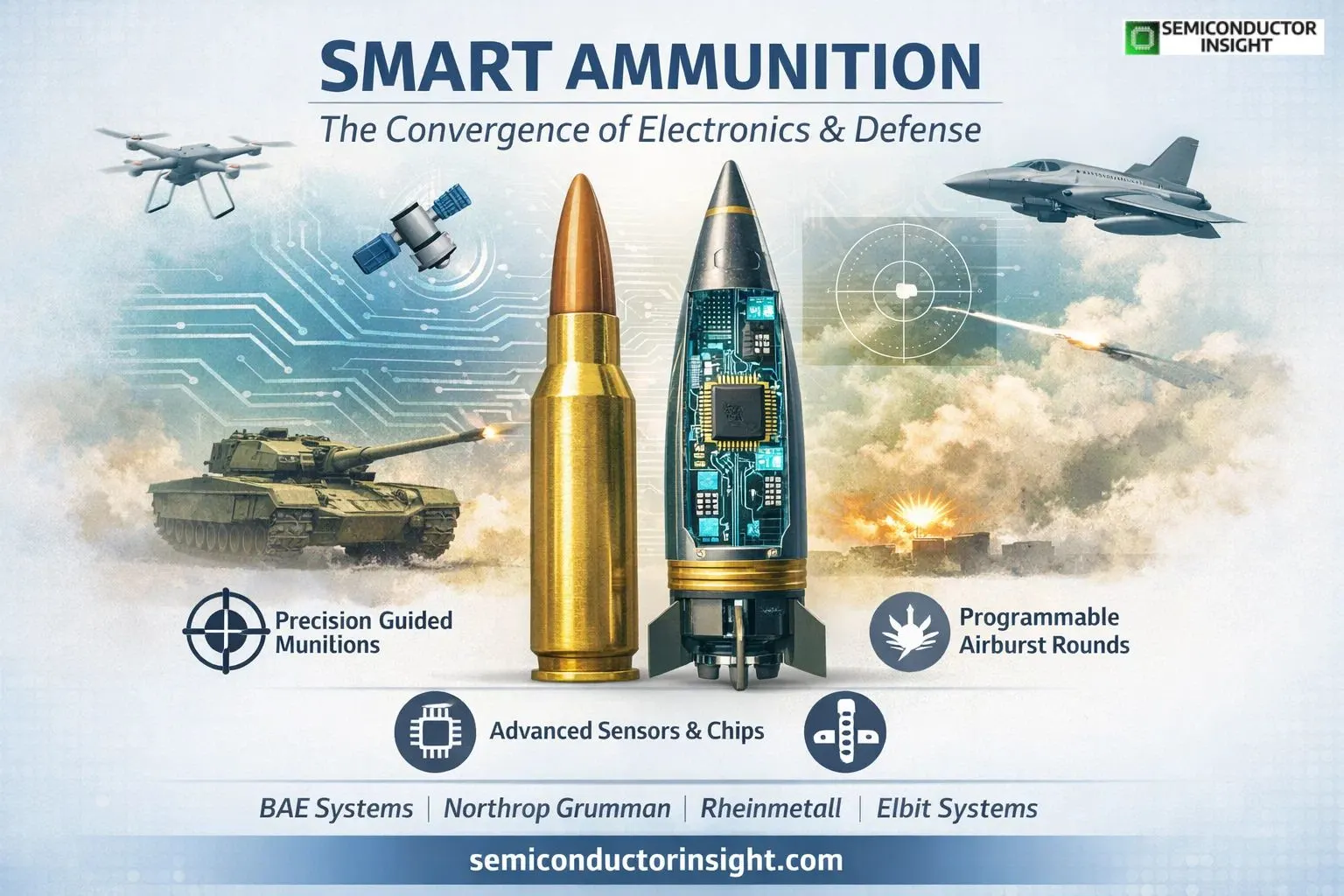
Ammunition industry has evolved far beyond traditional gunpowder and metal projectiles. Modern defence systems now integrate advanced electronics, sensors, and guidance technologies, bringing the ammunition market closer to the semiconductor ecosystem than ever before. Microchips embedded within smart munitions enable targeting accuracy, communication with weapon platforms, and adaptive control during flight.
This convergence of defence engineering and electronics is turning ammunition into an intelligent battlefield asset rather than just a consumable military supply.
The Hidden Role of Microelectronics in Modern Ammunition
In the past, ammunition was primarily mechanical. Today, microelectronic components are quietly transforming how certain munitions operate. Semiconductor chips support navigation systems, timing circuits, and detonation mechanisms that enable advanced capabilities such as programmable airburst rounds or guided artillery shells.
For example, precision-guided artillery systems use microcontrollers and sensors to adjust trajectory during flight. These electronics allow ammunition to strike targets with extreme accuracy, reducing collateral damage and improving operational efficiency.
This shift toward smart ammunition has also influenced supply chains. Defence manufacturers increasingly rely on semiconductor suppliers for rugged chips capable of surviving high temperatures, vibrations, and extreme acceleration during launch.
Smart Ammunition vs. Conventional Ammunition
- Traditional ammunition and digitally enhanced ammunition differ significantly in both design and battlefield functionality.
- Conventional ammunition is relatively simple. It relies on mechanical firing mechanisms and ballistic trajectories determined by weapon design and environmental factors. These munitions are cost-effective and easy to manufacture in large volumes.
- Smart ammunition, by contrast, incorporates electronic circuits, sensors, and sometimes communication modules. These allow the projectile to adapt mid-flight, detect targets, or detonate at optimized moments.
- For instance, programmable airburst rounds can explode above enemy positions rather than on impact, increasing effectiveness against concealed threats. However, this level of advancement also introduces higher production costs and greater reliance on semiconductor manufacturing.
- The trade-off between precision targeting and affordability continues to shape procurement strategies for military forces around the world.
Operational Advantages Emerging Across Defence Applications
One major advantage is battlefield accuracy. Guided munitions reduce the number of rounds needed to neutralize targets, improving operational efficiency and minimizing unintended damage.
Another advantage lies in interoperability with modern weapon platforms. Advanced ammunition can communicate with targeting systems, drones, and fire control computers, creating integrated combat networks.
Electronic fusing technology is also improving safety. Smart detonation systems ensure ammunition activates only under specific conditions, lowering accidental detonation risks during transport or handling.
For More Detailed Insights You Can Surf Our Latest Report Here: https://semiconductorinsight.com/report/aerospace-and-defense-memory-market/
Technology Layers behind Advanced Ammunition Systems
Modern ammunition innovation often involves several technological layers working together.
Guidance systems rely on sensors such as GPS modules or inertial measurement units to track movement and adjust trajectories. Microprocessors analyze data and issue commands to miniature control surfaces or propulsion adjustments.
Timing circuits determine the precise moment of detonation, particularly in programmable airburst rounds. Communication modules may also allow integration with targeting systems or drones that identify enemy positions.
The result is a complex technological ecosystem where ammunition design intersects with electronics engineering, materials science, and software development.
Recent Defense Technology Breakthroughs Influencing the Market
One of the most discussed developments in defense circles is the rise of chip-enabled precision artillery systems. These rounds incorporate advanced guidance electronics to strike targets dozens of kilometers away with remarkable accuracy.
Another emerging trend is AI-assisted targeting combined with programmable ammunition. Drones or surveillance systems can identify threats and transmit coordinates directly to fire-control systems that prepare electronically programmed rounds.
Such innovations are expanding the role of defense electronics across military supply chains and accelerating partnerships between defense manufacturers and semiconductor technology providers.
Real World Technology Instances
Several defense projects illustrate how electronics are reshaping ammunition capabilities.
Precision-guided artillery systems developed by companies such as BAE Systems and Northrop Grumman integrate guidance electronics that dramatically improve strike accuracy.
European manufacturer Rheinmetall has developed programmable airburst ammunition used in modern armored vehicle systems. These rounds rely on electronic timing mechanisms to detonate above targets.
Meanwhile, defense technology firm Elbit Systems focuses on integrating advanced electronics with weapon systems, creating digitally connected combat platforms that work with precision ammunition.
These developments highlight how semiconductor technologies are becoming essential to the next generation of military hardware.
Major Players in the Ammunition Market
Key companies active in the global ammunition ecosystem include:
- BAE Systems
- Northrop Grumman
- Rheinmetall
- General Dynamics
- Nammo
- Elbit Systems
- Thales Group
- Saab AB
- CBC Global Ammunition
- Olin Corporation
These organizations are increasingly investing in electronics integration, digital targeting technologies, and advanced materials to support next-generation ammunition platforms.

Comments (0)