

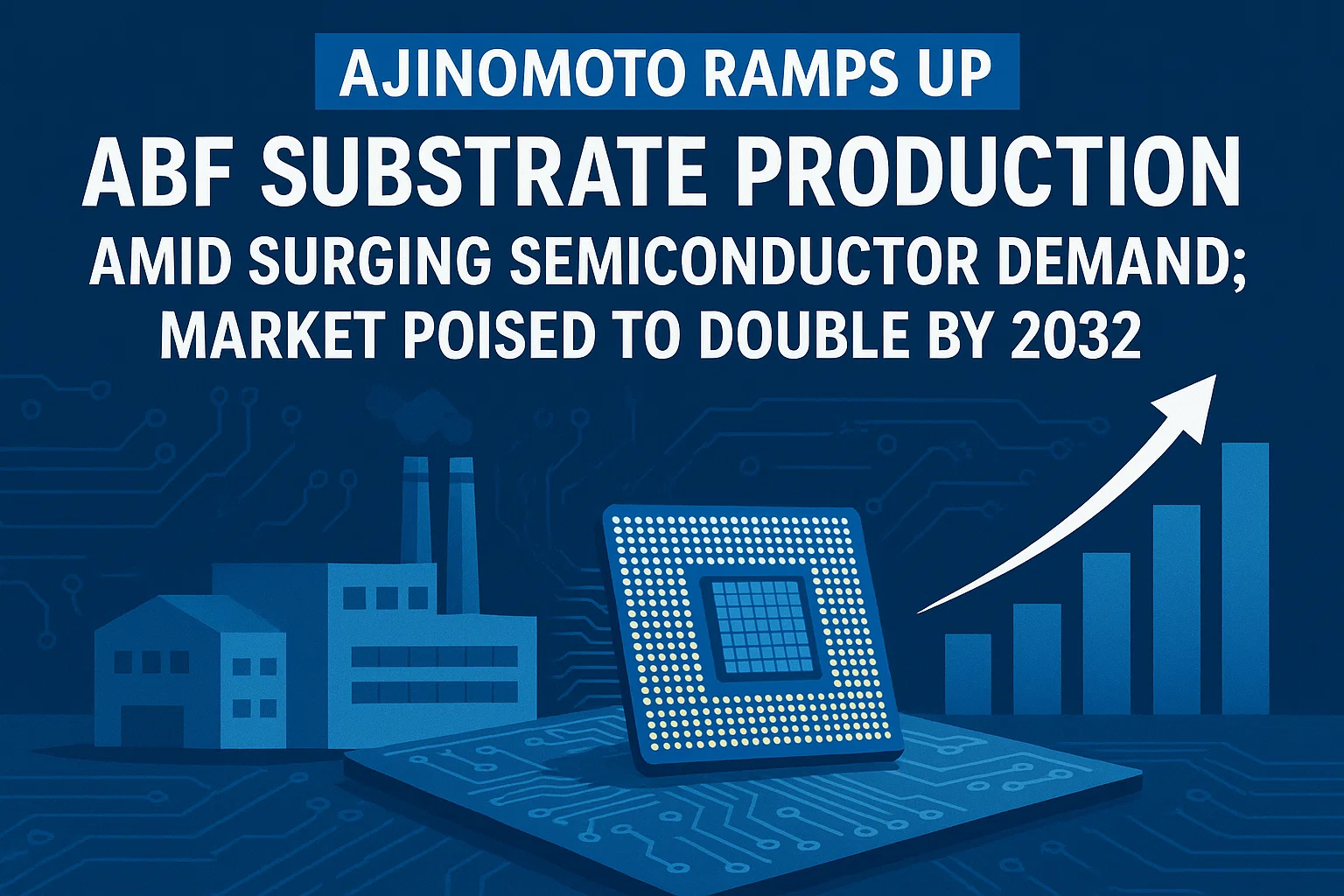
Ajinomoto Ramps Up ABF Substrate Production Amid Surging Semiconductor Demand; Market Poised to Double by 2032
In the ever-evolving landscape of semiconductor technology, the demand for advanced packaging solutions has surged, driven by the proliferation of high-performance computing applications, artificial intelligence, and the Internet of Things. At the heart of this transformation lies the Ajinomoto Build-up Film (ABF) substrate a critical component enabling the miniaturization and enhanced performance of semiconductor devices. This blog delves into the recent developments in the ABF substrate industry, exploring market trends, technological advancements, and the strategic initiatives shaping its future.
Access Your Free Sample Report- ABF (Ajinomoto Build-up Film) Substrate Market
Understanding ABF Substrates: The Backbone of Advanced Packaging
ABF substrates are organic materials used in semiconductor packaging to provide electrical insulation and mechanical support for integrated circuits (ICs). They play a pivotal role in facilitating the interconnection between the chip and the external environment, ensuring signal integrity and thermal management. The unique properties of ABF substrates, such as low dielectric constant, high thermal stability, and fine-line resolution, make them ideal for advanced packaging technologies like flip-chip and fan-out wafer-level packaging.
Market Dynamics: Growth Trajectory and Projections
The global ABF substrate market has witnessed significant growth in recent years, fueled by the increasing demand for high-performance semiconductors. According to industry reports, the market was valued at approximately USD 5.3 billion in 2024 and is projected to reach USD 10.4 billion by 2032, growing at a compound annual growth rate (CAGR) of 10.4% during the forecast period.
This robust growth is attributed to several factors:
- Advancements in Semiconductor Technology: The continuous evolution of semiconductor devices, characterized by smaller form factors and higher performance, necessitates the use of advanced packaging solutions like ABF substrates.
- Rising Demand for High-Performance Computing: The proliferation of AI, machine learning, and data analytics applications has escalated the need for powerful processors, thereby driving the demand for ABF substrates.
- Expansion of Consumer Electronics: The growing adoption of smartphones, wearable devices, and other consumer electronics has further fueled the need for advanced packaging solutions.
Key Players and Strategic Initiatives
Ajinomoto: Leading the Charge
Ajinomoto, a Japanese company renowned for its expertise in amino acid chemistry, is a dominant player in the ABF substrate market. The company holds over 95% of the global market share for ABF materials used in CPU and GPU substrates. To meet the escalating demand, Ajinomoto plans to invest at least JPY 25 billion (approximately USD 166 million) by 2030 to boost its ABF production capacity by 50%. This strategic expansion aims to enhance the company’s ability to supply high-quality ABF substrates to semiconductor manufacturers worldwide.
Unimicron: Expanding Capacity
Unimicron, a Taiwanese company specializing in PCB and semiconductor packaging substrates, is also investing in capacity expansion to address the growing demand for ABF substrates. The company is building new facilities and upgrading existing ones to increase production capacity and meet the needs of its clients in the semiconductor industry.
Download Sample Report PDF- ABF (Ajinomoto Build-up Film) Substrate Market
Technological Innovations: Enhancing Performance and Efficiency
The ABF substrate industry is witnessing several technological advancements aimed at improving the performance and efficiency of semiconductor packaging:
- Semi-Additive Processing (SAP): SAP is a manufacturing technique that allows for finer line widths and higher-density interconnections, facilitating the development of smaller and more powerful semiconductor devices.
- Glass Core Substrates: Glass substrates offer superior thermal and electrical properties compared to traditional organic materials, making them a promising alternative for next-generation semiconductor packaging.
- Advanced Materials Development: Ongoing research and development efforts are focused on creating new materials with enhanced properties, such as lower dielectric constants and higher thermal stability, to meet the evolving requirements of semiconductor packaging.
Supply Chain Challenges and Solutions
Despite the promising growth prospects, the ABF substrate industry faces several supply chain challenges:
- Capacity Constraints: The rapid growth in demand has outpaced the industry’s ability to expand production capacity, leading to supply shortages and increased lead times.
- Material Shortages: The availability of raw materials required for ABF substrate manufacturing is limited, impacting production schedules and costs.
To mitigate these challenges, industry players are exploring alternative materials, investing in capacity expansion, and adopting advanced manufacturing techniques to enhance production efficiency and meet the growing demand.
Click Here To Download Full Sample Report- ABF (Ajinomoto Build-up Film) Substrate Market
Future Outlook: Trends and Opportunities
The future of the ABF substrate industry appears promising, with several trends and opportunities on the horizon:
- Integration with Advanced Packaging Technologies: The integration of ABF substrates with emerging packaging technologies, such as system-in-package (SiP) and 3D packaging, will enable the development of more compact and powerful semiconductor devices.
- Expansion into New Applications: The adoption of ABF substrates is expected to extend beyond traditional applications in CPUs and GPUs to include areas like automotive electronics, medical devices, and industrial automation.
- Sustainability Initiatives: The industry is increasingly focusing on developing sustainable manufacturing processes and materials to reduce environmental impact and meet regulatory requirements.
The ABF substrate industry stands at the forefront of semiconductor packaging innovation, playing a crucial role in enabling the next generation of electronic devices. With continued investment in research and development, strategic capacity expansion, and the adoption of advanced manufacturing techniques, the industry is well-positioned to meet the growing demands of high-performance computing and other emerging applications. As technology continues to advance, the evolution of ABF substrates will remain integral to the progress of the semiconductor industry.

Comments (0)