Walking Aids Devices Market Insights
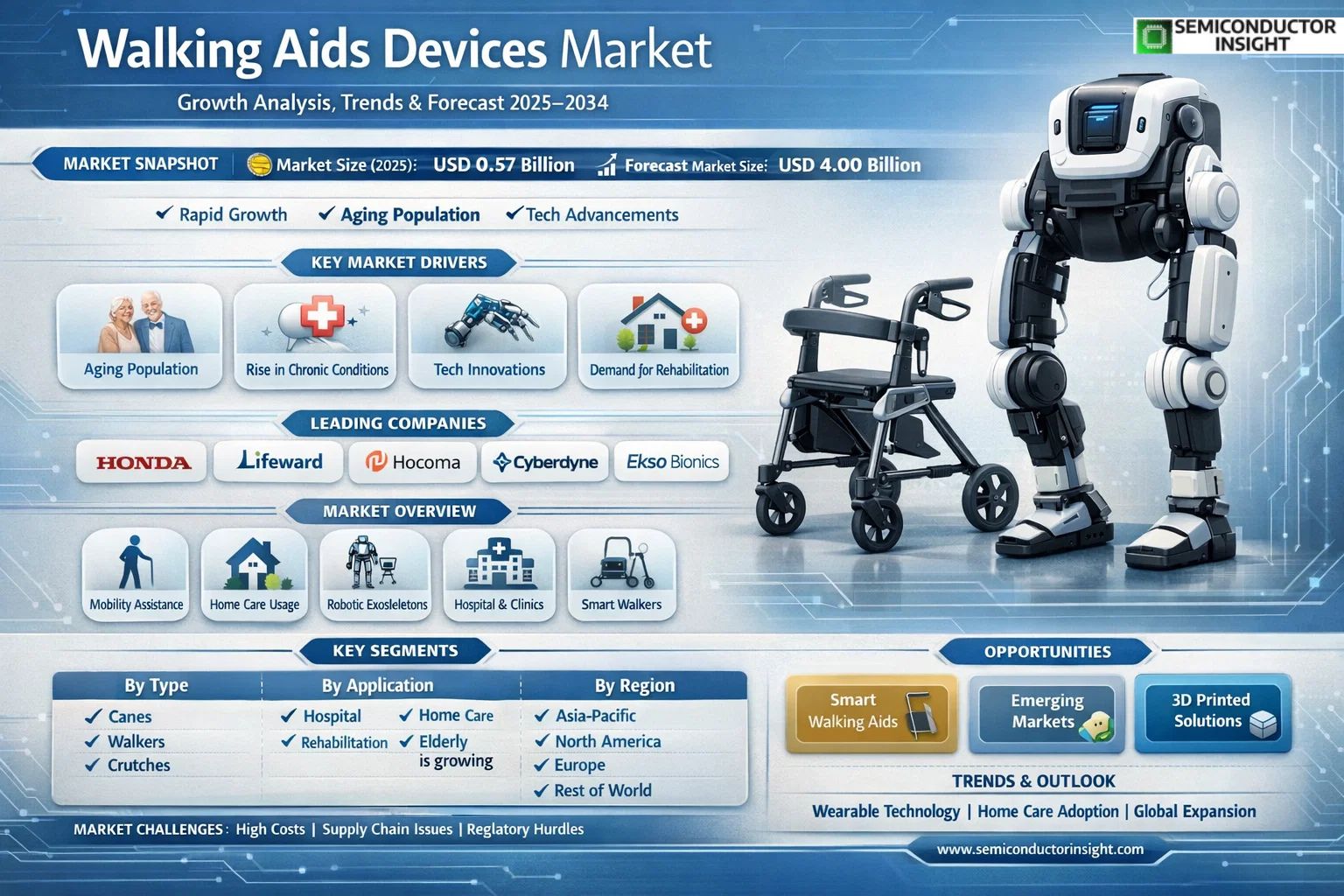
Global Walking Aids Devices market size was valued at USD 0.57 billion in 2025. The market is projected to grow from USD 0.70 billion in 2026 to USD 4.00 billion by 2034, exhibiting a CAGR of 21.6% during the forecast period.
Walking aids devices are assistive tools designed to help people with mobility challenges maintain balance, stability, and independence while walking. These devices are especially beneficial for individuals with injuries, disabilities, or age-related mobility issues. Walking aids come in several forms, including canes, crutches, walkers, and rollators, each tailored to varying levels of support need.
The market is experiencing rapid growth due to several factors, including a surging geriatric population, increasing incidences of chronic conditions like stroke and spinal injuries, and rising demand for rehabilitation solutions. Furthermore, advancements in robotic exoskeletons and wearable technologies are driving expansion, particularly in home and clinical settings. Initiatives by key players continue to propel this momentum. For instance, in May 2024, Ekso Bionics announced an exclusive distribution agreement with Ottobock for its Ekso Indego Personal exoskeleton in the U.S. and Canada. Cyberdyne, Ekso Bionics, Lifeward, Hocoma, and Honda are some of the key players operating in the market with a wide range of portfolios.
MARKET DRIVERS
Aging Population Surge
Walking Aids Devices Market is propelled by the global aging population, with over 1 billion people aged 65 and above expected by 2030. This demographic shift increases demand for mobility support products like walkers and canes, as age-related conditions such as arthritis and osteoporosis become more prevalent, driving steady market expansion.
Chronic Diseases and Injuries
Rising incidences of chronic diseases, including diabetes and cardiovascular issues, alongside sports injuries and accidents, necessitate walking aids for rehabilitation. In regions like North America and Europe, healthcare awareness has boosted adoption, with the market witnessing a CAGR of approximately 6.2% from 2023 to 2030.
➤ Healthcare infrastructure investments worldwide have enhanced accessibility to walking aids, supporting post-surgical recovery and daily mobility for millions.
Technological enhancements in lightweight materials and ergonomic designs further fuel consumer preference, positioning Walking Aids Devices Market for sustained growth amid evolving lifestyle needs.
MARKET CHALLENGES
High Costs and Affordability Issues
Premium walking aids with advanced features often exceed $200 per unit, deterring adoption in low-income segments of Walking Aids Devices Market. Limited insurance coverage in developing economies exacerbates this, slowing market penetration despite rising needs.
Other Challenges
Supply Chain Disruptions
Global events like pandemics have interrupted raw material supplies for crutches and rollators, increasing production costs by up to 15% and delaying deliveries to key markets.Competition from low-cost imports also pressures established brands to innovate continuously, while user compliance remains low due to discomfort with certain designs.
MARKET RESTRAINTS
Strict Regulatory Standards
Rigorous FDA and CE marking requirements for safety and durability impose significant compliance burdens on manufacturers in Walking Aids Devices Market. These regulations, while ensuring quality, extend approval timelines by 12-18 months and raise development costs.Additionally, varying international standards create barriers for exports, particularly to Asia-Pacific regions where harmonization efforts lag. Intellectual property concerns further limit innovation sharing among smaller players.Environmental regulations on material disposal add to operational challenges, compelling firms to invest in sustainable alternatives amid growing scrutiny.
MARKET OPPORTUNITIES
Technological Innovations
Integration of smart sensors and IoT in walking aids offers real-time health monitoring, untapped potential in Walking Aids Devices Market. Devices with fall detection and GPS could capture a 20% premium segment by 2028.Expansion into emerging markets like India and Brazil, fueled by urbanization and rising middle-class healthcare spending, promises double-digit growth rates.Customization via 3D printing for personalized fit addresses diverse user needs, while partnerships with telehealth services enhance post-market support and adoption.
Walking Aids Devices Market Trends
Advancements in Wearable Technology Driving Walking Aids Devices Market
In Walking Aids Devices Market, the transition towards wearable assistive devices represents a pivotal trend. These innovations, including exoskeleton systems from leading manufacturers like Cyberdyne, Ekso Bionics, and Hocoma, offer enhanced mobility support for users with disabilities or injuries. Unlike traditional fixed aids such as canes and walkers, wearables provide dynamic assistance, adapting to user movements for improved balance and gait rehabilitation. Industry surveys indicate strong development in this segment, fueled by technological integrations like robotics and AI, enabling greater independence for elderly and rehabilitation patients.
Other Trends
Increased Household Adoption
A notable shift in Walking Aids Devices Market is the growing preference for household applications over institutional settings like hospitals and nursing homes. Devices tailored for home use, including rollators and lightweight walkers, empower users to maintain daily activities with minimal assistance. This trend aligns with broader healthcare movements towards aging-in-place strategies, where accessibility and ease of use are paramount. Distributors report rising demand as families seek reliable tools to support aging relatives, reducing reliance on professional care facilities.
Expansion in Emerging Regional Markets
Walking Aids Devices Market is witnessing accelerated growth in Asia, particularly in China, Japan, and South Korea, driven by rapidly aging populations and advancements in local manufacturing. Companies such as Panasonic, Samsung, and Shenzhen-based firms like ZuoWei Technology are introducing cost-effective, tech-enabled aids suited to diverse needs. Meanwhile, North America and Europe maintain leadership through established players like Lifeward and German Bionic, focusing on premium robotic solutions. Competitive dynamics, including mergers and new product launches, underscore the need for manufacturers to innovate amid evolving regional demands and regulatory landscapes. Challenges like pricing pressures and supply chain obstacles persist, yet opportunities in underserved markets promise sustained momentum.
COMPETITIVE LANDSCAPE
Key Industry Players
Analysis of Leading Global Walking Aids Devices Manufacturers and Market Share
Walking Aids Devices Market features a competitive landscape dominated by innovative technology firms and specialized medical device manufacturers. Leading players such as Honda, Cyberdyne, and Ekso Bionics hold significant market positions through advanced robotic and exoskeleton technologies that enhance mobility for users with disabilities or age-related impairments. The market structure is moderately concentrated, with the global top five players accounting for a substantial revenue share in 2025, driven by product innovations in wearable and fixed support systems. These frontrunners invest heavily in R&D to integrate AI, sensors, and lightweight materials, capturing demand across hospitals, nursing homes, and household applications. Strategic partnerships and expansions into emerging markets like Asia-Pacific further solidify their leadership in this growing sector projected to expand at a notable CAGR through 2032.
Beyond the top tier, a diverse array of niche players contributes to market dynamism, focusing on specialized segments such as rollators, crutches, and powered walkers. Companies like Lifeward, Hocoma, and German Bionic offer targeted solutions for rehabilitation and elderly care, emphasizing user-friendly designs and clinical efficacy. Emerging firms from China, including Shenzhen ZuoWei Technology, SIASUN ROBOT & AUTOMATION, and Shanghai Fourier Intelligence, are gaining traction with cost-effective, high-tech alternatives tailored to regional needs. This fragmentation fosters innovation but intensifies competition, as mid-tier players differentiate through customization, regulatory compliance, and distribution networks. Overall, the competitive environment encourages mergers, acquisitions, and technological advancements to address challenges like pricing pressures and reimbursement policies.
List of Key Walking Aids Devices Companies Profiled
- Honda
- Ekso Bionics
- Cyberdyne
- Cyberdyne
- Lifeward
- Hocoma
- Woodway
- Panasonic
- Angelexo Scientific
- Rex Bionics
- Samsung
- German Bionic
- Shenzhen ZuoWei Technology
- SIASUN ROBOT & AUTOMATION
- Shenzhen MileBot Robotics
- Hangzhou RoboCT Technology Development
- Beijing Great Exhibition Human Technology
- Shanghai Jinghe Technology Innovation Robot
- Shanghai Fourier Intelligence
Segment Analysis:
| Segment Category | Sub-Segments | Key Insights |
| By Type |
|
Wearable leads due to its advanced integration of robotics and sensors for dynamic support.
|
| By Application |
|
Household dominates as it empowers daily living independence.
|
| By End User |
|
Elderly is the primary segment reflecting demographic shifts.
|
| By Material |
|
Aluminum prevails for its optimal balance of properties.
|
| By Distribution Channel |
|
Pharmacies & Retail leads with convenient accessibility.
|
Regional Analysis: Walking Aids Devices Market
North America
North America excels in pioneering smart walking aids with IoT features for real-time monitoring, enhancing user safety and independence. These advancements, including adjustable frames and anti-slip grips, cater to tech-savvy seniors, driving market growth through superior functionality and integration with wearable health devices.
Comprehensive insurance coverage and Medicare policies significantly boost affordability of walking aids devices. This supportive environment encourages early adoption in rehabilitation settings, reducing out-of-pocket expenses and promoting broader market accessibility across urban and rural demographics.
Extensive networks of pharmacies, medical supply stores, and online platforms ensure efficient reach. Direct-to-consumer models and hospital partnerships streamline supply chains, enabling quick delivery of customized walking aids tailored to individual mobility requirements.
A large elderly cohort and rising orthopedic conditions fuel demand for versatile walking aids. Preferences lean toward lightweight, foldable designs for active lifestyles, with awareness campaigns amplifying usage in preventive healthcare routines.
Europe
Europe exhibits strong growth in Walking Aids Devices Market, underpinned by universal healthcare systems and proactive aging policies. Countries like Germany and the UK prioritize mobility aids in elder care frameworks, promoting walkers and rollators with ergonomic enhancements for enhanced stability. Business strategies focus on sustainability, with manufacturers adopting eco-friendly materials amid stringent environmental regulations. Integration with public health initiatives drives adoption in community settings, while cross-border collaborations spur innovation in bariatric and pediatric variants. Rising awareness of fall prevention fuels demand, particularly in urban areas with aging infrastructure. Trends toward multifunctional devices that double as seating supports align with diverse lifestyles, ensuring steady market expansion through 2034 as demographic aging accelerates across the continent.
Asia-Pacific
Asia-Pacific emerges as a high-potential region in Walking Aids Devices Market, propelled by rapid urbanization and expanding geriatric populations in nations like Japan and China. Increasing disposable incomes enable access to premium walking aids, from basic canes to advanced powered walkers. Local manufacturers innovate affordably, blending traditional designs with modern features like height adjustability. Government wellness programs and rising chronic disease prevalence heighten focus on rehabilitation tools. E-commerce boom facilitates rural penetration, while awareness via digital campaigns boosts consumer education. Strategic investments in R&D aim to localize production, reducing import dependency and tailoring products to regional body types, positioning the area for accelerated growth toward 2034.
South America
South America shows promising dynamics in Walking Aids Devices Market, driven by improving healthcare access and growing middle-class adoption. Brazil and Argentina lead with demand for durable, cost-effective crutches and walkers suited to varied terrains. Public health reforms emphasize mobility aids in post-injury recovery, supported by expanding clinic networks. Business tactics involve affordable pricing and partnerships with NGOs for underserved communities. Cultural shifts toward active aging promote lightweight aids, though infrastructure challenges persist. Emerging trends include local assembly to cut costs, fostering self-reliance and market maturity as economic stability enhances affordability through the forecast period.
Middle East & Africa
The Middle East & Africa region navigates unique challenges in Walking Aids Devices Market, with growth stemming from healthcare modernization and rising expatriate populations. Gulf countries invest in high-end walking aids for luxury senior living, featuring climate-resistant materials. In Africa, demand surges for rugged designs amid uneven landscapes, aided by international aid programs. Strategies emphasize training for healthcare workers to optimize usage in rehabilitation. Urbanization and chronic condition awareness drive adoption, despite supply chain hurdles. Future trajectories highlight public-private partnerships and imports of innovative models, gradually bridging gaps and elevating regional participation by 2034.
Report Scope
This market research report provides a comprehensive analysis of Walking Aids Devices Market, covering the forecast period 2025–2032. It offers detailed insights into market dynamics, technological advancements, competitive landscape, and key trends shaping the industry.
Key focus areas of the report include:
- Market Overview: The report begins with an overview outlining its current market scenario, key growth indicators, and industry transformation drivers. It discusses macroeconomic factors, demand–supply balance, regulatory landscape, and the strategic role of walking aids in supporting mobility for aging populations, injuries, disabilities across healthcare sectors such as hospital, nursing home, household, and rehabilitation.
- Market Size & Forecast: Historical data and future projections for revenue, unit shipments, and market value across major regions and segments.
- Segmentation Analysis: Detailed breakdown by product type, technology, application, and end-user industry to identify high-growth segments and investment opportunities.
- Regional Insights: Insights into market performance across North America, Europe, Asia-Pacific, Latin America, and the Middle East & Africa, including country-level analysis where relevant.
- Competitive Landscape: Profiles of leading market participants, including their product offerings, R&D focus, manufacturing capacity, pricing strategies, and recent developments such as mergers, acquisitions, and partnerships.
- Technology Trends & Innovation: Assessment of emerging technologies, integration of AI/IoT, semiconductor design trends, fabrication techniques, and evolving industry standards.
- Market Drivers & Restraints: Evaluation of factors driving market growth along with challenges, supply chain constraints, regulatory issues, and market-entry barriers.
- Stakeholder Insights: Insights for component suppliers, OEMs, system integrators, investors, and policymakers regarding the evolving ecosystem and strategic opportunities.
Primary and secondary research methods are employed, including interviews with industry experts, data from verified sources, and real-time market intelligence to ensure the accuracy and reliability of the insights presented.
FREQUENTLY ASKED QUESTIONS:
What is the current market size of Walking Aids Devices Market?
-> Global Walking Aids Devices Market was valued at USD million in 2025 and is projected to reach USD million by 2032, at a CAGR of % during the forecast period.
Which key companies operate in Walking Aids Devices Market?
-> Key players include Honda, Lifeward, Hocoma, Woodway, Angelexo Scientific, Cyberdyne, Ekso Bionics, Rex Bionics, Panasonic, Samsung, among others. In 2025, the global top five players had a share approximately % in terms of revenue.
What are the key growth drivers?
-> Key growth drivers include aging population, rising mobility impairments due to injuries and disabilities, and advancements in wearable and fixed assistive technologies.
Which region dominates the market?
-> North America is a key market with U.S. estimated at USD million in 2025, while Asia, led by China reaching USD million, shows strong growth potential.
What are the emerging trends?
-> Emerging trends include wearable exoskeletons reaching USD million by 2032 at a % CAGR, smart walkers/rollators, and robotic integration for enhanced mobility.

Get Sample Report PDF for Exclusive Insights
Report Sample Includes
- Table of Contents
- List of Tables & Figures
- Charts, Research Methodology, and more...
 Download Sample Report PDF