MARKET INSIGHTS
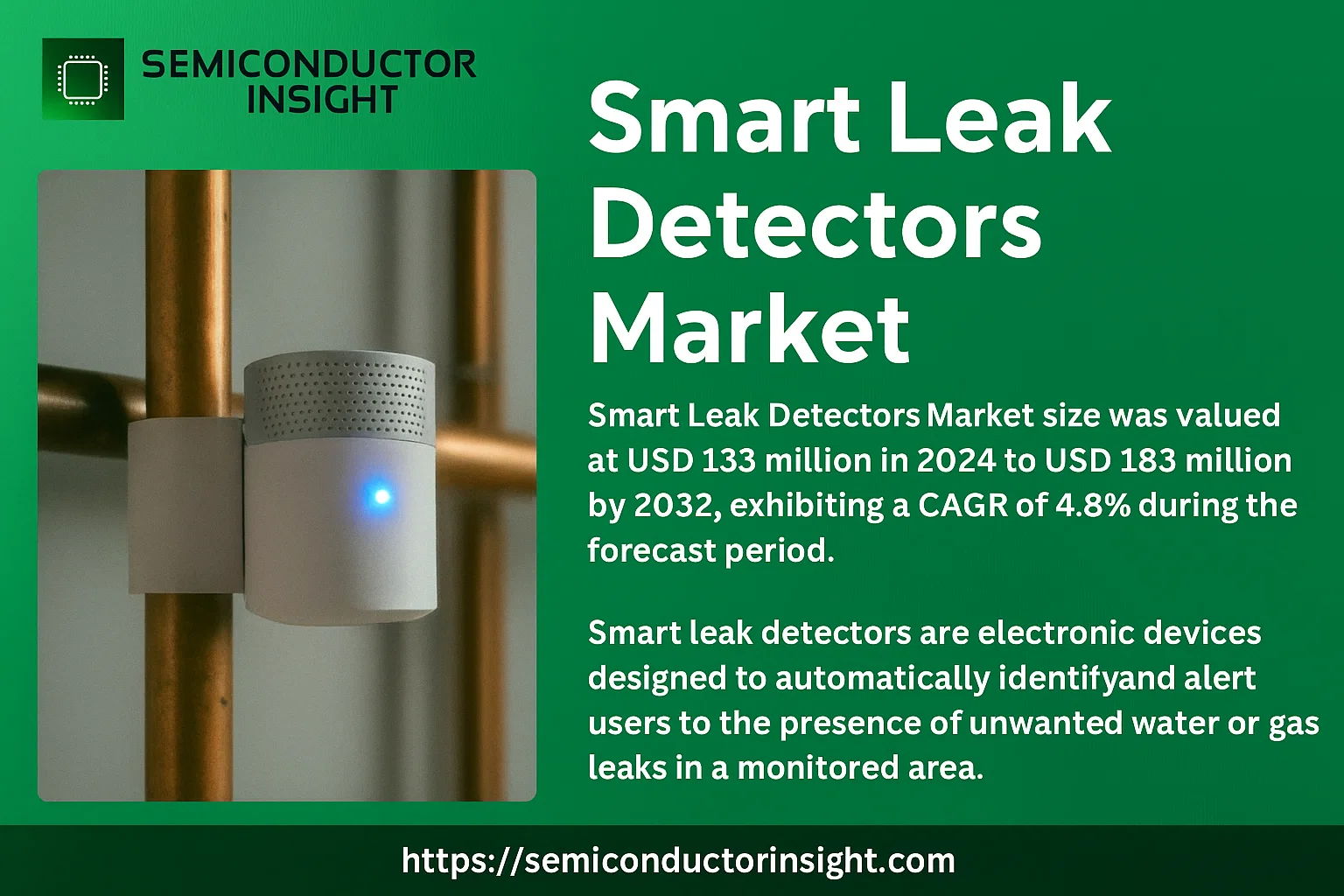
Global Smart Leak Detectors Market size was valued at USD 133 million in 2024 to USD 183 million by 2032, exhibiting a CAGR of 4.8% during the forecast period.
Smart leak detectors are electronic devices designed to automatically identify and alert users to the presence of unwanted water or gas leaks in a monitored area. These systems typically utilize sensors that, when tripped by moisture or specific gases, send an immediate signal via Wi-Fi, Zigbee, Z-Wave, or other wireless protocols to a central hub or directly to a user’s smartphone. The most common application is for water leak detection in residential and commercial buildings to prevent costly structural damage.
The Market growth is primarily driven by increasing consumer awareness about property protection, the rising adoption of smart home ecosystems, and the growing frequency of extreme weather events leading to pipe bursts. Furthermore, advancements in Internet of Things (IoT) technology and the integration of artificial intelligence for predictive maintenance are creating new opportunities. Initiatives by key players are also propelling the Market forward. For instance, companies are increasingly integrating their leak sensors with broader home automation platforms for automatic water shut-off, enhancing preventative capabilities. Honeywell, FIBARO, and LeakSMART are some of the key players that operate in the Market with a wide range of portfolios.
MARKET DRIVERS
Growth in Smart Home Adoption and IoT Connectivity
The primary driver for the smart leak detector Market is the accelerating adoption of smart home ecosystems. As consumers increasingly invest in connected devices for convenience, security, and efficiency, the demand for water leak detection as a core component of home automation is rising significantly. Global Market for smart home devices is projected to grow substantially, creating a natural expansion path for smart leak sensors that integrate seamlessly with platforms like Amazon Alexa, Google Assistant, and Apple HomeKit.
Increased Awareness of Water Damage and Insurance Incentives
Growing awareness of the costly consequences of water damage is a critical Market driver. Water damage is a leading cause of property insurance claims, with the average cost of a claim being significant. Many insurance companies now offer premium discounts for homes equipped with smart leak detection systems, incentivizing homeowners to adopt this preventative technology to mitigate risk and reduce potential repair expenses.
➤ The integration of advanced sensors and AI for predictive maintenance is becoming a key differentiator, allowing systems to identify minor anomalies before they evolve into major leaks.
Furthermore, regulatory trends and building standards in some regions are beginning to encourage or mandate the use of water-conserving and damage-preventing technologies in new constructions, providing a steady source of demand from the construction and real estate development sectors.
MARKET CHALLENGES
High Initial Cost and Consumer Price Sensitivity
A significant challenge is the relatively high upfront cost of comprehensive smart leak detection systems compared to traditional, non-smart alternatives. While the long-term savings from prevented damage can be substantial, the initial investment can be a barrier for budget-conscious consumers, especially in price-sensitive Markets. This challenge is amplified by the need for potential additional costs, such as smart home hubs or professional installation services.
Other Challenges
Integration Complexity and Interoperability Issues
The lack of universal standards for smart home devices can lead to interoperability problems. Consumers may face difficulties ensuring that a smart leak detector from one manufacturer works reliably with other smart home products or their chosen voice assistant platform, leading to frustration and limiting adoption.
Limited Awareness and “Out of Sight, Out of Mind” Mentality
Despite the risks, many homeowners do not proactively seek out leak detection until after experiencing a problem. Overcoming this reactive mindset and educating consumers on the passive protection offered by smart detectors remains a persistent Marketing and awareness challenge for the industry.
MARKET RESTRAINTS
Data Privacy and Security Concerns
As with all IoT devices, data privacy and cybersecurity present a major restraint. Smart leak detectors collect data on water usage and home occupancy patterns, raising concerns about how this data is stored, used, and protected. High-profile incidents of IoT device vulnerabilities can erode consumer trust and slow Market growth, as buyers become cautious about introducing potential security risks into their homes.
Battery Life and Maintenance Requirements
Many wireless smart leak detectors are battery-operated, and while battery life is improving, the need for periodic replacement or recharging can be a deterrent. The risk of a device failing due to a dead battery, thus negating its protective purpose, creates a perceived reliability issue that can restrain Market penetration among consumers seeking truly “set-and-forget” solutions.
MARKET OPPORTUNITIES
Expansion into Commercial and Industrial Sectors
A significant growth opportunity lies in expanding beyond the residential Market into commercial and industrial applications. Facilities such as data centers, hospitals, warehouses, and office buildings have a critical need to protect valuable assets from water damage. Smart leak detection systems with capabilities for monitoring large areas, integrating with building management systems, and providing detailed analytics represent a high-value Market segment with substantial revenue potential.
Development of Proactive and Integrated Water Management Systems
There is a strong opportunity for companies to develop more sophisticated, integrated systems that go beyond simple leak detection. This includes smart shut-off valves that automatically stop water flow upon detecting a leak, as well as systems that monitor overall water pressure and usage patterns to identify potential pipe weaknesses or inefficiencies. Offering a complete water security solution can create a powerful competitive advantage and drive higher average selling prices.
Growth in Water-Scarce Regions and Subscription Services
In regions facing water scarcity, smart leak detectors are increasingly positioned as water conservation tools. This expands their value proposition beyond damage prevention. Additionally, the emergence of subscription-based models offering 24/7 professional monitoring, instant alerts, and integration with emergency plumbing services creates a lucrative recurring revenue stream for manufacturers and service providers, enhancing customer retention.
Smart Leak Detectors Market Trends
Sustained Growth Driven by Rising Adoption of Smart Home Technologies
Global Smart Leak Detectors Market is on a steady growth trajectory, with its value projected to rise from USD 133 million in 2024 to USD 183 million by 2032, representing a compound annual growth rate (CAGR) of 4.8%. This expansion is primarily fueled by the increasing integration of smart home ecosystems. As consumers seek greater convenience and proactive property protection, the demand for devices that can automatically detect water leaks and send immediate alerts to smartphones is growing significantly. The technology helps mitigate costly water damage, making it an essential component of modern home and building management systems.
Other Trends
Dominance of Wired Systems and Residential Applications
Currently, wired smart leak detectors command over 50% of the Market share. Their reliability and consistent power supply make them a preferred choice for permanent installations where a continuous connection is critical. The residential sector is the largest application segment, driven by homeowner demand for leak prevention to avoid structural damage and high repair costs. The commercial sector follows, utilizing these detectors to protect valuable assets, inventory, and infrastructure in offices, retail spaces, and industrial facilities.
Regional Market Dynamics and Competitive Landscape
The United States is the largest Market, accounting for approximately 35% of the global share, due to high disposable income and advanced smart home penetration. Europe and China are also significant Markets, each holding around 30% of the Market share. The competitive landscape is concentrated, with the top three manufacturersHoneywell, FIBARO, and LeakSMARTcollectively holding about 38% of the Market. These key players focus on product innovation, integration with major smart home platforms, and expanding their distribution networks to maintain and grow their Market positions.
COMPETITIVE LANDSCAPE
Key Industry Players
A dynamic Market with a strong presence of global technology and smart home leaders.
Global Smart Leak Detectors Market is characterized by the dominance of a few key players, with the top three manufacturers Honeywell, FIBARO, and LeakSMART collectively holding a significant Market share of approximately 38%. Honeywell stands as a prominent leader, leveraging its extensive brand recognition and distribution network in the building automation and security sectors. The Market structure is moderately concentrated, where these established players compete on factors including technological innovation, integration with broader smart home ecosystems, product reliability, and brand trust. The largest Market is the USA, accounting for about 35% of global demand, followed closely by Europe and China. The competitive landscape is further defined by the dominance of wired smart leak detectors, which hold over 50% of the Market share, primarily due to their perceived reliability in critical residential and commercial applications.
Beyond the Market leaders, a diverse range of significant players thrives by focusing on niche segments and technological specialization. Companies like Roost, Inc. and WallyHome have carved out strong positions with dedicated, user-friendly solutions for the residential Market. Major consumer electronics brands such as Samsung and D-Link are increasingly important, using their Market presence to offer integrated smart home packages that include leak detection. Specialist smart home technology providers like Aeotec and Insteon contribute to a competitive environment with products designed for compatibility with popular home automation platforms. This breadth of competitors ensures a continuous drive for innovation, particularly in wireless technology and advanced features like automatic water shut-off valves and AI-driven predictive alerts.
List of Key Smart Leak Detectors Companies Profiled
- Honeywell
- FIBARO
- Roost, Inc.
- LeakSMART
- Samsung
- D-Link
- Aeotec
- WallyHome
- Insteon
- Phyn
- Moën
- Orbit Irrigation
- Gadgeon
- Flō by Streamlabs
- Zircon Corporation
Segment Analysis:
| Segment Category | Sub-Segments | Key Insights |
| By Type |
|
Wired Smart Leak Detectors hold a dominant Market position, a trend driven by their perceived reliability and stable connectivity, which is particularly valued in permanent installations where signal interference is a key concern. The preference for wired systems is often linked to integration capabilities with existing building management and security systems, offering a robust solution for comprehensive property protection. Meanwhile, wireless detectors are gaining significant traction due to the growing demand for flexible, easy-to-install smart home solutions, appealing to a wide consumer base seeking retrofitting options without complex wiring. |
| By Application |
|
Residential applications constitute the primary Market driver, fueled by heightened consumer awareness of property protection and the rapid integration of smart home ecosystems. Homeowners are increasingly adopting these devices as a proactive measure against water damage, which can lead to costly repairs. The commercial segment is also a substantial Market, with adoption driven by the need to protect high-value assets, ensure business continuity, and comply with insurance requirements in buildings such as offices, retail spaces, and data centers. Industrial applications focus on safeguarding critical infrastructure and processes, while the ‘Others’ category includes specialized uses in areas like agriculture and municipal infrastructure. |
| By End User |
|
Homeowners & Tenants represent the most significant end-user segment, driven by the desire for personal asset protection and the convenience of remote monitoring through smartphone applications. This group’s adoption is heavily influenced by the proliferation of DIY smart home products. Property management firms are major adopters as well, utilizing these systems for preventative maintenance across multiple units to reduce liability and operational costs associated with water damage. Industrial facilities represent a sophisticated end-user group that requires robust, often integrated, leak detection solutions to protect machinery, inventory, and ensure operational safety, often involving complex system-wide monitoring. |
| By Detection Medium |
|
Water Leak Detectors are the unequivocal Market leader, as water damage represents the most common and widespread risk to both residential and commercial properties. The high demand is attributed to the universal need to prevent structural damage, mold growth, and associated financial losses. Gas leak detectors cater to a critical safety niche, particularly in regions with natural gas infrastructure, focusing on preventing fire hazards and health risks. Multi-fluid detectors are an emerging segment aimed at providing comprehensive protection for facilities that handle various liquids, offering a versatile solution for complex environments. |
| By Connectivity Protocol |
|
Wi-Fi & Bluetooth enabled detectors are leading the Market, largely due to their seamless integration with ubiquitous smartphones and popular smart home platforms like Amazon Alexa and Google Assistant, which appeals directly to the consumer Market for its ease of use. Zigbee and Z-Wave protocols are highly favored in professional and customized smart home installations because they create robust, low-power mesh networks that can cover larger areas reliably. Proprietary RF solutions are typically used in specialized industrial or security-focused applications where guaranteed signal integrity and resistance to interference are paramount considerations, often as part of a larger proprietary monitoring system. |
Regional Analysis: Smart Leak Detectors Market
The residential sector is a primary growth engine, driven by heightened homeowner awareness of water damage risks and the subsequent high costs of repairs. The seamless integration of smart leak detectors with whole-home automation systems from brands like Amazon Alexa and Google Home creates significant value. Consumers are increasingly viewing these devices as essential for modern property management, contributing to steady Market growth and high replacement cycles for newer, more advanced models.
Building codes in many North American municipalities are increasingly incorporating recommendations or requirements for water leak detection in new constructions, especially for properties in flood-prone areas. The influence of the insurance industry is profound, with many providers offering tangible financial incentives, such as reduced premiums, to policyholders who install certified smart leak detection systems. This dual regulatory and economic push creates a powerful, sustained demand.
Beyond homes, the commercial and industrial segments are rapidly adopting smart leak detection to protect high-value assets, prevent operational downtime, and meet corporate sustainability goals related to water usage. Applications in data centers, manufacturing facilities, and large commercial buildings are expanding, with a focus on systems that offer centralized monitoring, automated shut-off valves, and detailed analytics for facility management.
North America serves as a central hub for innovation, with numerous startups and established tech companies continuously launching advanced features. These innovations include AI-powered predictive analytics to identify potential pipe weaknesses, ultra-long battery life for wireless sensors, and integration with wider utility management platforms. This constant evolution keeps the Market dynamic and attracts early adopters, reinforcing the region’s leadership.
Europe
The European Market for smart leak detectors is characterized by strong growth, primarily fueled by a high awareness of water conservation and stringent environmental regulations from bodies like the EU. Countries such as Germany, the UK, and the Nordic nations are at the forefront, driven by tech-savvy populations and a robust smart home infrastructure. The Market sees significant demand from both retrofitting existing housing stock and installation in new, energy-efficient buildings. European consumers show a distinct preference for devices that offer detailed water usage analytics alongside leak detection, aligning with broader sustainability trends. The presence of strong local manufacturers competing with global brands creates a diverse and competitive landscape, pushing innovation in design and functionality tailored to European housing styles and preferences.
Asia-Pacific
The Asia-Pacific region represents the fastest-growing Market for smart leak detectors, propelled by rapid urbanization, rising disposable incomes, and increasing construction of smart cities, particularly in China, Japan, and South Korea. While awareness is still developing compared to Western Markets, the growing middle class is increasingly investing in home safety and automation technologies. The Market is highly price-sensitive, driving demand for cost-effective, reliable solutions. Government initiatives promoting water conservation and the development of IoT infrastructure in major metropolitan areas are key growth drivers. Local manufacturers are playing an increasingly significant role, offering products tailored to specific regional needs and price points, suggesting immense future potential for Market expansion.
South America
The South American Market is in a nascent but promising stage of development. Growth is primarily concentrated in major urban centers within countries like Brazil and Argentina, where awareness of water scarcity issues is rising. The Market is currently constrained by economic volatility and lower spending power, but there is growing interest from middle- and upper-income households seeking to protect properties from water damage. The commercial sector, including hotels and office buildings, shows early adoption trends. Market growth is expected to be gradual, closely linked to broader economic stability and the increasing penetration of broadband and smart device infrastructure necessary for these IoT solutions to function effectively.
Middle East & Africa
The Market dynamics in the Middle East & Africa are highly varied. In the Gulf Cooperation Council (GCC) countries, the Market is driven by high disposable income, luxury real estate development, and a focus on smart city projects, creating demand for advanced leak detection systems. Conversely, in other parts of the region, the Market is considerably underdeveloped due to economic challenges and limited infrastructure. However, the critical need for water conservation in arid climates presents a significant long-term growth opportunity. The Market is currently characterized by a focus on high-end commercial and residential projects, with broader mass-Market adoption expected to be a slower process dependent on economic development and infrastructure improvement.
Report Scope
This Market research report provides a comprehensive analysis of the Smart Leak Detectors Market, covering the forecast period 2025–2032. It offers detailed insights into Market dynamics, technological advancements, competitive landscape, and key trends shaping the industry.
Key focus areas of the report include:
- Market Overview: The report begins with an overview outlining its current Market scenario, key growth indicators, and industry transformation drivers. It discusses macroeconomic factors, demand–supply balance, regulatory landscape, and the strategic role of semiconductors in powering advancements across industries such as automotive, telecommunications, consumer electronics, and industrial automation.
- Market Size & Forecast: Historical data and future projections for revenue, unit shipments, and Market value across major regions and segments.
- Segmentation Analysis: Detailed breakdown by product type, technology, application, and end-user industry to identify high-growth segments and investment opportunities.
- Regional Insights: Insights into Market performance across North America, Europe, Asia-Pacific, Latin America, and the Middle East & Africa, including country-level analysis where relevant.
- Competitive Landscape: Profiles of leading Market participants, including their product offerings, R&D focus, manufacturing capacity, pricing strategies, and recent developments such as mergers, acquisitions, and partnerships.
- Technology Trends & Innovation: Assessment of emerging technologies, integration of AI/IoT, semiconductor design trends, fabrication techniques, and evolving industry standards.
- Market Drivers & Restraints: Evaluation of factors driving Market growth along with challenges, supply chain constraints, regulatory issues, and Market-entry barriers.
- Stakeholder Insights: Insights for component suppliers, OEMs, system integrators, investors, and policymakers regarding the evolving ecosystem and strategic opportunities.
Primary and secondary research methods are employed, including interviews with industry experts, data from verified sources, and real-time Market intelligence to ensure the accuracy and reliability of the insights presented.
FREQUENTLY ASKED QUESTIONS:
What is the current Market size of Smart Leak Detectors Market?
-> Global Smart Leak Detectors Market was valued at USD 133 million in 2024 and is projected to reach USD 183 million by 2032, exhibiting a CAGR of 4.8% during the forecast period.
Which key companies operate in Smart Leak Detectors Market?
-> Key players include Honeywell, FIBARO, LeakSMART, Roost, Inc., Samsung, D-Link, Aeotec, WallyHome, and Insteon, among others. Global top three manufacturers hold a share of about 38%.
What are the key growth drivers?
-> Key growth drivers include increasing demand for water conservation, smart home automation, and preventative maintenance solutions for residential and commercial properties.
Which region dominates the Market?
-> North America is the largest Market, with the USA accounting for a share of about 35%, followed by Europe and China, which together hold about 30% of the Market.
What are the emerging trends?
-> Emerging trends include the dominance of wired smart leak detectors (holding over 50% Market share) and the largest application segment being residential, followed by commercial usage.

Get Sample Report PDF for Exclusive Insights
Report Sample Includes
- Table of Contents
- List of Tables & Figures
- Charts, Research Methodology, and more...
 Download Sample Report PDF