MARKET INSIGHTS
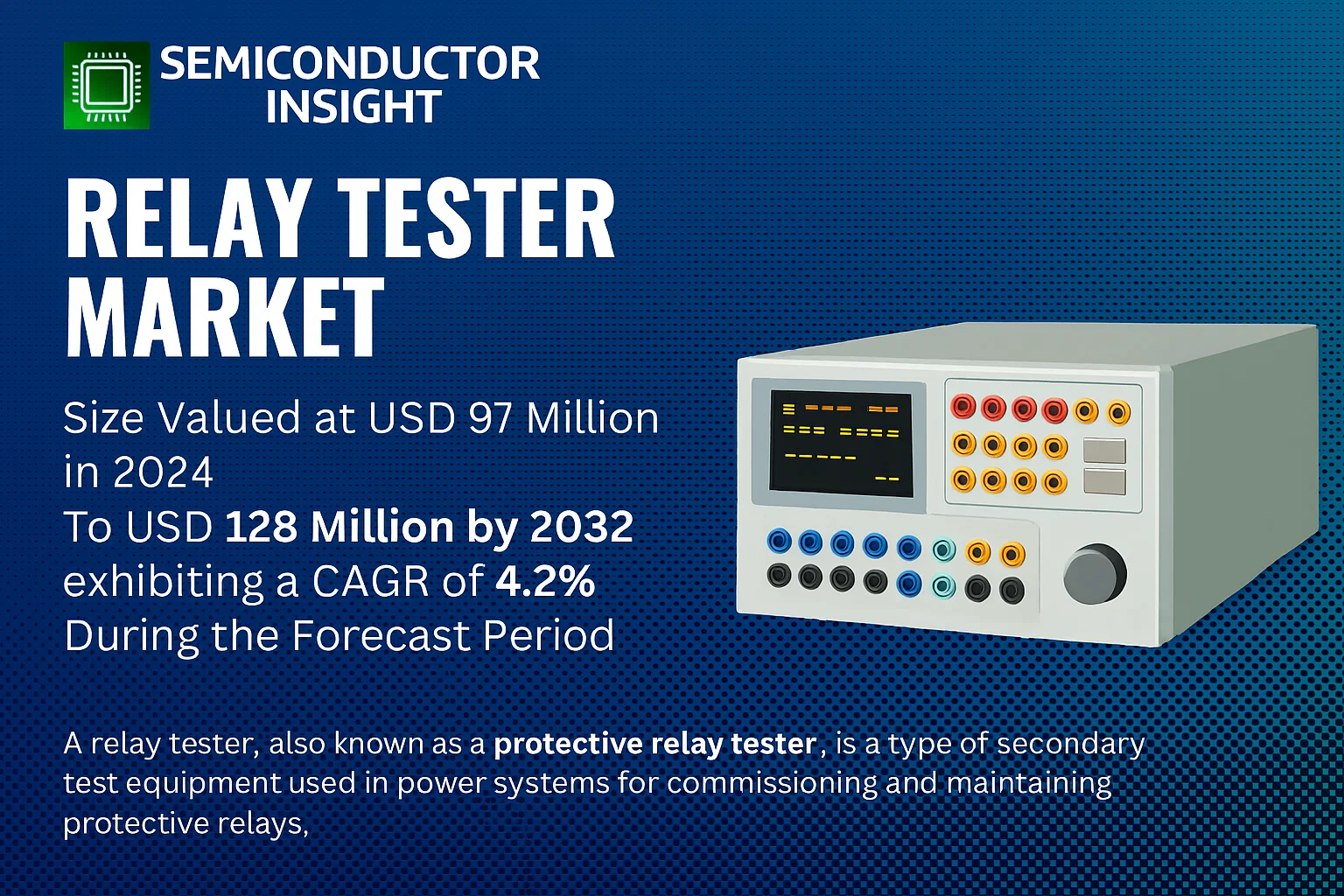
Global Relay Tester Market size was valued at USD 97 million in 2024 to USD 128 million by 2032, exhibiting a CAGR of 4.2% during the forecast period.
A relay tester, also known as a protective relay tester, is a type of secondary test equipment used in power systems for commissioning and maintaining protective relays. These devices are crucial for ensuring the reliability and safety of electrical infrastructure by simulating fault conditions and verifying that protection systems operate correctly and within specified timeframes. They are primarily used by electrical utilities, large industrial facilities, and railway networks.
The Market growth is driven by the increasing demand for reliable electricity supply and the modernization of aging power infrastructure globally. Furthermore, stringent regulations mandating regular testing of protection systems to prevent grid failures are contributing to Market expansion. The competitive landscape is consolidated, with key players such as OMICRON, Megger, and Doble (ISA Altanova) dominating the space; the top five companies account for approximately 65% of the total Market share. In terms of product segmentation, the versatile 6-phase type holds a dominant position with over 70% Market share because it can test complex multi-element relays simultaneously.
MARKET DRIVERS
Global Expansion and Modernization of Power Infrastructure
Global push for grid modernization, particularly in developing economies, is a primary driver for the Relay Tester Market. Aging electrical infrastructure in North America and Europe necessitates replacement and upgrades, requiring sophisticated testing equipment to ensure the reliability of new protective relay systems. Investments in smart grid technologies and renewable energy integration are creating sustained demand for advanced relay testers.
Stringent Regulatory Standards and Safety Compliance
Increasingly strict international standards for electrical safety and grid reliability are compelling utilities and industrial facilities to perform regular and rigorous testing of protective relays. Compliance with regulations from bodies like the IEEE and IEC mandates the use of certified, high-precision test equipment, directly fueling Market growth. This regulatory pressure ensures that relay testing is not optional but a mandatory operational expense.
➤ The integration of IoT and advanced communication protocols in modern relays is pushing the demand for testers that can simulate complex, real-world grid scenarios, moving beyond basic functional checks.
Furthermore, the rising incidence of extreme weather events highlights the critical need for resilient power systems. This focus on minimizing outage times and improving system reliability is leading to higher adoption rates of advanced relay testers for preventive maintenance and commissioning of new assets.
MARKET CHALLENGES
High Initial Investment and Technical Complexity
The advanced relay testers required for modern digital and numerical relays represent a significant capital investment for smaller utilities and service companies. The sophisticated software and hardware needed to test multi-functional, communications-enabled relays can be cost-prohibitive. Additionally, operating these complex systems requires highly trained personnel, creating a shortage of skilled technicians which acts as a barrier to adoption.
Other Challenges
Rapid Technological Obsolescence
The pace of innovation in protective relay technology is swift. New relay models with updated protocols and features are released frequently, which can render existing testers obsolete if they lack firmware upgrade paths or hardware compatibility, forcing repeated capital expenditure.
Market Fragmentation and standardization Issues
The absence of universal communication standards across different relay manufacturers complicates testing. Technicians often need specific software adapters and knowledge for each brand, increasing the complexity and time required for testing procedures.
MARKET RESTRAINTS
Economic Volatility and Capital Expenditure Constraints
Fluctuations in the global economy directly impact investment in power infrastructure projects. During economic downturns, utilities and industrial operators often defer capital expenditures on non-essential equipment, including upgrades to testing apparatus. This cyclical nature of investment can lead to periods of suppressed demand within the Relay Tester Market.
Extended Product Lifecycle of Test Equipment
High-quality relay testers are built for durability and can remain operational for a decade or more. This long product lifecycle means that the replacement Market grows slowly, as customers are reluctant to replace functional equipment unless absolutely necessary due to new technological requirements or regulatory changes.
MARKET OPPORTUNITIES
Growth in Renewable Energy Integration
The massive global investment in renewable energy sources like wind and solar presents a significant opportunity. These installations require complex protection schemes to manage variable power generation and ensure grid stability, creating a need for specialized relay testers capable of validating these new protection algorithms.
Advent of Portable and Cloud-Connected Testers
There is a growing demand for portable, user-friendly testers that can be operated by a wider range of personnel. The development of compact, battery-operated devices with cloud connectivity for data logging and remote expert support is opening new Markets, especially for field service and maintenance crews.
Expansion of Predictive Maintenance Services
The shift from reactive to predictive maintenance models in asset management allows for service providers to offer relay testing as a recurring service. This creates a recurring revenue stream for tester manufacturers who can bundle advanced analytics software with their hardware, offering comprehensive health monitoring solutions for electrical assets.
Relay Tester Market Trends
Steady Market Expansion Driven by Grid Modernization
Global Relay Tester Market is on a trajectory of stable growth, valued at approximately USD 97 million in 2024 and projected to reach USD 128 million by 2032, representing a Compound Annual Growth Rate (CAGR) of 4.2%. This consistent growth is primarily fueled by the ongoing global push for grid modernization and the expansion of power infrastructure. As electrical utilities and large industries invest in upgrading their protective relay systems to enhance reliability and accommodate renewable energy integration, the demand for sophisticated testing equipment like relay testers increases correspondingly. The Market’s momentum is further supported by increased investment in the industrial control, home appliance, and telecommunication sectors, all of which rely on robust electrical protection systems.
Other Trends
Geographical Market Concentration
The geographical distribution of the Relay Tester Market reveals significant concentration, with Europe holding the largest Market share of 40%, followed closely by North America at 25%. This dominance is attributed to the mature power infrastructure, stringent regulatory standards for electrical safety, and high investment in maintenance and upgrades within these regions. The presence of major Market players in Europe also contributes to its leading position. Meanwhile, the Asia-Pacific region represents a significant growth opportunity due to rapid industrialization and infrastructural development.
Product and Application Segmentation
In terms of product types, the 6-phase relay tester is the undisputed Market leader, commanding over 70% of the Market share. This preference is due to its ability to test complex protection schemes commonly found in modern power systems. Regarding applications, the electrical utilities sector is the largest end-user, driven by the critical need to ensure grid stability and prevent widespread outages. This segment is followed by large industries, which rely on relay testers to protect expensive equipment and maintain continuous operational uptime. The rail network segment also constitutes a notable Market, given its dependence on highly reliable signaling and traction power systems.
Consolidated Competitive Landscape
The competitive landscape of the Relay Tester Market is characterized by a high degree of consolidation. The top five companies, including industry leaders like OMICRON, Megger, and Doble, collectively account for approximately 65% of the total Market share. This concentration indicates a Market where technological expertise, brand reputation, and long-standing relationships with major utilities are critical success factors. Competition is largely based on product innovation, accuracy, software capabilities, and global service and support networks. The Market’s growth prospects are expected to encourage further investment in research and development from these key players to maintain their competitive edge.
COMPETITIVE LANDSCAPE
Key Industry Players
A Market Dominated by Established Electrotechnical Giants
Global Relay Tester Market exhibits a relatively concentrated competitive structure, with the top five industry players collectively accounting for approximately 65% of the total Market share. The Market is led by a few highly specialized and long-established companies with deep expertise in electrical testing and measurement. OMICRON, Megger, and Doble (a subsidiary of ISA Altanova) are universally recognized as the dominant leaders. These companies have built their strong positions through a combination of advanced, reliable product portfolios, extensive global sales and support networks, and a reputation for quality that is critical in the safety-conscious electrical utilities and large industrial sectors. Their prominence is reinforced by the technical complexity of relay testers, which requires continuous R&D investment to keep pace with evolving protection relay technologies in modern power systems.
Beyond the dominant players, the Market features several other significant competitors that hold niche positions or strong regional footholds. Companies such as SMC, MUSASHI, and NF Corporation compete effectively, often by focusing on specific product types like 3-phase testers or by catering to particular geographic Markets, such as Asia. Other players like Povono, Haomai, Onlly, GFUVE Group, Tesient, and Fuguang Electronics primarily serve their domestic Markets, particularly in China, with cost-competitive offerings. These companies are crucial for Market dynamics, providing alternatives and fostering competition, especially in price-sensitive segments and emerging Markets where infrastructure development is driving demand for testing equipment.
List of Key Relay Tester Companies Profiled
- OMICRON
- Megger
- Doble Engineering (ISA Altanova)
- SMC
- MUSASHI
- NF Corporation
- Povono
- Haomai
- Onlly
- GFUVE Group
- Tesient
- Fuguang Electronics
Segment Analysis:
| Segment Category | Sub-Segments | Key Insights |
| By Type |
|
6-Phase Type testers constitute the dominant product category, preferred for their ability to comprehensively test complex multi-functional protection relays and automate testing sequences, which significantly enhances efficiency in modern electrical protection systems. The versatility and advanced functionality of these units make them the standard choice for most utility-scale and large industrial applications, offering superior capabilities for simulating a wide range of fault conditions and testing scenarios to ensure grid reliability. |
| By Application |
|
Electrical Utilities represent the most significant application segment, driven by the critical need for uninterrupted power supply and stringent grid reliability standards. These organizations require regular and rigorous testing of protection relays to prevent widespread outages and ensure the safety of infrastructure, creating a consistent, high-volume demand for sophisticated relay testers. The segment’s growth is further underpinned by ongoing grid modernization initiatives and the integration of renewable energy sources, which introduce new protection challenges. |
| By End User |
|
Utility Companies are the primary end-user group, as they are directly responsible for the generation, transmission, and distribution of electricity and thus have the most extensive and critical relay protection systems. Their operational focus on maintaining grid stability and meeting regulatory compliance mandates drives continuous investment in advanced testing equipment. The complexity of their networks, which often include a mix of legacy and modern digital relays, necessitates the use of high-end testers capable of handling diverse protocols and ensuring operational resilience. |
| By Technology |
|
Automated/Smart Testers are emerging as the technology segment with the strongest growth trajectory, characterized by features like computerized control, software integration, and advanced data logging. The shift towards automation is driven by the need for higher testing accuracy, repeatability, and efficiency, reducing human error and the time required for complex commissioning and maintenance procedures. The demand for smart testers is closely linked to the digitization of power systems and the adoption of IoT and data analytics for predictive maintenance strategies. |
| By Service Provider |
|
In-house Maintenance Teams represent the most prevalent service provider segment, particularly among large utilities and industrial facilities that possess the scale to justify dedicated, skilled personnel and capital investment in testing equipment. This approach offers greater control over testing schedules, immediate response capabilities for troubleshooting, and deep institutional knowledge of the specific protection systems in use. However, there is a growing trend towards engaging specialized third-party service companies for highly complex projects or to supplement internal resources, bringing niche expertise and advanced tools to the task. |
Regional Analysis: Relay Tester Market
Unprecedented investment in new power generation, transmission, and distribution networks across developing economies fuels consistent demand for relay testers to commission and maintain these critical systems, ensuring operational reliability from the outset.
As the world’s primary manufacturing center, the region’s vast industrial base requires rigorous electrical safety protocols. Regular testing of protection relays is integral to minimizing downtime and preventing costly equipment failures in factories.
Governments are implementing and enforcing strict electrical safety standards and grid codes, compelling utilities and industries to utilize certified relay testers for compliance, creating a robust and regulated Market environment.
The rapid deployment of solar and wind farms introduces complexity to power grids. Relay testers are essential for validating the protection schemes that manage the intermittent nature of renewable sources and maintain grid stability.
North America
The North American Market for relay testers is characterized by a mature yet steady demand, driven primarily by the need to maintain and upgrade an aging electrical infrastructure. Utilities are heavily invested in grid modernization projects, including the integration of digital substations and smart grid technologies, which require advanced testing capabilities. A strong regulatory framework from bodies like NERC mandates rigorous testing of protective relays to ensure grid reliability and security. The presence of a large industrial base and a high emphasis on workplace safety further sustain the Market. Technological innovation, with a focus on portable and automated test solutions, is a key trend shaping the regional dynamics.
Europe
Europe represents a sophisticated Market for relay testers, underpinned by a strong commitment to energy transition and grid digitalization. The region’s focus on integrating a high share of renewables into the grid creates a persistent need for testing protection systems that can handle bidirectional power flows and distributed generation. Strict EU-wide regulations and standards ensure that electrical equipment, including protection relays, is regularly tested for compliance and safety. The Market is also influenced by the modernization of Eastern European power networks and the retirement of older electromechanical relays, which are being replaced with digital units that require sophisticated testing methodologies.
South America
The Relay Tester Market in South America is experiencing growth, fueled by investments in expanding electricity access and improving the reliability of existing power infrastructure. Countries like Brazil and Chile are leading with investments in hydroelectric and other renewable projects, which necessitate comprehensive protection system testing. Economic fluctuations can impact the pace of investment, but the fundamental need to reduce transmission losses and prevent blackouts drives steady demand. The Market is also seeing increased adoption as industrial sectors focus on improving operational efficiency and safety standards through better maintenance practices.
Middle East & Africa
This region shows promising growth potential for the Relay Tester Market, though development is uneven. The Gulf Cooperation Council (GCC) countries, with their extensive oil and gas industries and major investments in power and water infrastructure, represent a mature segment with demand for high-end testing equipment. In contrast, Sub-Saharan Africa is focused on expanding electrification rates and building new power infrastructure, creating a growing Market for relay testers for commissioning new assets. The overall Market dynamics are shaped by economic diversification efforts and the critical need to improve the reliability of power supply across the continent.
Report Scope
This Market research report provides a comprehensive analysis of the Global Relay Tester Market, covering the forecast period 2025–2032. It offers detailed insights into Market dynamics, technological advancements, competitive landscape, and key trends shaping the industry.
Key focus areas of the report include:
- Market Overview: The report begins with an overview outlining its current Market scenario, key growth indicators, and industry transformation drivers. It discusses macroeconomic factors, demand–supply balance, regulatory landscape, and the strategic role of power system testing equipment in supporting critical infrastructure across sectors such as electrical utilities, large industries, and rail networks.
- Market Size & Forecast: Historical data and future projections for revenue, unit shipments, and Market value across major regions and segments.
- Segmentation Analysis: Detailed breakdown by product type (e.g., 6-Phase, 3-Phase), application, and end-user industry to identify high-growth segments and investment opportunities.
- Regional Insights: Insights into Market performance across North America, Europe, Asia, South America, and the Middle East & Africa, including country-level analysis where relevant.
- Competitive Landscape: Profiles of leading Market participants, including their product offerings, Market share, manufacturing capacity, pricing strategies, and recent developments such as mergers, acquisitions, and partnerships.
- Technology Trends & Innovation: Assessment of emerging technologies, integration of advanced testing protocols, design trends, and evolving industry standards for protective relay testing.
- Market Drivers & Restraints: Evaluation of factors driving Market growth along with challenges, supply chain constraints, regulatory issues, and Market-entry barriers.
- Stakeholder Insights: Insights for manufacturers, suppliers, distributors, system integrators, investors, and policymakers regarding the evolving ecosystem and strategic opportunities.
Primary and secondary research methods are employed, including interviews with industry experts, data from verified sources, and real-time Market intelligence to ensure the accuracy and reliability of the insights presented.
FREQUENTLY ASKED QUESTIONS:
What is the current Market size of the Global Relay Tester Market?
->Relay Tester Market size was valued at USD 97 million in 2024 to USD 128 million by 2032, exhibiting a CAGR of 4.2% during the forecast period.
Which key companies operate in the Global Relay Tester Market?
-> Key players include OMICRON, Megger, Doble, SMC, MUSASHI, NF Corporation, Povono, Haomai, Onlly, GFUVE Group, Tesient, and Fuguang Electronics, among others. The top five companies account for approximately 65% of the Market share.
What are the key growth drivers?
-> Key growth drivers include increased demand from the industrial control, home appliance, and telecommunication sectors, along with rising investments in relay testing equipment by leading companies.
Which region dominates the Market?
-> Europe is the dominant Market, holding a share of about 40%, followed by North America with a 25% Market share.
What are the emerging trends?
-> Key trends include the dominance of 6-phase type testers, which hold over 70% Market share, and the primary application of these testers in electrical utilities, followed by large industries.

Get Sample Report PDF for Exclusive Insights
Report Sample Includes
- Table of Contents
- List of Tables & Figures
- Charts, Research Methodology, and more...
 Download Sample Report PDF