MARKET INSIGHTS
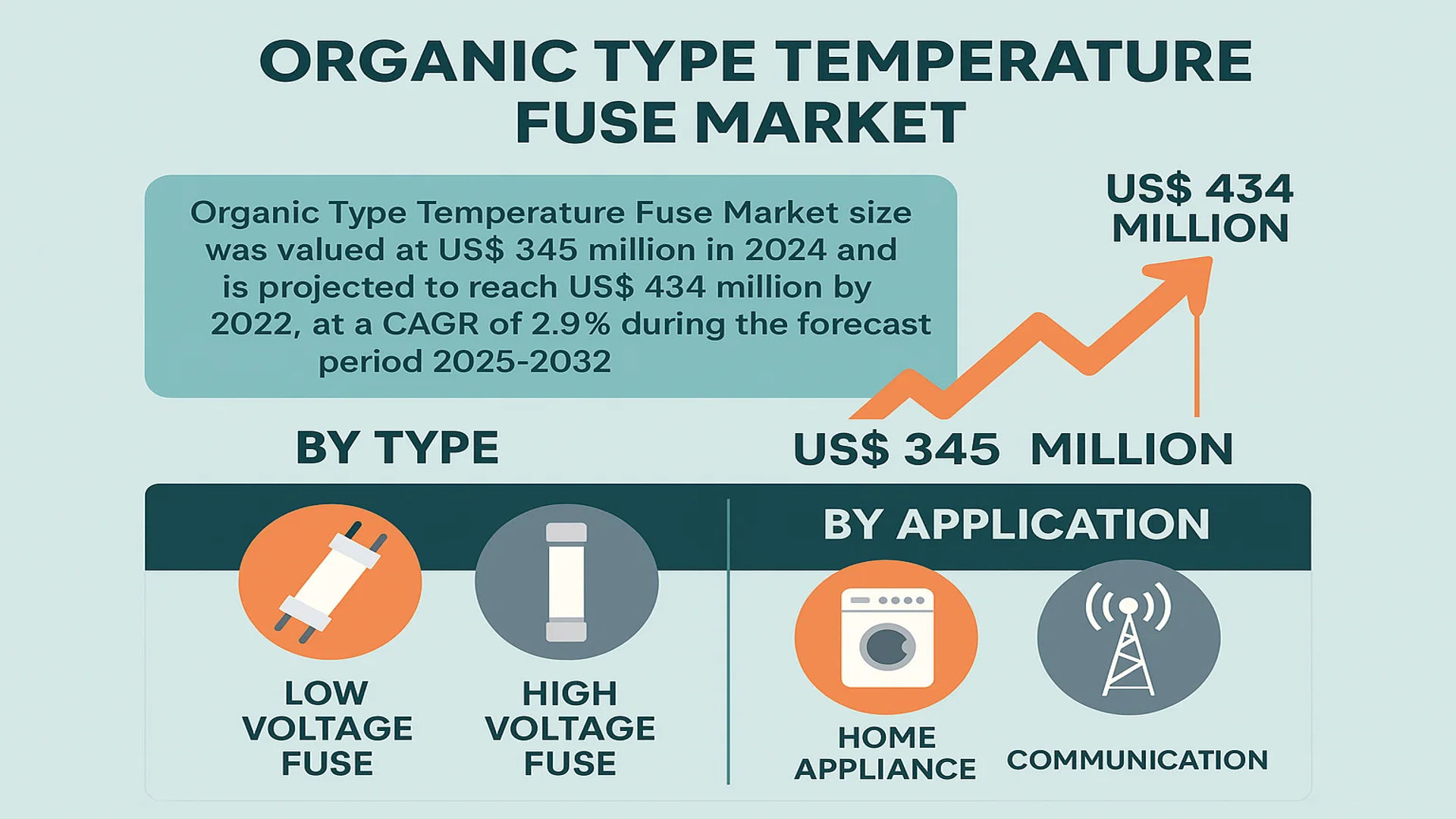
The global Organic Type Temperature Fuse Market size was valued at US$ 345 million in 2024 and is projected to reach US$ 434 million by 2032, at a CAGR of 2.9% during the forecast period 2025-2032.
Organic type temperature fuses are critical safety components designed to protect electrical circuits from overheating. These devices operate on a thermal cutoff principle: when ambient temperature exceeds the fuse’s rating, an organic temperature-sensitive material melts, triggering a spring mechanism that permanently breaks the circuit. This fail-safe mechanism makes them indispensable in applications where temperature regulation is crucial.
The market growth is driven by increasing adoption in consumer electronics, automotive systems, and industrial equipment where overheating protection is mandatory. Asia-Pacific dominates the market with 42% share in 2024, fueled by China’s electronics manufacturing boom. Key players including Littelfuse and Schott are expanding their production capacities to meet the growing demand, particularly for low-voltage variants which accounted for 68% of 2024 sales. Recent regulatory mandates for enhanced electrical safety across multiple industries are further accelerating market expansion.
MARKET DYNAMICS
MARKET DRIVERS
Rapid Growth in Consumer Electronics to Fuel Organic Type Temperature Fuse Demand
The global surge in smart home appliances and connected devices is creating strong demand for reliable circuit protection components like organic type temperature fuses. With the smart home market projected to grow at over 14% CAGR, manufacturers are increasingly adopting these fuses for applications ranging from washing machines to air conditioners. The unique thermal triggering mechanism of organic fuses makes them particularly suitable for temperature-sensitive applications where precise circuit interruption is critical. Major electronics manufacturers are now standardizing on these components for their superior reliability compared to mechanical alternatives.
Stringent Safety Regulations Driving Adoption Across Industries
Increasingly strict international safety standards are compelling manufacturers across multiple sectors to upgrade their overcurrent protection systems. The organic type temperature fuse market benefits significantly from these regulatory changes because its fail-safe mechanism meets the most rigorous safety requirements. Industries including automotive (where electric vehicle adoption is accelerating), industrial automation, and telecommunications infrastructure are all transitioning to these solutions. The ability of organic fuses to provide permanent circuit disconnection at precise temperature thresholds makes them indispensable for compliance with modern safety certifications.
Expansion of 5G Infrastructure Creating New Applications
The global rollout of 5G networks presents a significant growth opportunity for organic type temperature fuses. Telecom equipment requires advanced thermal protection due to higher power densities and smaller form factors. Major infrastructure providers are increasingly specifying organic fuses for base stations and network equipment, with some regions showing 20% year-over-year growth in these applications. The market is further buoyed by the integration of these components in power supply units for 5G small cells, where space constraints make traditional circuit breakers impractical.
MARKET RESTRAINTS
Price Pressure from Alternative Technologies Constrains Market Expansion
While organic type temperature fuses offer superior performance characteristics, the market faces challenges from lower-cost alternatives like resettable thermal switches. Price-sensitive applications in emerging markets often opt for these alternatives despite their limitations in precision and reliability. The competitive landscape has intensified as some manufacturers achieve 15-20% cost reductions through alternative fuse technologies. However, industry experts note that this cost advantage often comes at the expense of product lifespan and safety margins.
Other Restraints
Supply Chain Vulnerabilities
Recent disruptions in the global electronics supply chain have exposed vulnerabilities in the organic fuse manufacturing ecosystem. Specialized materials required for temperature-sensitive elements face periodic shortages, creating production bottlenecks. These challenges are particularly acute for manufacturers without vertical integration capabilities.
Miniaturization Challenges
The ongoing trend toward smaller electronic devices creates technical challenges for organic fuse designs. While significant progress has been made in developing compact form factors, some applications require protection solutions smaller than currently available in the market.
MARKET CHALLENGES
Technical Complexity in High-Temperature Applications Limits Market Potential
The organic type temperature fuse market faces significant engineering challenges in high-temperature environments above 150°C. Current formulations struggle to maintain precise triggering thresholds under extreme operating conditions, limiting adoption in sectors like automotive under-the-hood applications. Research and development efforts are ongoing to develop more stable organic compounds, but material science limitations present substantial hurdles. These technical constraints are particularly problematic as industries push toward higher power densities and more compact designs.
Certification and Standards Fragmentation Across Regions
Divergent safety certification requirements across major markets create compliance challenges for organic type temperature fuse manufacturers. The lack of harmonization between North American, European, and Asian standards requires companies to maintain multiple product variants, increasing inventory costs and complexity. Recent regulatory updates in several jurisdictions have further complicated the landscape, with some manufacturers reporting 30% longer certification timelines compared to five years ago. These challenges disproportionately affect smaller players attempting to enter multiple geographic markets.
MARKET OPPORTUNITIES
Electric Vehicle Revolution Creates New Application Verticals
The rapid transition to electric vehicles presents transformative opportunities for the organic type temperature fuse market. EV battery management systems require highly reliable thermal protection solutions that can operate in demanding automotive environments. Industry projections indicate that the automotive segment could account for 25% of total market revenue by 2030. Leading automotive suppliers are increasingly collaborating with fuse manufacturers to develop custom solutions for next-generation battery architectures.
Smart Manufacturing Adoption Drives Industrial Market Growth
The expansion of Industry 4.0 initiatives worldwide is creating strong demand for advanced circuit protection in industrial automation systems. Organic type temperature fuses are particularly well-suited for protecting sensitive control equipment in smart factories. Their precise triggering characteristics and compact form factors align perfectly with the requirements of modern industrial IoT deployments. Market analysts note that industrial applications are showing 18% annual growth in the sector, outpacing many other verticals.
Emerging Market Infrastructure Development Opens New Frontiers
Significant infrastructure development in emerging economies presents substantial growth opportunities. Countries in Southeast Asia and Africa are investing heavily in power distribution networks, telecommunications infrastructure, and consumer durables manufacturing – all key applications for organic type temperature fuses. Local manufacturing initiatives in these regions could reduce import dependencies while creating new consumption centers. Several global players have already announced expansion plans to capitalize on this potential.
ORGANIC TYPE TEMPERATURE FUSE MARKET TRENDS
Rising Demand for Safety Solutions in Electronics to Drive Market Growth
The global organic type temperature fuse market is experiencing steady growth due to increasing demand for reliable thermal protection in electronic and electrical applications. These fuses play a critical role in preventing overheating in devices by permanently cutting off current upon reaching a threshold temperature. With the surge in smart home appliances, automotive electronics, and IoT devices, manufacturers are prioritizing safety mechanisms that ensure long-term reliability. Recent data suggests that the market is projected to grow at a compound annual growth rate (CAGR) of 4-6% over the next decade, supported by stringent safety regulations and the miniaturization of electronic components.
Other Trends
Technological Advancements in Fuse Design
Innovations in materials science are enhancing the performance of organic type temperature fuses, making them more responsive and durable. For instance, manufacturers are focusing on improving the thermal sensitivity of the organic sensing block to enable faster response times. Additionally, the development of low-voltage fuses, which accounted for over 60% of the market share in 2024, is meeting the needs of compact electronic devices such as smartphones and wearables. These advancements are critical in reducing failure rates and enhancing energy efficiency in modern circuits.
Expansion of Automotive and Renewable Energy Applications
The automotive sector is emerging as a key driver for organic type temperature fuses, particularly in electric vehicles (EVs) and battery management systems. With global EV sales exceeding 10 million units annually, the need for thermal protection in high-energy-density batteries is accelerating demand. Similarly, renewable energy systems, such as solar inverters and wind turbines, are adopting these fuses to mitigate risks associated with overheating. The reliability of organic temperature fuses in extreme conditions makes them indispensable for sustainable energy infrastructure, further boosting market potential.
COMPETITIVE LANDSCAPE
Key Industry Players
Strategic Innovation and Expansion Define the Organic Type Temperature Fuse Market
The global organic type temperature fuse market showcases a moderately competitive landscape, characterized by the presence of both established multinational corporations and emerging regional players. Schott AG and Littelfuse Inc. currently dominate the market, collectively accounting for approximately 35% of global revenue share in 2024, primarily due to their extensive product portfolios spanning low and high voltage applications across industrial and consumer segments.
Bel Fuse Inc. and Emerson Electric Co. maintain strong positions in the market through continuous technological advancements in thermal protection solutions. These companies have particularly strengthened their foothold in the automotive sector, where demand for organic temperature fuses is growing at nearly 8% annually, driven by increasing electrification of vehicles.
The competitive scenario is further intensified by Japanese players like Uchihashi Estec Co., Ltd. and Sungwoo Industrial, who are making significant strides in miniaturization technologies. Their ultra-compact temperature fuse solutions are gaining traction in consumer electronics, especially in smartphone and wearable device applications where space constraints are critical.
Meanwhile, European manufacturers such as Limitor GmbH are focusing on high-temperature applications, developing fuses capable of operating in extreme environments up to 150°C. This specialization allows them to maintain premium pricing power in niche industrial segments like renewable energy systems and heavy machinery.
List of Key Organic Type Temperature Fuse Manufacturers
- Schott AG (Germany)
- Littelfuse, Inc. (U.S.)
- Bel Fuse Inc. (U.S.)
- Emerson Electric Co. (U.S.)
- Uchihashi Estec Co., Ltd. (Japan)
- Elmwood Sensors (U.S.)
- Betterfuse (China)
- SETsafe (Germany)
- Sinolec Electronics (China)
- Lanson Electronics (Taiwan)
- Cantherm (Canada)
- Sungwoo Industrial (South Korea)
- Limitor GmbH (Germany)
- AUPO (Taiwan)
Segment Analysis:
By Type
Low Voltage Fuse Segment Dominates Due to Widespread Use in Consumer Electronics and Home Appliances
The market is segmented based on type into:
- Low Voltage Fuse
- High Voltage Fuse
By Application
Home Appliance Segment Leads Owing to Rising Demand for Safety Components in Consumer Electronics
The market is segmented based on application into:
- Home Appliance
- Communication
- Automotive
- Others
By End User
Electronics Manufacturers Hold Largest Share Due to Growing Production of Smart Devices
The market is segmented based on end user into:
- Electronics Manufacturers
- Automotive Industry
- Industrial Sector
- Telecommunication Providers
By Material Composition
Organic Compound-Based Fuses Lead Market Due to Superior Thermal Sensitivity
The market is segmented based on material composition into:
- Paraffin-Based
- Rosin-Based
- Wax-Based
- Other Organic Compounds
Regional Analysis: Organic Type Temperature Fuse Market
North America
The North American market for organic type temperature fuses is characterized by stringent safety regulations and high adoption in critical applications such as automotive and home appliances. The U.S. dominates the region, driven by robust demand from manufacturers of HVAC systems, electric vehicles, and industrial equipment. Recent legislation emphasizing equipment safety and energy efficiency has further bolstered market growth. Major manufacturers like Littelfuse and Bel maintain a strong presence here, leveraging advanced manufacturing capabilities and R&D investments. However, price sensitivity among mid-tier OEMs continues to challenge wider adoption of high-performance fuses in cost-competitive segments.
Europe
Europe’s organic temperature fuse market benefits from strict EU directives on electronic safety (e.g., RoHS, EN 60691) and the growing electrification of industries. Germany leads in industrial applications, while France and Italy show high demand in the home appliance sector. The region’s focus on sustainability has accelerated the shift toward lead-free and recyclable fuse materials. European manufacturers like Schott and Emerson emphasize precision engineering and compliance with evolving standards. However, the market faces margin pressures due to rising raw material costs and the need for frequent product recertification under updated regulations.
Asia-Pacific
As the largest regional market, Asia-Pacific contributes over 45% of global demand, propelled by China’s electronics manufacturing boom and India’s expanding automotive sector. Chinese producers like Sinolec dominate the low-voltage fuse segment, catering to price-sensitive buyers across emerging markets. Japan and South Korea prioritize high-reliability fuses for automotive electronics, driven by stringent OEM specifications. While the region shows strong volume growth, intellectual property concerns and inconsistent quality standards among local suppliers remain key challenges for international brands seeking market expansion.
South America
This emerging market demonstrates steady growth, primarily in Brazil’s industrial and appliance manufacturing sectors. The lack of domestic production capabilities creates import dependence, with U.S. and European brands commanding premium positioning. Infrastructure limitations in thermal management systems hinder adoption in high-temperature industrial applications. Recent economic stabilization policies and trade agreements are gradually improving market access, though currency volatility continues to impact pricing strategies for international suppliers.
Middle East & Africa
The region presents niche opportunities in oil/gas equipment and construction-related electrical systems. Gulf Cooperation Council countries lead in adopting imported high-temperature fuses for harsh environment applications. African markets remain underpenetrated but show potential in renewable energy projects requiring thermal protection components. Market growth is constrained by limited technical expertise in fuse selection and installation, creating opportunities for supplier-led education initiatives alongside product distribution.
Report Scope
This market research report provides a comprehensive analysis of the global and regional Organic Type Temperature Fuse markets, covering the forecast period 2025–2032. It offers detailed insights into market dynamics, technological advancements, competitive landscape, and key trends shaping the industry.
Key focus areas of the report include:
- Market Size & Forecast: Historical data and future projections for revenue, unit shipments, and market value across major regions and segments. The global Organic Type Temperature Fuse market was valued at US$ 345 million in 2024 and is projected to reach US$ 434 million by 2032.
- Segmentation Analysis: Detailed breakdown by product type (Low Voltage Fuse, High Voltage Fuse) and application (Home Appliance, Communication, Automotive, Others) to identify high-growth segments.
- Regional Outlook: Insights into market performance across North America (USD 85.2 million in 2024), Europe, Asia-Pacific (China estimated at USD 102.4 million by 2032), Latin America, and the Middle East & Africa.
- Competitive Landscape: Profiles of leading market participants including Schott, Littelfuse, Bel, Emerson, and Uchihashi, which collectively held approximately 58% market share in 2024.
- Technology Trends & Innovation: Assessment of fuse safety standards, miniaturization trends, and material science advancements in organic thermal sensing components.
- Market Drivers & Restraints: Evaluation of factors including growing electronics demand, safety regulations, and challenges from alternative protection technologies.
- Stakeholder Analysis: Insights for component manufacturers, OEMs, system integrators, and investors regarding the evolving ecosystem.
Primary and secondary research methods are employed, including interviews with industry experts and data from verified sources to ensure accuracy.
FREQUENTLY ASKED QUESTIONS:
What is the current market size of Global Organic Type Temperature Fuse Market?
-> Organic Type Temperature Fuse Market size was valued at US$ 345 million in 2024 and is projected to reach US$ 434 million by 2032, at a CAGR of 2.9% during the forecast period 2025-2032.
Which key companies operate in Global Organic Type Temperature Fuse Market?
-> Key players include Schott, Littelfuse, Bel, Emerson, Uchihashi, Elmwood, Betterfuse, and SETsafe, among others.
What are the key growth drivers?
-> Key growth drivers include increasing electronics production, stricter safety regulations, and growing demand for reliable circuit protection.
Which region dominates the market?
-> Asia-Pacific is the largest market, driven by electronics manufacturing in China, while North America shows strong growth in automotive applications.
What are the emerging trends?
-> Emerging trends include miniaturization of fuses, development of high-temperature resistant materials, and integration with smart monitoring systems.

Get Sample Report PDF for Exclusive Insights
Report Sample Includes
- Table of Contents
- List of Tables & Figures
- Charts, Research Methodology, and more...
 Download Sample Report PDF