MARKET INSIGHTS
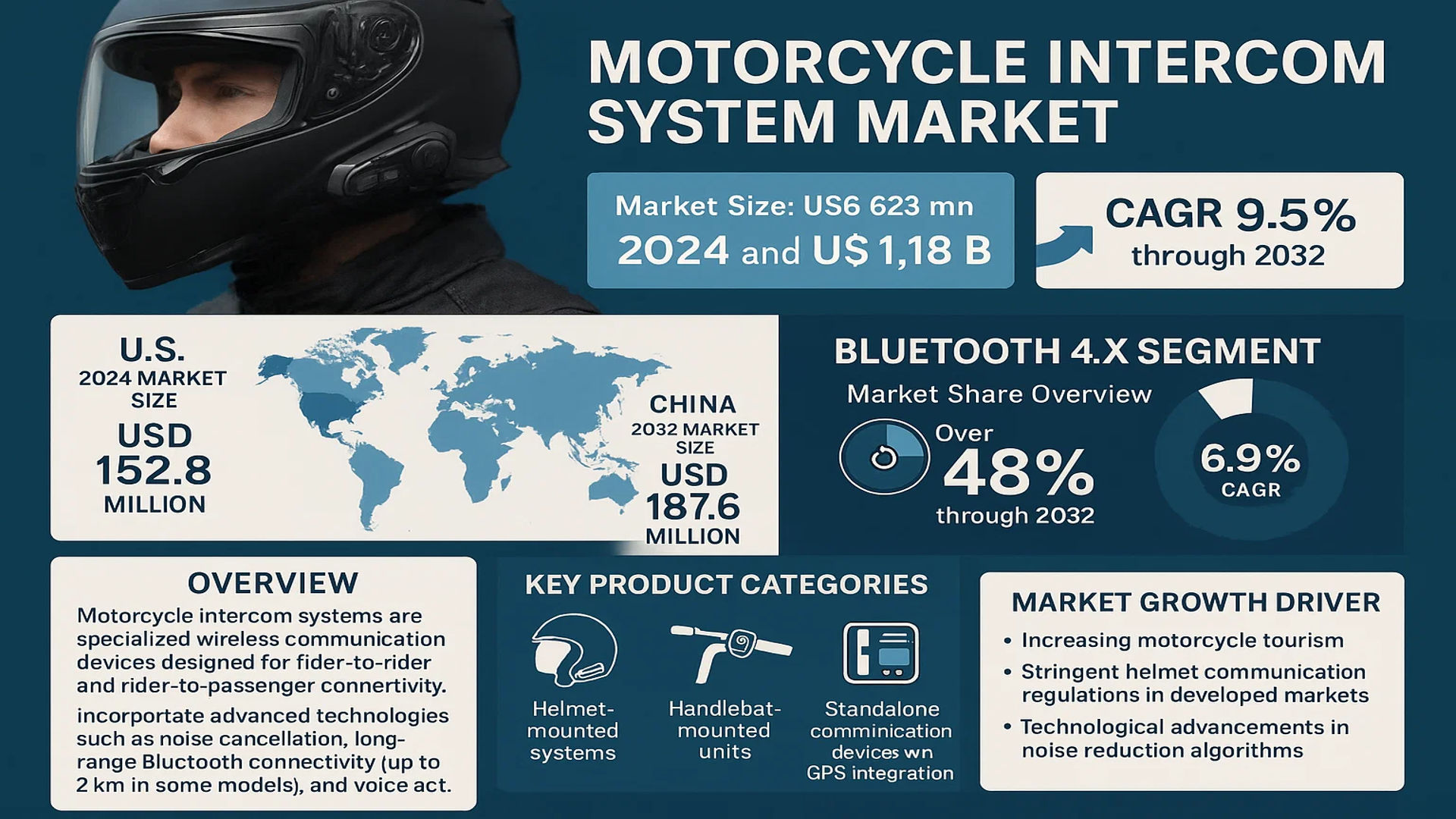
The global Motorcycle Intercom System Market size was valued at US$ 623 million in 2024 and is projected to reach US$ 1.18 billion by 2032, at a CAGR of 9.5% during the forecast period 2025-2032. The U.S. market size is estimated at USD 152.8 million in 2024, while China is expected to reach USD 187.6 million by 2032. The Bluetooth 4.X segment accounted for over 48% market share in 2024 and is anticipated to grow at 6.9% CAGR through 2032.
Motorcycle intercom systems are specialized wireless communication devices designed for rider-to-rider and rider-to-passenger connectivity. These systems incorporate advanced technologies such as noise cancellation, long-range Bluetooth connectivity (up to 2 km in some models), and voice activation features. Key product categories include helmet-mounted systems, handlebar-mounted units, and standalone communication devices with GPS integration.
The market growth is driven by increasing motorcycle tourism, stringent helmet communication regulations in developed markets, and technological advancements in noise reduction algorithms. Major players like Sena Technology and Cardo Systems are investing heavily in mesh networking technology, with Cardo’s PackTalk Edge achieving 1.6 km range in ideal conditions. The Asia-Pacific region shows strongest growth potential due to rising disposable incomes and motorcycle ownership rates in countries like India and Indonesia.
MARKET DYNAMICS
MARKET DRIVERS
Increasing Motorcycle Tourism and Group Riding Culture to Accelerate Market Growth
The global motorcycle intercom system market is experiencing strong growth driven by the expanding motorcycle tourism industry and group riding culture. Over recent years, there has been a significant rise in organized motorcycle tours and adventure riding groups, with many participants prioritizing communication devices for safety and coordination. Studies indicate that group motorcycle touring has grown by over 35% in the past five years, creating a substantial demand for reliable intercom systems. Leading manufacturers are responding by developing advanced products with extended battery life and clearer audio to enhance group riding experiences.
Rising Safety Regulations and Rider Awareness Fueling Adoption Rates
Government regulations mandating safer riding practices and growing consumer awareness about road safety are key drivers for intercom system adoption. Many countries have implemented laws restricting handheld mobile device usage while riding, pushing riders toward Bluetooth-enabled intercom solutions. Additionally, motorcycle safety organizations now recommend intercom systems to allow hands-free communication, navigation instructions, and emergency alerts. This growing safety consciousness among riders has led to increased sales of intercom systems with features like automatic volume adjustment and voice command functionality.
Technological Advancements in Wireless Communication Driving Product Innovation
The market is benefiting from rapid advancements in wireless communication technologies. The transition from Bluetooth 4.X to 5.X standards has significantly improved connection stability, range, and audio quality in motorcycle intercoms. Major manufacturers now offer systems supporting multi-device pairing, with some premium models providing mesh networking capabilities for group communication. These technological improvements have expanded the applications of intercom systems beyond rider-passenger communication to include music streaming, phone calls, and integration with navigation systems. The resulting product enhancements are making intercoms more appealing to casual riders in addition to touring enthusiasts.
MARKET RESTRAINTS
High Product Costs and Limited Affordability in Emerging Markets
Despite growing demand, the high price points of premium intercom systems remain a significant barrier, particularly in price-sensitive markets. Advanced motorcycle intercom systems can cost several hundred dollars, which is prohibitive for many riders in developing economies. While budget options exist, they often lack the features and reliability offered by high-end models. This price sensitivity limits market penetration in regions with large motorcycle populations but lower disposable incomes, creating a restraint that manufacturers must address through product segmentation and localized pricing strategies.
Other Restraints
Battery Life Limitations
Current intercom systems face operational constraints due to limited battery capacities, especially for riders undertaking long-distance journeys. While manufacturers have improved power efficiency, the need for frequent recharging can be inconvenient and potentially hazardous in remote areas.
Helmet Compatibility Issues
The diversity in helmet designs and safety standards presents compatibility challenges for intercom manufacturers. Some systems require specific helmet mounting solutions or modifications that may not be universally applicable across all helmet types and brands.
MARKET OPPORTUNITIES
Emerging Smart Helmet Integration Creating New Product Development Potential
The growing smart helmet market presents significant opportunities for intercom system integration. Manufacturers can leverage this trend by developing built-in intercom solutions that seamlessly integrate with helmet electronics. Recent advancements in compact audio components and power-efficient designs make such integration more feasible. This convergence of technologies could redefine product offerings and create new revenue streams while addressing helmet compatibility issues that currently limit market growth.
Expansion in Emerging Markets Offering Untapped Potential
Developing economies with high motorcycle adoption rates represent the next frontier for market expansion. Countries in Southeast Asia, South America, and Africa are seeing rising disposable incomes and increasing interest in motorcycle accessories. Localized product development focusing on affordability and durability could help manufacturers tap into these markets. Strategic partnerships with regional distributors and motorcycle manufacturers could accelerate market penetration in these high-growth regions.
MARKET CHALLENGES
Intense Competition and Rapid Product Obsolescence Pressuring Manufacturers
The motorcycle intercom market faces significant challenges from fierce competition and fast-moving technology cycles. New entrants are continuously emerging with innovative features, forcing established players to accelerate their R&D cycles. This competitive intensity leads to compressed product lifecycles and thinner profit margins. Manufacturers must balance rapid innovation with quality assurance while also navigating complex intellectual property landscapes to protect their technological advancements.
Other Challenges
Regulatory Compliance Complexities
Global variations in wireless communication regulations create compliance challenges for manufacturers. Meeting different certification requirements across markets increases development costs and time-to-market for new products.
After-sales Support Requirements
The technical nature of intercom systems creates customer support challenges. Manufacturers must maintain extensive support networks to handle installation guidance, firmware updates, and warranty claims across diverse regional markets.
MOTORCYCLE INTERCOM SYSTEM MARKET TRENDS
Integration of Advanced Connectivity Solutions Boosting Market Growth
The global motorcycle intercom system market is witnessing accelerated growth due to the rising demand for advanced connectivity solutions such as Bluetooth 5.X, which offers superior range and sound clarity. Manufacturers are increasingly focusing on integrating noise-cancellation technology and long-range communication capabilities, with some models now supporting communication distances of up to 1.5 kilometers. Additionally, the adoption of mesh communication networks in premium models allows multiple riders to stay connected seamlessly. These advancements cater to both recreational and professional riders seeking reliable in-helmet communication.
Other Trends
Rise in Motorcycle Tourism and Group Riding Activities
The growing popularity of motorcycle tourism and group riding events is significantly fueling demand for motorcycle intercom systems. Events such as cross-country rallies and adventure touring require robust communication devices that ensure rider safety and coordination. Countries with strong motorcycle cultures, such as the U.S., Germany, and India, are experiencing heightened sales of intercom systems, as riders prioritize real-time group communication. Furthermore, industry reports suggest that nearly 40% of touring motorcyclists now use intercom systems, a number projected to grow as safety regulations tighten.
Expanding Aftermarket Sales Channels
The motorcycle intercom system market is experiencing a surge in aftermarket sales, driven by consumers upgrading older communication systems to newer, feature-rich alternatives. Online platforms dominate distribution channels, accounting for over 50% of total sales globally due to competitive pricing and accessibility. While offline retailers maintain a strong presence in emerging markets, e-commerce giants and specialized motorcycle accessory websites are rapidly gaining traction. Additionally, manufacturers are collaborating with ride-sharing and rental services to bundle intercom systems, creating new revenue streams.
COMPETITIVE LANDSCAPE
Key Industry Players
Leading Brands Invest in Connectivity Innovation to Capture Market Share
The global motorcycle intercom system market exhibits a dynamic competitive environment dominated by established players while welcoming newer entrants offering specialized solutions. Sena Technology, Inc. and Cardo Systems collectively hold a significant market share, benefitting from their early entry into the bluetooth communication space. These brands have strengthened their positions through continuous firmware updates and strategic partnerships with helmet manufacturers.
While intercom technology was once limited to basic rider-to-passenger communication, today’s systems offer advanced features including mesh networking, advanced noise cancellation, and smartphone integration. UCLEAR Digital has gained notable traction with its patented audio technology, particularly among touring motorcycle enthusiasts who prioritize sound clarity during long-distance rides. Meanwhile, FreedConn and Lexin Motorcycle have successfully targeted the mid-range market segment with competitively priced products featuring surprisingly robust specifications.
The competitive landscape continues to evolve with European manufacturers like Schuberth and AGV integrating communication systems directly into premium helmet lines. This vertical integration strategy presents both opportunities and challenges, as it requires substantial R&D investment but creates high barriers to entry. Asia-based companies including Shenzhen VNETPHONE Technology are making inroads by offering cost-effective alternatives, though they currently focus primarily on the domestic Chinese market and adjacent regions.
Several market participants now emphasize ecosystem development, creating products designed to work seamlessly across different vehicle types and use cases. Twiins has particularly excelled in this area, with products that maintain connectivity between motorcycles, ATVs, and snowmobiles. As rider demographics expand and technology standards mature, we anticipate increasing consolidation through strategic acquisitions and partnerships.
List of Key Motorcycle Intercom System Companies
- Sena Technology, Inc. (U.S.)
- Cardo Systems (Israel)
- Schuberth (Germany)
- Twiins (Italy)
- UCLEAR Digital (U.S.)
- FreedConn (China)
- Vimoto (China)
- Lexin Motorcycle (China)
- AGV (Italy)
- Alan Electronics GmbH (Germany)
- Nolangroup S.p.A. (Italy)
- Midland (Italy)
- Shenzhen VNETPHONE Technology Co., Ltd (China)
- Shenzhen EJEAS Technology Co., Ltd. (China)
Segment Analysis:
By Type
Bluetooth 5.X Segment Dominates Due to Superior Connectivity and Range
The market is segmented based on type into:
- Bluetooth 4.X
- Bluetooth 5.X
- Others
By Application
Online Sales Segment Gains Traction with Rising E-commerce Penetration
The market is segmented based on application into:
- Online Sales
- Offline Sales
By Connectivity Range
Short-Range Communication Solutions Lead for Urban Riding Applications
The market is segmented based on connectivity range into:
- Short-Range (0-500 meters)
- Medium-Range (500-1500 meters)
- Long-Range (Above 1500 meters)
By End-User
Individual Riders Account for Significant Market Share
The market is segmented based on end-user into:
- Individual Riders
- Motorcycle Clubs
- Rental Services
- Commercial Fleets
Regional Analysis: Motorcycle Intercom System Market
North America
The North American motorcycle intercom market is driven by a strong motorcycle culture, particularly in the U.S., where long-distance touring and group riding activities are popular. Sena Technology, Inc. and Cardo Systems dominate the premium segment with advanced Bluetooth 5.X products offering superior noise cancellation and mesh networking capabilities. The region has seen increased adoption of MESH-based communication systems (offering group connectivity for up to 24 riders) following product launches in 2023. However, strict FCC regulations on wireless communication devices have pushed manufacturers to invest in compliance testing. The U.S. accounts for over 85% of regional revenue, supported by motorcycle sales of approximately 450,000 units annually.
Europe
Europe represents a technology-driven market with high demand for integrated helmet communication systems from brands like Schuberth and Nolangroup. The region’s stringent CE certification process influences product development cycles, with manufacturers prioritizing features like water resistance (IP67 ratings) and cross-brand compatibility. Germany and France lead in adoption due to their strong touring motorcycle markets. Recent EU legislation mandating reduced rider distraction has accelerated the shift from button-controlled to voice-activated intercoms, creating opportunities for AI-powered interfaces. The Benelux countries show the highest growth potential, with intercom penetration exceeding 40% among registered touring motorcycles.
Asia-Pacific
As the largest volume market, Asia-Pacific is characterized by price sensitivity and rapid adoption of mid-range Bluetooth devices. China’s Shenzhen-based manufacturers (VNETPHONE, EJEAS Technology) control 60% of the regional market with competitively priced Bluetooth 4.X systems. India’s burgeoning middle-class rider demographic is driving demand, though adoption remains limited to urban areas. Unique market dynamics include the preference for multifunction devices combining intercoms with navigation and camera controls. Japan and South Korea exhibit premium market characteristics, with local brands like Lexin Motorcycle gaining share through strategic OEM partnerships with Honda and Kawasaki.
South America
Market growth in South America is constrained by economic volatility but benefits from strong motorcycle culture in Brazil and Colombia. The region shows a distinct preference for ruggedized, waterproof intercoms (like FreedConn’s T-COM series) suited to tropical climates. Argentina’s import restrictions have fostered local assembly operations, while Chile’s adventure riding boom created a niche for long-range communication systems. However, the prevalence of counterfeit products (estimated at 35% of the market) limits revenue growth for branded manufacturers. Moto-taxi applications in Peru and Ecuador present untapped potential for basic intercom solutions.
Middle East & Africa
This emerging market displays extreme polarization between luxury touring segments (GCC countries) and utilitarian applications (South Africa, Egypt). The UAE leads in per capita adoption of premium intercoms, driven by desert rally participation and Ducati/Harley-Davidson enthusiast groups. African markets show preference for entry-level wired systems due to infrastructure limitations, though mobile payment-integrated solutions are gaining traction for delivery rider networks. Political instability in some nations hampers distribution channel development, but regional e-commerce platforms are bridging gaps in product accessibility. The 2024 launch of Cardo Systems’ Dubai-based regional HQ signals growing manufacturer confidence in the GCC market.
Report Scope
This market research report provides a comprehensive analysis of the Global Motorcycle Intercom System Market, covering the forecast period 2024–2032. It offers detailed insights into market dynamics, technological advancements, competitive landscape, and key trends shaping the industry.
Key focus areas of the report include:
- Market Size & Forecast: Historical data and future projections for revenue, unit shipments, and market value across major regions and segments.
- Segmentation Analysis: Detailed breakdown by product type (Bluetooth 4.X, Bluetooth 5.X, Others), application (Online Sales, Offline Sales), and region to identify high-growth segments and investment opportunities.
- Regional Outlook: Insights into market performance across North America, Europe, Asia-Pacific, Latin America, and the Middle East & Africa, including country-level analysis for key markets like the U.S., China, Germany, and Japan.
- Competitive Landscape: Profiles of leading market participants, including their product offerings, R&D focus, manufacturing capacity, pricing strategies, and recent developments such as mergers, acquisitions, and partnerships.
- Technology Trends & Innovation: Assessment of emerging technologies, including advanced Bluetooth connectivity, noise cancellation, and integration with smart helmets and navigation systems.
- Market Drivers & Restraints: Evaluation of factors driving market growth along with challenges, supply chain constraints, regulatory issues, and market-entry barriers.
- Stakeholder Analysis: Insights for component suppliers, OEMs, system integrators, investors, and policymakers regarding the evolving ecosystem and strategic opportunities.
Primary and secondary research methods are employed, including interviews with industry experts, data from verified sources, and real-time market intelligence to ensure the accuracy and reliability of the insights presented.
FREQUENTLY ASKED QUESTIONS:
What is the current market size of Global Motorcycle Intercom System Market?
-> Motorcycle Intercom System Market size was valued at US$ 623 million in 2024 and is projected to reach US$ 1.18 billion by 2032, at a CAGR of 9.5% during the forecast period 2025-2032.
Which key companies operate in Global Motorcycle Intercom System Market?
-> Key players include Sena Technology, Inc., Cardo Systems, Schuberth, Twiins, UCLEAR Digital, FreedConn, Vimoto, Lexin Motorcycle, AGV, and Alan Electronics GmbH, among others.
What are the key growth drivers?
-> Key growth drivers include rising motorcycle tourism, increasing demand for rider safety solutions, and advancements in wireless communication technology.
Which region dominates the market?
-> North America holds the largest market share, while Asia-Pacific is expected to witness the fastest growth due to increasing motorcycle sales and safety awareness.
What are the emerging trends?
-> Emerging trends include integration with smart helmets, AI-powered voice assistants, and mesh communication technology for group riding.

Get Sample Report PDF for Exclusive Insights
Report Sample Includes
- Table of Contents
- List of Tables & Figures
- Charts, Research Methodology, and more...
 Download Sample Report PDF