
MARKET INSIGHTS
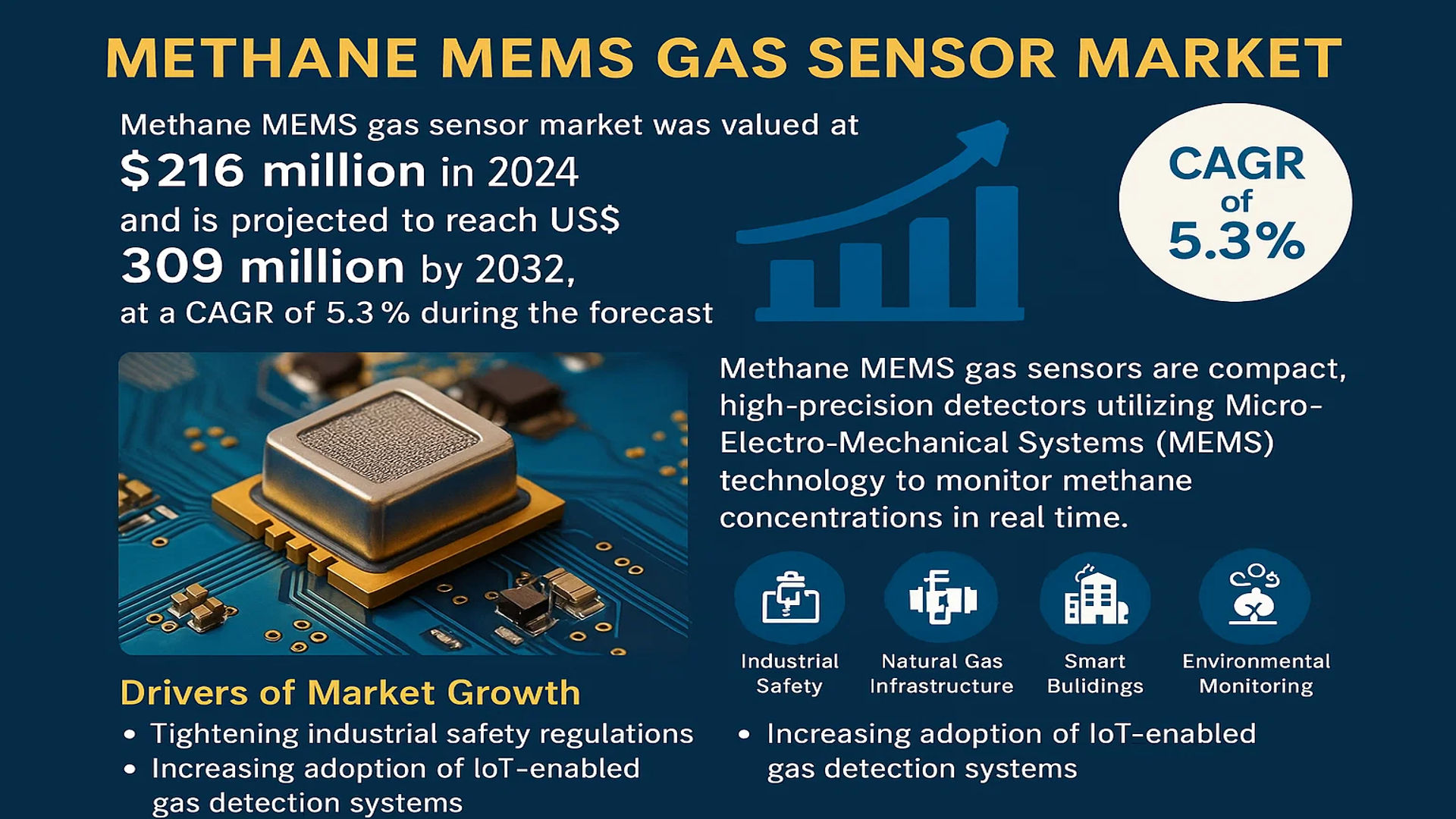
The global Methane MEMS Gas Sensor market was valued at 216 million in 2024 and is projected to reach US$ 309 million by 2032, at a CAGR of 5.3% during the forecast period.
Methane MEMS gas sensors are compact, high-precision detectors utilizing Micro-Electro-Mechanical Systems (MEMS) technology to monitor methane concentrations in real time. These sensors leverage silicon-based materials for enhanced sensitivity and stability while maintaining low power consumption. Their applications span industrial safety, natural gas infrastructure, smart buildings, and environmental monitoring due to rapid response times and durability.
Market growth is driven by tightening industrial safety regulations, increasing adoption of IoT-enabled gas detection systems, and rising investments in smart city infrastructure. While NDIR (Non-Dispersive Infrared) sensors dominate the technology segment with over 60% market share in 2024 due to their high accuracy, metal oxide semiconductor sensors are gaining traction for cost-sensitive applications. Key players like Amphenol and Figaro are expanding production capacities to meet the 12% annual demand surge from the oil & gas sector. However, technical challenges in minimizing cross-sensitivity to other gases remain an industry focus.
MARKET DYNAMICS
MARKET DRIVERS
Stringent Safety Regulations in Industrial and Residential Sectors to Drive Adoption of Methane MEMS Gas Sensors
The increasing enforcement of safety regulations across industries, particularly in oil & gas, mining, and residential sectors, is driving demand for methane MEMS gas sensors. Governments globally are mandating strict monitoring of methane emissions due to its high global warming potential—28–36 times that of CO₂ over 100 years. The industrial sector accounts for nearly 40% of global methane emissions, creating a pressing need for real-time detection solutions. MEMS-based sensors, with their high sensitivity and rapid response times, are becoming indispensable for compliance with these regulations. In 2024, at least 12 countries introduced updated industrial safety standards requiring continuous methane monitoring, further accelerating market penetration.
Growth in Natural Gas Infrastructure to Propel Market Expansion
Global natural gas consumption is projected to grow by over 3% annually, driving investments in pipeline networks and distribution systems where methane leaks pose significant risks. MEMS gas sensors are increasingly integrated into smart monitoring systems for pipelines, offering advantages like sub-ppm detection levels and connectivity with IoT platforms. The oil & gas industry alone is expected to deploy over 1.2 million new methane sensors by 2027, with MEMS technology capturing 35% of this market. This trend is reinforced by regulatory mandates in regions like North America and Europe, where pipeline operators must implement advanced leak detection systems.
Advancements in MEMS Technology to Enhance Market Penetration
Recent innovations in MEMS fabrication have significantly improved sensor performance, enabling detection thresholds below 500 ppb while reducing power consumption by 60% compared to conventional gas sensors. These advancements are critical for battery-operated and wireless applications in smart homes and industrial IoT. Industry leaders are launching compact, multi-gas detection modules combining methane sensing with environmental monitoring, broadening application scope. For instance, one major manufacturer recently introduced a MEMS-based methane sensor with a 10-year operational lifespan, making it viable for remote and harsh environments where maintenance is challenging.
MARKET RESTRAINTS
Cross-Sensitivity Issues to Limit Adoption in Complex Environments
Despite their precision, methane MEMS sensors face challenges with cross-sensitivity to other gases like propane and volatile organic compounds (VOCs), which can cause false readings. In industrial settings where multiple gases coexist, this limitation necessitates supplemental calibration or hybrid sensor arrays, increasing system costs by 15–25%. This issue is particularly acute in chemical plants and refineries, where gas mixtures are complex. While NDIR-based MEMS sensors mitigate some interference, their higher price point restricts adoption in cost-sensitive applications, creating a trade-off between accuracy and affordability.
Other Restraints:
High Initial Costs for Advanced MEMS Solutions
Premium methane MEMS sensors with IoT integration and ultra-low detection limits can cost 3–5 times more than basic semiconductor variants. This pricing disparity slows adoption in developing regions, where end-users prioritize upfront costs over long-term benefits. Though prices are declining at 8–10% annually, the current cost structure remains a barrier for SMEs and residential markets.
Regulatory Fragmentation Across Regions
Diverging certification requirements for gas sensors in North America, Europe, and Asia compel manufacturers to develop region-specific variants, increasing R&D overhead. For example, ATEX certification in Europe adds 6–8 months to product development cycles compared to US standards. This fragmentation complicates global scalability for sensor providers.
MARKET OPPORTUNITIES
Integration with Smart City Infrastructure to Unlock New Growth Avenues
Smart city initiatives worldwide are incorporating gas leak detection into urban safety frameworks, creating a $420 million annual opportunity for methane MEMS sensors. Municipalities are deploying networked sensors along utility lines and in public spaces to preempt leaks—Seoul’s smart city project alone installed 8,000 methane sensors in 2023. This trend is amplified by 5G rollout, enabling real-time data transmission from distributed sensor nodes. Partnerships between MEMS manufacturers and urban planners are critical to capitalize on this demand.
Emerging Applications in Biogas and Renewable Energy to Fuel Demand
As biogas plants multiply to meet renewable energy targets, methane monitoring during production and storage becomes essential. MEMS sensors are ideal for this sector due to their resilience in high-humidity environments common in anaerobic digesters. With global biogas capacity projected to double by 2030, this niche could account for 18% of methane sensor sales. Concurrently, landfill gas monitoring regulations are tightening—the EU’s updated waste directive mandates continuous methane tracking at all major sites, driving another high-margin segment.
MARKET CHALLENGES
Technical Constraints in Extreme Environments to Hinder Deployment
While MEMS sensors excel in controlled settings, performance degradation in extreme temperatures (–40°C to +85°C) limits use in arctic pipelines or desert oil fields. Harsh conditions accelerate sensor drift, necessitating frequent recalibration—a logistical challenge for remote installations. Although some manufacturers now offer ruggedized variants, their $50–$100 premium over standard models dampens adoption. Overcoming this constraint requires breakthroughs in materials science to enhance thermal stability without compromising sensitivity.
Other Challenges:
Data Overload from IoT Deployments
Large-scale sensor networks generate vast data streams that overwhelm conventional analytics platforms. One offshore rig with 2,000 sensors produces 4TB monthly—filtering actionable insights demands edge computing integration, adding 20–30% to system costs. This challenge grows as Industry 4.0 adoption accelerates.
Intellectual Property Battles
Patent disputes over MEMS designs and algorithms are rising, with 37% of sensor firms reporting litigation in 2023. These conflicts drain resources and delay product launches, particularly for startups navigating crowded patent landscapes.
METHANE MEMS GAS SENSOR MARKET TRENDS
Increasing Demand for Industrial Safety Solutions to Drive Market Growth
The global Methane MEMS Gas Sensor market is witnessing significant growth due to rising concerns over industrial safety and environmental monitoring. With methane being a highly flammable gas, industries such as oil & gas, mining, and chemical manufacturing are increasingly adopting MEMS-based gas sensors to prevent hazardous leaks. In 2024, the industrial application segment accounted for nearly 42% of the total market share, driven by stricter government regulations and corporate safety protocols. Additionally, the compact size and energy efficiency of MEMS sensors make them ideal for integration into wireless monitoring systems, further accelerating adoption in high-risk environments.
Other Trends
Advancements in Smart Home Technologies
The integration of methane MEMS gas sensors in smart home systems is emerging as a key trend, particularly in regions with high natural gas usage. With residential applications projected to grow at a CAGR of 4.8% through 2032, manufacturers are focusing on developing low-power and IoT-enabled sensors that connect seamlessly with home automation platforms. These sensors provide real-time alerts for gas leaks, enhancing household safety while complying with emerging smart building standards. The rising adoption of natural gas pipelines in urban areas further supports this demand, with Asia-Pacific leading in market penetration.
Shift Toward Environmental Compliance and Sustainability
Environmental regulations aimed at reducing greenhouse gas emissions are accelerating the deployment of methane detection technologies. Governments worldwide are implementing stringent policies that mandate methane monitoring in industries such as waste management and agriculture. The U.S. Environmental Protection Agency’s recent methane emission reduction targets, for instance, have prompted increased sensor installations across oil fields. Furthermore, the development of ultra-sensitive NDIR (Non-Dispersive Infrared) sensors, capable of detecting methane concentrations as low as 1 ppm, is enabling more precise environmental compliance monitoring. This trend is particularly strong in North America and Europe, where carbon neutrality initiatives are prioritized.
COMPETITIVE LANDSCAPE
Key Industry Players
Technological Innovation and Strategic Alliances Define Market Competition
The global methane MEMS gas sensor market exhibits a moderately fragmented competitive landscape, with established players and emerging innovators vying for market share through technological differentiation. Amphenol Advanced Sensors leads the market with approximately 18% revenue share in 2024, thanks to its diversified portfolio of NDIR-based methane sensors and strong distribution network across industrial sectors.
European manufacturers Senseair (Sweden) and smartGAS Mikrosensorik (Germany) collectively captured nearly 25% of the 2024 market share by specializing in energy-efficient MEMS solutions for smart city applications. Their success stems from strategic partnerships with IoT platform providers and compliance with stringent EU emission regulations.
Japanese competitor Figaro Engineering dominates the Asia-Pacific region with patented metal-oxide semiconductor (MOS) technology, holding 12% of global sales. Recent developments include ultra-low power sensors for battery-operated safety devices, addressing the growing demand in mining operations and residential gas leak detection.
The competitive intensity is increasing as players like Veris Industries and Cubic Sensor and Instrument expand their manufacturing capabilities in emerging markets. This geographical diversification allows cost optimization while meeting localization requirements in regions with tightening safety standards.
List of Key Methane MEMS Sensor Manufacturers
- Amphenol Advanced Sensors (U.S.)
- Senseair AB (Sweden)
- smartGAS Mikrosensorik GmbH (Germany)
- Figaro Engineering Inc. (Japan)
- NISSHA FIS Inc. (Japan)
- Veris Industries (U.S.)
- Dynament Ltd (UK)
- Cubic Sensor and Instrument Co., Ltd (China)
Segment Analysis:
By Type
NDIR (Non-Dispersive Infrared) Sensors Segment Leads Due to High Accuracy and Reliability
The market is segmented based on type into:
- NDIR (Non-Dispersive Infrared) Sensors
- Metal Oxide Semiconductor Sensors
- Catalytic Sensors
- Electrochemical Sensors
- Others
By Application
Industrial Segment Dominates Due to Stringent Safety Regulations and Leak Detection Needs
The market is segmented based on application into:
- Industrial
- Residential
- Commercial
- Environmental Monitoring
- Others
By End User
Oil & Gas Sector Holds Largest Share Due to Extensive Methane Monitoring Requirements
The market is segmented based on end user into:
- Oil & Gas
- Mining
- Utilities
- Manufacturing
- Others
Regional Analysis: Methane MEMS Gas Sensor Market
Asia-Pacific
Asia-Pacific dominates the global Methane MEMS Gas Sensor market, accounting for over 40% of global demand as of 2024. China leads regional adoption due to extensive natural gas infrastructure expansion and strict industrial safety regulations mandating methane leak detection. The country’s 13th Five-Year Plan for Natural Gas Development has accelerated pipeline network growth, driving sensor installations. India follows closely with increasing smart city projects incorporating gas detection systems. While cost sensitivity favors metal oxide semiconductor sensors, Japan and South Korea show stronger preference for higher-accuracy NDIR sensors in industrial applications. Regional manufacturers are investing heavily in miniaturization and IoT integration to meet diverse application needs from residential to large-scale industrial monitoring.
North America
The North American market thrives on stringent OSHA and EPA regulations governing methane emissions across oil & gas facilities. The U.S. contributes over 75% of regional demand, with growing shale gas production and pipeline safety initiatives under the PIPES Act 2020 fueling sensor deployments. Canada follows with increased focus on Arctic gas exploration safety measures. The region exhibits strong preference for NDIR sensors in critical infrastructure due to their false-alarm resistance. Emerging applications include integration with building automation systems and drone-based leak detection, with key players like Amphenol and Veris Industries introducing wireless sensor solutions.
Europe
Europe’s mature market is driven by EU directives like ATEX 2014/34/EU for explosive atmospheres and ambitious methane reduction targets under the European Green Deal. Germany and France lead in industrial adoption, particularly in chemical plants and biogas facilities. The region shows highest penetration of smart home gas detectors, with over 30% of new residential constructions incorporating MEMS sensors. Strict certification requirements create barriers for cheaper imports, favoring local manufacturers like smartGAS and Senseair. Recent R&D focuses on multi-gas detection capabilities and energy harvesting technologies to enable battery-free operation in remote monitoring applications.
Middle East & Africa
The MEA region presents emerging opportunities with expanding LNG infrastructure and oilfield safety upgrades. GCC countries, particularly Saudi Arabia and UAE, account for 60% of regional demand through megaprojects like NEOM smart city. However, adoption faces challenges from extreme climate conditions affecting sensor reliability and fragmented regulatory frameworks. South Africa shows promise as an industrial hub, while North African nations gradually implement gas detection in energy facilities. The market remains price-sensitive, with local distributors prioritizing economical metal oxide sensors over premium NDIR alternatives.
South America
South America’s growth remains uneven, with Brazil dominating through its pre-salt offshore gas projects and regulatory reforms in pipeline safety. Argentina follows with Vaca Muerta shale development driving sensor demand. Economic volatility and currency fluctuations hinder widespread adoption, though increasing foreign investments in energy infrastructure support steady market expansion. Portable methane detectors see growing uptake in mining sectors across Chile and Peru. The region exhibits strong potential for growth as environmental awareness rises and governments implement stricter emission monitoring policies.
Report Scope
This market research report provides a comprehensive analysis of the global Methane MEMS Gas Sensor market, covering the forecast period 2024–2032. It offers detailed insights into market dynamics, technological advancements, competitive landscape, and key trends shaping the industry.
Key focus areas of the report include:
- Market Size & Forecast: Historical data and future projections for revenue, unit shipments, and market value across major regions and segments. The market was valued at USD 216 million in 2024 and is projected to reach USD 309 million by 2032, growing at a CAGR of 5.3%.
- Segmentation Analysis: Detailed breakdown by product type (NDIR and Metal Oxide Semiconductor Sensors) and application (Residential, Commercial, Industrial) to identify high-growth segments.
- Regional Outlook: Insights into market performance across North America, Europe, Asia-Pacific, Latin America, and Middle East & Africa, including country-level analysis.
- Competitive Landscape: Profiles of leading players including Amphenol, Senseair, smartGAS, Figaro, and NISSHA, covering their product portfolios, market share, and strategic initiatives.
- Technology Trends: Assessment of MEMS innovation, integration with IoT platforms, and emerging sensor technologies for methane detection.
- Market Drivers & Restraints: Analysis of factors such as increasing safety regulations, growing natural gas infrastructure, and challenges like high development costs.
- Stakeholder Analysis: Strategic insights for sensor manufacturers, system integrators, and investors in the methane detection ecosystem.
The research methodology combines primary interviews with industry experts and analysis of verified market data to ensure accuracy and reliability.
FREQUENTLY ASKED QUESTIONS:
What is the current market size of Global Methane MEMS Gas Sensor Market?
-> Methane MEMS Gas Sensor market was valued at 216 million in 2024 and is projected to reach US$ 309 million by 2032, at a CAGR of 5.3% during the forecast period.
Which key companies operate in this market?
-> Major players include Amphenol, Senseair, smartGAS, Figaro, NISSHA, Veris Industries, Dynament, and Cubic Sensor and Instrument.
What are the key growth drivers?
-> Growth is driven by increasing safety regulations, expansion of natural gas infrastructure, and demand from industrial applications.
Which region dominates the market?
-> Asia-Pacific leads in market share due to industrial growth, while North America shows strong adoption in oil & gas sectors.
What are the emerging trends?
-> Emerging trends include miniaturization of sensors, IoT integration for remote monitoring, and development of low-power consumption models.

Get Sample Report PDF for Exclusive Insights
Report Sample Includes
- Table of Contents
- List of Tables & Figures
- Charts, Research Methodology, and more...
 Download Sample Report PDF





