MARKET INSIGHTS
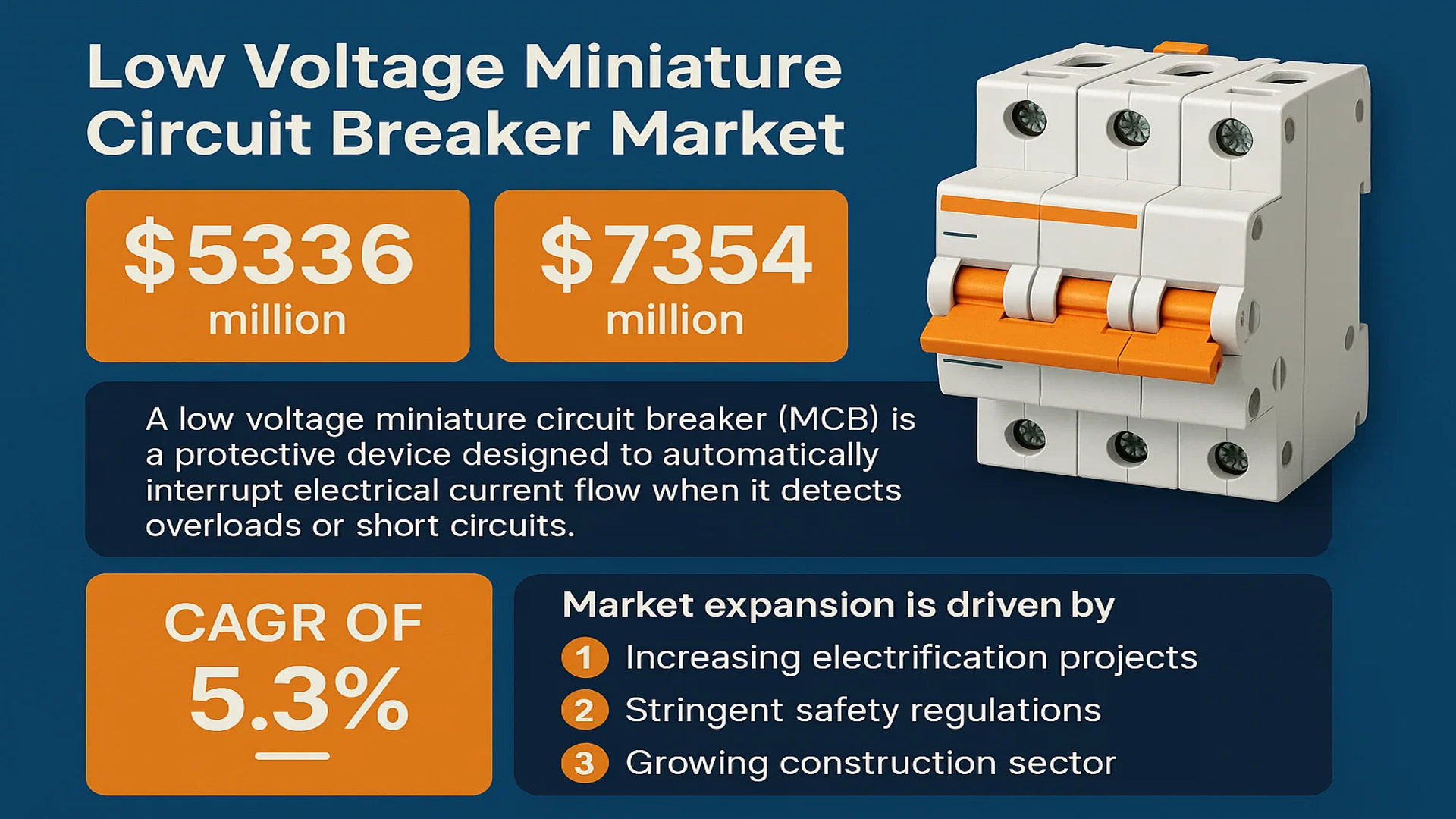
The global Low Voltage Miniature Circuit Breaker Market was valued at 5336 million in 2024 and is projected to reach US$ 7354 million by 2032, at a CAGR of 5.3% during the forecast period.
A low voltage miniature circuit breaker (MCB) is a protective device designed to automatically interrupt electrical current flow when it detects overloads or short circuits. These components operate in low-voltage installations, typically below 1,000V AC or 1,500V DC, and are critical for safeguarding residential, commercial, and industrial electrical systems against fire hazards and equipment damage.
Market expansion is driven by increasing electrification projects, stringent safety regulations, and the growing construction sector. The standard MCB segment dominates applications, while Asia-Pacific leads regional growth due to rapid urbanization. Key players like Schneider Electric, ABB, and Siemens continue innovating with smart MCB solutions to meet evolving industry demands.
MARKET DYNAMICS
MARKET DRIVERS
Growing Electrification Across Residential and Commercial Sectors to Drive Market Expansion
The global push for electrification across residential, commercial, and industrial sectors is significantly boosting demand for low voltage miniature circuit breakers. These devices play a critical role in safeguarding electrical systems against overloads and short circuits, which are becoming increasingly common as power consumption rises. Residential applications account for nearly 40% of the total MCB market, driven by urbanization and the construction of smart homes. The commercial sector is witnessing similar growth, particularly in office spaces and retail complexes where electrical safety regulations mandate the use of high-quality protection devices. These trends are expected to continue as countries modernize their power infrastructure.
Stringent Safety Regulations and Standards Accelerating Product Adoption
Safety regulations established by international bodies are compelling industries to adopt advanced circuit protection solutions. Organizations such as the International Electrotechnical Commission (IEC) and Underwriters Laboratories (UL) enforce strict guidelines for electrical safety, directly influencing the MCB market. For example, IEC 60898-1 sets the benchmark for circuit breaker performance in residential and commercial applications, while IEC 60947-2 governs industrial uses. Compliance with these standards not only enhances safety but also drives innovation in product design and functionality. Manufacturers are continually developing new MCB variants to meet evolving regulatory demands, which in turn stimulates market growth.
➤ The introduction of smart circuit breakers with IoT capabilities represents a significant breakthrough, enabling real-time monitoring and remote operation to enhance electrical safety.
Furthermore, government initiatives promoting energy efficiency and sustainable infrastructure are encouraging investments in modern electrical protection systems. Green building certifications like LEED and BREEAM are increasingly factoring in advanced circuit protection solutions as part of their rating systems.
MARKET CHALLENGES
Price Volatility of Raw Materials Affecting Manufacturing Costs
The MCB market faces significant challenges from fluctuating raw material prices, particularly copper and silver, which are essential components in circuit breaker manufacturing. Copper prices have shown volatility ranging between 15-20% annually over the past three years, directly impacting production costs. This volatility puts pressure on manufacturers to either absorb higher costs or pass them on to customers, potentially slowing market growth. Smaller manufacturers with limited financial flexibility are particularly affected, sometimes forcing them to compromise on product quality or scale back production.
Other Challenges
Increasing Competition from Local Manufacturers
The market is witnessing intense competition from regional players offering low-cost alternatives to branded MCB products. In developing economies particularly, local manufacturers capture substantial market share by offering products at 20-30% lower prices than global brands. While these products may not always meet international quality standards, their affordability makes them attractive to price-sensitive customers, creating challenges for established manufacturers.
Technical Limitations in High-Current Applications
Standard MCBs face performance limitations when dealing with high-current industrial applications. Unlike molded case circuit breakers (MCCBs), MCBs typically have lower breaking capacities, restricting their use in heavy industrial settings. Manufacturers are investing in R&D to bridge this gap, but technical constraints remain a notable challenge for market expansion into high-power applications.
MARKET RESTRAINTS
Long Product Lifecycle Limiting Replacement Demand
MCBs are designed for durability, often operating reliably for 15-20 years without requiring replacement. While this longevity benefits end-users, it presents a significant restraint for market growth as replacement cycles are prolonged. Unlike consumer electronics that require frequent upgrades, electrical protection devices are typically replaced only during complete system overhauls or building renovations. This characteristic dampens the frequency of repeat purchases, compelling manufacturers to focus on new installations rather than replacement markets for revenue growth.
MARKET OPPORTUNITIES
Rising Smart City Development Creating New Application Avenues
The global smart city initiative presents substantial opportunities for MCB manufacturers. As urban areas implement intelligent infrastructure, the demand for advanced circuit protection solutions integrated with smart grid technologies is rising. These next-generation MCBs offer features like energy monitoring, remote control, and predictive maintenance capabilities. With smart city investments projected to exceed $2 trillion globally by 2025, manufacturers developing IoT-enabled circuit protection solutions stand to gain significant market share.
Additionally, the renewable energy sector offers promising growth prospects. Solar PV installations and wind farms require specialized circuit protection solutions to handle unique electrical characteristics like DC current and variable loads. Manufacturers developing application-specific MCBs for renewable energy systems can capitalize on this emerging market segment.
LOW VOLTAGE MINIATURE CIRCUIT BREAKER MARKET TRENDS
Smart Grid and IoT Integration Redefining MCB Applications
The integration of smart grid technologies and the Internet of Things (IoT) is revolutionizing the low voltage miniature circuit breaker market. Modern MCBs are increasingly equipped with advanced monitoring capabilities, enabling real-time fault detection and predictive maintenance. These connected devices play a critical role in energy management systems and smart infrastructure projects. The growing adoption of smart metering solutions, which currently represents over 30% of new electrical installations in developed regions, has created significant demand for intelligent MCBs that can communicate with central monitoring systems.
Other Trends
Renewable Energy Sector Expansion
The rapid growth of renewable energy installations is driving substantial demand for specialized MCBs in solar and wind power applications. Distributed generation systems require circuit protection solutions capable of handling variable loads and reverse power flows, creating opportunities for innovation in MCB design. With global renewable energy capacity expected to increase by 60% over the next decade, manufacturers are developing MCBs specifically engineered for photovoltaic systems and other clean energy applications.
Urbanization and Infrastructure Development
Accelerating urbanization across emerging economies continues to fuel MCB market growth, particularly in the construction sector. Developing nations are experiencing an annual construction growth rate of approximately 6-8%, creating sustained demand for electrical protection devices in residential and commercial projects. The standardization of safety regulations and the increasing adoption of international electrical codes in these regions have further expanded the MCB market, with modern building standards now requiring circuit protection in virtually all new installations.
Industrial automation represents another key growth vertical, where MCBs must meet increasingly stringent requirements for equipment protection and system reliability. The growing complexity of manufacturing processes and the rising value of sensitive electronic equipment have elevated the importance of precise current interruption capabilities in industrial circuit protection solutions.
COMPETITIVE LANDSCAPE
Key Industry Players
Technological Innovation and Strategic Expansion Drive Competition in MCB Market
The global low voltage miniature circuit breaker (MCB) market features a highly competitive landscape, dominated by established multinational corporations alongside regional players striving for greater market share. Schneider Electric and Siemens emerge as market leaders, holding significant revenue shares in 2024 due to their extensive product portfolios, strong R&D capabilities, and global distribution networks. These companies benefit from decades of expertise in electrical protection systems and continuous investments in smart circuit breaker technologies.
Meanwhile, ABB and Eaton maintain robust positions through their focus on energy-efficient solutions and strategic acquisitions. ABB’s recent launch of its digital-enabled MCB series demonstrates how traditional players are adapting to the growing demand for IoT-integrated protection devices. Eaton’s strength lies in its diversified industrial client base and customized solutions for harsh environments.
Asian manufacturers like CHINT Electrics and Mitsubishi Electric are gaining traction through competitive pricing and rapid adoption of automated manufacturing processes. CHINT in particular has shown remarkable growth in emerging markets, owing to its cost-effective product range tailored for residential and SME applications. The company’s expansion into African and South American markets highlights the shifting dynamics in global MCB distribution.
Market competition intensifies as companies employ varied strategies – from Schneider’s emphasis on eco-design compliant breakers to Hager’s specialization in modular solutions for smart homes. The sector also sees increasing collaboration between MCB manufacturers and construction firms to develop integrated electrical safety systems for modern infrastructure projects.
List of Key Low Voltage Miniature Circuit Breaker Manufacturers
- Schneider Electric (France)
- ABB (Switzerland)
- Eaton Corporation (Ireland)
- Siemens AG (Germany)
- Mitsubishi Electric (Japan)
- Hager Group (Germany)
- Fuji Electric (Japan)
- CHINT Electrics (China)
- Liangxin (China)
- DELIXI (China)
- HangShen Electric (China)
Segment Analysis:
By Type
Standard MCB Segment Leads the Market Due to Wide Application in Residential and Commercial Buildings
The market is segmented based on type into:
- Standard MCB
- Subtypes: Single-pole, Double-pole, Triple-pole, and others
- Residual Current Circuit Breaker
- Subtypes: Type AC, Type A, Type B, and others
- Others
By Application
Construction Industry Dominates Due to Increased Infrastructure Development Globally
The market is segmented based on application into:
- Construction Industry
- Subtypes: Residential buildings, Commercial buildings, Industrial facilities
- Power Generation Industry
- Others
By End User
Residential Sector Shows Strong Growth Potential with Rising Urbanization
The market is segmented by end user into:
- Residential
- Commercial
- Industrial
Regional Analysis: Low Voltage Miniature Circuit Breaker Market
Asia-Pacific
The Asia-Pacific region dominates the global Low Voltage Miniature Circuit Breaker (MCB) market, accounting for the highest consumption volume due to rapid urbanization and industrial expansion. China is the key driver, followed by India and Southeast Asian nations, where infrastructure development and power sector investments remain strong. The region benefits from cost-effective manufacturing capabilities and the presence of local players like CHINT Electrics and DELIXI. However, price sensitivity often leads to competition between international brands and domestic manufacturers. Smart city initiatives and renewable energy projects are creating new demand for advanced MCBs with IoT capabilities and enhanced safety features.
North America
North America’s MCB market is characterized by stringent safety regulations and a focus on energy-efficient solutions. The U.S. leads the region due to substantial investments in commercial construction and grid modernization projects. Schneider Electric and Eaton hold significant market share, offering smart MCBs compliant with NEC (National Electrical Code) standards. The shift toward renewable energy integration and electric vehicle infrastructure is driving demand for specialized circuit protection solutions. However, market growth faces challenges from mature infrastructure and slower replacement cycles compared to emerging economies.
Europe
Europe maintains a strong position in the MCB market, with Germany, France, and the U.K. as key contributors. Strict EU directives on electrical safety and energy efficiency (e.g., EN 60898 standards) compel manufacturers to innovate. Siemens and Hager lead in technological advancements, particularly in smart home and industrial automation applications. The region’s focus on sustainable energy and building renovations under initiatives like the European Green Deal supports steady MCB demand. However, high competition and price pressures from Asian manufacturers present ongoing challenges for local suppliers.
South America
South America’s MCB market shows moderate growth, primarily fueled by Brazil’s industrial sector and Argentina’s gradual infrastructure upgrades. Economic instability and fluctuating raw material prices often hinder market expansion. While basic MCBs dominate, increasing awareness of electrical safety is driving demand for residual current devices (RCDs) in residential applications. Local manufacturers face competition from Chinese imports, though regional players maintain presence through distributor networks and after-sales services.
Middle East & Africa
This emerging market demonstrates growing potential, particularly in GCC countries with large-scale construction projects. The UAE and Saudi Arabia lead in smart grid deployments and renewable energy investments, creating demand for advanced MCBs. Africa’s market remains underpenetrated but shows promise with urban electrification programs. Challenges include price sensitivity in developing nations and inconsistent regulatory enforcement. Still, the region presents long-term opportunities as electrical infrastructure development accelerates across both residential and industrial sectors.
Report Scope
This market research report provides a comprehensive analysis of the Global Low Voltage Miniature Circuit Breaker (MCB) market, covering the forecast period 2024–2032. It offers detailed insights into market dynamics, technological advancements, competitive landscape, and key trends shaping the industry.
Key focus areas of the report include:
- Market Size & Forecast: Historical data and future projections for revenue, unit shipments, and market value across major regions and segments. The global market was valued at USD 5,336 million in 2024 and is projected to reach USD 7,354 million by 2032 at a CAGR of 5.3%.
- Segmentation Analysis: Detailed breakdown by product type (Standard MCB, Residual Current Circuit Breaker, Others), application (Construction Industry, Power Generation Industry, Others), and end-user sectors to identify high-growth segments.
- Regional Outlook: Insights into market performance across North America, Europe, Asia-Pacific, Latin America, and Middle East & Africa, with country-level analysis for key markets including the U.S., China, Germany, and Japan.
- Competitive Landscape: Profiles of leading manufacturers including Schneider Electric, ABB, Eaton, Siemens, and Mitsubishi Electric, covering their market share, product portfolios, and strategic developments.
- Technology Trends & Innovation: Assessment of smart circuit protection technologies, IoT integration, and energy-efficient solutions transforming the MCB market.
- Market Drivers & Restraints: Evaluation of factors including rising electricity demand, infrastructure development, and safety regulations versus challenges like raw material price volatility and supply chain disruptions.
- Stakeholder Analysis: Strategic insights for electrical component manufacturers, distributors, contractors, and investors regarding emerging opportunities in the evolving MCB ecosystem.
The report employs primary and secondary research methodologies, including interviews with industry experts and analysis of verified market data, to ensure accuracy and reliability.
FREQUENTLY ASKED QUESTIONS:
What is the current market size of Global Low Voltage Miniature Circuit Breaker Market?
-> Low Voltage Miniature Circuit Breaker Market was valued at 5336 million in 2024 and is projected to reach US$ 7354 million by 2032, at a CAGR of 5.3% during the forecast period.
Which key companies operate in this market?
-> Major players include Schneider Electric, ABB, Eaton, Siemens, Mitsubishi Electric, Hager, Fuji Electric, and CHINT Electrics.
What are the key growth drivers?
-> Growth is driven by increasing construction activities, industrialization, and stringent electrical safety regulations worldwide.
Which region dominates the market?
-> Asia-Pacific leads the market due to rapid urbanization, while North America and Europe maintain significant shares.
What are the emerging trends?
-> Emerging trends include smart MCBs with remote monitoring, arc-fault detection technology, and eco-friendly materials.

Get Sample Report PDF for Exclusive Insights
Report Sample Includes
- Table of Contents
- List of Tables & Figures
- Charts, Research Methodology, and more...