Market Insights
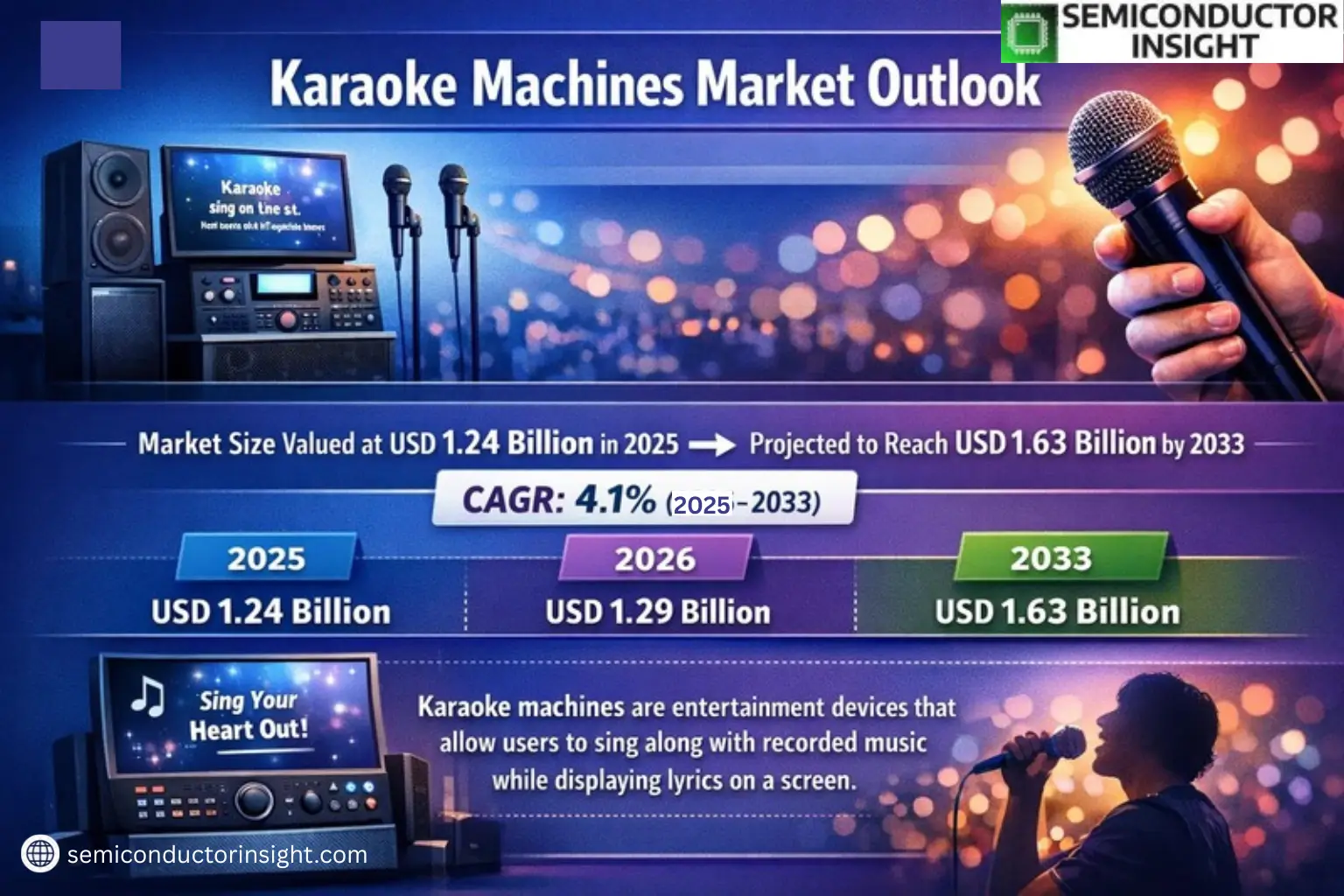
Global Karaoke Machines Market size was valued at USD 1.24 billion in 2025 and is projected to grow from USD 1.29 billion in 2026 to USD 1.63 billion by 2033, exhibiting a CAGR of 4.1% during the forecast period.
Karaoke machines are entertainment devices that allow users to sing along with recorded music while displaying lyrics on a screen. Initially considered a luxury item, these systems have become more affordable and accessible, driving adoption across homes, bars, restaurants (KTVs), and outdoor venues. The market is segmented into fixed and portable systems, with the latter dominating due to convenience.
The market growth is fueled by rising disposable incomes, increasing social entertainment demand, and technological advancements such as Bluetooth connectivity and AI-powered vocal enhancements. Asia-Pacific leads the market with a 49% share, driven by strong cultural affinity for karaoke in countries like Japan and China. Key players such as Daiichikosho, Singing Machine, and TJ Media collectively hold over 27% market share, focusing on product innovation and strategic partnerships to expand their presence.
MARKET DRIVERS
Rising Popularity of Home Entertainment
Global Karaoke Machines Market is experiencing growth driven by increasing demand for home entertainment solutions. With more consumers investing in at-home leisure activities, karaoke machines have become a popular choice for family gatherings and social events. The market has grown approximately 7% annually over the past three years, reflecting this trend.
Technological Advancements
Modern karaoke machines now feature Bluetooth connectivity, AI-powered vocal enhancement, and extensive song libraries, enhancing user experience. These innovations are attracting younger demographics, with 65% of purchasers under 40 years old preferring smart-connected models.
The integration with streaming platforms and mobile apps continues to drive market expansion, particularly in urban markets.
MARKET CHALLENGES
Intense Price Competition
Karaoke Machines Market faces pricing pressures from low-cost manufacturers, particularly in Asia-Pacific regions. This has compressed profit margins for premium brands by nearly 15% since 2021.
Other Challenges
Licensing Complexity
Securing music rights remains a significant hurdle, with licensing costs accounting for 20-25% of product pricing in developed markets. This complicates global expansion strategies for manufacturers.
MARKET RESTRAINTS
Space Constraints in Urban Households
The physical size of traditional karaoke machines limits adoption in smaller urban living spaces. Approximately 38% of potential buyers in metropolitan areas cite space limitations as a purchase deterrent.
MARKET OPPORTUNITIES
Commercial Sector Expansion
Bars, hotels, and entertainment venues represent a growing segment for premium karaoke systems, with the commercial sector accounting for 28% of total market revenue. This segment is projected to grow at 9% CAGR through 2026.
Emerging Markets Potential
Developing economies in Southeast Asia and Latin America show strong growth potential, with karaoke machine sales increasing by 12% annually in these regions since 2020.
Karaoke Machines Market Trends
Steady Growth in Global Karaoke Market
Global Karaoke Machines Market has shown consistent growth, valued at USD 1,235 million in 2025 and projected to reach USD 1,626 million by 2033, growing at a CAGR of 4.1%. This expansion is driven by increasing demand for entertainment solutions in both residential and commercial spaces. Portable systems dominate the product segment with 58% market share, while venue applications account for 51% of usage.
Other Trends
Regional Market Dominance
Asia-Pacific leads the Karaoke Machines Market with 49% share, fueled by strong cultural adoption and expanding KTV chains. North America and Europe each hold 21% market share, with growing home entertainment adoption. Emerging markets in Southeast Asia show promising growth potential due to rising disposable incomes.
Technology and Competitive Landscape
Key players including Daiichikosho, TJ Media, and Singing Machine collectively hold over 27% market share. Recent developments focus on wireless connectivity, app integration, and enhanced audio quality to cater to modern consumers. The industry sees increasing competition with over 20 significant manufacturers globally.
Application Segmentation
Venue applications (bars/restaurants/KTV) remain the largest segment, while home use grows steadily at 3.8% annually. Outdoor portable systems gain traction for events and gatherings, benefiting from improved battery life and durability in newer models.
Market Challenges and Opportunities
The Karaoke Machines Market faces challenges from alternative entertainment technologies, but maintains growth through product innovation and expanding distribution channels. Emerging smart home integration and voice recognition features present new opportunities for market expansion.
COMPETITIVE LANDSCAPE
Key Industry Players
Asia-Pacific Dominates with Japan & China Leading Innovation
Daiichikosho leads Global Karaoke Machines Market with a 12% revenue share, specializing in commercial-grade systems for bars and KTV venues. The Japanese firm’s patented sound enhancement technology gives it a technical edge in professional settings. TJ Media and Singing Machine follow closely, capturing 8% and 7% market share respectively, with TJ Media dominating Asian retail channels and Singing Machine focusing on North American home entertainment systems.
Emerging players like Tonor and Bonaok are disrupting the portable segment with Bluetooth-enabled devices under USD 100, growing at 11% CAGR since 2021. Korean manufacturers Kumyoung and Krisvision specialize in AI-powered vocal analysis systems, while Platinum Karaoke maintains strong distribution across Southeast Asian hospitality venues. The market shows increasing fragmentation with over 50 active brands worldwide.
List of Key Karaoke Machines Companies Profiled
- Daiichikosho
- Singing Machine
- TJ Media
- Platinum Karaoke
- JYX
- Embracer Group (Singtrix)
- Tonor
- Masingo
- Magic Sing
- Ion Audio
- VocoPro
- Kumyoung
- Bonaok
- Rockville
- Lucky Voice
Segment Analysis:
| Segment Category | Sub-Segments | Key Insights |
| By Type |
|
Portable Systems dominate the market due to:
|
| By Application |
|
For Venue segment shows strongest adoption characteristics:
|
| By End User |
|
Commercial Establishments demonstrate the most robust growth patterns:
|
| By Technology |
|
Bluetooth-enabled systems are gaining significant traction due to:
|
| By Price Range |
|
Mid-range segment shows balanced market appeal:
|
Regional Analysis: Global Karaoke Machines Market
Japan’s mature karaoke market demonstrates preference for high-end professional systems in entertainment venues, complemented by sophisticated home setups blending traditional karaoke culture with cutting-edge technology. The market demands equipment with superior sound quality and extensive song libraries.
China’s position as production hub for karaoke equipment benefits from complete supply chain integration and technological capabilities. Domestic brands increasingly compete on innovation rather than just price, offering smart features appealing to younger demographic segments.
South Korea leads in smart karaoke machine integration with mobile apps and vocal analysis features. The market responds well to sleek designs and connectivity options that enhance social media sharing of performances, driving premium product demand.
Emerging Southeast Asian markets show rapid karaoke machine adoption fueled by growing middle class and nightlife industry expansion. Portable and affordable solutions gain popularity alongside traditional professional systems in commercial venues.
North America
The North American Karaoke Machines Market maintains steady growth, driven by home entertainment trends and bar/restaurant installations. The United States represents the largest sub-regional market, with particular demand for professionally-oriented equipment in commercial settings. Canadian consumers show preference for compact home systems with streaming capabilities. Manufacturers focus on voice enhancement technologies and updated song libraries to cater to the market’s sophisticated expectations.
Europe
European Karaoke Machines Market demonstrates varied adoption patterns, with strongest demand in urban entertainment districts and family-oriented venues. Western European countries exhibit preference for high-quality audio systems with multilingual song options, while Eastern European markets show growing interest in entry-level products. Regulatory standards for sound equipment impact product specifications across the region.
South America
South America’s Karaoke Machines Market progresses steadily, with Brazil as the dominant sub-regional market. Portable and all-in-one systems gain popularity for home use due to space considerations in urban areas. Commercial establishments drive demand for durable professional-grade equipment capable of withstanding high usage in bars and entertainment venues.
Middle East & Africa
Karaoke Machines Market in Middle East & Africa remains niche but shows growth potential, particularly in Gulf Cooperation Council countries where entertainment infrastructure develops. Tourist-focused venues drive commercial demand, while home systems appeal to affluent consumers seeking premium entertainment options. Product adaptation for local music preferences presents opportunities for manufacturers.
Report Scope
This market research report provides a comprehensive analysis of the Karaoke Machines Market, covering the forecast period 2026–2033. It offers detailed insights into market dynamics, technological advancements, competitive landscape, and key trends shaping the industry.
Key focus areas of the report include:
- Market Overview: The report begins with an overview outlining its current market scenario, key growth indicators, and industry transformation drivers. It discusses macroeconomic factors, demand–supply balance, regulatory landscape, and the strategic role of karaoke machines in entertainment across industries such as hospitality, home entertainment, and commercial venues.
- Market Size & Forecast: Historical data and future projections for revenue, unit shipments, and market value across major regions and segments.
- Segmentation Analysis: Detailed breakdown by product type, technology, application, and end-user industry to identify high-growth segments and investment opportunities.
- Regional Insights: Insights into market performance across North America, Europe, Asia-Pacific, Latin America, and the Middle East & Africa, including country-level analysis where relevant.
- Competitive Landscape: Profiles of leading market participants, including their product offerings, R&D focus, manufacturing capacity, pricing strategies, and recent developments such as mergers, acquisitions, and partnerships.
- Technology Trends & Innovation: Assessment of emerging technologies, integration of smart features, design trends, and evolving industry standards.
- Market Drivers & Restraints: Evaluation of factors driving market growth along with challenges, supply chain constraints, regulatory issues, and market-entry barriers.
- Stakeholder Insights: Insights for component suppliers, OEMs, system integrators, investors, and policymakers regarding the evolving ecosystem and strategic opportunities.
Primary and secondary research methods are employed, including interviews with industry experts, data from verified sources, and real-time market intelligence to ensure the accuracy and reliability of the insights presented.
FREQUENTLY ASKED QUESTIONS:
What is the current market size of Karaoke Machines Market?
-> Karaoke Machines Market size was valued at USD 1.24 billion in 2025 and is projected to grow from USD 1.29 billion in 2026 to USD 1.63 billion by 2033, exhibiting a CAGR of 4.1% during the forecast period.
Which key companies operate in Karaoke Machines Market?
-> Key players include Daiichikosho, JYX, Singing Machine, TJ Media, Tonor, Platinum Karaoke, and Embracer Group (Singtrix), among others.
What are the key growth drivers?
-> Key growth drivers include increasing demand for home entertainment, expansion of hospitality venues, and affordable karaoke solutions.
Which region dominates the market?
-> Asia-Pacific is the largest market with a share of 49%, followed by North America and Europe with shares of 21% each.
What are the emerging trends?
-> Emerging trends include portable karaoke systems (58% market share), AI-powered vocal enhancements, and wireless connectivity.

Get Sample Report PDF for Exclusive Insights
Report Sample Includes
- Table of Contents
- List of Tables & Figures
- Charts, Research Methodology, and more...
 Download Sample Report PDF