Hardware-in-the-Loop (HIL) Simulation Market, Global Business Strategies 2025-2032

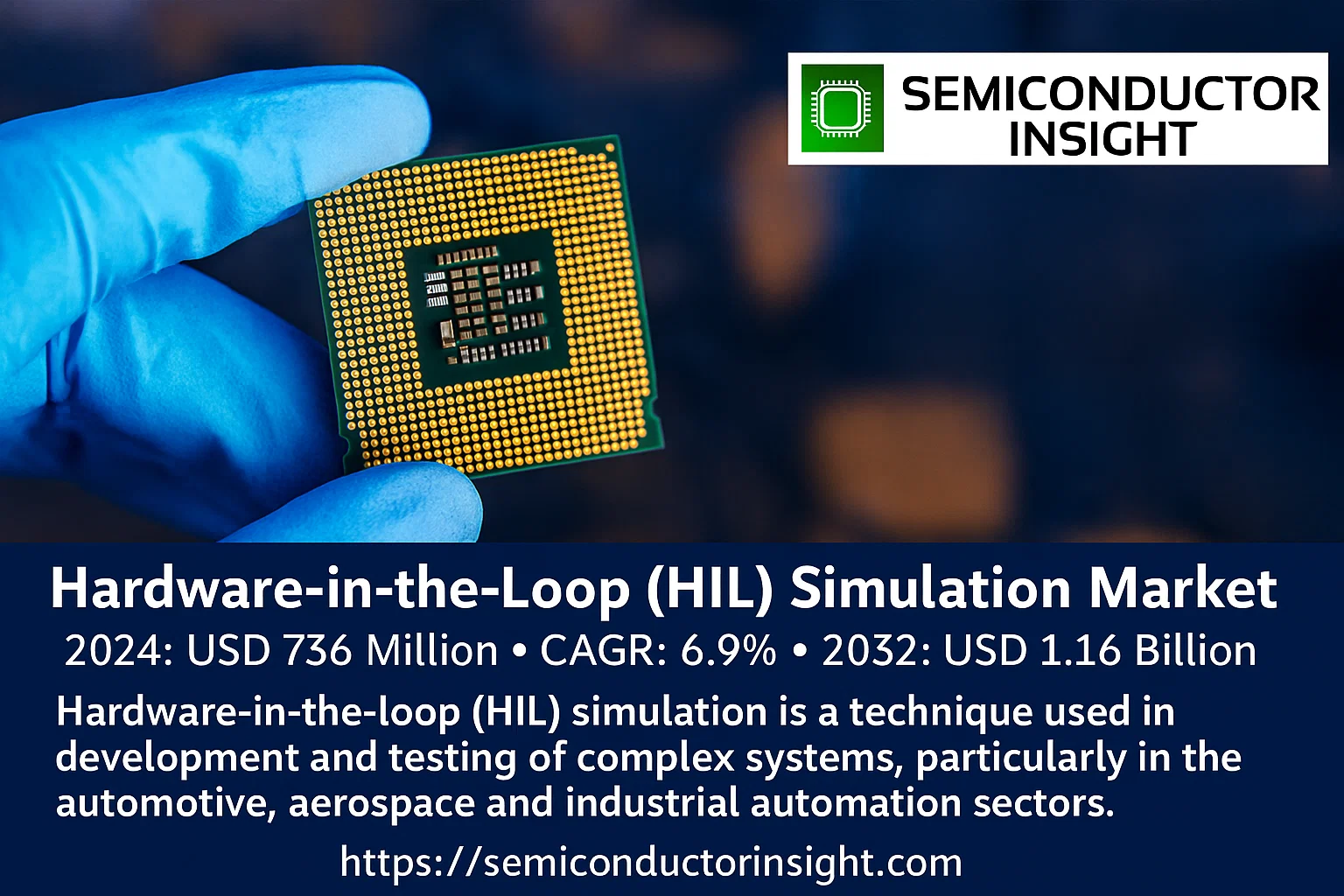
Hardware-in-the-Loop (HIL) Simulation Market was valued at USD 736 million in 2024 and is projected to reach USD 1.16 billion by 2032, at a CAGR of 6.9% during the forecast period

PDF Icon Download Sample Report PDF
  • Quick Dispatch

    All Orders

  • Secure Payment

    100% Secure Payment

Price range: $1,500.00 through $4,250.00

Clear

MARKET INSIGHTS

Global Hardware-in-the-Loop (HIL) Simulation Market was valued at USD 736 million in 2024 and is projected to reach USD 1.16 billion by 2032, at a CAGR of 6.9% during the forecast period.

Hardware-in-the-loop (HIL) simulation is a technique used in the development and testing of complex systems, particularly in the automotive, aerospace, and industrial automation sectors. It involves connecting a real physical component or subsystem (the “hardware”) to a real-time simulation of the remaining parts of the system (the “loop”). This allows for testing and validation in a realistic environment without the need for a fully operational prototype, reducing development time and cost.

The market is experiencing steady growth due to several factors, including the increasing complexity of embedded systems across industries, the rising demand for testing and validation in the automotive sector (especially with the advent of electric and autonomous vehicles), and the growing adoption of Industry 4.0 and Industrial Internet of Things (IIoT) principles which emphasize simulation-based design and testing. Additionally, stringent safety and regulatory requirements in aerospace and automotive are mandating rigorous testing, further driving the adoption of HIL systems.

Key players in the market include dSpace GmbH, National Instruments, Vector Informatik, ETAS, Ipg Automotive GmbH, and MicroNova AG, among others. The top five players hold approximately 45% of the market share. Europe is the largest market, holding a share of about 35%, followed by North America and China.
Hardware-in-the-Loop (HIL) Simulation Market

MARKET DRIVERS

Accelerated Automotive Electrification and ADAS Development

The rapid global transition towards electric vehicles (EVs) and the proliferation of Advanced Driver-Assistance Systems (ADAS) are primary drivers for the HIL simulation market. Automakers require rigorous, safe, and cost-effective testing for complex electronic control units (ECUs) managing batteries, powertrains, and autonomous functions. HIL systems enable this testing without the need for physical prototypes, significantly reducing development time and cost. The demand is particularly strong as regulations and consumer expectations for vehicle safety and efficiency intensify.

Stringent Safety Regulations and Quality Standards

Industries such as aerospace, automotive, and rail are governed by increasingly strict safety standards (e.g., ISO 26262 for functional safety). HIL simulation is critical for compliance, allowing for the validation of system performance under a vast range of scenarios, including edge cases and fault conditions that would be dangerous or impossible to test physically. This regulatory pressure compels manufacturers to adopt HIL solutions to certify their products for market.

The global HIL market is projected to grow at a CAGR of approximately 9.5% from 2023 to 2030, driven by the need for comprehensive validation in cyber-physical systems.

Furthermore, the push for software-defined vehicles and the increasing complexity of system-on-chip (SoC) architectures necessitate advanced HIL platforms that can handle high-fidelity simulations, making them an indispensable tool in modern engineering.

MARKET CHALLENGES

High Initial Investment and System Complexity

The substantial upfront cost of high-performance HIL systems, which include real-time processors, I/O interfaces, and sophisticated software, presents a significant barrier to entry, especially for small and medium-sized enterprises. The complexity of integrating these systems into existing development workflows and the need for specialized expertise to operate them further increases the total cost of ownership and can slow adoption rates.

Other Challenges

Rapid Technological Obsolescence
The fast-paced evolution of hardware components, such as ECUs and sensors, can quickly render a HIL setup obsolete. Companies face the challenge of continuously updating their simulation environments to keep pace with new technologies, leading to recurring investments.

Integration with Digital Twin and Model-Based Design
Seamlessly integrating HIL testing with broader Model-Based Design (MBD) and digital twin workflows remains a technical challenge. Ensuring consistency and data flow between simulation models and physical hardware interfaces requires sophisticated toolchains and can create bottlenecks in the development process.

MARKET RESTRAINTS

Economic Volatility and Capital Expenditure Constraints

Global economic uncertainty and fluctuations in key end-user industries, particularly automotive, can lead to tightened R&D budgets. As HIL systems represent significant capital expenditure, companies may delay or cancel investments in new testing infrastructure during periods of economic downturn, acting as a major restraint on market growth.

Availability of Alternatives and Open-Source Tools

The emergence of powerful alternatives, such as Software-in-the-Loop (SIL) simulation and cloud-based testing platforms, provides lower-cost options for certain validation phases. While not a full replacement, these alternatives can reduce the scope of testing requiring a full HIL setup, particularly in early design stages, thereby restraining the market’s potential size.

MARKET OPPORTUNITIES

Expansion into New Verticals: Industrial Automation and Energy

While automotive and aerospace are mature markets, significant growth opportunities exist in sectors like industrial automation, renewable energy, and robotics. The validation of complex control systems for smart grids, wind turbines, and autonomous industrial robots using HIL simulation is a largely untapped market with substantial potential.

Advent of Cloud-Based HIL Solutions

The development of cloud-native HIL platforms offers a transformative opportunity. This model can reduce upfront costs via a subscription service, enable remote and collaborative testing, and provide scalable computing power on demand. This approach can democratize access to HIL technology for a broader range of companies.

Growth in Electric and Hybrid Aircraft Development

The nascent but rapidly growing field of electric aerial vehicles (eVTOLs) and hybrid-electric aircraft presents a major new frontier. The stringent safety requirements and novel propulsion systems in this sector will create a strong, long-term demand for advanced HIL testing solutions tailored to aerospace applications.

Hardware-in-the-Loop (HIL) Simulation Market Trends
Steady Growth Fueled by Automotive Sector Dominance

The global Hardware-in-the-Loop (HIL) Simulation market is on a consistent growth trajectory, with its valuation projected to increase from $736 million in 2024 to $1162 million by 2032, representing a compound annual growth rate (CAGR) of 6.9%. A primary driver of this expansion is the dominant application of HIL systems within the automobile industry, which accounts for over 70% of the total market. The stringent requirements for validating complex electronic control units (ECUs) and advanced driver-assistance systems (ADAS) under safe, controlled, and repeatable conditions continue to fuel strong demand from automotive manufacturers and suppliers worldwide.

Other Trends

Market Consolidation and Regional Leadership

The competitive landscape is characterized by a moderate level of consolidation, with the top two players, National Instruments and Vector Informatik, collectively holding approximately 45% of the global market share. Geographically, Europe is the largest market, commanding about 35% of the global share, driven by its strong automotive manufacturing base. It is closely followed by the mature North American market and the rapidly expanding market in China, highlighting a global distribution of demand centered on major manufacturing and technology hubs.

Expansion into Non-Automotive Applications

While the automobile sector remains the bedrock of the HIL simulation market, there is a growing trend of adoption in other high-stakes industries. The aerospace, electronic power, and scientific research sectors are increasingly utilizing HIL testing to enhance the safety and reliability of complex systems. The “System” segment, encompassing the core hardware and software platforms, continues to be the largest product category, holding over 85% of the market, as it forms the essential foundation for all HIL testing activities. The continued evolution of electrification, automation, and connected systems across these industries is expected to sustain long-term market growth.

COMPETITIVE LANDSCAPE

Key Industry Players

A Market Dominated by Established Electronics and Automotive Test Specialists

The global Hardware-in-the-Loop (HIL) Simulation market is characterized by a high degree of concentration, with the top two players collectively holding approximately 45% of the market share. The competitive landscape is led by globally recognized technology providers such as dSpace GmbH and National Instruments. These companies have established a strong foothold through their comprehensive and reliable HIL systems, extensive software toolchains, and deep-rooted relationships within the automotive industry, which constitutes the largest application segment. Their dominance is reinforced by significant investments in R&D to support the increasing complexity of electronic control units (ECUs) and the advent of new technologies like autonomous driving and electrification. The market structure is oligopolistic, where a few large players set the technological pace, leaving smaller competitors to compete on niche applications, specialized services, or regional expertise.

Beyond the market leaders, a number of other significant players compete effectively by focusing on specific niches or by offering differentiated solutions. Companies like Vector Informatik and ETAS are major forces, particularly within the European automotive sector, providing integrated software and hardware solutions. Other key participants, such as IPG Automotive GmbH and Opal-RT Technologies, specialize in high-fidelity simulation models and real-time testing platforms for advanced driver-assistance systems (ADAS) and power electronics, respectively. Regional players, including HiRain Technologies in China and Speedgoat GmbH with its real-time target machines, have also carved out substantial market shares by catering to local demand and specific industry verticals like aerospace and scientific research. This diverse ecosystem of niche players ensures robust competition and continuous innovation across different segments of the HIL simulation market.

List of Key Hardware-in-the-Loop (HIL) Simulation Companies Profiled

  • dSpace GmbH
  • National Instruments
  • Vector Informatik
  • ETAS
  • Ipg Automotive GmbH
  • MicroNova AG
  • HiRain Technologies
  • Opal-RT Technologies
  • Shanghai KeLiang InformationTechnology Co., Ltd.
  • EON
  • Typhoon HIL
  • LHP Engineering Solutions
  • Speedgoat GmbH
  • Beijing Jiuzhou Huahai Technologies Co. Ltd.
  • Wineman Technology (Genuen)
  • ModelingTech Energy Technology Co., Ltd.

Segment Analysis:

Segment Category Sub-Segments Key Insights
By Type
  • System
  • Service
System solutions constitute the dominant core offering in the HIL simulation market, as they provide the essential integrated hardware and software platform required for comprehensive testing. Their leadership is driven by the critical need for robust, high-performance physical simulation environments to validate complex electronic control units, particularly in safety-critical industries. The Service segment, while smaller, is experiencing notable growth due to rising demand for specialized expertise in system integration, custom model development, and ongoing support, which helps clients maximize the value of their HIL investments and navigate complex testing requirements.
By Application
  • Automobile
  • Aerospace
  • Electronic Power
  • Scientific Research and Education
  • Other Industries
Automobile is the unequivocal leading application, driven by the automotive industry’s intense focus on developing and validating advanced driver-assistance systems, electric vehicle powertrains, and complex onboard electronics under safe, repeatable laboratory conditions. The Aerospace sector is also a significant and highly demanding user of HIL for testing flight control systems and avionics, where failure is not an option. Emerging applications in Electronic Power for smart grid and power electronics testing, along with adoption in Scientific Research and Education for academic and R&D purposes, represent important and growing niche segments expanding the technology’s reach beyond its traditional strongholds.
By End User
  • Automotive OEMs and Tier 1 Suppliers
  • Aerospace and Defense Contractors
  • Power Electronics Manufacturers
  • Research Institutions and Universities
Automotive OEMs and Tier 1 Suppliers are the primary end-users, leveraging HIL simulation extensively throughout their product development cycles to accelerate time-to-market and ensure the reliability and safety of increasingly software-defined vehicles. Aerospace and Defense Contractors represent another critical user group with exceptionally high requirements for testing rigor and certification. The adoption by Power Electronics Manufacturers is growing as the energy transition demands sophisticated testing for inverters and grid interfaces, while Research Institutions and Universities utilize these systems for cutting-edge academic research and to train the next generation of engineers, creating a vital pipeline for future industry expertise.
By Component
  • Hardware (Processors, I/O Interfaces)
  • Software (Simulation Models, Tools)
  • Services (Integration, Maintenance)
Hardware components, including high-fidelity processors and precise I/O interfaces, form the foundational layer of any HIL system and represent a significant portion of the market value due to their critical role in real-time performance. The Software segment, encompassing simulation models and development tools, is equally vital as it provides the intelligence and flexibility to simulate complex real-world scenarios; its importance is growing with the complexity of systems under test. While smaller, the Services component is essential for successful implementation and long-term operability, ensuring that the sophisticated hardware and software are correctly configured, integrated, and maintained to deliver maximum testing efficacy and return on investment.
By System Complexity
  • Closed-Loop HIL Systems
  • Open-Loop HIL Systems
  • Full Vehicle HIL Systems
Closed-Loop HIL Systems are the most prevalent, providing a self-contained environment where the controller’s outputs directly influence the simulated plant model, which is ideal for testing individual ECUs and subsystems with high accuracy. There is a clear trend towards the adoption of more sophisticated Full Vehicle HIL Systems that can simulate the entire vehicle’s dynamics and all its interconnected electronic systems, a necessity for validating the complex interactions in modern autonomous and electric vehicles. Open-Loop HIL Systems serve important roles for specific validation tasks where direct feedback is not required, offering a more targeted and sometimes more cost-effective testing solution for certain development stages.

Regional Analysis: Hardware-in-the-Loop (HIL) Simulation Market

North America

North America dominates the HIL simulation market, driven by the region’s advanced and mature automotive, aerospace, and defense industries. A key factor is the high concentration of automotive OEMs and tier-1 suppliers who are aggressively investing in HIL systems to accelerate the development of electric and autonomous vehicle technologies. The presence of major simulation software providers and a robust research and development ecosystem, heavily supported by government and private funding, fuels continuous innovation. Early adoption of stringent safety and emissions regulations pushes manufacturers to rely on HIL testing for validation and certification. Furthermore, strong collaboration between leading technology universities and industry players ensures a steady pipeline of expertise and advanced applications, solidifying North America’s position as the technological vanguard for sophisticated HIL solutions across multiple sectors.

Automotive Innovation Hub
The North American automotive sector’s pivot towards electric and autonomous vehicles is a primary driver. HIL systems are indispensable for testing complex electronic control units, battery management systems, and advanced driver-assistance systems, allowing for rapid prototyping and validation in a safe, virtual environment before physical deployment, significantly reducing development cycles.
Aerospace and Defense Leadership
The region’s leading aerospace and defense contractors utilize HIL simulation extensively for developing and certifying avionics, flight control systems, and mission-critical hardware. The demand for high-fidelity testing to meet rigorous safety standards and the complexity of modern aircraft systems ensures a sustained and growing demand for advanced HIL solutions in this sector.
Strong R&D and Academic Ties
A synergistic relationship exists between major corporations and top-tier research institutions. This collaboration fosters innovation in HIL methodologies and applications, creating a highly skilled workforce and driving the development of next-generation simulation technologies that address emerging challenges in electrification and autonomy.
Regulatory and Standards Influence
Proactive regulatory bodies in North America set high benchmarks for vehicle safety and emissions. This regulatory pressure compels manufacturers to adopt rigorous testing protocols like HIL simulation to ensure compliance, making it a non-negotiable part of the product development lifecycle for automotive and other regulated industries.

Europe
Europe represents a highly significant market for HIL simulation, characterized by its strong automotive manufacturing base, particularly in Germany. The region’s emphasis on precision engineering and high-quality manufacturing necessitates thorough validation processes. European automakers are heavily invested in HIL for developing advanced powertrains, including hybrid and electric systems, to comply with the European Union’s strict environmental directives. The aerospace sector, with giants like Airbus, also relies on HIL for complex system integration testing. A well-established industrial automation sector further contributes to the demand, using HIL to test and validate control systems for machinery and robotics, ensuring reliability and efficiency in highly automated production environments.

Asia-Pacific
The Asia-Pacific region is the fastest-growing market for HIL simulation, fueled by the rapid expansion of its automotive and electronics industries. Countries like China, Japan, and South Korea are major hubs for automotive production, with a strong focus on electric vehicle development. Local manufacturers are increasingly adopting HIL testing to enhance product quality, reduce time-to-market, and compete globally. The burgeoning electronics sector, supplying components worldwide, utilizes HIL for validating embedded systems. Government initiatives promoting industrial automation and smart manufacturing are creating additional momentum, making Asia-Pacific a critical region for future market expansion, though the market maturity varies significantly across different countries within the region.

South America
The HIL simulation market in South America is nascent but shows potential for growth, primarily driven by the automotive industry in Brazil and Argentina. The focus is often on cost-effective solutions for testing engine control units and basic vehicle systems as manufacturers seek to improve fuel efficiency and meet regional emissions standards. The adoption rate is slower compared to other regions, influenced by economic fluctuations and less intensive R&D investment. However, as global automotive players strengthen their local operations and the demand for more sophisticated vehicles increases, the need for advanced testing methodologies like HIL is expected to gradually rise, presenting future opportunities for market development.

Middle East & Africa
The HIL simulation market in the Middle East & Africa is currently the smallest but has niche growth drivers. The region’s focus is less on automotive manufacturing and more on sectors like energy, aerospace, and defense. Countries in the Middle East with significant sovereign wealth funds are investing in aerospace and defense technologies, where HIL is used for system validation. The growing industrial automation in sectors such as oil and gas also presents specific applications for control system testing. Overall, market growth is gradual, tied to economic diversification plans and strategic investments in technology infrastructure rather than mass-market manufacturing.

Report Scope

This market research report provides a comprehensive analysis of the Hardware-in-the-Loop (HIL) Simulation Market , covering the forecast period 2025–2032. It offers detailed insights into market dynamics, technological advancements, competitive landscape, and key trends shaping the industry.

Key focus areas of the report include:

  • Market Overview: The report begins with an overview outlining its current market scenario, key growth indicators, and industry transformation drivers. It discusses macroeconomic factors, demand–supply balance, regulatory landscape, and the strategic role of semiconductors in powering advancements across industries such as automotive, telecommunications, consumer electronics, and industrial automation.
  • Market Size & Forecast: Historical data and future projections for revenue, unit shipments, and market value across major regions and segments.
  • Segmentation Analysis: Detailed breakdown by product type, technology, application, and end-user industry to identify high-growth segments and investment opportunities.
  • Regional Insights: Insights into market performance across North America, Europe, Asia-Pacific, Latin America, and the Middle East & Africa, including country-level analysis where relevant.
  • Competitive Landscape: Profiles of leading market participants, including their product offerings, R&D focus, manufacturing capacity, pricing strategies, and recent developments such as mergers, acquisitions, and partnerships.
  • Technology Trends & Innovation: Assessment of emerging technologies, integration of AI/IoT, semiconductor design trends, fabrication techniques, and evolving industry standards.
  • Market Drivers & Restraints: Evaluation of factors driving market growth along with challenges, supply chain constraints, regulatory issues, and market-entry barriers.
  • Stakeholder Insights: Insights for component suppliers, OEMs, system integrators, investors, and policymakers regarding the evolving ecosystem and strategic opportunities.

Primary and secondary research methods are employed, including interviews with industry experts, data from verified sources, and real-time market intelligence to ensure the accuracy and reliability of the insights presented.

FREQUENTLY ASKED QUESTIONS:

What is the current market size of Hardware-in-the-Loop (HIL) Simulation Market?

-> Hardware-in-the-Loop (HIL) Simulation Market was valued at USD 736 million in 2024 and is projected to reach USD 1.16 billion by 2032, at a CAGR of 6.9% during the forecast period.

Which key companies operate in Hardware-in-the-Loop (HIL) Simulation Market?

-> Key players include dSpace GmbH, National Instruments, Vector Informatik, ETAS, Ipg Automotive GmbH, and MicroNova AG, among others.

What are the key growth drivers?

-> Key growth drivers include advancements in automotive electronics, increasing complexity of control systems, and the need for rigorous testing and validation in safety-critical applications.

Which region dominates the market?

-> Europe is the largest market, with a share of about 35%, followed by North America and China.

What are the emerging trends?

-> Emerging trends include increased adoption in the automotive sector, growth in aerospace and electronic power applications, and the integration of more complex system simulations.

Hardware-in-the-Loop (HIL) Simulation Market, Global Business Strategies 2025-2032

Get Sample Report PDF for Exclusive Insights

Report Sample Includes

  • Table of Contents
  • List of Tables & Figures
  • Charts, Research Methodology, and more...

PDF Icon Download Sample Report PDF

Download Sample Report

Table of Content

1 Introduction to Research & Analysis Reports
1.1 Hardware-in-the-Loop (HIL) Simulation Market Definition
1.2 Market Segments
1.2.1 Segment by Type
1.2.2 Segment by Application
1.3 Global Hardware-in-the-Loop (HIL) Simulation Market Overview
1.4 Features & Benefits of This Report
1.5 Methodology & Sources of Information
1.5.1 Research Methodology
1.5.2 Research Process
1.5.3 Base Year
1.5.4 Report Assumptions & Caveats
2 Global Hardware-in-the-Loop (HIL) Simulation Overall Market Size
2.1 Global Hardware-in-the-Loop (HIL) Simulation Market Size: 2024 VS 2032
2.2 Global Hardware-in-the-Loop (HIL) Simulation Market Size, Prospects & Forecasts: 2020-2032
2.3 Key Market Trends, Opportunity, Drivers and Restraints
2.3.1 Market Opportunities & Trends
2.3.2 Market Drivers
2.3.3 Market Restraints
3 Company Landscape
3.1 Top Hardware-in-the-Loop (HIL) Simulation Players in Global Market
3.2 Top Global Hardware-in-the-Loop (HIL) Simulation Companies Ranked by Revenue
3.3 Global Hardware-in-the-Loop (HIL) Simulation Revenue by Companies
3.4 Top 3 and Top 5 Hardware-in-the-Loop (HIL) Simulation Companies in Global Market, by Revenue in 2024
3.5 Global Companies Hardware-in-the-Loop (HIL) Simulation Product Type
3.6 Tier 1, Tier 2, and Tier 3 Hardware-in-the-Loop (HIL) Simulation Players in Global Market
3.6.1 List of Global Tier 1 Hardware-in-the-Loop (HIL) Simulation Companies
3.6.2 List of Global Tier 2 and Tier 3 Hardware-in-the-Loop (HIL) Simulation Companies
4 Sights by Product
4.1 Overview
4.1.1 Segmentation by Type – Global Hardware-in-the-Loop (HIL) Simulation Market Size Markets, 2024 & 2032
4.1.2 System
4.1.3 Service
4.2 Segmentation by Type – Global Hardware-in-the-Loop (HIL) Simulation Revenue & Forecasts
4.2.1 Segmentation by Type – Global Hardware-in-the-Loop (HIL) Simulation Revenue, 2020-2025
4.2.2 Segmentation by Type – Global Hardware-in-the-Loop (HIL) Simulation Revenue, 2026-2032
4.2.3 Segmentation by Type – Global Hardware-in-the-Loop (HIL) Simulation Revenue Market Share, 2020-2032
5 Sights by Application
5.1 Overview
5.1.1 Segmentation by Application – Global Hardware-in-the-Loop (HIL) Simulation Market Size, 2024 & 2032
5.1.2 Automobile
5.1.3 Aerospace
5.1.4 Electronic Power
5.1.5 Scientific Research and Education
5.1.6 Other Industries
5.2 Segmentation by Application – Global Hardware-in-the-Loop (HIL) Simulation Revenue & Forecasts
5.2.1 Segmentation by Application – Global Hardware-in-the-Loop (HIL) Simulation Revenue, 2020-2025
5.2.2 Segmentation by Application – Global Hardware-in-the-Loop (HIL) Simulation Revenue, 2026-2032
5.2.3 Segmentation by Application – Global Hardware-in-the-Loop (HIL) Simulation Revenue Market Share, 2020-2032
6 Sights by Region
6.1 By Region – Global Hardware-in-the-Loop (HIL) Simulation Market Size, 2024 & 2032
6.2 By Region – Global Hardware-in-the-Loop (HIL) Simulation Revenue & Forecasts
6.2.1 By Region – Global Hardware-in-the-Loop (HIL) Simulation Revenue, 2020-2025
6.2.2 By Region – Global Hardware-in-the-Loop (HIL) Simulation Revenue, 2026-2032
6.2.3 By Region – Global Hardware-in-the-Loop (HIL) Simulation Revenue Market Share, 2020-2032
6.3 North America
6.3.1 By Country – North America Hardware-in-the-Loop (HIL) Simulation Revenue, 2020-2032
6.3.2 United States Hardware-in-the-Loop (HIL) Simulation Market Size, 2020-2032
6.3.3 Canada Hardware-in-the-Loop (HIL) Simulation Market Size, 2020-2032
6.3.4 Mexico Hardware-in-the-Loop (HIL) Simulation Market Size, 2020-2032
6.4 Europe
6.4.1 By Country – Europe Hardware-in-the-Loop (HIL) Simulation Revenue, 2020-2032
6.4.2 Germany Hardware-in-the-Loop (HIL) Simulation Market Size, 2020-2032
6.4.3 France Hardware-in-the-Loop (HIL) Simulation Market Size, 2020-2032
6.4.4 U.K. Hardware-in-the-Loop (HIL) Simulation Market Size, 2020-2032
6.4.5 Italy Hardware-in-the-Loop (HIL) Simulation Market Size, 2020-2032
6.4.6 Russia Hardware-in-the-Loop (HIL) Simulation Market Size, 2020-2032
6.4.7 Nordic Countries Hardware-in-the-Loop (HIL) Simulation Market Size, 2020-2032
6.4.8 Benelux Hardware-in-the-Loop (HIL) Simulation Market Size, 2020-2032
6.5 Asia
6.5.1 By Region – Asia Hardware-in-the-Loop (HIL) Simulation Revenue, 2020-2032
6.5.2 China Hardware-in-the-Loop (HIL) Simulation Market Size, 2020-2032
6.5.3 Japan Hardware-in-the-Loop (HIL) Simulation Market Size, 2020-2032
6.5.4 South Korea Hardware-in-the-Loop (HIL) Simulation Market Size, 2020-2032
6.5.5 Southeast Asia Hardware-in-the-Loop (HIL) Simulation Market Size, 2020-2032
6.5.6 India Hardware-in-the-Loop (HIL) Simulation Market Size, 2020-2032
6.6 South America
6.6.1 By Country – South America Hardware-in-the-Loop (HIL) Simulation Revenue, 2020-2032
6.6.2 Brazil Hardware-in-the-Loop (HIL) Simulation Market Size, 2020-2032
6.6.3 Argentina Hardware-in-the-Loop (HIL) Simulation Market Size, 2020-2032
6.7 Middle East & Africa
6.7.1 By Country – Middle East & Africa Hardware-in-the-Loop (HIL) Simulation Revenue, 2020-2032
6.7.2 Turkey Hardware-in-the-Loop (HIL) Simulation Market Size, 2020-2032
6.7.3 Israel Hardware-in-the-Loop (HIL) Simulation Market Size, 2020-2032
6.7.4 Saudi Arabia Hardware-in-the-Loop (HIL) Simulation Market Size, 2020-2032
6.7.5 UAE Hardware-in-the-Loop (HIL) Simulation Market Size, 2020-2032
7 Companies Profiles
7.1 dSpace GmbH
7.1.1 dSpace GmbH Corporate Summary
7.1.2 dSpace GmbH Business Overview
7.1.3 dSpace GmbH Hardware-in-the-Loop (HIL) Simulation Major Product Offerings
7.1.4 dSpace GmbH Hardware-in-the-Loop (HIL) Simulation Revenue in Global Market (2020-2025)
7.1.5 dSpace GmbH Key News & Latest Developments
7.2 National Instruments
7.2.1 National Instruments Corporate Summary
7.2.2 National Instruments Business Overview
7.2.3 National Instruments Hardware-in-the-Loop (HIL) Simulation Major Product Offerings
7.2.4 National Instruments Hardware-in-the-Loop (HIL) Simulation Revenue in Global Market (2020-2025)
7.2.5 National Instruments Key News & Latest Developments
7.3 Vector Informatik
7.3.1 Vector Informatik Corporate Summary
7.3.2 Vector Informatik Business Overview
7.3.3 Vector Informatik Hardware-in-the-Loop (HIL) Simulation Major Product Offerings
7.3.4 Vector Informatik Hardware-in-the-Loop (HIL) Simulation Revenue in Global Market (2020-2025)
7.3.5 Vector Informatik Key News & Latest Developments
7.4 ETAS
7.4.1 ETAS Corporate Summary
7.4.2 ETAS Business Overview
7.4.3 ETAS Hardware-in-the-Loop (HIL) Simulation Major Product Offerings
7.4.4 ETAS Hardware-in-the-Loop (HIL) Simulation Revenue in Global Market (2020-2025)
7.4.5 ETAS Key News & Latest Developments
7.5 Ipg Automotive GmbH
7.5.1 Ipg Automotive GmbH Corporate Summary
7.5.2 Ipg Automotive GmbH Business Overview
7.5.3 Ipg Automotive GmbH Hardware-in-the-Loop (HIL) Simulation Major Product Offerings
7.5.4 Ipg Automotive GmbH Hardware-in-the-Loop (HIL) Simulation Revenue in Global Market (2020-2025)
7.5.5 Ipg Automotive GmbH Key News & Latest Developments
7.6 MicroNova AG
7.6.1 MicroNova AG Corporate Summary
7.6.2 MicroNova AG Business Overview
7.6.3 MicroNova AG Hardware-in-the-Loop (HIL) Simulation Major Product Offerings
7.6.4 MicroNova AG Hardware-in-the-Loop (HIL) Simulation Revenue in Global Market (2020-2025)
7.6.5 MicroNova AG Key News & Latest Developments
7.7 HiRain Technologies
7.7.1 HiRain Technologies Corporate Summary
7.7.2 HiRain Technologies Business Overview
7.7.3 HiRain Technologies Hardware-in-the-Loop (HIL) Simulation Major Product Offerings
7.7.4 HiRain Technologies Hardware-in-the-Loop (HIL) Simulation Revenue in Global Market (2020-2025)
7.7.5 HiRain Technologies Key News & Latest Developments
7.8 Opal-RT Technologies
7.8.1 Opal-RT Technologies Corporate Summary
7.8.2 Opal-RT Technologies Business Overview
7.8.3 Opal-RT Technologies Hardware-in-the-Loop (HIL) Simulation Major Product Offerings
7.8.4 Opal-RT Technologies Hardware-in-the-Loop (HIL) Simulation Revenue in Global Market (2020-2025)
7.8.5 Opal-RT Technologies Key News & Latest Developments
7.9 Shanghai KeLiang InformationTechnology Co., Ltd.
7.9.1 Shanghai KeLiang InformationTechnology Co., Ltd. Corporate Summary
7.9.2 Shanghai KeLiang InformationTechnology Co., Ltd. Business Overview
7.9.3 Shanghai KeLiang InformationTechnology Co., Ltd. Hardware-in-the-Loop (HIL) Simulation Major Product Offerings
7.9.4 Shanghai KeLiang InformationTechnology Co., Ltd. Hardware-in-the-Loop (HIL) Simulation Revenue in Global Market (2020-2025)
7.9.5 Shanghai KeLiang InformationTechnology Co., Ltd. Key News & Latest Developments
7.10 EON
7.10.1 EON Corporate Summary
7.10.2 EON Business Overview
7.10.3 EON Hardware-in-the-Loop (HIL) Simulation Major Product Offerings
7.10.4 EON Hardware-in-the-Loop (HIL) Simulation Revenue in Global Market (2020-2025)
7.10.5 EON Key News & Latest Developments
7.11 Typhoon HIL
7.11.1 Typhoon HIL Corporate Summary
7.11.2 Typhoon HIL Business Overview
7.11.3 Typhoon HIL Hardware-in-the-Loop (HIL) Simulation Major Product Offerings
7.11.4 Typhoon HIL Hardware-in-the-Loop (HIL) Simulation Revenue in Global Market (2020-2025)
7.11.5 Typhoon HIL Key News & Latest Developments
7.12 LHP Engineering Solutions
7.12.1 LHP Engineering Solutions Corporate Summary
7.12.2 LHP Engineering Solutions Business Overview
7.12.3 LHP Engineering Solutions Hardware-in-the-Loop (HIL) Simulation Major Product Offerings
7.12.4 LHP Engineering Solutions Hardware-in-the-Loop (HIL) Simulation Revenue in Global Market (2020-2025)
7.12.5 LHP Engineering Solutions Key News & Latest Developments
7.13 Speedgoat GmbH
7.13.1 Speedgoat GmbH Corporate Summary
7.13.2 Speedgoat GmbH Business Overview
7.13.3 Speedgoat GmbH Hardware-in-the-Loop (HIL) Simulation Major Product Offerings
7.13.4 Speedgoat GmbH Hardware-in-the-Loop (HIL) Simulation Revenue in Global Market (2020-2025)
7.13.5 Speedgoat GmbH Key News & Latest Developments
7.14 Beijing Jiuzhou Huahai Technologies Co. Ltd.
7.14.1 Beijing Jiuzhou Huahai Technologies Co. Ltd. Corporate Summary
7.14.2 Beijing Jiuzhou Huahai Technologies Co. Ltd. Business Overview
7.14.3 Beijing Jiuzhou Huahai Technologies Co. Ltd. Hardware-in-the-Loop (HIL) Simulation Major Product Offerings
7.14.4 Beijing Jiuzhou Huahai Technologies Co. Ltd. Hardware-in-the-Loop (HIL) Simulation Revenue in Global Market (2020-2025)
7.14.5 Beijing Jiuzhou Huahai Technologies Co. Ltd. Key News & Latest Developments
7.15 Wineman Technology (Genuen)
7.15.1 Wineman Technology (Genuen) Corporate Summary
7.15.2 Wineman Technology (Genuen) Business Overview
7.15.3 Wineman Technology (Genuen) Hardware-in-the-Loop (HIL) Simulation Major Product Offerings
7.15.4 Wineman Technology (Genuen) Hardware-in-the-Loop (HIL) Simulation Revenue in Global Market (2020-2025)
7.15.5 Wineman Technology (Genuen) Key News & Latest Developments
7.16 ModelingTech Energy Technology Co., Ltd.
7.16.1 ModelingTech Energy Technology Co., Ltd. Corporate Summary
7.16.2 ModelingTech Energy Technology Co., Ltd. Business Overview
7.16.3 ModelingTech Energy Technology Co., Ltd. Hardware-in-the-Loop (HIL) Simulation Major Product Offerings
7.16.4 ModelingTech Energy Technology Co., Ltd. Hardware-in-the-Loop (HIL) Simulation Revenue in Global Market (2020-2025)
7.16.5 ModelingTech Energy Technology Co., Ltd. Key News & Latest Developments
8 Conclusion
9 Appendix
9.1 Note
9.2 Examples of Clients
9.3 DisclaimerList of Tables
Table 1. Hardware-in-the-Loop (HIL) Simulation Market Opportunities & Trends in Global Market
Table 2. Hardware-in-the-Loop (HIL) Simulation Market Drivers in Global Market
Table 3. Hardware-in-the-Loop (HIL) Simulation Market Restraints in Global Market
Table 4. Key Players of Hardware-in-the-Loop (HIL) Simulation in Global Market
Table 5. Top Hardware-in-the-Loop (HIL) Simulation Players in Global Market, Ranking by Revenue (2024)
Table 6. Global Hardware-in-the-Loop (HIL) Simulation Revenue by Companies, (US$, Mn), 2020-2025
Table 7. Global Hardware-in-the-Loop (HIL) Simulation Revenue Share by Companies, 2020-2025
Table 8. Global Companies Hardware-in-the-Loop (HIL) Simulation Product Type
Table 9. List of Global Tier 1 Hardware-in-the-Loop (HIL) Simulation Companies, Revenue (US$, Mn) in 2024 and Market Share
Table 10. List of Global Tier 2 and Tier 3 Hardware-in-the-Loop (HIL) Simulation Companies, Revenue (US$, Mn) in 2024 and Market Share
Table 11. Segmentation by Type – Global Hardware-in-the-Loop (HIL) Simulation Revenue, (US$, Mn), 2024 & 2032
Table 12. Segmentation by Type – Global Hardware-in-the-Loop (HIL) Simulation Revenue (US$, Mn), 2020-2025
Table 13. Segmentation by Type – Global Hardware-in-the-Loop (HIL) Simulation Revenue (US$, Mn), 2026-2032
Table 14. Segmentation by Application– Global Hardware-in-the-Loop (HIL) Simulation Revenue, (US$, Mn), 2024 & 2032
Table 15. Segmentation by Application – Global Hardware-in-the-Loop (HIL) Simulation Revenue, (US$, Mn), 2020-2025
Table 16. Segmentation by Application – Global Hardware-in-the-Loop (HIL) Simulation Revenue, (US$, Mn), 2026-2032
Table 17. By Region– Global Hardware-in-the-Loop (HIL) Simulation Revenue, (US$, Mn), 2024 & 2032
Table 18. By Region – Global Hardware-in-the-Loop (HIL) Simulation Revenue, (US$, Mn), 2020-2025
Table 19. By Region – Global Hardware-in-the-Loop (HIL) Simulation Revenue, (US$, Mn), 2026-2032
Table 20. By Country – North America Hardware-in-the-Loop (HIL) Simulation Revenue, (US$, Mn), 2020-2025
Table 21. By Country – North America Hardware-in-the-Loop (HIL) Simulation Revenue, (US$, Mn), 2026-2032
Table 22. By Country – Europe Hardware-in-the-Loop (HIL) Simulation Revenue, (US$, Mn), 2020-2025
Table 23. By Country – Europe Hardware-in-the-Loop (HIL) Simulation Revenue, (US$, Mn), 2026-2032
Table 24. By Region – Asia Hardware-in-the-Loop (HIL) Simulation Revenue, (US$, Mn), 2020-2025
Table 25. By Region – Asia Hardware-in-the-Loop (HIL) Simulation Revenue, (US$, Mn), 2026-2032
Table 26. By Country – South America Hardware-in-the-Loop (HIL) Simulation Revenue, (US$, Mn), 2020-2025
Table 27. By Country – South America Hardware-in-the-Loop (HIL) Simulation Revenue, (US$, Mn), 2026-2032
Table 28. By Country – Middle East & Africa Hardware-in-the-Loop (HIL) Simulation Revenue, (US$, Mn), 2020-2025
Table 29. By Country – Middle East & Africa Hardware-in-the-Loop (HIL) Simulation Revenue, (US$, Mn), 2026-2032
Table 30. dSpace GmbH Corporate Summary
Table 31. dSpace GmbH Hardware-in-the-Loop (HIL) Simulation Product Offerings
Table 32. dSpace GmbH Hardware-in-the-Loop (HIL) Simulation Revenue (US$, Mn) & (2020-2025)
Table 33. dSpace GmbH Key News & Latest Developments
Table 34. National Instruments Corporate Summary
Table 35. National Instruments Hardware-in-the-Loop (HIL) Simulation Product Offerings
Table 36. National Instruments Hardware-in-the-Loop (HIL) Simulation Revenue (US$, Mn) & (2020-2025)
Table 37. National Instruments Key News & Latest Developments
Table 38. Vector Informatik Corporate Summary
Table 39. Vector Informatik Hardware-in-the-Loop (HIL) Simulation Product Offerings
Table 40. Vector Informatik Hardware-in-the-Loop (HIL) Simulation Revenue (US$, Mn) & (2020-2025)
Table 41. Vector Informatik Key News & Latest Developments
Table 42. ETAS Corporate Summary
Table 43. ETAS Hardware-in-the-Loop (HIL) Simulation Product Offerings
Table 44. ETAS Hardware-in-the-Loop (HIL) Simulation Revenue (US$, Mn) & (2020-2025)
Table 45. ETAS Key News & Latest Developments
Table 46. Ipg Automotive GmbH Corporate Summary
Table 47. Ipg Automotive GmbH Hardware-in-the-Loop (HIL) Simulation Product Offerings
Table 48. Ipg Automotive GmbH Hardware-in-the-Loop (HIL) Simulation Revenue (US$, Mn) & (2020-2025)
Table 49. Ipg Automotive GmbH Key News & Latest Developments
Table 50. MicroNova AG Corporate Summary
Table 51. MicroNova AG Hardware-in-the-Loop (HIL) Simulation Product Offerings
Table 52. MicroNova AG Hardware-in-the-Loop (HIL) Simulation Revenue (US$, Mn) & (2020-2025)
Table 53. MicroNova AG Key News & Latest Developments
Table 54. HiRain Technologies Corporate Summary
Table 55. HiRain Technologies Hardware-in-the-Loop (HIL) Simulation Product Offerings
Table 56. HiRain Technologies Hardware-in-the-Loop (HIL) Simulation Revenue (US$, Mn) & (2020-2025)
Table 57. HiRain Technologies Key News & Latest Developments
Table 58. Opal-RT Technologies Corporate Summary
Table 59. Opal-RT Technologies Hardware-in-the-Loop (HIL) Simulation Product Offerings
Table 60. Opal-RT Technologies Hardware-in-the-Loop (HIL) Simulation Revenue (US$, Mn) & (2020-2025)
Table 61. Opal-RT Technologies Key News & Latest Developments
Table 62. Shanghai KeLiang InformationTechnology Co., Ltd. Corporate Summary
Table 63. Shanghai KeLiang InformationTechnology Co., Ltd. Hardware-in-the-Loop (HIL) Simulation Product Offerings
Table 64. Shanghai KeLiang InformationTechnology Co., Ltd. Hardware-in-the-Loop (HIL) Simulation Revenue (US$, Mn) & (2020-2025)
Table 65. Shanghai KeLiang InformationTechnology Co., Ltd. Key News & Latest Developments
Table 66. EON Corporate Summary
Table 67. EON Hardware-in-the-Loop (HIL) Simulation Product Offerings
Table 68. EON Hardware-in-the-Loop (HIL) Simulation Revenue (US$, Mn) & (2020-2025)
Table 69. EON Key News & Latest Developments
Table 70. Typhoon HIL Corporate Summary
Table 71. Typhoon HIL Hardware-in-the-Loop (HIL) Simulation Product Offerings
Table 72. Typhoon HIL Hardware-in-the-Loop (HIL) Simulation Revenue (US$, Mn) & (2020-2025)
Table 73. Typhoon HIL Key News & Latest Developments
Table 74. LHP Engineering Solutions Corporate Summary
Table 75. LHP Engineering Solutions Hardware-in-the-Loop (HIL) Simulation Product Offerings
Table 76. LHP Engineering Solutions Hardware-in-the-Loop (HIL) Simulation Revenue (US$, Mn) & (2020-2025)
Table 77. LHP Engineering Solutions Key News & Latest Developments
Table 78. Speedgoat GmbH Corporate Summary
Table 79. Speedgoat GmbH Hardware-in-the-Loop (HIL) Simulation Product Offerings
Table 80. Speedgoat GmbH Hardware-in-the-Loop (HIL) Simulation Revenue (US$, Mn) & (2020-2025)
Table 81. Speedgoat GmbH Key News & Latest Developments
Table 82. Beijing Jiuzhou Huahai Technologies Co. Ltd. Corporate Summary
Table 83. Beijing Jiuzhou Huahai Technologies Co. Ltd. Hardware-in-the-Loop (HIL) Simulation Product Offerings
Table 84. Beijing Jiuzhou Huahai Technologies Co. Ltd. Hardware-in-the-Loop (HIL) Simulation Revenue (US$, Mn) & (2020-2025)
Table 85. Beijing Jiuzhou Huahai Technologies Co. Ltd. Key News & Latest Developments
Table 86. Wineman Technology (Genuen) Corporate Summary
Table 87. Wineman Technology (Genuen) Hardware-in-the-Loop (HIL) Simulation Product Offerings
Table 88. Wineman Technology (Genuen) Hardware-in-the-Loop (HIL) Simulation Revenue (US$, Mn) & (2020-2025)
Table 89. Wineman Technology (Genuen) Key News & Latest Developments
Table 90. ModelingTech Energy Technology Co., Ltd. Corporate Summary
Table 91. ModelingTech Energy Technology Co., Ltd. Hardware-in-the-Loop (HIL) Simulation Product Offerings
Table 92. ModelingTech Energy Technology Co., Ltd. Hardware-in-the-Loop (HIL) Simulation Revenue (US$, Mn) & (2020-2025)
Table 93. ModelingTech Energy Technology Co., Ltd. Key News & Latest Developments

List of Figures
Figure 1. Hardware-in-the-Loop (HIL) Simulation Product Picture
Figure 2. Hardware-in-the-Loop (HIL) Simulation Segment by Type in 2024
Figure 3. Hardware-in-the-Loop (HIL) Simulation Segment by Application in 2024
Figure 4. Global Hardware-in-the-Loop (HIL) Simulation Market Overview: 2024
Figure 5. Key Caveats
Figure 6. Global Hardware-in-the-Loop (HIL) Simulation Market Size: 2024 VS 2032 (US$, Mn)
Figure 7. Global Hardware-in-the-Loop (HIL) Simulation Revenue: 2020-2032 (US$, Mn)
Figure 8. The Top 3 and 5 Players Market Share by Hardware-in-the-Loop (HIL) Simulation Revenue in 2024
Figure 9. Segmentation by Type – Global Hardware-in-the-Loop (HIL) Simulation Revenue, (US$, Mn), 2024 & 2032
Figure 10. Segmentation by Type – Global Hardware-in-the-Loop (HIL) Simulation Revenue Market Share, 2020-2032
Figure 11. Segmentation by Application – Global Hardware-in-the-Loop (HIL) Simulation Revenue, (US$, Mn), 2024 & 2032
Figure 12. Segmentation by Application – Global Hardware-in-the-Loop (HIL) Simulation Revenue Market Share, 2020-2032
Figure 13. By Region – Global Hardware-in-the-Loop (HIL) Simulation Revenue Market Share, 2020-2032
Figure 14. By Country – North America Hardware-in-the-Loop (HIL) Simulation Revenue Market Share, 2020-2032
Figure 15. United States Hardware-in-the-Loop (HIL) Simulation Revenue, (US$, Mn), 2020-2032
Figure 16. Canada Hardware-in-the-Loop (HIL) Simulation Revenue, (US$, Mn), 2020-2032
Figure 17. Mexico Hardware-in-the-Loop (HIL) Simulation Revenue, (US$, Mn), 2020-2032
Figure 18. By Country – Europe Hardware-in-the-Loop (HIL) Simulation Revenue Market Share, 2020-2032
Figure 19. Germany Hardware-in-the-Loop (HIL) Simulation Revenue, (US$, Mn), 2020-2032
Figure 20. France Hardware-in-the-Loop (HIL) Simulation Revenue, (US$, Mn), 2020-2032
Figure 21. U.K. Hardware-in-the-Loop (HIL) Simulation Revenue, (US$, Mn), 2020-2032
Figure 22. Italy Hardware-in-the-Loop (HIL) Simulation Revenue, (US$, Mn), 2020-2032
Figure 23. Russia Hardware-in-the-Loop (HIL) Simulation Revenue, (US$, Mn), 2020-2032
Figure 24. Nordic Countries Hardware-in-the-Loop (HIL) Simulation Revenue, (US$, Mn), 2020-2032
Figure 25. Benelux Hardware-in-the-Loop (HIL) Simulation Revenue, (US$, Mn), 2020-2032
Figure 26. By Region – Asia Hardware-in-the-Loop (HIL) Simulation Revenue Market Share, 2020-2032
Figure 27. China Hardware-in-the-Loop (HIL) Simulation Revenue, (US$, Mn), 2020-2032
Figure 28. Japan Hardware-in-the-Loop (HIL) Simulation Revenue, (US$, Mn), 2020-2032
Figure 29. South Korea Hardware-in-the-Loop (HIL) Simulation Revenue, (US$, Mn), 2020-2032
Figure 30. Southeast Asia Hardware-in-the-Loop (HIL) Simulation Revenue, (US$, Mn), 2020-2032
Figure 31. India Hardware-in-the-Loop (HIL) Simulation Revenue, (US$, Mn), 2020-2032
Figure 32. By Country – South America Hardware-in-the-Loop (HIL) Simulation Revenue Market Share, 2020-2032
Figure 33. Brazil Hardware-in-the-Loop (HIL) Simulation Revenue, (US$, Mn), 2020-2032
Figure 34. Argentina Hardware-in-the-Loop (HIL) Simulation Revenue, (US$, Mn), 2020-2032
Figure 35. By Country – Middle East & Africa Hardware-in-the-Loop (HIL) Simulation Revenue Market Share, 2020-2032
Figure 36. Turkey Hardware-in-the-Loop (HIL) Simulation Revenue, (US$, Mn), 2020-2032
Figure 37. Israel Hardware-in-the-Loop (HIL) Simulation Revenue, (US$, Mn), 2020-2032
Figure 38. Saudi Arabia Hardware-in-the-Loop (HIL) Simulation Revenue, (US$, Mn), 2020-2032
Figure 39. UAE Hardware-in-the-Loop (HIL) Simulation Revenue, (US$, Mn), 2020-2032
Figure 40. dSpace GmbH Hardware-in-the-Loop (HIL) Simulation Revenue Year Over Year Growth (US$, Mn) & (2020-2025)
Figure 41. National Instruments Hardware-in-the-Loop (HIL) Simulation Revenue Year Over Year Growth (US$, Mn) & (2020-2025)
Figure 42. Vector Informatik Hardware-in-the-Loop (HIL) Simulation Revenue Year Over Year Growth (US$, Mn) & (2020-2025)
Figure 43. ETAS Hardware-in-the-Loop (HIL) Simulation Revenue Year Over Year Growth (US$, Mn) & (2020-2025)
Figure 44. Ipg Automotive GmbH Hardware-in-the-Loop (HIL) Simulation Revenue Year Over Year Growth (US$, Mn) & (2020-2025)
Figure 45. MicroNova AG Hardware-in-the-Loop (HIL) Simulation Revenue Year Over Year Growth (US$, Mn) & (2020-2025)
Figure 46. HiRain Technologies Hardware-in-the-Loop (HIL) Simulation Revenue Year Over Year Growth (US$, Mn) & (2020-2025)
Figure 47. Opal-RT Technologies Hardware-in-the-Loop (HIL) Simulation Revenue Year Over Year Growth (US$, Mn) & (2020-2025)
Figure 48. Shanghai KeLiang InformationTechnology Co., Ltd. Hardware-in-the-Loop (HIL) Simulation Revenue Year Over Year Growth (US$, Mn) & (2020-2025)
Figure 49. EON Hardware-in-the-Loop (HIL) Simulation Revenue Year Over Year Growth (US$, Mn) & (2020-2025)
Figure 50. Typhoon HIL Hardware-in-the-Loop (HIL) Simulation Revenue Year Over Year Growth (US$, Mn) & (2020-2025)
Figure 51. LHP Engineering Solutions Hardware-in-the-Loop (HIL) Simulation Revenue Year Over Year Growth (US$, Mn) & (2020-2025)
Figure 52. Speedgoat GmbH Hardware-in-the-Loop (HIL) Simulation Revenue Year Over Year Growth (US$, Mn) & (2020-2025)
Figure 53. Beijing Jiuzhou Huahai Technologies Co. Ltd. Hardware-in-the-Loop (HIL) Simulation Revenue Year Over Year Growth (US$, Mn) & (2020-2025)
Figure 54. Wineman Technology (Genuen) Hardware-in-the-Loop (HIL) Simulation Revenue Year Over Year Growth (US$, Mn) & (2020-2025)
Figure 55. ModelingTech Energy Technology Co., Ltd. Hardware-in-the-Loop (HIL) Simulation Revenue Year Over Year Growth (US$, Mn) & (2020-2025)