
MARKET INSIGHTS
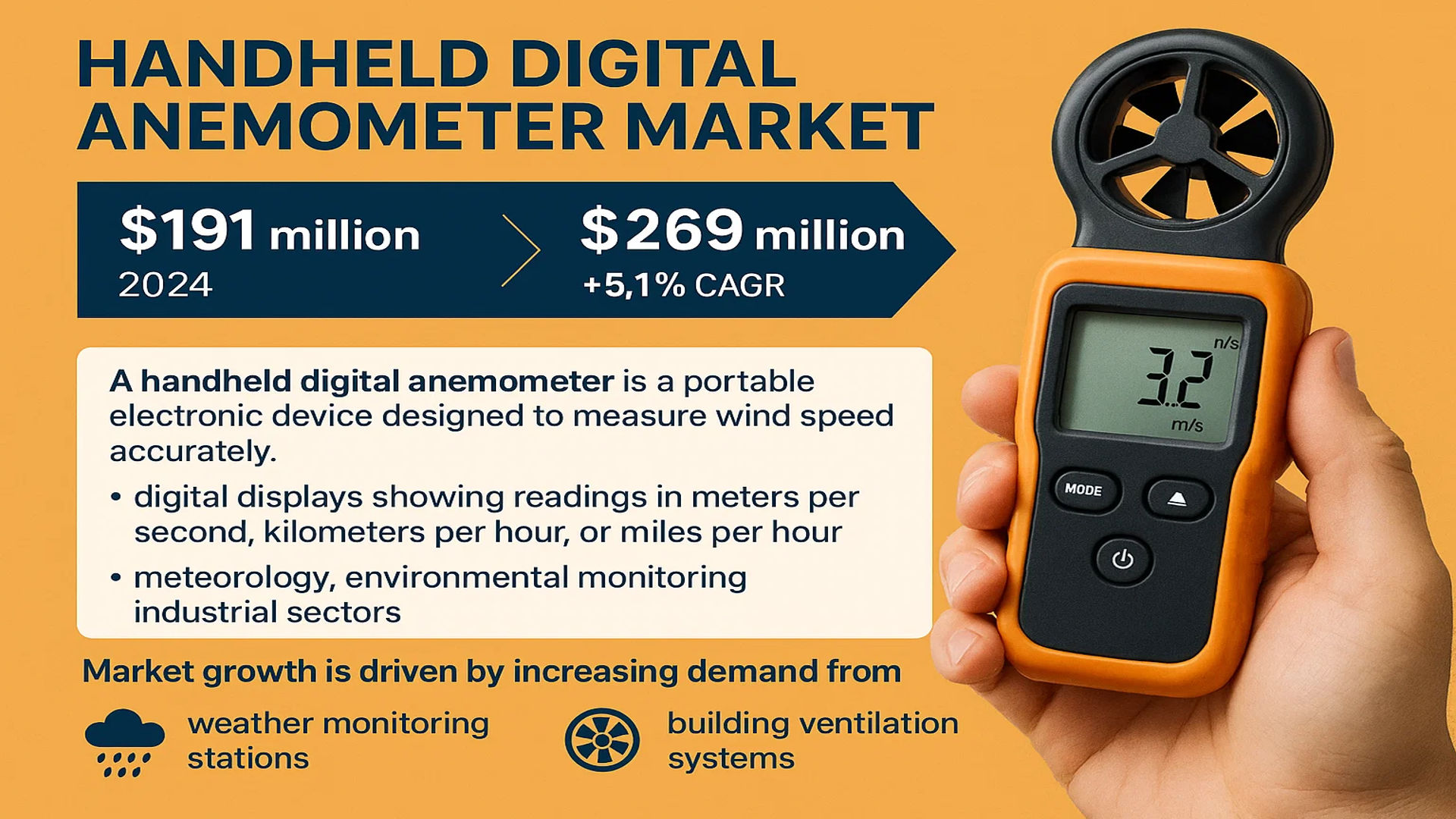
The global Handheld Digital Anemometer Market was valued at 191 million in 2024 and is projected to reach US$ 269 million by 2032, at a CAGR of 5.1% during the forecast period.
A handheld digital anemometer is a portable electronic device designed to measure wind speed accurately. These devices feature digital displays showing readings in meters per second, kilometers per hour, or miles per hour, catering to applications in meteorology, environmental monitoring, and industrial sectors where precise wind measurement is critical. Their compact, user-friendly design enables convenient on-site measurements across various fields.
The market growth is driven by increasing demand from weather monitoring stations, industrial safety applications, and building ventilation systems. Advancements in sensor technology, such as ultrasonic and hot-wire anemometers, are enhancing measurement precision, further propelling adoption. Key players like OMEGA Engineering, Bosch, and Testo dominate the market with innovative product launches, while emerging economies contribute significantly to demand expansion.
MARKET DYNAMICS
MARKET DRIVERS
Growing Applications in Renewable Energy Sector to Propel Market Growth
The global shift toward renewable energy sources is accelerating demand for handheld digital anemometers, particularly in wind energy applications. These devices play a critical role in wind farm planning and maintenance by providing accurate wind speed measurements that determine turbine placement and efficiency. With the wind energy sector projected to grow significantly, the need for precise wind measurement tools has intensified. Their portability and accuracy make them indispensable for field measurements, site assessments, and ongoing performance monitoring of wind turbines.
Stringent Industrial Safety Regulations to Boost Adoption
Increasing workplace safety regulations across industries are driving the adoption of handheld digital anemometers. In sectors such as construction, manufacturing, and chemical processing, monitoring air flow and ventilation is crucial for maintaining safe working conditions. Regulatory bodies worldwide continue to tighten occupational safety standards, requiring businesses to implement proper air quality monitoring systems. Handheld anemometers provide a cost-effective solution for compliance, particularly in confined spaces or hazardous environments where airflow monitoring is essential for worker safety.
➤ The versatility of handheld anemometers allows their use across multiple safety applications, from monitoring fume hood effectiveness to ensuring proper ventilation in underground mines.
Technological Advancements to Fuel Market Expansion
Recent technological innovations have significantly enhanced the capabilities of handheld digital anemometers. Modern devices now incorporate features such as Bluetooth connectivity, data logging functions, and multi-parameter measurement (including temperature, humidity, and air pressure). This integration of multiple environmental sensors into single handheld units has expanded their utility across various sectors, from HVAC system maintenance to agricultural weather monitoring. Manufacturers continue to invest in improving measurement accuracy, battery life, and durability, making these devices more reliable for professional applications.
MARKET RESTRAINTS
High Cost of Precision Instruments to Limit Market Penetration
While handheld digital anemometers offer significant value, their higher price point compared to traditional mechanical anemometers presents a market restraint, particularly in developing regions. Professional-grade instruments with advanced features and enhanced accuracy command premium pricing, making them less accessible to smaller businesses or individual users. This cost barrier is especially noticeable in price-sensitive markets where budget constraints often lead to compromises on equipment quality or reliance on less accurate measurement methods.
Other Restraints
Competition from Alternative Technologies
The increasing availability of smartphone-based anemometer apps presents a challenge to dedicated digital anemometer devices. While these mobile solutions may lack the precision of professional instruments, their low cost and convenience appeal to casual users. This trend could potentially limit market growth in the consumer and prosumer segments where extreme accuracy is not always required.
Limited Awareness in Emerging Markets
In many developing regions, awareness about advanced wind measurement technologies remains limited. Traditional methods of wind assessment continue to dominate in certain sectors, slowing the adoption of more sophisticated digital solutions. This knowledge gap presents a significant hurdle for market growth in areas where professional training on modern measurement techniques is lacking.
MARKET CHALLENGES
Calibration and Maintenance Requirements to Pose Operational Challenges
Maintaining measurement accuracy over time remains a significant challenge for handheld digital anemometer users. These devices require regular calibration to ensure reliable readings, which adds to the total cost of ownership. The need for periodic professional recalibration can be particularly burdensome for operations in remote locations or organizations with multiple units in use. Furthermore, exposure to harsh environmental conditions may accelerate wear and tear, potentially compromising device performance if not properly maintained.
Integration with Existing Systems
Many industrial facilities face challenges integrating handheld measurement data with their existing monitoring and control systems. While some advanced models offer data export capabilities, compatibility issues with legacy systems can create operational inefficiencies. This integration challenge is particularly relevant in large-scale industrial applications where centralized data collection and analysis are critical for effective decision-making.
MARKET OPPORTUNITIES
Expansion in Smart City Projects to Create New Applications
The global smart city initiative presents significant opportunities for handheld digital anemometer manufacturers. As cities worldwide invest in sophisticated environmental monitoring networks, these devices play a crucial role in urban planning and pollution control. Their portability makes them ideal for temporary monitoring stations, traffic air flow studies, and microclimate assessments in densely populated areas. The ability to quickly deploy these instruments for localized measurements complements fixed monitoring systems, providing more comprehensive environmental data.
Growing Demand in Precision Agriculture to Drive Innovation
The agriculture sector is increasingly adopting precision farming techniques that rely on accurate environmental measurements. Handheld anemometers are becoming essential tools for monitoring wind conditions that affect crop spraying, irrigation scheduling, and frost protection systems. Manufacturers have the opportunity to develop specialized models with features tailored to agricultural applications, such as spray drift prediction algorithms or integration with farm management software. This application area shows strong potential for growth as farming operations continue to adopt data-driven decision-making.
HANDHELD DIGITAL ANEMOMETER MARKET TRENDS
Integration of IoT and Smart Technology to Shape Market Growth
The handheld digital anemometer market is witnessing a transformative shift with the widespread adoption of Internet of Things (IoT) and smart technology. Modern devices now incorporate wireless connectivity, enabling real-time data transmission to cloud platforms for advanced analysis. This feature is particularly valuable in industries like renewable energy, where wind speed monitoring plays a crucial role in turbine efficiency optimization. Furthermore, manufacturers are developing mobile-compatible anemometers with Bluetooth and Wi-Fi capabilities, allowing seamless integration with smartphones and tablets. Such advancements enhance data accessibility, improve workflow efficiency, and facilitate better decision-making in critical applications.
Other Trends
Demand for Multi-Functional Measurement Devices
While traditional anemometers focused solely on wind speed measurement, current market trends show a growing preference for multi-parameter devices that can simultaneously measure temperature, humidity, air pressure, and wind direction. This expansion in functionality is driven by the need for comprehensive environmental monitoring in sectors such as construction, aviation, and HVAC systems. Additionally, the integration of high-resolution LCD screens with backlighting and data logging capabilities addresses the demand for user-friendly interfaces in challenging outdoor conditions.
Industrial Automation and Renewable Energy Driving Market Expansion
The rapid growth of industrial automation and renewable energy sectors represents a significant driver for the handheld digital anemometer market. In wind energy applications, precise wind speed measurement is critical for site assessment, turbine performance monitoring, and maintenance planning. With global wind power capacity exceeding 900 GW in 2024, the demand for accurate portable measurement tools continues to rise. Similarly, industrial safety regulations require wind speed monitoring in construction sites, chemical plants, and mining operations, further propelling market growth. Manufacturers are responding by developing rugged, weatherproof designs with extended battery life to meet the demanding requirements of these applications.
Miniaturization and Enhanced Portability
A noticeable trend in the handheld digital anemometer market is the increasing emphasis on compact and lightweight designs. Field professionals prioritize devices that are easy to carry without compromising measurement accuracy. Recent product innovations have seen the development of pocket-sized anemometers weighing less than 200 grams while maintaining industrial-grade precision. This trend aligns with the growing adoption of portable measurement tools in meteorology, agriculture, and environmental research. Furthermore, the use of durable composite materials and water-resistant designs has improved device longevity, reducing replacement costs for end-users.
COMPETITIVE LANDSCAPE
Key Industry Players
Leading Manufacturers Drive Innovation in Wind Measurement Technology
The global handheld digital anemometer market features a diverse competitive landscape where established industrial measurement companies compete with specialized meteorological equipment manufacturers. OMEGA Engineering emerges as a dominant player, leveraging its expansive portfolio of precision measurement tools and strong distribution networks across North America and Europe. The company’s recent introduction of Bluetooth-enabled anemometers has further strengthened its market position.
Testo and KANOMAX maintain significant market shares through their technologically advanced product lines tailored for professional applications. These companies have demonstrated particular strength in industrial and HVAC sectors, where accuracy and durability are paramount. Their continuous investment in R&D has resulted in several patented measurement technologies that offer superior performance in challenging environments.
Meanwhile, general instrumentation leaders like Fluke and Bosch are expanding their presence through strategic product line extensions. Their brand recognition and existing customer relationships in related measurement categories provide a competitive advantage in cross-selling anemometer solutions. These companies are actively pursuing acquisitions to enhance their technological capabilities in wind measurement applications.
The market also features several specialized manufacturers such as Vaisala and Davis Instruments that focus exclusively on environmental measurement equipment. These niche players compete on precision and specialized features for meteorological applications, often incorporating additional parameters like temperature and humidity measurement in their devices.
List of Key Handheld Digital Anemometer Companies Profiled
- OMEGA Engineering (U.S.)
- Bosch (Germany)
- KANOMAX (Japan)
- Testo (Germany)
- VWR (U.S.)
- La Crosse Technology (U.S.)
- Samson Automation (China)
- Fluke (U.S.)
- Raj Thermometers (India)
- Biral (UK)
- Kaizen Imperial (Japan)
- Davis Instruments (U.S.)
- Vaisala (Finland)
- CEM (China)
- Lutron Electronic (Taiwan)
Segment Analysis:
By Type
Impeller Type Segment Leads the Market Due to High Precision and Cost-Effective Measurement Solutions
The market is segmented based on type into:
- Impeller Type
- Subtypes: Vane anemometers, Cup anemometers, and others
- Hot Wire Type
- Ultrasonic Type
- Pressure Type
- Subtypes: Pitot tube anemometers, Pressure plate anemometers
- Other
By Application
Industrial Equipment Segment Dominates Due to Increased Demand for Wind Speed Monitoring in Manufacturing Processes
The market is segmented based on application into:
- Industrial Equipment
- Weather Stations
- Building Ventilation
- Outdoor Wind Speed Measurement
- Other
By End User
Meteorological Organizations Lead Market Adoption for Weather Forecasting Applications
The market is segmented based on end user into:
- Meteorological Organizations
- Industrial Manufacturers
- Construction Companies
- Research Institutions
- Environmental Agencies
Regional Analysis: Handheld Digital Anemometer Market
Asia-Pacific
The Asia-Pacific region dominates the global handheld digital anemometer market, driven by rapid industrialization, increasing infrastructure development, and growing environmental monitoring needs. China and India lead in demand due to large-scale construction projects, expanding weather monitoring networks, and government investments in renewable energy (particularly wind power). Japan and South Korea contribute significantly through their advanced industrial sectors, where precise airflow measurement is critical for manufacturing and HVAC systems. While cost-effective impeller-type anemometers remain popular, technological adoption is accelerating, with ultrasonic models gaining traction in high-precision applications. The region benefits from local manufacturing hubs and competitive pricing strategies by key players.
North America
North America holds a substantial market share, with the U.S. as the primary contributor due to stringent workplace safety regulations (OSHA standards) and widespread industrial automation. The region emphasizes high-accuracy devices, particularly in sectors like aerospace, oil & gas, and environmental sciences. Advanced ultrasonic and hot-wire anemometers are preferred for their reliability in critical applications. Canada’s focus on sustainable building practices further drives demand for ventilation assessment tools. North American consumers prioritize durability and calibration compliance, favoring brands like OMEGA Engineering and Fluke.
Europe
Europe’s market thrives on strict environmental regulations (EU directives on air quality) and the adoption of energy-efficient building standards. Germany and the U.K. lead in technological innovation, with a strong preference for multifunctional anemometers integrating temperature and humidity sensors. The region sees growing use in wind energy farms and smart city projects. Compliance with ISO and CE certifications is a key purchasing criterion. Manufacturers like Testo and Bosch dominate through continuous R&D, though price sensitivity in Southern Europe limits premium product penetration.
South America
The market in South America is expanding steadily, fueled by mining operations, agriculture, and renewable energy initiatives. Brazil is the largest consumer, utilizing anemometers for weather forecasting and industrial process control. However, economic instability and import dependency hinder faster growth. Basic impeller-type models dominate due to affordability, while ultrasonic variants are limited to high-budget projects. Local players like Instrutherm compete with global brands by offering cost-effective solutions.
Middle East & Africa
This region shows emerging potential, particularly in UAE and Saudi Arabia, where construction booms and oilfield operations drive demand. Harsh desert climates necessitate robust anemometers for dust and temperature resistance. Africa’s market is nascent but growing, with agricultural and meteorological applications creating opportunities. Infrastructure limitations and low awareness of advanced technologies currently restrict market maturity, though multinational suppliers are gradually increasing their presence.
Report Scope
This market research report provides a comprehensive analysis of the global and regional Handheld Digital Anemometer markets, covering the forecast period 2024–2032. It offers detailed insights into market dynamics, technological advancements, competitive landscape, and key trends shaping the industry.
Key focus areas of the report include:
- Market Size & Forecast: Historical data and future projections for revenue, unit shipments, and market value across major regions and segments. The global Handheld Digital Anemometer market was valued at USD 191 million in 2024 and is projected to reach USD 269 million by 2032, growing at a CAGR of 5.1%.
- Segmentation Analysis: Detailed breakdown by product type (Impeller, Hot Wire, Ultrasonic, Pressure, Others) and application (Industrial Equipment, Weather Stations, Building Ventilation, Outdoor Wind Speed Measurement, Others) to identify high-growth segments.
- Regional Outlook: Insights into market performance across North America (U.S., Canada, Mexico), Europe (Germany, France, U.K., Italy), Asia-Pacific (China, Japan, India), and other key regions.
- Competitive Landscape: Profiles of leading market participants including OMEGA Engineering, Bosch, Testo, Fluke, and KANOMAX, covering their product portfolios, market share, and strategic initiatives.
- Technology Trends & Innovation: Assessment of emerging technologies in wind measurement, integration with IoT devices, and advancements in sensor accuracy.
- Market Drivers & Restraints: Evaluation of factors such as increasing demand for environmental monitoring, industrial safety regulations, and challenges like price sensitivity in emerging markets.
- Stakeholder Analysis: Strategic insights for manufacturers, distributors, industrial users, and investors regarding market opportunities and challenges.
The report employs both primary and secondary research methodologies, including interviews with industry experts and analysis of verified market data, to ensure accuracy and reliability.
FREQUENTLY ASKED QUESTIONS:
What is the current market size of Global Handheld Digital Anemometer Market?
-> Handheld Digital Anemometer Market was valued at 191 million in 2024 and is projected to reach US$ 269 million by 2032, at a CAGR of 5.1% during the forecast period.
Which key companies operate in Global Handheld Digital Anemometer Market?
-> Key players include OMEGA Engineering, Bosch, KANOMAX, Testo, Fluke, VWR, and La Crosse Technology, among others.
What are the key growth drivers?
-> Key growth drivers include increasing industrial safety regulations, growth in renewable energy projects, and rising demand for environmental monitoring.
Which region dominates the market?
-> North America holds significant market share, while Asia-Pacific is expected to witness the fastest growth during the forecast period.
What are the emerging trends?
-> Emerging trends include integration with smart devices, development of multi-functional anemometers, and increasing adoption in drone-based wind measurement.

Get Sample Report PDF for Exclusive Insights
Report Sample Includes
- Table of Contents
- List of Tables & Figures
- Charts, Research Methodology, and more...
 Download Sample Report PDF


