Seat Pressure Sensor Market Overview
Seat Pressure Sensor is a device used to measure the amount of pressure or force applied to a seat, typically for safety, comfort, or diagnostic purposes. It utilizes various technologies, such as capacitive, resistive, or piezoelectric sensors, to detect the presence and weight of occupants, which can then be used to adjust airbag deployment, enhance seat comfort, or monitor seat usage. This information helps in optimizing vehicle safety systems, improving occupant comfort, and providing data for vehicle diagnostics and user behavior analysis.
This report provides a deep insight into the global Seat Pressure Sensor market covering all its essential aspects. This ranges from a macro overview of the market to micro details of the market size, competitive landscape, development trend, niche market, key market drivers and challenges, SWOT analysis, value chain analysis, etc.
The analysis helps the reader to shape the competition within the industries and strategies for the competitive environment to enhance the potential profit. Furthermore, it provides a simple framework for evaluating and accessing the position of the business organization. The report structure also focuses on the competitive landscape of the Global Seat Pressure Sensor Market, this report introduces in detail the market share, market performance, product situation, operation situation, etc. of the main players, which helps the readers in the industry to identify the main competitors and deeply understand the competition pattern of the market.
In a word, this report is a must-read for industry players, investors, researchers, consultants, business strategists, and all those who have any kind of stake or are planning to foray into the Seat Pressure Sensor market in any manner.
Seat Pressure Sensor Market Analysis:
The Global Seat Pressure Sensor Market size was estimated at USD 160 million in 2023 and is projected to reach USD 214.84 million by 2030, exhibiting a CAGR of 4.30% during the forecast period.
North America Seat Pressure Sensor market size was USD 41.69 million in 2023, at a CAGR of 3.69% during the forecast period of 2024 through 2030.
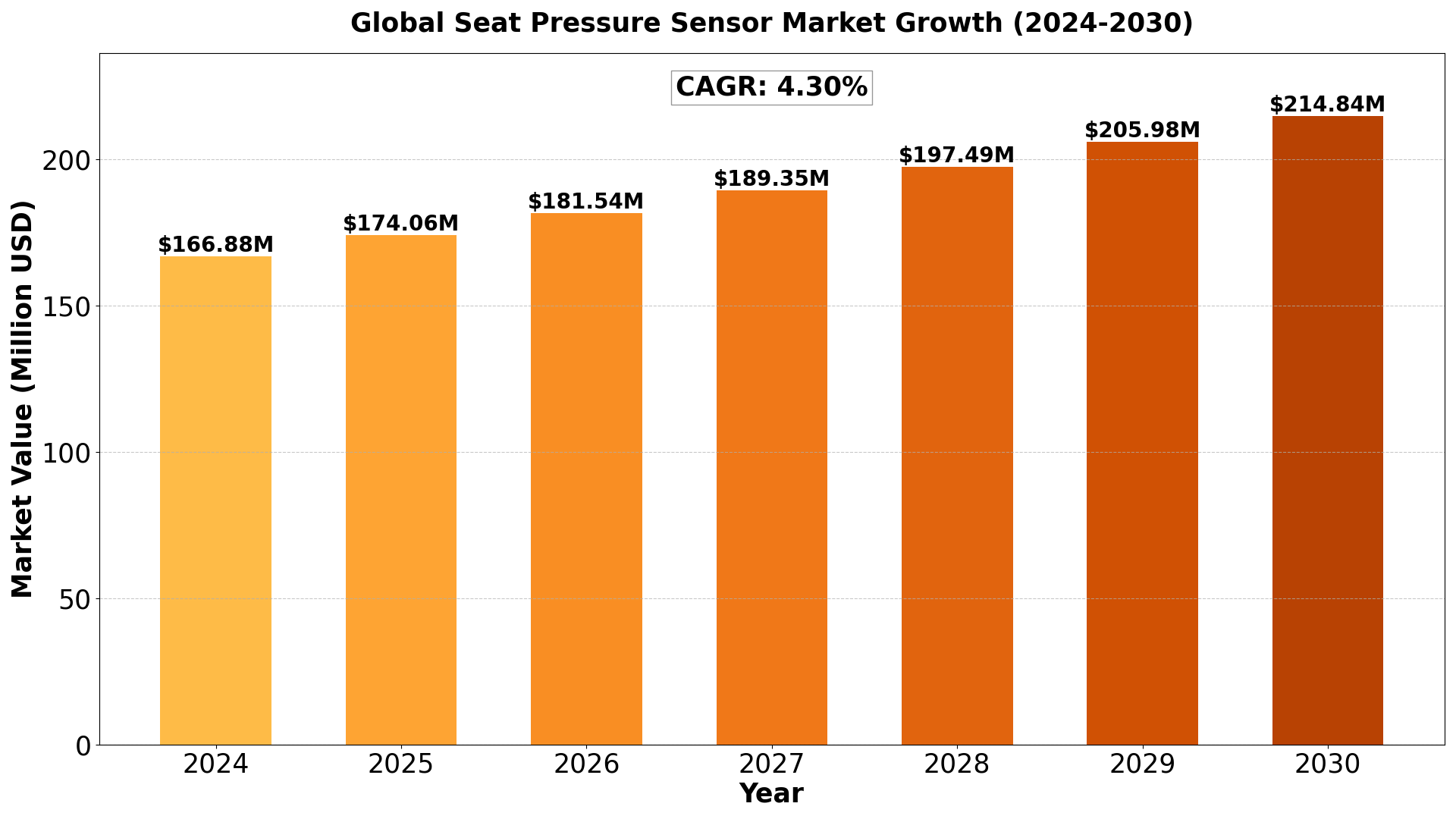
Seat Pressure Sensor Key Market Trends :
- Growing Demand for Advanced Driver Assistance Systems (ADAS): As vehicles become more equipped with advanced safety features, seat pressure sensors play a key role in enhancing ADAS technologies. These sensors are used to detect the presence and position of occupants in the seat, allowing for more precise deployment of airbags, seatbelt tensioning, and other safety features. The increasing emphasis on vehicle safety and the adoption of ADAS in both passenger cars and commercial vehicles are driving demand for seat pressure sensors.
- Rising Focus on Passenger Comfort: In addition to safety applications, seat pressure sensors are also being integrated into vehicle systems to enhance passenger comfort. By monitoring pressure distribution, these sensors can adjust seat position, lumbar support, and seat heating/cooling functions to optimize comfort for individual passengers. As consumer expectations for personalized comfort in vehicles rise, the demand for such technologies will continue to grow.
- Regulatory Push for Improved Vehicle Safety: Governments around the world are implementing stricter safety regulations in the automotive industry, pushing automakers to adopt technologies that improve occupant safety. Seat pressure sensors are an essential part of ensuring proper airbag deployment, especially in cases where airbags are designed to deploy differently based on the passenger’s weight, size, and seat position. As safety standards continue to evolve, seat pressure sensors will become increasingly important in meeting these regulations.
- Technological Advancements in Sensor Integration: The development of more compact, accurate, and cost-effective seat pressure sensors is driving their adoption across a range of vehicles, including electric vehicles (EVs) and autonomous vehicles. Advances in sensor technology, such as the integration of pressure sensors with other monitoring systems (like temperature and humidity sensors), allow for more comprehensive data collection, leading to improved performance and functionality in both safety and comfort applications.
- Expanding Use in Electric and Autonomous Vehicles: The rise of electric vehicles (EVs) and autonomous vehicles is creating new opportunities for seat pressure sensors. In autonomous vehicles, these sensors can be used for occupant monitoring, ensuring that the seat is correctly adjusted for optimal safety, especially in the absence of a traditional driver. As the market for EVs and autonomous vehicles continues to grow, the demand for seat pressure sensors will expand, particularly as manufacturers look to implement more advanced safety and comfort features in these next-generation vehicles.
Seat Pressure Sensor Market Regional Analysis :
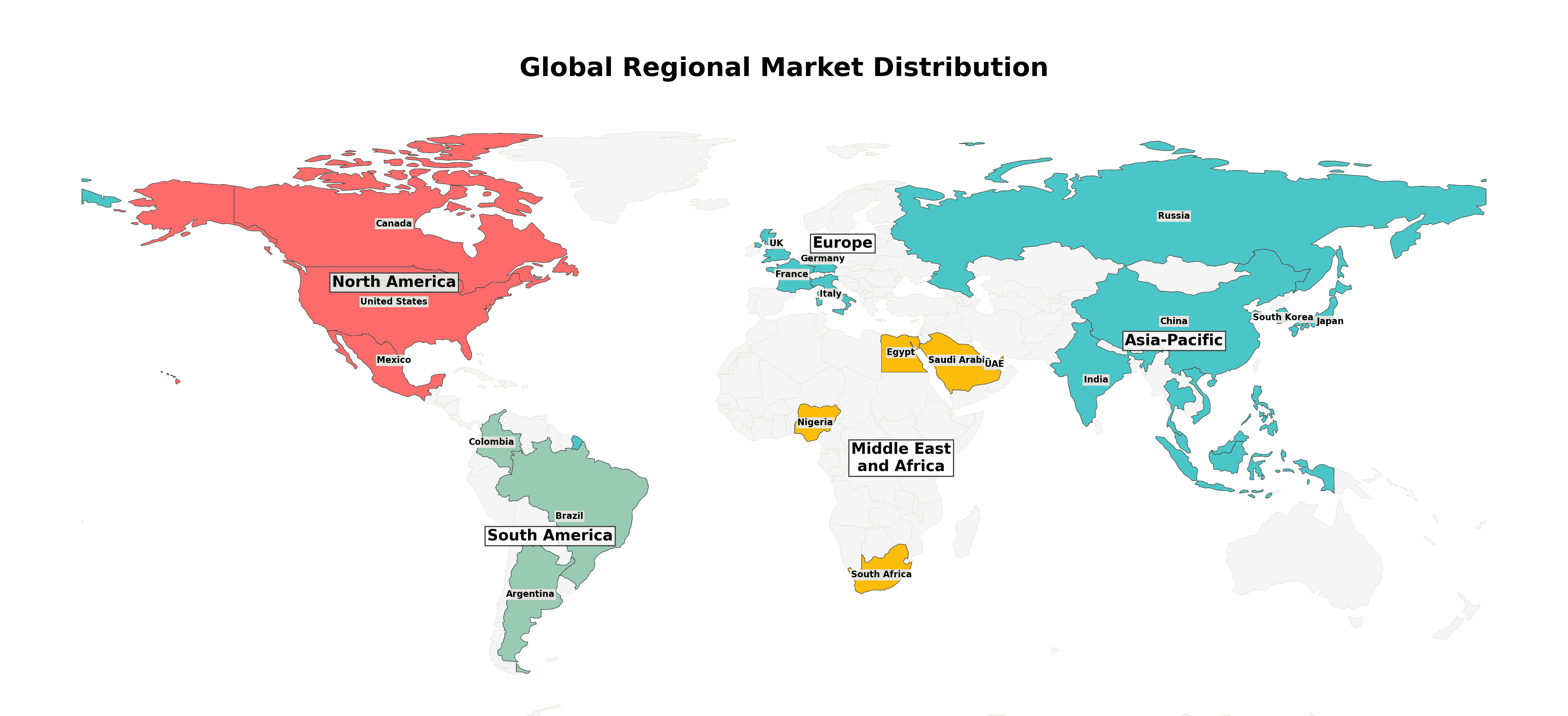
1. North America (USA, Canada, Mexico)
- USA: The largest market in the region due to advanced infrastructure, high disposable income, and technological advancements. Key industries include technology, healthcare, and manufacturing.
- Canada: Strong market potential driven by resource exports, a stable economy, and government initiatives supporting innovation.
- Mexico: A growing economy with strengths in automotive manufacturing, agriculture, and tourism, benefitting from trade agreements like the USMCA.
2. Europe (Germany, UK, France, Russia, Italy, Rest of Europe)
- Germany: The region’s industrial powerhouse with a focus on engineering, automotive, and machinery.
- UK: A hub for financial services, fintech, and pharmaceuticals, though Brexit has altered trade patterns.
- France: Strong in luxury goods, agriculture, and aerospace with significant innovation in renewable energy.
- Russia: Resource-driven economy with strengths in oil, gas, and minerals but geopolitical tensions affect growth.
- Italy: Known for fashion, design, and manufacturing, especially in luxury segments.
- Rest of Europe: Includes smaller yet significant economies like Spain, Netherlands, and Switzerland with strengths in finance, agriculture, and manufacturing.
3. Asia-Pacific (China, Japan, South Korea, India, Southeast Asia, Rest of Asia-Pacific)
- China: The largest market in the region with a focus on technology, manufacturing, and e-commerce. Rapid urbanization and middle-class growth fuel consumption.
- Japan: Technological innovation, particularly in robotics and electronics, drives the economy.
- South Korea: Known for technology, especially in semiconductors and consumer electronics.
- India: Rapidly growing economy with strengths in IT services, agriculture, and pharmaceuticals.
- Southeast Asia: Key markets like Indonesia, Thailand, and Vietnam show growth in manufacturing and tourism.
- Rest of Asia-Pacific: Emerging markets with growing investment in infrastructure and services.
4. South America (Brazil, Argentina, Colombia, Rest of South America)
- Brazil: Largest economy in the region, driven by agriculture, mining, and energy.
- Argentina: Known for agriculture exports and natural resources but faces economic instability.
- Colombia: Growing economy with strengths in oil, coffee, and flowers.
- Rest of South America: Includes Chile and Peru, which have strong mining sectors.
5. The Middle East and Africa (Saudi Arabia, UAE, Egypt, Nigeria, South Africa, Rest of MEA)
- Saudi Arabia: Oil-driven economy undergoing diversification with Vision 2030 initiatives.
- UAE: Financial hub with strengths in tourism, real estate, and trade.
- Egypt: Growing infrastructure development and tourism.
- Nigeria: Largest economy in Africa with strengths in oil and agriculture.
- South Africa: Industrialized economy with strengths in mining and finance.
- Rest of MEA: Includes smaller yet resource-rich markets like Qatar and Kenya with growing infrastructure investments.
Seat Pressure Sensor Market Segmentation :
The research report includes specific segments by region (country), manufacturers, Type, and Application. Market segmentation creates subsets of a market based on product type, end-user or application, Geographic, and other factors. By understanding the market segments, the decision-maker can leverage this targeting in the product, sales, and marketing strategies. Market segments can power your product development cycles by informing how you create product offerings for different segments.
Market Segmentation (by Type)
- Piezoelectric Sensor
- Capacitive Sensor
- Resistive Sensor
Market Segmentation (by Application)
- Passenger Cars
- Commercial Cars
Seat Pressure Sensor Market Competitive landscape :
- Robert Bosch
- Infineon Technologies
- MEMSensing
Drivers
- Increasing Adoption of Advanced Safety Systems in Automotive Industry
With growing emphasis on passenger safety, seat pressure sensors are increasingly being integrated into vehicles. These sensors help detect passenger occupancy and adjust airbags accordingly, meeting strict safety regulations and enhancing user protection. - Rising Demand for Smart Seating Solutions
As automotive manufacturers focus on improving comfort and ergonomics, the demand for smart seating systems equipped with pressure sensors has surged. These sensors aid in features like automatic seat adjustments and posture correction, attracting customers who prioritize comfort and innovation. - Healthcare Applications Gaining Traction
Beyond automotive, seat pressure sensors are widely used in healthcare to prevent pressure ulcers in patients confined to wheelchairs or beds. With the rise in geriatric populations globally, demand in this segment is expected to grow steadily. - Technological Advancements and Miniaturization
Innovations in sensor technology, such as flexible and lightweight designs, have made seat pressure sensors more adaptable to various industries, including aerospace and consumer electronics, broadening their market appeal.
Restraints
- High Costs of Advanced Sensor Systems
Advanced seat pressure sensors, particularly those integrated with multiple functionalities, come with a high price tag, which can limit their adoption, especially in cost-sensitive markets. - Complexity in Sensor Integration
The integration of seat pressure sensors into vehicle seating systems or medical devices requires precise calibration and compatibility. This complexity can increase production costs and delay deployment timelines. - Durability Concerns in Harsh Environments
Seat pressure sensors may face wear and tear in challenging environments, such as extreme temperatures or high humidity, potentially impacting their performance and lifespan.
Opportunities
- Expanding Electric Vehicle (EV) Market
The rapid growth of electric vehicles presents significant opportunities for the adoption of seat pressure sensors. EV manufacturers are focusing on lightweight and energy-efficient components, and pressure sensors fit well within this paradigm. - Growth in IoT-Enabled Smart Seats
The integration of IoT in smart seating systems, particularly in automotive and healthcare sectors, opens up new avenues. Pressure sensors play a vital role in enabling data collection, real-time adjustments, and analytics for improved user experience. - Emerging Markets and Untapped Regions
Developing economies in Asia-Pacific and Latin America are witnessing a rise in disposable incomes and vehicle ownership. These markets offer immense growth potential for seat pressure sensor manufacturers. - Cross-Industry Applications
Beyond automotive and healthcare, industries like aerospace, gaming, and office furniture are exploring pressure sensors for ergonomic improvements and interactive solutions, diversifying the market’s scope.
Challenges
- Standardization Issues Across Industries
Different industries have varying requirements for seat pressure sensors, making it challenging to establish universal standards. This lack of standardization increases R&D efforts and costs. - Intense Competition and Price Pressures
The market is highly competitive, with numerous players striving to offer cost-effective solutions. Smaller manufacturers may struggle to compete with established brands offering innovative yet affordable products. - Data Privacy Concerns in IoT Applications
With the increasing use of IoT-enabled seat pressure sensors, data privacy and cybersecurity concerns arise. Users may hesitate to adopt such solutions if data protection measures are inadequate. - Short Product Lifecycles in Automotive
The fast-paced evolution of automotive technologies and design changes can shorten the product lifecycle of seat pressure sensors, creating challenges for manufacturers to stay relevant and profitable.
Key Benefits of This Market Research:
- Industry drivers, restraints, and opportunities covered in the study
- Neutral perspective on the market performance
- Recent industry trends and developments
- Competitive landscape & strategies of key players
- Potential & niche segments and regions exhibiting promising growth covered
- Historical, current, and projected market size, in terms of value
- In-depth analysis of the Seat Pressure Sensor Market
- Overview of the regional outlook of the Seat Pressure Sensor Market:
Key Reasons to Buy this Report:
- Access to date statistics compiled by our researchers. These provide you with historical and forecast data, which is analyzed to tell you why your market is set to change
- This enables you to anticipate market changes to remain ahead of your competitors
- You will be able to copy data from the Excel spreadsheet straight into your marketing plans, business presentations, or other strategic documents
- The concise analysis, clear graph, and table format will enable you to pinpoint the information you require quickly
- Provision of market value (USD Billion) data for each segment and sub-segment
- Indicates the region and segment that is expected to witness the fastest growth as well as to dominate the market
- Analysis by geography highlighting the consumption of the product/service in the region as well as indicating the factors that are affecting the market within each region
- Competitive landscape which incorporates the market ranking of the major players, along with new service/product launches, partnerships, business expansions, and acquisitions in the past five years of companies profiled
- Extensive company profiles comprising of company overview, company insights, product benchmarking, and SWOT analysis for the major market players
- The current as well as the future market outlook of the industry concerning recent developments which involve growth opportunities and drivers as well as challenges and restraints of both emerging as well as developed regions
- Includes in-depth analysis of the market from various perspectives through Porters five forces analysis
- Provides insight into the market through Value Chain
- Market dynamics scenario, along with growth opportunities of the market in the years to come
- 6-month post-sales analyst support
Customization of the Report
In case of any queries or customization requirements, please connect with our sales team, who will ensure that your requirements are met.
FAQs
Get Sample Report PDF for Exclusive Insights
Report Sample Includes
- Table of Contents
- List of Tables & Figures
- Charts, Research Methodology, and more...
 Download Sample Report PDF