MARKET INSIGHTS
The global GFCI and AFCI Receptacles Market size was valued at US$ 2,150 million in 2024 and is projected to reach US$ 3,420 million by 2032, at a CAGR of 6.0% during the forecast period 2025-2032.
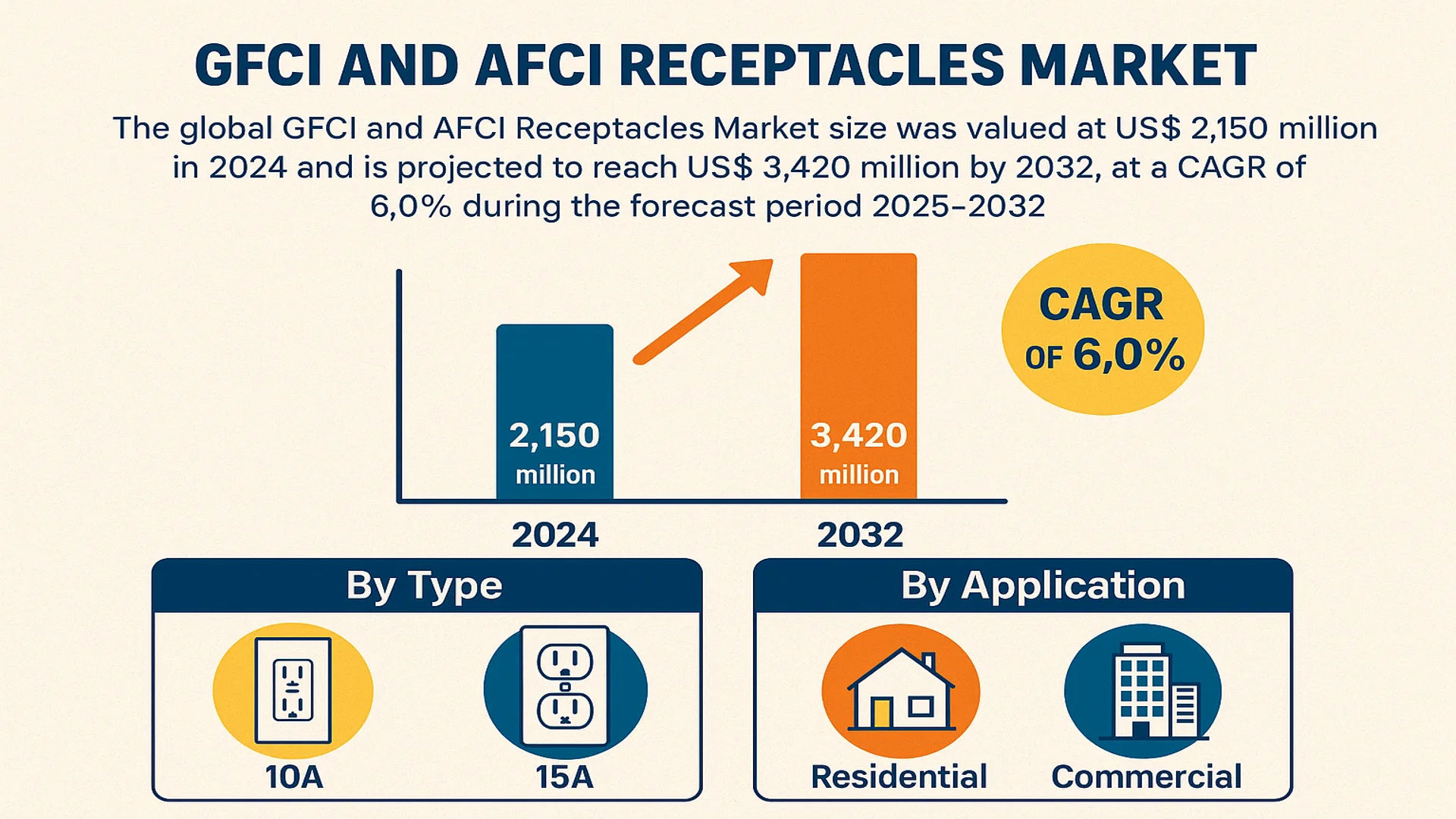
GFCI (Ground Fault Circuit Interrupter) and AFCI (Arc Fault Circuit Interrupter) receptacles are critical electrical safety devices designed to prevent electrocution and fire hazards. GFCI receptacles monitor current imbalances between hot and neutral wires to detect ground faults, while AFCIs identify dangerous arc faults that could lead to electrical fires. These devices are increasingly mandated in residential and commercial building codes worldwide.
The market growth is primarily driven by stringent electrical safety regulations, increasing construction activities, and rising awareness about electrical fire prevention. The 10A segment currently dominates the market due to its widespread residential applications. However, commercial adoption of higher capacity (15A-20A) receptacles is growing as businesses upgrade their electrical infrastructure. Leading manufacturers like Leviton, Eaton, and Legrand are expanding their smart receptacle offerings with IoT integration, further propelling market expansion.
MARKET DYNAMICS
MARKET DRIVERS
Stringent Electrical Safety Regulations Driving GFCI and AFCI Adoption
Global safety regulations mandating the use of Ground Fault Circuit Interrupter (GFCI) and Arc Fault Circuit Interrupter (AFCI) receptacles in residential and commercial buildings are accelerating market growth. In North America alone, the National Electrical Code (NEC) has progressively expanded requirements for these devices – mandating AFCIs in virtually all living areas since 2014 and GFCI protection for outdoor outlets up to 250 volts since 2020. Similar regulatory frameworks are emerging across Europe and Asia-Pacific, with an increasing number of countries adopting IEC safety standards that recommend these protective devices. This regulatory push stems from documented reductions in electrical fires and electrocutions, with studies showing GFCI receptacles preventing over 70% of residential electrocutions when properly implemented.
Rising Construction Activity Fueling Market Expansion
The global construction boom, particularly in residential sectors, is creating substantial demand for GFCI and AFCI receptacles. Urbanization trends show over 60% of the world’s population now living in cities, driving new housing developments that must comply with modern electrical safety standards. The U.S. housing market is projected to add approximately 1.5 million new units annually through 2030, each requiring multiple safety receptacles. Commercial construction growth is equally significant, particularly in sectors like hospitality and healthcare where electrical safety is prioritized. Emerging markets are experiencing particularly strong growth, with countries like China and India seeing double-digit annual increases in construction activity that directly correlate with rising demand for electrical safety components.
Technological Advancements Enhancing Product Features
Manufacturers are introducing innovative GFCI and AFCI receptacles with enhanced features that are driving market adoption. Recent product developments include smart receptacles with WiFi connectivity for remote monitoring, combination devices offering both GFCI and AFCI protection in a single unit, and tamper-resistant designs that improve child safety. These technological improvements have significantly increased product appeal and functionality, with smart receptacles projected to grow at nearly 20% CAGR through 2030. Furthermore, manufacturers are addressing installation challenges by creating more compact designs that fit standard electrical boxes while maintaining full functionality – a critical factor for retrofit applications in existing buildings.
MARKET RESTRAINTS
High Product Costs and Price Sensitivity Limiting Adoption
While GFCI and AFCI receptacles provide critical safety benefits, their higher costs compared to standard receptacles remain a significant market restraint. GFCI units typically cost 3-5 times more than conventional receptacles, while AFCI models can be 10-15 times more expensive. In price-sensitive markets, particularly in developing economies, this cost differential often leads builders and homeowners to opt for basic alternatives despite safety risks. The situation is exacerbated by the need for multiple units in typical installations – an average single-family home may require 10-15 GFCI receptacles and comparable AFCI protection at the circuit breaker level. While long-term safety benefits outweigh upfront costs, the initial investment remains a barrier to wider adoption, especially in retrofit applications.
Complex Installation Requirements Challenging Market Growth
The specialized installation requirements for GFCI and AFCI receptacles present another significant market restraint. Unlike standard outlets, these safety devices require correct wiring configurations and proper testing after installation – factors that many electricians and DIY installers find challenging. AFCI devices are particularly complex, as they need to distinguish between dangerous arcing and normal arcing that occurs in everyday electrical operation. Studies show that improper installation accounts for approximately 30% of safety device failures, leading to nuisance tripping that undermines user confidence. The need for skilled labor adds to installation costs and can delay project timelines, particularly in regions experiencing electrician shortages.
Limited Awareness in Developing Markets
Despite growing safety regulations, awareness of GFCI and AFCI benefits remains limited in many developing markets. Surveys indicate that fewer than 40% of homeowners in emerging economies can accurately describe the protective functions of these devices. This knowledge gap leads to under-prioritization of safety features during construction and remodeling projects. Even when regulations mandate installation, enforcement can be inconsistent, with some builders opting to install just the minimum required quantity or lower-quality alternatives that meet only basic compliance standards. The educational challenge is compounded by regional differences in electrical systems and safety standards, requiring customized awareness campaigns for each market.
MARKET OPPORTUNITIES
Expansion in Smart Home Integration Creates New Market Potential
The rapid growth of smart home technology presents significant opportunities for advanced GFCI and AFCI receptacles. Integration with home automation systems allows for real-time monitoring of electrical safety status, predictive maintenance alerts, and remote circuit control – features increasingly demanded by tech-savvy homeowners. Manufacturers developing IoT-enabled safety receptacles can capture premium pricing and recurring revenue through associated service offerings. The smart home market is projected to exceed $150 billion globally by 2025, with safety and monitoring features ranking among the top priorities for consumers. This convergence of electrical safety and smart technology is creating entirely new product categories and business models for industry participants.
Emerging Markets Offer Untapped Growth Potential
Developing economies represent substantial growth opportunities as they modernize electrical infrastructure and adopt more stringent safety standards. Countries in Southeast Asia, Latin America, and the Middle East are gradually implementing building codes that mandate enhanced electrical protection, creating new markets for GFCI and AFCI technology. While current penetration rates in these regions remain below 20%, growth projections suggest rapid adoption as incomes rise and safety awareness increases. Localized product development – including devices tailored to regional voltage standards and housing types – will be key to capturing this potential. Manufacturers that establish early partnerships with regional regulators and construction firms can gain significant first-mover advantages in these emerging markets.
Retrofit Market Presents Significant Upside
The enormous installed base of older buildings without adequate electrical protection represents a major market opportunity. In the U.S. alone, over 60% of existing homes were built before comprehensive GFCI/AFCI requirements took effect, creating a vast retrofit potential. Similar situations exist in European and Asian markets with mature housing stocks. Home renovation activity is surging globally, with many homeowners prioritizing safety upgrades during remodeling projects. Manufacturers developing easy-to-install retrofit solutions – particularly combination GFCI/AFCI devices and breaker-based solutions that simplify whole-house protection – are well positioned to capitalize on this trend. The retrofit market is particularly attractive because it often commands higher margins than new construction channels and benefits from recurring replacement cycles as devices reach their typical 10-15 year lifespan.
MARKET CHALLENGES
Supply Chain Disruptions Impacting Product Availability
The GFCI and AFCI receptacle market continues to face supply chain challenges that affect production and distribution. Semiconductor shortages have particularly impacted smart and advanced models that incorporate sophisticated electronics. Lead times for certain components have extended to 40-50 weeks in some cases, forcing manufacturers to redesign products or seek alternative suppliers. These disruptions come at a time when demand is surging due to increased construction activity and regulatory changes, creating significant order backlogs. The situation is further complicated by rising raw material costs – copper prices increased approximately 25% year-over-year, directly impacting production costs for these copper-intensive electrical products. Manufacturers must navigate these challenges while maintaining quality standards that are critical for safety devices.
Counterfeit Products Undermining Market Integrity
The proliferation of counterfeit GFCI and AFCI products presents a growing challenge for legitimate manufacturers and poses serious safety risks. Recent market surveys estimate that up to 15% of devices sold online may be counterfeit, often lacking proper safety certifications or using substandard components. These products typically sell at deep discounts, undercutting legitimate manufacturers while failing to provide adequate protection. The problem is particularly acute in online marketplaces and certain developing markets where enforcement is weak. Counterfeit devices not only threaten market share but also create liability concerns when non-compliant products fail, potentially leading to injuries or property damage. Industry groups are responding with authentication technologies and education campaigns, but the challenge remains significant.
Regulatory Fragmentation Complicates Global Operations
The lack of global harmonization in electrical safety standards creates operational challenges for manufacturers serving international markets. While North America has relatively uniform requirements through the NEC, European standards (IEC) differ significantly in testing protocols and performance criteria. Asian markets show even greater variation, with some countries maintaining unique national standards. This fragmentation forces manufacturers to maintain multiple product lines and obtain numerous certifications, increasing development costs and time-to-market. The situation is particularly challenging for innovation, as new features must be adapted to comply with varying regional requirements. While efforts toward global harmonization continue progress has been slow, leaving manufacturers to navigate a complex web of overlapping and sometimes conflicting regulations.
GFCI AND AFCI RECEPTACLES MARKET TRENDS
Stringent Safety Regulations Drive Market Growth
The global GFCI (Ground Fault Circuit Interrupter) and AFCI (Arc Fault Circuit Interrupter) receptacles market is experiencing robust growth due to increasingly stringent electrical safety regulations. In North America, the National Electrical Code (NEC) mandates GFCI protection in virtually all residential and commercial wet locations, including kitchens, bathrooms, and outdoor outlets. Similarly, AFCIs are required for bedroom circuits and other dwelling unit areas to prevent fire hazards. This regulatory push has created a compounded annual growth rate (CAGR) projection of over 6% from 2024 to 2032. The market’s revenue is expected to cross $1.5 billion by 2030, driven largely by renovation projects and new construction adhering to these life-saving standards.
Other Trends
Smart Home Integration Creates New Opportunities
As smart home adoption accelerates globally, manufacturers are developing GFCI/AFCI receptacles with IoT connectivity and remote monitoring capabilities. These advanced models represent nearly 15% of the market’s premium product segment, offering features like real-time fault alerts and usage tracking through mobile apps. While traditional receptacles dominate current installations, the smart segment is projected to grow at nearly 12% CAGR through 2030 as homeowners and facility managers prioritize both safety and convenience. Major manufacturers have also begun embedding surge protection into these smart receptacles, creating multifunctional devices that command higher price points.
Material Innovations Address Installation Pain Points
The industry is responding to installer demands with innovative materials that reduce callbacks and warranty claims. New thermoplastic composites now allow for smaller, more durable receptacle designs that withstand repeated plug insertions while maintaining UL certification. These advanced materials have decreased product failure rates by approximately 40% compared to traditional models, according to recent industry testing. Manufacturers are also investing in self-testing technology that automatically verifies GFCI/AFCI functionality at regular intervals—a critical feature as building codes in several states now require such capabilities in commercial applications.
COMPETITIVE LANDSCAPE
Key Industry Players
Market Leaders Drive Innovation in Electrical Safety Solutions
The global GFCI and AFCI Receptacles market is moderately consolidated, with established electrical component manufacturers competing alongside emerging regional players. Leviton dominates the market with an estimated XX% revenue share in 2024, thanks to its comprehensive product range and strong foothold in North American residential and commercial sectors. The company’s Smart Locking Receptacle technology has particularly strengthened its position in safety-critical applications.
Meanwhile, Hubbell and Eaton have emerged as formidable competitors, capturing significant market share through advanced arc-fault detection technologies. Hubbell’s recent investment in tamper-resistant GFCI development has allowed them to gain traction in education and healthcare verticals, while Eaton’s focus on miniature circuit breaker integration appeals to industrial clients seeking space-efficient solutions.
What sets the competitive dynamics apart is how mid-tier players are carving niche positions. Legrand leads in European markets through strategic acquisitions, while Tower Manufacturing maintains cost leadership in budget-conscious segments. Furthermore, Chinese manufacturers like CHINT and Shenzhen Keygma Electrical Manufacturing are gaining ground in Asia-Pacific through competitively priced UL-certified products.
The competitive intensity is expected to increase as companies expand into smart receptacle technologies. ELEGRP recently launched Wi-Fi-enabled GFCI outlets with remote monitoring capabilities, signaling a shift toward IoT integration. Similarly, Leviton and Hubbell are reportedly developing AFCI solutions with AI-powered fault prediction algorithms, suggesting the competitive battleground will increasingly focus on predictive safety features.
List of Key GFCI and AFCI Receptacle Manufacturers
- Leviton Manufacturing Co., Inc. (U.S.)
- Hubbell Incorporated (U.S.)
- Eaton Corporation (Ireland)
- Legrand SA (France)
- Tower Manufacturing Corporation (U.S.)
- ELEGRP (U.S.)
- Tollea Inc. (South Korea)
- Barep Co., Ltd. (China)
- Shenzhen Keygma Electrical Manufacturing (China)
- CHINT Group (China)
- Shenzhen Nandao Electromachinery Co. (China)
Segment Analysis:
By Type
10A Segment Leads Due to Widespread Residential and Light Commercial Applications
The market is segmented based on type into:
- 10A
- 15A
- 16A
- 20A
- Others
By Application
Residential Segment Dominates Market Share Owing to Mandatory Safety Regulations in Homes
The market is segmented based on application into:
- Residential
- Commercial
- Subtypes: Offices, Retail spaces, Hospitality, and others
By Protection Type
Combination AFCI/GFCI Receptacles Gain Traction for Comprehensive Electrical Protection
The market is segmented based on protection type into:
- GFCI (Ground Fault Circuit Interrupter)
- AFCI (Arc Fault Circuit Interrupter)
- Combination AFCI/GFCI
By Installation
New Construction Segment Holds Significant Share Due to Growing Infrastructure Development
The market is segmented based on installation into:
- New construction
- Retrofit
- Replacement
Regional Analysis: GFCI and AFCI Receptacles Market
North America
North America dominates the global GFCI and AFCI receptacles market, driven by stringent electrical safety regulations and proactive enforcement by bodies like the National Electrical Code (NEC). The U.S. accounts for over 80% of regional demand due to mandates requiring GFCI protection in residential kitchens, bathrooms, and outdoor outlets. Major players like Leviton and Eaton invest heavily in R&D to develop smart receptacles with IoT capabilities, catering to both commercial and residential sectors. The Infrastructure Investment and Jobs Act’s focus on modernizing buildings further accelerates adoption. However, premium pricing remains a challenge for widespread consumer adoption.
Europe
Europe’s market is shaped by the IEC’s strict safety standards and localized regulations, particularly in Germany and France where arc fault protection is mandated for new residential constructions. The push toward energy-efficient buildings under the EU’s Green Deal has increased demand for advanced AFCI receptacles that integrate with home automation systems. While growth is steady, market expansion is tempered by the region’s mature construction sector and lengthy approval processes for new electrical products. Manufacturers like Legrand and ABB are focusing on retrofitting solutions for older buildings to tap into this niche.
Asia-Pacific
The Asia-Pacific region is the fastest-growing market, with China leading due to rapid urbanization and government initiatives like the National Standard GB 16916 for GFCI adoption. India and Southeast Asian countries are catching up, though affordability of advanced receptacles remains a hurdle. Local manufacturers such as CHINT dominate mid-tier segments, while international brands target premium commercial projects. The lack of uniform enforcement of safety standards across the region creates opportunities for budget products but also raises quality concerns. Increasing awareness about electrical fires is gradually shifting consumer preferences toward safer alternatives.
South America
South America presents a mixed landscape, with Brazil and Argentina driving demand through urbanization and sporadic regulatory updates. The market relies heavily on imports due to limited local manufacturing capabilities, making pricing susceptible to currency fluctuations. While commercial sectors in major cities adopt international standards, rural areas still use basic protection devices. Economic instability delays large-scale infrastructure projects, though the hospitality and real estate sectors show consistent demand for compliant receptacles.
Middle East & Africa
This region is in the early growth phase, with the UAE and Saudi Arabia spearheading adoption through smart city initiatives and stringent building codes. High-end commercial projects prefer imported GFCI/AFCI solutions, while the residential market remains underpenetrated. Africa’s growth is constrained by low electrification rates and informal construction practices, though countries like South Africa and Egypt are making gradual progress with safety regulations. The lack of local testing facilities often delays product certifications, creating bottlenecks for suppliers.
Report Scope
This market research report provides a comprehensive analysis of the global and regional GFCI and AFCI Receptacles markets, covering the forecast period 2024–2032. It offers detailed insights into market dynamics, technological advancements, competitive landscape, and key trends shaping the industry.
Key focus areas of the report include:
- Market Size & Forecast: Historical data and future projections for revenue, unit shipments, and market value across major regions and segments. The global GFCI and AFCI Receptacles market was valued at US$ 2,150 million in 2024 and is projected to reach US$ 3,420 million by 2032.
- Segmentation Analysis: Detailed breakdown by product type (10A, 15A, 16A, 20A, Others) and application (Commercial, Residential) to identify high-growth segments. The 10A segment is expected to reach USD million by 2032.
- Regional Outlook: Insights into market performance across North America (U.S., Canada, Mexico), Europe (Germany, France, U.K.), Asia-Pacific (China, Japan, India), and other regions.
- Competitive Landscape: Profiles of leading market participants including Leviton, Hubbell, Eaton, Legrand, and others. The global top five players accounted for approximately % market share in 2024.
- Technology Trends & Innovation: Assessment of emerging safety technologies, smart integration capabilities, and evolving electrical safety standards.
- Market Drivers & Restraints: Evaluation of factors driving market growth including stringent safety regulations and increasing construction activities, along with supply chain challenges.
- Stakeholder Analysis: Insights for electrical component manufacturers, contractors, distributors, and regulatory bodies regarding market opportunities.
Primary and secondary research methods are employed, including manufacturer surveys, expert interviews, and verified market data to ensure accuracy and reliability.
FREQUENTLY ASKED QUESTIONS:
What is the current market size of Global GFCI and AFCI Receptacles Market?
-> The global GFCI and AFCI Receptacles Market size was valued at US$ 2,150 million in 2024 and is projected to reach US$ 3,420 million by 2032, at a CAGR of 6.0% during the forecast period 2025-2032.
Which key companies operate in Global GFCI and AFCI Receptacles Market?
-> Key players include Leviton, Hubbell, Eaton, Legrand, Tower Manufacturing, and ELEGRP, among others.
What are the key growth drivers?
-> Key growth drivers include increasing safety regulations, growth in construction sector, and rising demand for electrical safety solutions.
Which region dominates the market?
-> North America currently leads the market, while Asia-Pacific is expected to show the highest growth rate.
What are the emerging trends?
-> Emerging trends include smart GFCI/AFCI integration, wireless monitoring capabilities, and increased focus on energy efficiency.

Get Sample Report PDF for Exclusive Insights
Report Sample Includes
- Table of Contents
- List of Tables & Figures
- Charts, Research Methodology, and more...
 Download Sample Report PDF