MARKET INSIGHTS
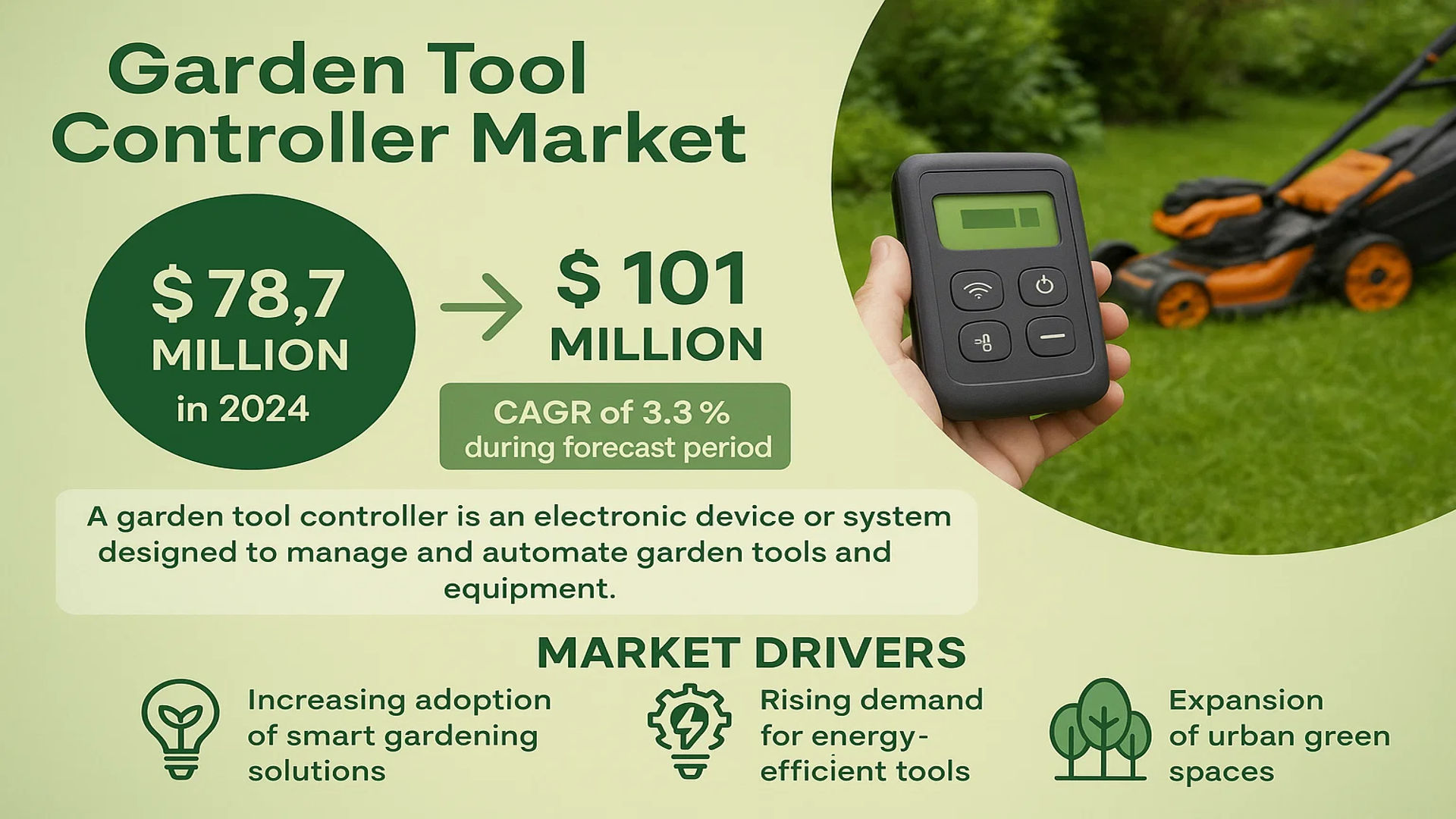
The global Garden Tool Controller Market was valued at 78.7 million in 2024 and is projected to reach US$ 101 million by 2032, at a CAGR of 3.3% during the forecast period.
A garden tool controller is an electronic device or system designed to manage and automate garden tools and equipment. These controllers enable intelligent functionality such as power regulation, remote operation via wireless connectivity, and precision control for tasks like irrigation, mowing, or trimming. The integration of smart technologies is transforming traditional gardening equipment into efficient, connected systems.
The market growth is driven by increasing adoption of smart gardening solutions, rising demand for energy-efficient tools, and the expansion of urban green spaces. The 420W~800W power segment holds significant market share due to its versatility in residential applications. Key players like BLACK+DECKER and Toro are investing in IoT-enabled controllers to enhance user experience. However, high development costs and technical complexity in integration pose challenges for widespread adoption in price-sensitive markets.
MARKET DYNAMICS
MARKET DRIVERS
Growing Demand for Smart Gardening Solutions Drives Market Expansion
The global garden tool controller market is experiencing significant growth due to the increasing adoption of smart gardening solutions. Homeowners and commercial landscapers are increasingly opting for automated, efficient tools to reduce labor costs and improve precision. The rising preference for wireless controllers with IoT integration allows real-time monitoring and control, enhancing operational efficiency. Smart controllers enable features like scheduled watering, automated mowing, and energy optimization, which are becoming essential in modern gardening practices. While traditional tools still dominate, the shift toward smart automation is accelerating at a rapid pace, particularly in North America and Europe where smart home ecosystems are well-established.
Expansion of Landscaping and Municipal Maintenance Activities Boosts Demand
Municipalities and landscaping companies are increasingly investing in advanced garden tool controllers to improve efficiency in maintaining public parks, golf courses, and urban green spaces. Cities worldwide are prioritizing sustainable landscaping, which requires precision tools to optimize water usage and reduce manual labor costs. The 420W~800W segment is particularly gaining traction due to its balance of power and efficiency, making it ideal for medium-scale landscaping projects. Furthermore, governments are implementing stricter regulations on water conservation, pushing the adoption of intelligent irrigation controllers. This regulatory push, combined with increasing urban green initiatives, is expected to sustain market growth over the forecast period.
Technological Advancements Enhance Product Capabilities
Recent innovations in battery technology and wireless connectivity are transforming the garden tool controller market. Lithium-ion batteries with higher energy density enable longer operation times, making cordless tools more practical. Manufacturers are also integrating AI-based diagnostics to predict maintenance needs, reducing downtime. Leading companies are expanding their product portfolios with controllers that support multiple tool types—ranging from robotic mowers to hedge trimmers—under a single management system. This interoperability is particularly appealing to professional gardeners who require seamless switching between different tasks. These advancements are expected to drive adoption across both residential and commercial segments.
MARKET RESTRAINTS
High Initial Costs Limit Adoption in Price-Sensitive Markets
Despite the growing demand, the high upfront cost of smart garden tool controllers remains a significant barrier, especially in developing regions. Battery-powered and IoT-enabled models are more expensive than conventional tools, making them less accessible to budget-conscious consumers. Additionally, installation and setup costs for advanced systems can deter small-scale landscapers and homeowners. While long-term savings on labor and resources are clear, the initial investment often steers potential buyers toward traditional alternatives. This cost sensitivity is particularly pronounced in Asia-Pacific and Latin America, where manual labor remains cheaper than automated solutions.
Limited Compatibility Between Brands Hinders Market Growth
Another challenge is the lack of standardization in garden tool controller technology. Many manufacturers use proprietary systems, making it difficult for users to integrate tools from different brands into a unified control platform. This fragmentation forces consumers to commit to a single brand, limiting flexibility and increasing long-term costs. Additionally, frequent software updates and varying hardware requirements create maintenance complexities, deterring some customers from transitioning to smart solutions. Until industry-wide compatibility standards emerge, this issue is expected to remain a notable constraint on broader market expansion.
MARKET OPPORTUNITIES
Rising Trend of Home Gardening Creates New Consumer Segment
The increasing popularity of home gardening, particularly in urban areas, presents a significant opportunity for the garden tool controller market. Millennials and younger homeowners are showing greater interest in sustainable living, leading to a surge in indoor and small-space gardening. Smart controllers that cater to this demographic—emphasizing ease of use, mobile app integration, and compact designs—are gaining momentum. Companies are responding by introducing budget-friendly models tailored to novice gardeners, expanding the market beyond professional use. With urban farming trends expected to continue growing, this segment offers substantial untapped potential.
Expansion into Emerging Markets Offers Long-Term Growth Potential
Emerging economies in Asia, Africa, and Latin America present lucrative opportunities due to rapid urbanization and increasing disposable incomes. While currently price-sensitive, these regions are beginning to adopt smart gardening tools as middle-class households seek convenience and efficiency. Governments in countries like India and Brazil are also investing in smart city projects, which include automated landscaping solutions. Companies that introduce cost-optimized products tailored to local conditions can establish early dominance in these high-growth markets. Strategic partnerships with regional distributors will be crucial for capturing this expanding customer base.
MARKET CHALLENGES
Cybersecurity Risks Pose Threats to IoT-Enabled Controllers
With the growing adoption of IoT-connected garden tool controllers, cybersecurity vulnerabilities are becoming a significant concern. Cases of unauthorized access to smart irrigation systems and robotic mowers have raised doubts about data security. Manufacturers must prioritize robust encryption and authentication protocols to protect user data and prevent misuse. The lack of consumer awareness about cybersecurity best practices further complicates the issue, as many users fail to update firmware or use weak passwords. Until industry-wide security standards are implemented, these risks may slow adoption among privacy-conscious buyers.
Supply Chain Disruptions Impact Product Availability
Recent global supply chain challenges have affected the production and distribution of garden tool controllers, particularly those reliant on semiconductor components. Delays in microchip availability have led to prolonged lead times, frustrating both manufacturers and customers. Additionally, fluctuating raw material costs, particularly for lithium and rare-earth metals used in batteries, create pricing instability. Companies that diversify their supplier networks and invest in localized production facilities will be better positioned to mitigate these challenges. However, in the short term, these disruptions are expected to continue affecting market growth.
GARDEN TOOL CONTROLLER MARKET TRENDS
Smart Gardening Solutions to Drive Adoption of Advanced Tool Controllers
The integration of smart technologies in gardening tools is accelerating the demand for advanced garden tool controllers. These controllers, featuring wireless connectivity and IoT-enabled functions, allow users to monitor and manage equipment remotely through mobile applications. Notably, 42% of residential garden tool users now prefer devices with smart controllers for convenience and efficiency. Manufacturers are also incorporating battery-powered options, which align with the increasing preference for eco-friendly solutions. The adoption of AI-powered predictive maintenance in controllers is reducing downtime and enhancing operational longevity, making them appealing to commercial landscaping businesses.
Other Trends
Growing Preference for High-Power Controllers
The 800W~2300W segment is witnessing significant traction due to rising applications in commercial landscaping and municipal garden maintenance. These high-power controllers provide enhanced torque and durability, making them ideal for demanding tasks such as hedge trimming and soil cultivation. Commercial projects now account for nearly 35% of high-power controller sales, driven by strict efficiency requirements in landscape maintenance contracts.
Regional Expansion in Emerging Markets
Rapid urbanization in Asia-Pacific is fueling the garden tool controller market growth, with China being a key contributor. Government initiatives promoting green spaces in cities and increasing investments in urban landscaping projects are propelling demand. Additionally, North America remains a dominant market, holding over 28% of global revenue, supported by high consumer spending on home gardening automation. Collaborative efforts between manufacturers and agricultural research institutions in Europe are also fostering innovations in precision gardening tools, expanding deployment in vineyards and horticulture.
COMPETITIVE LANDSCAPE
Key Industry Players
Smart Gardening Solutions Drive Competition as Brands Expand Globally
The global garden tool controller market features a mix of established brands and emerging manufacturers, all competing through technological innovation and geographic expansion. BLACK+DECKER leads the competitive landscape with its extensive residential and commercial product lineup, leveraging its strong distribution network across North America and Europe. The company’s focus on IoT-enabled gardening solutions has helped maintain its dominant position.
Toro and Yard Force have emerged as significant players, particularly in the professional landscaping segment, where precision and durability are paramount. Toro’s 2023 acquisition of a smart irrigation controller startup strengthened its position in the commercial gardening space, while Yard Force continues gaining market share with its budget-friendly home gardening systems.
Chinese manufacturers like Hangzhou System Technology and Zhongxin Electronic Technology are rapidly expanding their presence, supported by growing domestic demand and competitive pricing. These companies are making strategic inroads into Southeast Asian and African markets, where smart gardening adoption is accelerating.
The competitive scenario remains dynamic with companies employing different strategies: while established brands focus on premium smart controllers, newer entrants compete through affordability and customization options. Recent partnerships between hardware manufacturers and software developers indicate growing integration of AI and machine learning in garden tool control systems.
List of Key Garden Tool Controller Manufacturers
- BLACK+DECKER (U.S.)
- Falcon Garden Tools (UK)
- Dictum (Germany)
- Toro (U.S.)
- Yard Force (Netherlands)
- Hangzhou System Technology (China)
- Zhongxin Electronic Technology (China)
- Genbyte (U.S.)
- Shenzhen Green Power Technology (China)
- Chongqing Yuxing Pingrui Electrical (China)
- BOKANG (South Korea)
Segment Analysis:
By Type
420W~800W Segment Dominates Due to Its Widespread Use in Home and Small-Scale Gardening
The market is segmented based on type into:
- 420W~800W
- 800W~2300W
- Others
By Application
Home Gardening Segment Leads Owing to Rising Consumer Interest in Smart Gardening Solutions
The market is segmented based on application into:
- Landscaping Engineering
- Municipal Garden Maintenance
- Agricultural Planting
- Golf Course Maintenance
- Home Gardening
- Forestry
- Others
By Technology
Wireless Connectivity Gaining Traction for Remote Garden Tool Management
The market is segmented based on technology into:
- Wired Controllers
- Wireless Controllers
- Subtypes: Bluetooth, Wi-Fi, RF, and others
By Functionality
Smart Monitoring Capabilities Driving Market Growth
The market is segmented based on functionality into:
- Basic Control
- Smart Monitoring
- Subtypes: Battery monitoring, Performance tracking, and others
- Scheduling Features
- Safety Controls
Regional Analysis: Garden Tool Controller Market
Asia-Pacific
The Asia-Pacific region dominates the global garden tool controller market, driven by rapid urbanization, increasing disposable income, and growing demand for smart gardening solutions. China leads the market, accounting for over 40% of regional revenue, supported by strong manufacturing capabilities and technological advancements in garden automation. The 420W~800W segment, widely used in residential and small-scale commercial applications, sees particularly high adoption due to its balance of power efficiency and affordability. Japan and South Korea contribute significantly due to their tech-savvy consumer base and preference for IoT-enabled gardening tools. Challenges include price sensitivity in emerging economies like India, where cost-effective alternatives remain popular despite gradual shifts toward smart gardening solutions.
North America
North America is the second-largest market, characterized by high demand for smart home integration and sustainable gardening practices. The U.S. accounts for the majority of regional sales, with home gardening and golf course maintenance being key application segments. Major players like BLACK+DECKER and Toro drive innovation, focusing on wireless connectivity and energy-efficient controllers. Regulatory support for eco-friendly products further boosts adoption, though higher upfront costs for advanced controllers limit penetration in budget-conscious segments. The market is expected to grow steadily, supported by rising interest in landscaping automation.
Europe
Europe showcases a mature market with strong emphasis on environmental sustainability and precision gardening. Germany and the U.K. lead in adoption, driven by strict environmental regulations and high awareness of smart gardening benefits. The 800W~2300W segment gains traction in municipal garden maintenance and forestry applications, where robust performance is critical. However, market growth faces hurdles from economic uncertainties and competition from traditional tools. Manufacturers are increasingly focusing on modular designs and battery-powered solutions to align with the region’s green initiatives.
South America
The market in South America is nascent but exhibits growth potential, particularly in Brazil and Argentina, where urban gardening trends are gaining momentum. Limited purchasing power and infrastructure constraints currently restrict widespread adoption of advanced controllers. However, increasing investments in agricultural automation and public green spaces are creating opportunities. Local players prioritize affordability, while international brands face challenges in establishing distribution networks.
Middle East & Africa
This region remains an emerging market, with demand concentrated in GCC countries like the UAE and Saudi Arabia, where luxury landscaping projects drive sales. The harsh climate necessitates durable controllers, yet low awareness and high import costs hinder growth. In Africa, the market is largely untapped, though urban development initiatives in countries like South Africa present long-term opportunities. The focus remains on basic functionality due to budget constraints.
Report Scope
This market research report provides a comprehensive analysis of the global Garden Tool Controller market, covering the forecast period 2024–2032. It offers detailed insights into market dynamics, technological advancements, competitive landscape, and key trends shaping the industry.
Key focus areas of the report include:
- Market Size & Forecast: Historical data and future projections for revenue, unit shipments, and market value across major regions and segments. The global Garden Tool Controller market was valued at USD 78.7 million in 2024 and is projected to reach USD 101 million by 2032, growing at a CAGR of 3.3%.
- Segmentation Analysis: Detailed breakdown by product type (420W~800W, 800W~2300W, Others) and application (Landscaping Engineering, Municipal Garden Maintenance, Agricultural Planting, Golf Course Maintenance, Home Gardening, Forestry, Others) to identify high-growth segments.
- Regional Outlook: Insights into market performance across North America, Europe, Asia-Pacific, Latin America, and Middle East & Africa, with country-level analysis. The U.S. market size is estimated at USD million in 2024, while China is expected to reach USD million.
- Competitive Landscape: Profiles of leading market participants including BLACK+DECKER, Falcon Garden Tools, Toro, Yard Force, and other key manufacturers who held approximately % revenue share in 2024.
- Technology Trends & Innovation: Assessment of smart gardening solutions, IoT integration, and energy-efficient controllers driving market evolution.
- Market Drivers & Restraints: Evaluation of factors such as growing smart gardening adoption, urbanization, and labor cost reduction benefits against challenges like high initial costs and technical complexity.
- Stakeholder Analysis: Strategic insights for tool manufacturers, technology providers, distributors, and investors regarding emerging opportunities in the gardening automation sector.
The research employs both primary and secondary methodologies, including manufacturer surveys, expert interviews, and analysis of verified market data to ensure accuracy and reliability.
FREQUENTLY ASKED QUESTIONS:
What is the current market size of Global Garden Tool Controller Market?
-> Garden Tool Controller Market was valued at 78.7 million in 2024 and is projected to reach US$ 101 million by 2032, at a CAGR of 3.3% during the forecast period.
Which key companies operate in Global Garden Tool Controller Market?
-> Key players include BLACK+DECKER, Falcon Garden Tools, Toro, Yard Force, Hangzhou System Technology, Zhongxin Electronic Technology, and Shenzhen Green Power Technology, among others.
What are the key growth drivers?
-> Key growth drivers include rising smart gardening adoption, labor cost reduction benefits, and increasing demand for automated landscape maintenance.
Which region dominates the market?
-> North America currently leads in market share, while Asia-Pacific is expected to show the highest growth rate during the forecast period.
What are the emerging trends?
-> Emerging trends include IoT-enabled smart controllers, AI-powered gardening solutions, and energy-efficient designs.

Get Sample Report PDF for Exclusive Insights
Report Sample Includes
- Table of Contents
- List of Tables & Figures
- Charts, Research Methodology, and more...
 Download Sample Report PDF