Fiberglass Back Panel for Phone Market Insights
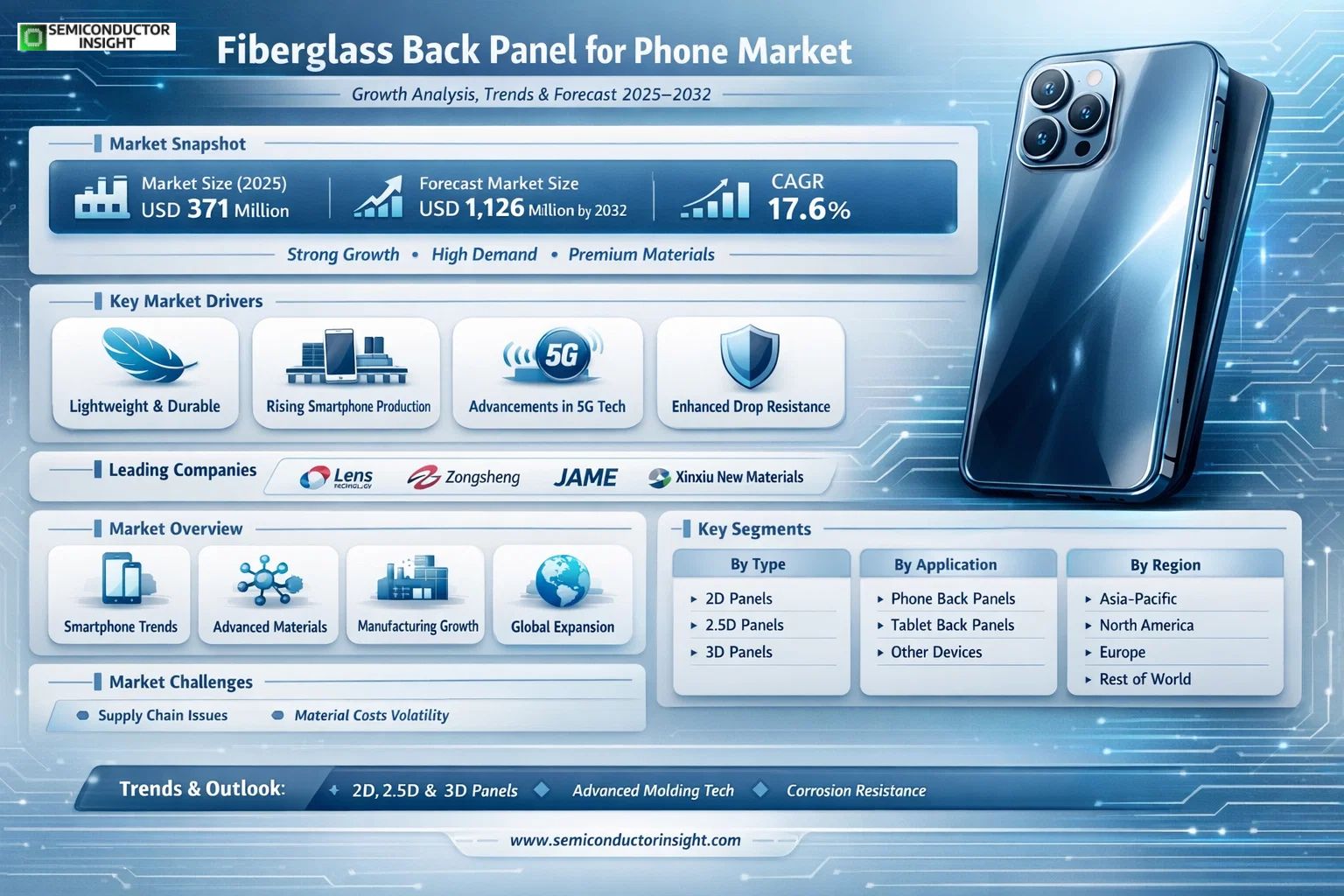
Global Fiberglass Back Panel for Phone market size was valued at USD 371 million in 2025. The market is projected to grow from USD 371 million in 2025 to USD 1,126 million by 2032, exhibiting a CAGR of 17.6% during the forecast period.
The fiberglass back panel for phones is a mobile phone back cover made of glass fiber and resin and other matrix materials through a special process. Specifically, this back cover material combines the characteristics of glass fiber, such as light weight, high strength, high toughness, good insulation, corrosion resistance and fatigue resistance, and the excellent performance of matrix materials such as resin, making the back cover both light and strong, and can effectively resist collision and vibration, providing excellent protection for the mobile phone. Secondly, the fiberglass back cover is processed by molding and other process technologies, and can be made into various shapes and sizes to meet the design requirements of different mobile phones, enhancing portability while improving durability and drop resistance.
The market is experiencing rapid growth due to surging demand for lightweight, durable materials in premium smartphones, advancements in composite manufacturing, and expanding production in Asia-Pacific regions. Furthermore, rising consumer preference for thin, robust devices drives adoption. Key players such as Lens Technology, Huizhou Zongsheng Electronic Materials, Shenzhen Jame Technology, Guangdong Xinxiu New Materials, and Dongguan Julong high-tech Electronic Technology dominate with innovative portfolios, holding significant revenue shares. Surveys of manufacturers, suppliers, and experts highlight trends in sales, revenue, and product developments fueling this expansion.
MARKET DRIVERS
Rising Demand for Lightweight Durability in Smartphones
Fiberglass Back Panel for Phone Market is propelled by the increasing need for materials that balance strength and minimal weight in modern smartphones. With global smartphone shipments exceeding 1.4 billion units annually, manufacturers prioritize fiberglass composites for their superior tensile strength-to-weight ratio, outperforming traditional plastics by up to 30%. This shift supports sleeker designs without sacrificing structural integrity against drops and daily wear.
Technological Advancements in 5G and Heat Management
Fiberglass back panels excel in thermal dissipation, critical for 5G-enabled devices generating higher heat loads. Market data indicates that devices with fiberglass components show 15-20% better heat management, enhancing performance and user safety. Leading OEMs are integrating these panels to meet regulatory standards and consumer expectations for reliable high-speed connectivity.
➤ Fiberglass Back Panel for Phone Market is expected to grow at a CAGR of 7.2% through 2028, driven by premium segment adoption.
Consumer preference for premium-feel devices further accelerates adoption, as fiberglass enables matte finishes and customization, aligning with trends in personalized smartphones across emerging markets.
MARKET CHALLENGES
Supply Chain Vulnerabilities and Raw Material Volatility
Fiberglass Back Panel for Phone Market faces hurdles from fluctuating fiberglass resin prices, which rose 12% in 2023 due to petrochemical dependencies. Geopolitical tensions disrupt glass fiber supply from key Asian producers, delaying production cycles for phone assemblers and increasing costs passed to end-users.
Other Challenges
Competition from Alternative Materials
Glass and aluminum backs dominate 65% of the premium segment, offering familiarity and established recycling streams that challenge fiberglass penetration despite its advantages in weight reduction for Fiberglass Back Panel for Phone Market.
MARKET RESTRAINTS
Regulatory and Environmental Compliance Pressures
Strict environmental regulations on fiberglass production, including emissions from curing processes, limit scalability in Fiberglass Back Panel for Phone Market. EU RoHS directives and similar global standards demand low-VOC resins, raising compliance costs by 10-15% for manufacturers.
Recycling challenges persist, as fiberglass composites are harder to process than metals, contributing to e-waste concerns amid growing scrutiny on smartphone lifecycle impacts. This restrains adoption in eco-focused brands prioritizing circular economy principles.
High initial tooling investments for custom fiberglass molds deter smaller players, consolidating the market among top-tier suppliers and slowing innovation pace.
MARKET OPPORTUNITIES
Expansion into Foldable and Rugged Phone Segments
Fiberglass Back Panel for Phone Market holds potential in foldables, where flexible fiberglass hybrids provide hinge reinforcement and durability, tapping into a segment projected to reach 50 million units by 2027. Rugged phones for industrial use further boost demand, leveraging fiberglass’s impact resistance.
Innovations in bio-based resins address sustainability gaps, opening doors for green-certified panels attractive to brands like those emphasizing ESG goals. Emerging markets in Southeast Asia offer volume growth as local assembly ramps up.
Partnerships between panel fabricators and chipset makers could integrate antenna enhancements, positioning fiberglass as key for next-gen mmWave 5G phones.
Fiberglass Back Panel for Phone Market Trends
Increasing Adoption of Lightweight and High-Strength Materials
Fiberglass Back Panel for Phone Market is experiencing growth driven by the material’s unique properties, combining glass fiber’s light weight, high strength, high toughness, good insulation, corrosion resistance, and fatigue resistance with resin matrix materials. This combination results in back panels that effectively resist collisions and vibrations, enhancing mobile phone protection while maintaining portability. Manufacturers process these panels through molding techniques to achieve various shapes and sizes tailored to different phone designs, improving overall durability and drop resistance.
Other Trends
Advancements Across Panel Types
Developments in Fiberglass Back Panel for Phone Market highlight segments like 2D Fiberglass Panel, 2.5D Fiberglass Panel, and 3D Fiberglass Panel, each offering distinct design flexibilities for phone back panels, tablet back panels, and other applications. These variations allow for customized solutions that meet diverse consumer demands for aesthetics and functionality, with ongoing innovations in processing technologies enabling thinner, lighter profiles without compromising structural integrity.
Growth in Regional Markets and Key Player Innovations
Key regions including North America, Europe, Asia (with focus on China, Japan, and South Korea), South America, and Middle East & Africa are shaping Fiberglass Back Panel for Phone Market. Asia leads due to concentrated manufacturing hubs, while North America emphasizes premium durable components. Leading manufacturers such as Lens Technology, Huizhou Zongsheng Electronic Materials, Shenzhen Jame Technology, Guangdong Xinxiu New Materials, Dongguan Julong high-tech Electronic Technology, Hochuen Smart Technology, Zhejiang Zhaoyi Technology, Shenzhen Goldenken New Material, Dongguan Shengyi Technology, and Dongguan ZhengWei Precision Plastic are driving competition through product enhancements, recent developments, and strategic expansions. Industry surveys reveal trends in demand influenced by drivers like need for robust protection, challenges in supply chain, and opportunities in emerging applications. Additional players like Berne Optical and TONGDA GROUP contribute to a dynamic competitive landscape, focusing on sales growth, revenue strategies, and adaptation to market dynamics including policy impacts and industrial chain optimizations.
COMPETITIVE LANDSCAPE
Key Industry Players
Leading Manufacturers in Fiberglass Back Panel for Phone Market
Fiberglass Back Panel for Phone Market features a competitive landscape dominated by a handful of key manufacturers, primarily based in China, with Lens Technology emerging as a frontrunner due to its substantial revenue share and advanced molding technologies. In 2025, the global top five players collectively commanded a significant portion of the market revenue, reflecting a moderately concentrated structure amid rapid growth projected at a 17.6% CAGR to reach US$1,126 million by 2032. These leaders leverage expertise in glass fiber composites, offering lightweight, high-strength panels that enhance smartphone durability and design aesthetics, particularly for 2D, 2.5D, and 3D variants used in phone back panels.
Beyond the top tier, niche players like Huizhou Zongsheng Electronic Materials and Shenzhen Jame Technology contribute through specialized production of corrosion-resistant and fatigue-proof panels tailored for tablets and other devices. Companies such as Guangdong Xinxiu New Materials and Dongguan Shengyi Technology focus on innovation in resin matrix formulations, addressing demands for thin, portable designs while competing on cost efficiency and supply chain reliability. This diverse ecosystem fosters technological advancements, though smaller firms face challenges from scale advantages held by giants, driving consolidation and strategic partnerships in the sector.
List of Key Fiberglass Back Panel for Phone Companies Profiled
- Lens Technology
- Huizhou Zongsheng Electronic Materials
- Shenzhen Jame Technology
- Guangdong Xinxiu New Materials
- Dongguan Julong high-tech Electronic Technology
- Hochuen Smart Technology
- Zhejiang Zhaoyi Technology
- Shenzhen Goldenken New Material
- Dongguan Shengyi Technology
- Dongguan ZhengWei Precision Plastic
- Berne Optical
- TONGDA GROUP
- Huizhou Weibrass Precision Technology
- Dongguan Tarry Electronics
- Dongguan Haonianjing New Material Technology
Segment Analysis:
| Segment Category | Sub-Segments | Key Insights |
| By Type |
|
3D Fiberglass Panel
|
| By Application |
|
Phone Back Panel
|
| By End User |
|
Smartphone OEMs
|
| By Manufacturing Process |
|
Injection Molding
|
| By Surface Finish |
|
Matte Finish
|
Regional Analysis: Fiberglass Back Panel for Phone Market
Asia-Pacific
Manufacturing Excellence
Asia-Pacific’s factories excel in high-precision molding of fiberglass back panels, integrating seamlessly with phone assembly lines for minimal defects and optimal yields in Fiberglass Back Panel for Phone Market.
Booming smartphone adoption in emerging economies propels volume growth, with fiberglass panels favored for their lightweight appeal in mid-range devices within Asia-Pacific.
North America
North America plays a pivotal role in Fiberglass Back Panel for Phone Market through its focus on high-end customization and technological integration. Premium device manufacturers prioritize fiberglass for its superior durability and customization potential, enabling unique textures and colors that differentiate flagship models. R&D investments emphasize advanced composites for better thermal management and antenna performance, aligning with 5G rollout demands. Strategic partnerships between material innovators and assemblers foster premium segment growth, though higher production costs limit mass-market penetration. Sustainability drives adoption of bio-based fiberglass variants, appealing to eco-aware consumers. The market benefits from robust intellectual property frameworks, encouraging proprietary panel designs that enhance brand loyalty.
Europe
Europe’s Fiberglass Back Panel for Phone Market is shaped by stringent regulatory standards and a push toward sustainable manufacturing. Compliance with REACH and RoHS directives accelerates the shift to low-emission fiberglass processes, positioning the region as a leader in green composites. Design-centric brands favor fiberglass for its moldability into ergonomic, premium-feeling backs that meet aesthetic demands. Collaborative ecosystems involving automotive-derived expertise bring hybrid material innovations, improving drop resistance. While production scales modestly due to labor costs, exports to global assemblers leverage quality certifications. Consumer preference for repairable devices further boosts modular fiberglass panel adoption.
South America
In South America, Fiberglass Back Panel for Phone Market is emerging rapidly, fueled by expanding smartphone penetration and local assembly initiatives. Brazil and Mexico lead with incentives for domestic production, reducing import reliance and fostering fiberglass expertise. Affordable, rugged panels suit the region’s diverse climates, offering corrosion resistance over metal alternatives. Partnerships with Asian suppliers transfer technology, enhancing local capabilities in composite fabrication. Urbanization and digital inclusion drive demand for durable, cost-effective back panels in budget devices. Growth potential lies in scaling mid-tier production to capture rising middle-income markets.
Middle East & Africa
The Middle East & Africa segment of Fiberglass Back Panel for Phone Market grows through urbanization and mobile connectivity expansions. Gulf states invest in assembly hubs, importing fiberglass expertise for high-end devices tailored to harsh environments. Dust and heat resistance makes fiberglass ideal for regional conditions, supporting premium imports. In Africa, affordability initiatives promote basic fiberglass panels in entry-level phones, aiding digital access. Infrastructure developments and youth demographics amplify demand, with potential for local fabrication as skills build. Strategic imports from Asia-Pacific sustain supply amid evolving consumer needs.
Report Scope
This market research report provides a comprehensive analysis of Fiberglass Back Panel for Phone Market, covering the forecast period 2025–2032. It offers detailed insights into market dynamics, technological advancements, competitive landscape, and key trends shaping the industry.
Key focus areas of the report include:
- Market Overview: The report begins with an overview outlining its current market scenario, key growth indicators, and industry transformation drivers. It discusses macroeconomic factors, demand–supply balance, regulatory landscape, and the strategic role of fiberglass back panels in providing lightweight, high-strength, and durable protection for mobile phones and tablets in the consumer electronics industry.
- Market Size & Forecast: Historical data and future projections for revenue, unit shipments, and market value across major regions and segments.
- Segmentation Analysis: Detailed breakdown by product type, technology, application, and end-user industry to identify high-growth segments and investment opportunities.
- Regional Insights: Insights into market performance across North America, Europe, Asia-Pacific, Latin America, and the Middle East & Africa, including country-level analysis where relevant.
- Competitive Landscape: Profiles of leading market participants, including their product offerings, R&D focus, manufacturing capacity, pricing strategies, and recent developments such as mergers, acquisitions, and partnerships.
- Technology Trends & Innovation: Assessment of emerging technologies, integration of advanced molding processes, fiberglass panel design trends, fabrication techniques, and evolving industry standards.
- Market Drivers & Restraints: Evaluation of factors driving market growth along with challenges, supply chain constraints, regulatory issues, and market-entry barriers.
- Stakeholder Insights: Insights for component suppliers, OEMs, system integrators, investors, and policymakers regarding the evolving ecosystem and strategic opportunities.
Primary and secondary research methods are employed, including interviews with industry experts, data from verified sources, and real-time market intelligence to ensure the accuracy and reliability of the insights presented.
FREQUENTLY ASKED QUESTIONS:
What is the current market size of Fiberglass Back Panel for Phone Market?
-> Fiberglass Back Panel for Phone Market was valued at USD 371 million in 2025 and is expected to reach USD 1126 million by 2032, at a CAGR of 17.6% during the forecast period.
Which key companies operate in Fiberglass Back Panel for Phone Market?
-> Key players include Lens Technology, Huizhou Zongsheng Electronic Materials, Shenzhen Jame Technology, Guangdong Xinxiu New Materials, Dongguan Julong high-tech Electronic Technology, among others.
What are the key growth drivers?
-> Key growth drivers include demand for lightweight and high-strength materials, rising smartphone production, and need for improved drop resistance and durability.
Which region dominates the market?
-> Asia is the fastest-growing region, while China remains a dominant market.
What are the emerging trends?
-> Emerging trends include 2D, 2.5D, and 3D fiberglass panels, advanced molding processes for custom shapes, and enhanced corrosion resistance.

Get Sample Report PDF for Exclusive Insights
Report Sample Includes
- Table of Contents
- List of Tables & Figures
- Charts, Research Methodology, and more...
 Download Sample Report PDF