MARKET INSIGHTS
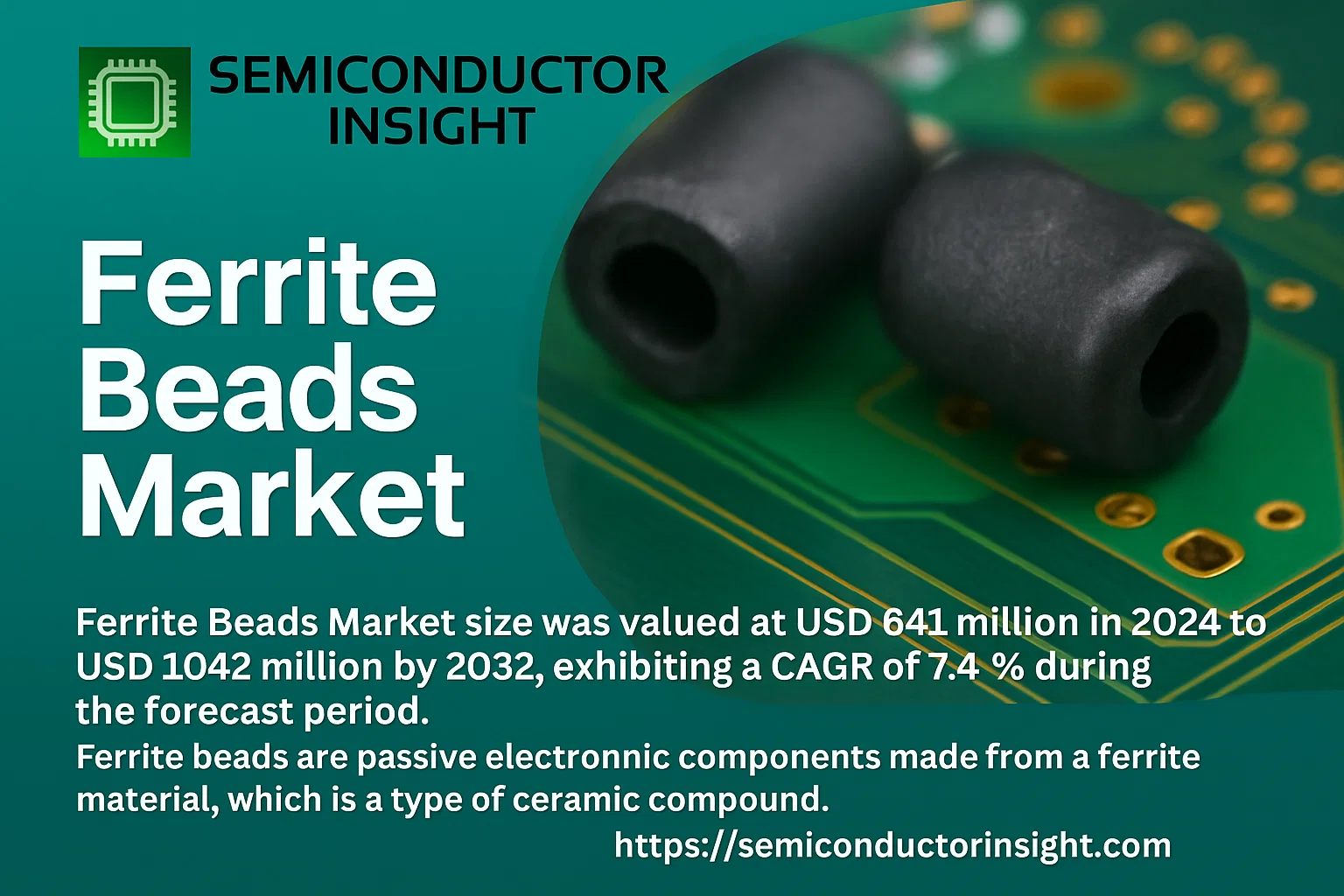
Global Ferrite Beads Market size was valued at USD 641 million in 2024 to USD 1042 million by 2032, exhibiting a CAGR of 7.4% during the forecast period.
Ferrite beads are passive electronic components made from a ferrite material, which is a type of ceramic compound. They are primarily used to suppress or filter high-frequency electromagnetic interference (EMI) and radio frequency interference (RFI) noise in electronic circuits. By acting as a resistor at high frequencies, they absorb and dissipate unwanted noise as heat, thereby ensuring signal integrity and compliance with electromagnetic compatibility (EMC) regulations.
The Market growth is driven by the escalating demand for noise suppression in a wide range of electronic devices. The proliferation of consumer electronics, the expansion of automotive electronics with advanced driver-assistance systems (ADAS), and the rollout of 5G infrastructure are key factors contributing to this expansion. Furthermore, stringent global EMC regulations compel manufacturers to incorporate effective filtering solutions. The competitive landscape is characterized by innovation in miniaturization and performance. For instance, key players like TDK Corporation and Murata Manufacturing continuously develop smaller, more efficient bead designs to meet the demands of compact PCBs. TDK, Murata, and TAIYO YUDEN are some of the dominant players that operate in the Market with a wide range of portfolios.
MARKET DRIVERS
Proliferation of High-Frequency Electronic Devices
The exponential growth in consumer electronics, including smartphones, tablets, laptops, and wearable devices, is a primary driver for the Ferrite Beads Market. These components are essential for suppressing electromagnetic interference (EMI) and radio-frequency interference (RFI) in compact, high-speed circuits. The increasing adoption of 5G technology and the Internet of Things (IoT) further amplifies the need for effective noise suppression to ensure device performance and regulatory compliance.
Stringent Electromagnetic Compatibility Regulations
Governments and international regulatory bodies have implemented strict electromagnetic compatibility (EMC) standards that electronic products must meet before they can be sold. These regulations, such as those from the FCC in the United States and the CE mark requirements in Europe, mandate low levels of EMI emissions. Ferrite beads are a cost-effective and reliable solution for manufacturers to achieve compliance, driving their integration into a wide array of electronic designs.
➤ Global Market for ferrite beads is projected to grow at a CAGR of approximately 5.8% over the next five years, fueled by demand from the automotive and telecommunications sectors.
Additionally, the expansion of the automotive electronics sector, particularly with the rise of electric vehicles (EVs) and advanced driver-assistance systems (ADAS), creates substantial demand. These systems require robust EMI suppression to ensure the reliable operation of sensitive sensors and communication modules.
MARKET CHALLENGES
Intense Price Competition and Commoditization
Ferrite Beads Market is highly competitive, with numerous manufacturers, particularly in the Asia-Pacific region. This leads to significant price pressure and thin profit margins. For many standard, low-frequency beads, the product is increasingly viewed as a commodity, making it difficult for companies to differentiate based solely on performance.
Other Challenges
Miniaturization Demands
As electronic devices become smaller and more powerful, there is constant pressure to develop ferrite beads with a smaller footprint and higher current handling capacity. This requires advanced materials and manufacturing processes, increasing R&D costs and technical challenges.
Performance Limitations at Higher Frequencies
While effective for a broad range of frequencies, ferrite beads can exhibit performance limitations, such as saturation under high DC bias currents or reduced effectiveness at very high frequencies (above several GHz), which are common in next-generation communication systems.
MARKET RESTRAINTS
Availability and Volatility of Raw Materials
The production of ferrite beads relies on raw materials such as iron oxide, manganese, zinc, and nickel. Fluctuations in the prices and supply chains of these materials can pose a significant restraint. Geopolitical issues and trade policies can disrupt availability, leading to increased production costs and potential delays for manufacturers.
Adoption of Alternative EMI Suppression Technologies
In some applications, alternative solutions like multilayer ceramic capacitors (MLCCs) for decoupling or integrated passive devices (IPDs) that combine multiple functions are being adopted. These integrated solutions can sometimes offer a smaller form factor or better performance for specific high-frequency applications, potentially limiting the growth of discrete ferrite bead components.
MARKET OPPORTUNITIES
Expansion in Automotive and Industrial Electronics
The ongoing digital transformation in the automotive industry, including the electrification of powertrains and increased autonomous functionality, presents a major growth avenue. Ferrite beads are critical for suppressing noise in power lines and data buses within vehicles. Similarly, the industrial sector’s adoption of Industry 4.0 and industrial IoT (IIoT) creates demand for reliable EMI filtering in harsh environments.
Development of High-Frequency and High-Current Beads
There is a significant opportunity for manufacturers who can innovate and produce ferrite beads that operate effectively at higher frequencies (e.g., for 5G mmWave applications) and handle higher DC bias currents without saturation. Products tailored for specific emerging applications, such as power over Ethernet (PoE) and advanced data centers, represent a high-value Market segment.
Growth in Renewable Energy Systems
The renewable energy sector, including solar inverters and wind turbine power converters, requires robust EMI suppression to ensure grid stability and compliance with power quality standards. Global push for clean energy is expected to drive sustained demand for ferrite beads in these power electronic systems.
Ferrite Beads Market Trends
Sustained Growth by Application
Global Ferrite Beads Market was valued at 641 million in 2024 and is projected to reach USD 1042 million by 2032, at a CAGR of 7.4% during the forecast period. A key trend is the Market’s segmentation by application, with consumer electronics remaining the dominant sector. This dominance is driven by the pervasive need for electromagnetic interference (EMI) suppression in smartphones, tablets, laptops, and wearable devices, where component miniaturization and signal integrity are paramount. The automotive electronics segment is also showing strong growth, fueled by the increasing electrification of vehicles and the proliferation of advanced driver-assistance systems (ADAS), which require robust EMI filtering to ensure reliable operation.
Other Trends
Product Type Dominance and Innovation
In terms of product type, Chip Ferrite Beads are the largest segment, holding approximately 88% of the Market share. This dominance is attributed to their small size, surface-mount compatibility, and cost-effectiveness for high-volume production, making them ideal for the compact PCBs found in modern electronics. The trend is towards developing chip beads with higher current ratings and improved impedance characteristics at higher frequencies to meet the demands of next-generation communication standards like 5G. While Through Hole Ferrite Beads hold a smaller share, they remain relevant for high-power applications requiring greater mechanical stability.
Geographical Market Concentration
The Market exhibits significant geographical concentration. Japan is the largest Market, accounting for about 40% of the global share, supported by the presence of key manufacturers like TDK, Murata, and TAIYO YUDEN. Combined, China and China Taiwan hold a share of approximately 35%, reflecting the region’s massive electronics manufacturing base. The trend indicates a robust supply chain ecosystem in Asia, which continues to be the production and consumption hub for ferrite beads. North America and Europe remain important Markets, particularly for high-reliability applications in automotive and industrial sectors.
Competitive Landscape Consolidation
Global Ferrite Beads Market features a consolidated competitive landscape, with the top three manufacturers TDK, Murata, and TAIYO YUDEN collectively holding about 50% of the Market share. This concentration underscores the high technical barriers to entry and the importance of established manufacturing expertise and extensive patent portfolios. The prevailing trend among these key players involves continuous investment in research and development to create more efficient and miniaturized components, alongside strategic initiatives to expand their global production capacity to meet rising demand, particularly from the automotive and telecommunications industries.
COMPETITIVE LANDSCAPE
Key Industry Players
A Market Dominated by Leading Japanese Electronic Component Giants
Global Ferrite Beads Market is characterized by a high level of consolidation, with the top three manufacturersTDK Corporation, Murata Manufacturing, and TAIYO YUDENcollectively holding approximately 50% of the Market share. Japan stands as the dominant production and consumption region, accounting for roughly 40% of the global Market, which reinforces the strong position of these domestic leaders. These companies possess extensive expertise in ceramic and magnetic materials, robust R&D capabilities, and vast global distribution networks, allowing them to serve major downstream industries like consumer electronics and automotive electronics with high-volume, high-reliability components. Their product portfolios are comprehensive, heavily focused on chip ferrite beads, which constitute about 88% of the total Market.
Beyond the top three, the Market includes a range of other significant players that cater to specific niches and regional demands. Companies such as Yageo, Sunlord Electronics, and Chilisin operate as major forces, particularly strong in the Asia-Pacific region, offering competitive alternatives. International component suppliers like Würth Elektronik, Vishay, and Bourns provide strong competition with their broad electronic component catalogs and strong presence in North America and Europe. Several other manufacturers, including Samsung Electro-Mechanics, Laird Performance Materials, and Zhenhua Fu Electronics, contribute to the Market’s diversity, focusing on specific applications or leveraging cost-effective manufacturing.
List of Key Ferrite Beads Companies Profiled
- TDK Corporation
- Murata Manufacturing Co., Ltd.
- TAIYO YUDEN Co., Ltd.
- Sunlord Electronics
- Yageo Corporation
- Chilisin Electronics
- Microgate
- Samsung Electro-Mechanics
- Bourns, Inc.
- Zhenhua Fu Electronics
- Fenghua Advanced Technology
- Würth Elektronik GmbH
- Vishay Intertechnology, Inc.
- Tecstar
- Laird Performance Materials
- Max Echo
Segment Analysis:
| Segment Category | Sub-Segments | Key Insights |
| By Type |
|
Chip Ferrite Bead is the undisputed Market leader due to its overwhelming dominance in modern surface-mount technology (SMT) assembly processes. Its compact size and superior performance in suppressing high-frequency electromagnetic interference (EMI) make it exceptionally well-suited for the high-density, miniaturized printed circuit boards found in nearly all contemporary electronic devices. The widespread adoption of automated pick-and-place manufacturing further cements the chip type’s supremacy. Through-hole variants are primarily utilized in older or more robust applications where manual assembly may be required or higher power handling is a critical factor, representing a more niche segment of the Market. |
| By Application |
|
Consumer Electronics represents the leading application segment, driven by the colossal and continuous global demand for smartphones, laptops, tablets, and wearable technology. The critical need for signal integrity and EMI suppression in these high-frequency, compact devices makes ferrite beads a fundamental component. The Automotive Electronics segment exhibits very strong growth potential, fueled by the rapid electrification of vehicles and the proliferation of advanced driver-assistance systems (ADAS), infotainment, and in-car connectivity, all of which require stringent noise filtering. The ‘Other’ category includes diverse applications such as industrial equipment, telecommunications infrastructure, and medical devices, each with specific, demanding requirements for electromagnetic compatibility. |
| By End User |
|
Original Equipment Manufacturers (OEMs) are the dominant end-user segment, as they integrate ferrite beads directly into their final products, such as consumer electronics and automotive systems. These companies drive specifications and demand for high-performance, reliable components. Electronic Manufacturing Services (EMS) providers constitute a significant segment, acting as contract manufacturers for various OEMs and requiring a steady supply of components. Component Distributors play a crucial role in the supply chain, serving smaller OEMs, repair Markets, and providing rapid prototyping components, ensuring wide product availability and accessibility across the Market. |
| By Sales Channel |
|
Direct Sales is the leading channel for high-volume transactions with major OEMs and large EMS providers, fostering strong technical partnerships and ensuring supply chain stability for critical production lines. Distributor Sales remains a vital channel for reaching a broad base of small and medium-sized enterprises, offering inventory management, logistical support, and localized service. The Online Retail channel is experiencing growth, particularly for serving hobbyists, research and development teams, and for procuring small batches or obsolete parts, providing unparalleled convenience and accessibility for non-bulk purchases. |
| By Performance Specification |
|
General-Purpose / Standard Grade beads constitute the largest segment due to their versatility and cost-effectiveness, meeting the EMI suppression needs for a vast array of common electronic circuits. High-Frequency / RF Grade beads are critical for advanced applications in telecommunications, data transmission, and high-speed digital circuits where suppressing noise in the gigahertz range is paramount. High-Current Grade beads are specialized components designed for power supply lines and automotive applications, where maintaining performance under significant DC bias current without magnetic saturation is a key performance differentiator and a growing area of innovation. |
Regional Analysis: Ferrite Beads Market
Asia-Pacific
The region’s strength lies in its role as the world’s primary electronics manufacturing center. This creates immense, consistent demand for passive components like ferrite beads from original equipment manufacturers and contract manufacturers across diverse sectors, ensuring a stable and growing Market base.
A deeply integrated supply chain for electronic components, from raw material processing to final assembly, provides a significant competitive advantage. This allows for efficient production, reduced lead times, and cost-effectiveness for ferrite bead manufacturers and their customers.
Aggressive deployment of 5G technology, expansion of Internet of Things (IoT) networks, and the booming electric vehicle industry are key growth drivers. These advanced applications require sophisticated EMI filtering, pushing the development and adoption of next-generation ferrite beads.
Strong governmental initiatives promoting electronics manufacturing and stringent regional electromagnetic compatibility (EMC) regulations compel device makers to incorporate high-quality ferrite beads. Concurrently, significant R&D investments by regional players focus on miniaturization and enhancing performance characteristics.
North America
The North American Ferrite Beads Market is characterized by high demand from advanced technology sectors, particularly aerospace, defense, and telecommunications. The presence of leading technology companies and a strong focus on innovation drive the need for reliable, high-performance EMI suppression components. Strict regulatory standards for electronic emissions in the region ensure a steady Market for quality ferrite beads. The growth of the automotive sector, especially in electric and autonomous vehicles, along with ongoing investments in data center infrastructure, provides additional growth avenues. The Market is supported by a robust R&D ecosystem focused on developing components for next-generation applications.
Europe
Europe holds a significant share of the Ferrite Beads Market, propelled by its strong automotive industry and industrial automation sector. The region’s stringent electromagnetic compatibility directives mandate effective noise suppression in electronic products, sustaining demand. Leading automotive manufacturers, particularly in Germany and France, incorporate ferrite beads extensively in vehicle electronic systems. The region also sees steady demand from the industrial equipment and renewable energy sectors. A focus on quality and reliability, combined with the presence of several major component suppliers, underpins the Market’s stability. Research initiatives supported by the European Union further contribute to advancements in materials used for ferrite beads.
South America
The Ferrite Beads Market in South America is emerging, with growth largely tied to the gradual expansion of its consumer electronics and industrial sectors. Brazil is the most prominent Market, driven by local manufacturing of appliances and automotive products. The region’s growth is tempered by economic volatility, which can impact investment in new electronic equipment. However, increasing mobile phone penetration and infrastructure development projects present opportunities for Market growth. The demand is primarily for standard ferrite bead components, with the Market relying heavily on imports to meet the needs of its manufacturing base.
Middle East & Africa
The Middle East & Africa region represents a smaller but developing Market for ferrite beads. Growth is primarily driven by infrastructure development, particularly in telecommunications and construction sectors within the Gulf Cooperation Council countries. The increasing adoption of consumer electronics and the gradual establishment of local assembly plants contribute to demand. The Market faces challenges such as limited local manufacturing capabilities for electronic components, leading to a reliance on imports. Nevertheless, economic diversification efforts and urbanization projects in key countries are expected to foster gradual Market expansion over the coming years.
Report Scope
This Market research report provides a comprehensive analysis of the Ferrite Beads Market , covering the forecast period 2025–2032. It offers detailed insights into Market dynamics, technological advancements, competitive landscape, and key trends shaping the industry.
Key focus areas of the report include:
- Market Overview: The report begins with an overview outlining its current Market scenario, key growth indicators, and industry transformation drivers. It discusses macroeconomic factors, demand–supply balance, regulatory landscape, and the strategic role of semiconductors in powering advancements across industries such as automotive, telecommunications, consumer electronics, and industrial automation.
- Market Size & Forecast: Historical data and future projections for revenue, unit shipments, and Market value across major regions and segments.
- Segmentation Analysis: Detailed breakdown by product type, technology, application, and end-user industry to identify high-growth segments and investment opportunities.
- Regional Insights: Insights into Market performance across North America, Europe, Asia-Pacific, Latin America, and the Middle East & Africa, including country-level analysis where relevant.
- Competitive Landscape: Profiles of leading Market participants, including their product offerings, R&D focus, manufacturing capacity, pricing strategies, and recent developments such as mergers, acquisitions, and partnerships.
- Technology Trends & Innovation: Assessment of emerging technologies, integration of AI/IoT, semiconductor design trends, fabrication techniques, and evolving industry standards.
- Market Drivers & Restraints: Evaluation of factors driving Market growth along with challenges, supply chain constraints, regulatory issues, and Market-entry barriers.
- Stakeholder Insights: Insights for component suppliers, OEMs, system integrators, investors, and policymakers regarding the evolving ecosystem and strategic opportunities.
Primary and secondary research methods are employed, including interviews with industry experts, data from verified sources, and real-time Market intelligence to ensure the accuracy and reliability of the insights presented.
FREQUENTLY ASKED QUESTIONS:
What is the current Market size of Ferrite Beads Market?
-> Ferrite Beads Market size was valued at USD 641 million in 2024 to USD 1042 million by 2032, exhibiting a CAGR of 7.4% during the forecast period.
Which key companies operate in Ferrite Beads Market?
-> Key players include TDK, Murata, TAIYO YUDEN, Sunlord, Yageo, and Chilisin, among others. Global top three manufacturers hold a share of about 50%.
What are the key growth drivers?
-> Key growth drivers include increasing demand for electronic circuits, the need to suppress high-frequency electromagnetic interference (EMI) noise, and growth in end-use industries like consumer electronics and automotive electronics.
Which region dominates the Market?
-> Japan is the largest Market, with a share of about 40%, followed by China and China Taiwan, which together hold a share of about 35%.
What are the emerging trends?
-> Emerging trends include the dominance of chip ferrite beads, which hold about 88% Market share, and the growing application in consumer electronics, which is the largest application segment.

Get Sample Report PDF for Exclusive Insights
Report Sample Includes
- Table of Contents
- List of Tables & Figures
- Charts, Research Methodology, and more...